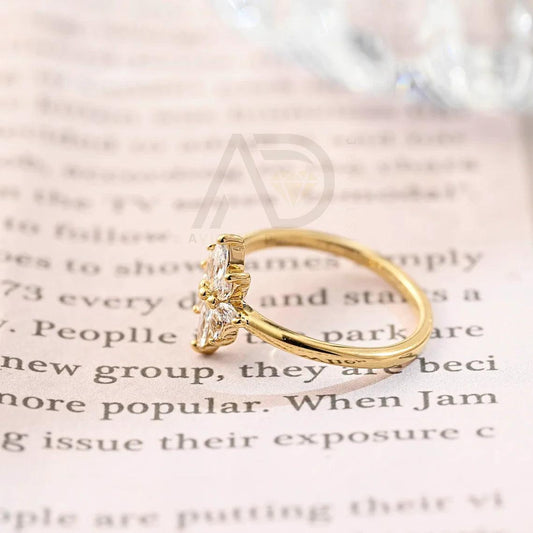

A Distinctive Shape Within Reach
Marquise-cut engagement rings offer couples a distinctive alternative to familiar round styles. With curved sides and two pointed ends, the marquise creates an elongated silhouette that feels graceful on the hand. Its outline can also make fingers appear longer and more slender, as GIA’s guide to choosing a marquise diamond explains.
That generous face-up presence may be appealing when you are working within a budget: a marquise can look larger than a round diamond of the same carat weight. Avittam Diamond Jewels offers a curated selection of marquise rings and bespoke options, with customization for design, metal, and engraving.
Price claims deserve careful checking. The available product information confirms one marquise engagement ring with a starting price below $2,000; other styles discussed in this guide are design directions, not verified product listings. A starting price may also change with the stone and setting selected.
Before choosing a specific ring, confirm that its center stone is marquise-cut, then verify the final price, metal, and current availability. At avittamdiamondjewels.com, detailed product guidance and virtual try-on tools can help you assess a design before placing an order.
Marquise Ring Selection Guide
- Marquise diamonds have two pointed ends that are especially vulnerable to damage; V-tip prongs or a bezel can help protect them.
- GIA recommends assessing symmetry, outline, and face-up appearance, including the bow-tie shadow, under ordinary lighting.
- A three-stone setting pairs the marquise center with side stones, while tapered accents can echo its elongated shape.
- A solitaire setting keeps attention on the marquise outline; an east-west orientation places the stone’s long axis across the finger.
- A halo adds a frame of smaller stones and visual presence, but its extra stones and setting work affect the final price.
- A bezel encloses the diamond’s perimeter and offers coverage around the tips, though its metal edge may make the stone appear smaller face-up.
- A slim or simple band can keep the design understated, but band width and balance are matters of personal preference.
- A contoured wedding band can follow a marquise ring’s profile; trying both rings together helps confirm fit and comfort.
- Avittam Diamond Jewels offers bespoke ordering to personalize a ring’s design and metal, as well as virtual try-on tools.
- One listed prong-set trilogy design starts at $1,023; confirm the center-stone shape, complete specifications, and final price before ordering.
1. Prong Set Trilogy With a Marquise Center
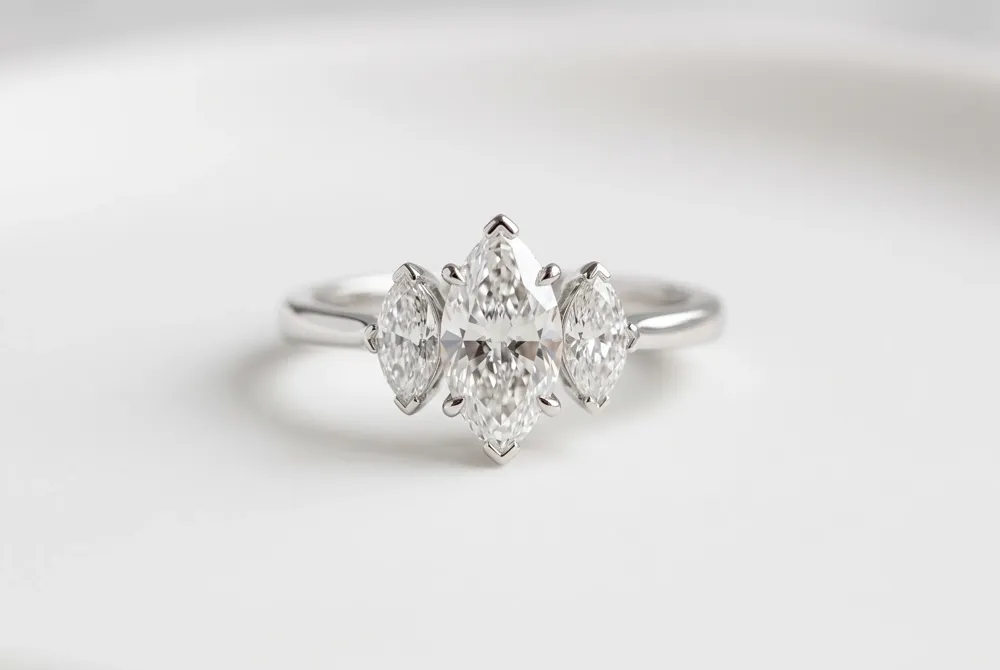
Among marquise-cut engagement rings, a prong-set trilogy design pairs the elongated center stone with two side stones. This three-stone arrangement enhances sparkle and balance while keeping the marquise shape as the focal point. One listed design begins at $1,023, though this is a starting point and may vary with different diamonds, metals, and settings. Before ordering, please confirm that the center stone is marquise-cut and review the complete ring’s specifications and final price.
The pointed ends require careful consideration in a ring meant for everyday wear. V-shaped prongs can protect each tip, and well-positioned side prongs help secure the stone. According to the Gemological Institute of America’s guidance on marquise diamonds, the points are especially vulnerable to damage, so it is important to ensure they are well-protected. Ask about the protection of the tips and examine the prong placement from both above and the side.
For a broader selection of center stones and setting styles, explore Avittam Diamond Jewels’ marquise ring collection, which offers varied designs. Compare the side stones, metal, and protective details together, then confirm the total before making your decision.
2. Classic Solitaire With Protective Tips
For couples considering marquise-cut engagement rings, a classic solitaire offers a composed alternative to more elaborate settings. A plain band leaves the stone’s elongated outline and lively facets in clear view, giving the design its character without adding visual detail.
The marquise’s pointed ends deserve particular care. V-tip prongs cover and cradle both points, helping reduce the risk of chips from everyday knocks. When comparing stones, GIA recommends considering the points, girdle, symmetry, and face-up appearance, including any bow-tie shadow, rather than judging by carat weight alone. Its marquise diamond guidance also advises viewing the stone under ordinary lighting.
To keep a solitaire within a set budget, compare the center stone’s size, color, and clarity alongside the setting cost. A modest adjustment to one of these choices may leave room for secure tip protection without changing the clean silhouette. Confirm the price of the complete ring, including the selected metal and any upgrades, before deciding.
At Avittam Diamond Jewels, shoppers can personalize a ring’s design and metal through its bespoke ordering service. Reviewing those choices together helps balance the stone’s presence with practical protection and the intended budget.
3. Marquise Halo With Added Presence
A halo gives marquise-cut engagement rings a more detailed frame, surrounding the center stone with smaller stones. Its outline can echo the marquise’s long, pointed shape or soften it with a more rounded border, adding visual presence without changing the center diamond.
The extra stones and setting work affect the final price, so treat a halo as a style to investigate within a $2,000 budget, not a guaranteed fit. Compare the complete ring price and confirm that the center stone is marquise, since a retailer’s broader halo selection may include other shapes.
A halo can also provide some protection around the marquise’s delicate points, but it does not replace a close look at how each tip is secured. Ask whether the setting has protective prongs or a metal edge at the points, and inspect the finished design from the side as well as face-up. The GIA’s guidance on choosing a marquise diamond explains why the points and their surrounding structure deserve attention.
For a more considered online search, Avittam Diamond Jewels offers bespoke ordering, allowing couples to personalize a ring’s design and metal. That flexibility can help narrow the choice to a halo whose proportions suit the center stone, while a final quote confirms whether the desired details fit the budget.
4. East West Marquise Solitaire
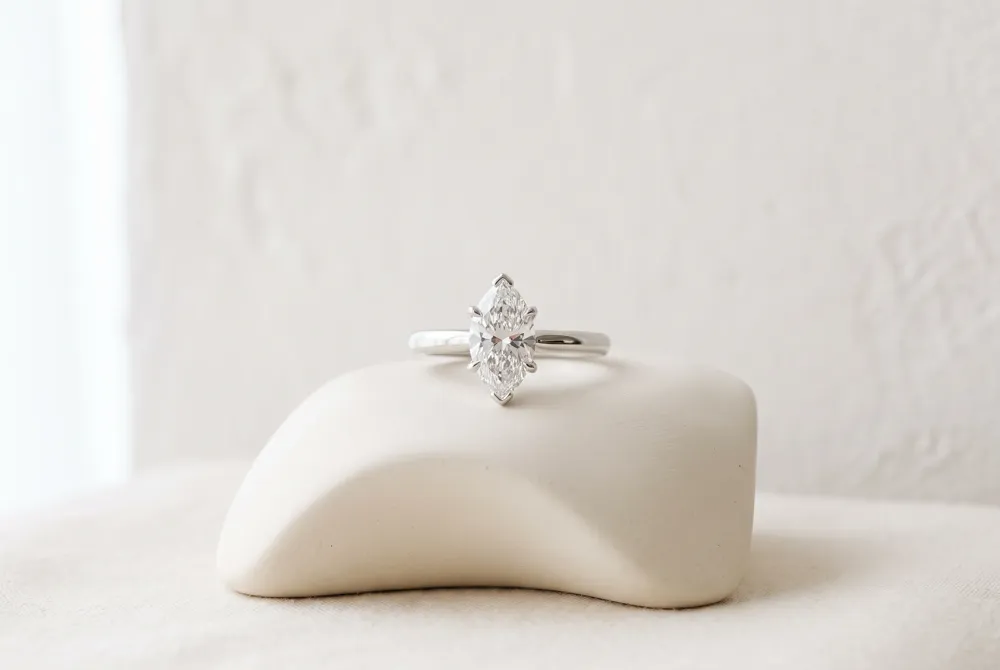
For couples considering marquise-cut engagement rings, an east-west solitaire turns the stone sideways, placing its long axis across the finger instead of following the traditional north-south line. The orientation gives the familiar marquise outline a more unexpected, contemporary character. GIA’s guide to choosing a marquise diamond also illustrates how setting direction can shape the ring’s overall look.
A clean solitaire keeps the design focused: a plain band and restrained setting let the horizontal silhouette speak for itself, without a halo or side stones competing for attention. This simplicity may also leave more of the budget available for the center diamond, though the final cost depends on the stone, metal, and setting.
Because the marquise’s pointed ends are its most vulnerable areas, assess the prongs or other protection at both tips rather than choosing on appearance alone. GIA advises examining symmetry and viewing the stone face-up under ordinary lighting, which can help reveal how the outline and central shadow look in practice.
If you are shopping online, Avittam Diamond Jewels offers virtual try-on tools and a bespoke service for personalizing a ring’s design and metal. Use a try-on or an in-person viewing to see how the east-west proportions sit on your hand, and confirm that both points feel securely protected for regular wear.
5. Protective Bezel With a Sleek Profile
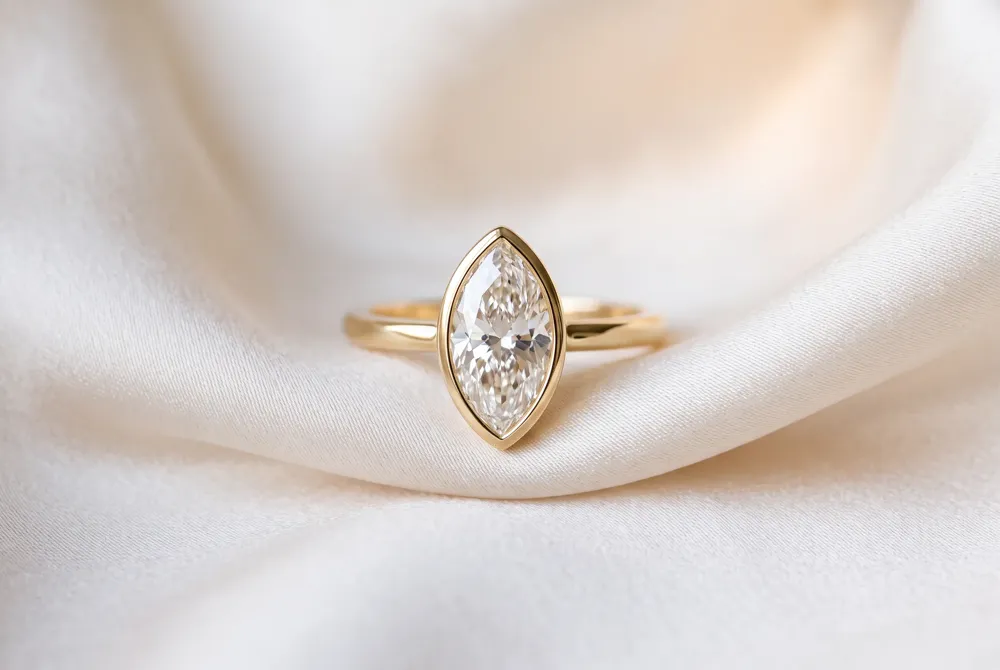
For marquise-cut engagement rings, a bezel setting offers a refined alternative to exposed prongs. A slim rim of metal follows the diamond’s outline, enclosing its perimeter and providing coverage around both delicate points. The result is a clean, contemporary profile that can feel composed and understated.
That added coverage comes with a visual trade-off: the metal edge may make the diamond appear slightly smaller face-up than it would in a more open setting. The bezel’s width and height also affect its character, from a fine outline that keeps attention on the stone to a broader rim with a bolder look. GIA recommends assessing a marquise diamond’s outline, symmetry, and vulnerable points as well as its proportions when comparing stones (GIA’s marquise diamond guide).
A bezel is worth including in a budget search, but the setting style alone does not confirm that a particular marquise ring is available under $2,000. Check that the center stone is actually marquise-cut, then verify the full price for the chosen diamond, metal, and ring size rather than relying on a starting price. The Avittam Diamond Jewels marquise ring collection offers a place to compare designs, while its bespoke ordering service allows customers to customize a ring’s design and metal.
Consider how much of the stone you want the setting to frame, whether a low or raised profile suits everyday wear, and which metal complements the diamond. The right bezel balances practical tip coverage with a silhouette that feels natural on the wearer’s hand.
6. Vintage-Inspired Marquise Detail
Vintage-inspired marquise-cut engagement rings bring together the shape’s graceful outline and details such as milgrain edges, fine engraving, or delicate diamond accents. These touches can lend a ring an heirloom character while leaving the marquise center stone as the focus.
The marquise has appeared in bridal jewelry across earlier eras, and its distinctive silhouette continues to attract couples seeking a style that feels both familiar and individual. That history is a point of inspiration, not a guarantee that a particular ring follows a specific period design or falls within a given budget. When comparing stones, GIA’s guidance on marquise shape and symmetry can help you assess the outline and balance beyond the setting’s decorative details.
For a budget-conscious choice, compare the complete setting and center-stone cost rather than judging by the stone price alone. Engraving, milgrain work, accent diamonds, metal choice, and customization can all affect the final total. Avittam Diamond Jewels offers a bespoke ordering service for personalizing a ring’s design and metal, so couples can consider decorative details alongside their budget.
The supplied product listings do not confirm a specific vintage-inspired marquise engagement ring priced under $2,000. Treat examples and starting prices as prompts for further checking, and verify the center-stone shape, materials, setting details, and final price before deciding.
7. Marquise Three-Stone With Tapered Accents
For marquise-cut engagement rings, a three-stone design gives the elongated center a composed frame. Smaller side stones create a graduated outline, while tapered accents can draw the eye toward the center and echo its length without competing with its distinctive shape.
While tapered side stones are a beautiful design option, it is important to confirm that the ring you choose includes them and that the price covers the complete setting and all three stones. Before selecting a ring, verify that its center diamond is genuinely marquise-cut and that the displayed price reflects the complete setting rather than a starting configuration.
Inspect the center stone face-up for symmetrical shape and well-aligned tips, then ensure that both tips are well-protected by the setting. The Gemological Institute of America’s marquise guidance recommends assessing symmetry and viewing any dark area that sometimes appears across the center under ordinary lighting. Avittam Diamond Jewels offers a curated marquise ring collection, and its bespoke ordering service lets couples personalize a ring’s design and metal.
8. Slim Band With a Marquise Center
A slim band gives marquise-cut engagement rings a light, understated frame, keeping attention on the center stone’s elongated outline. With fewer accent stones competing for the eye, the marquise can remain the design’s clear focus.
Band width is a matter of proportion and personal taste, not a fixed rule. A delicate band can create an airy look, while a slightly wider one may feel more balanced beside a larger center stone. Consider how the band looks from above and how it feels during everyday wear.
A simpler setting can be one way to keep a ring within a planned budget, since elaborate details and additional stones may affect the total cost. Avittam Diamond Jewels offers customizable choices in design and metal, so shoppers can weigh the overall look against their spending limit without assuming a particular configuration has a set price.
Before treating any slim-band design as an under-$2,000 option, confirm the listed price and review the center diamond, metal, and setting details. For the stone itself, compare its outline and symmetry and view it face-up under ordinary lighting; GIA’s marquise diamond guide explains why those visual checks matter alongside the listed specifications.
9. Lab-Grown Marquise With a Simple Setting
A lab-grown marquise center in a simple setting is one option to investigate when you have a firm budget. The clean design keeps attention on the stone’s distinctive outline, while choosing a lab-grown diamond may give you another way to compare available options.
The supplied shopping information shows that natural and lab-grown diamonds are available categories, but it does not verify a specific lab-grown marquise engagement ring priced under $2,000. Treat the setting and stone as a design direction, not a confirmed price match.
Compare each diamond on its own appearance, proportions, symmetry, and documentation rather than assuming its origin alone determines value. GIA recommends assessing a marquise’s outline and symmetry, and viewing the stone face-up under ordinary lighting to judge the bow-tie effect (GIA’s marquise diamond guide).
At Avittam Diamond Jewels, the bespoke ordering service allows you to customize a ring’s design and metal, making those details worth confirming as you narrow your choice. Before purchasing, ask for the final price and verify the metal, center-stone origin, and exact stone details for the specific ring. A clear quote helps ensure the complete design, not just the initial listing, fits your budget.
10. Contoured Bridal Set With Marquise Center
For marquise-cut engagement rings, a contoured bridal set brings the engagement ring and wedding band together with a close, considered fit. The band’s curve follows the marquise setting, creating a coordinated outline without competing with the center stone.
A straight wedding band can leave a visible gap beside a marquise ring because its pointed ends extend beyond the center setting. A contour shaped to the ring’s profile can sit more closely alongside it; a straight band paired with a spacer is another practical option. The right choice depends on the engagement ring’s setting and how much separation you prefer.
When comparing a bridal set, confirm that the center stone is indeed marquise-cut and verify the combined price, as some listings may not clearly identify the center shape. Examine the fit of both rings together, the metal and accent stones, and whether the marquise’s pointed tips are protected by prongs or a bezel. Consult a trusted jeweler’s guide to contoured wedding sets, and confirm the specific marquise design and final price before ordering.
A well-matched set should feel comfortable when worn together and keep the center ring secure. Ask to see the two rings side by side, and verify that their profiles meet as intended rather than relying on photographs alone.
Understanding the Marquise Shape
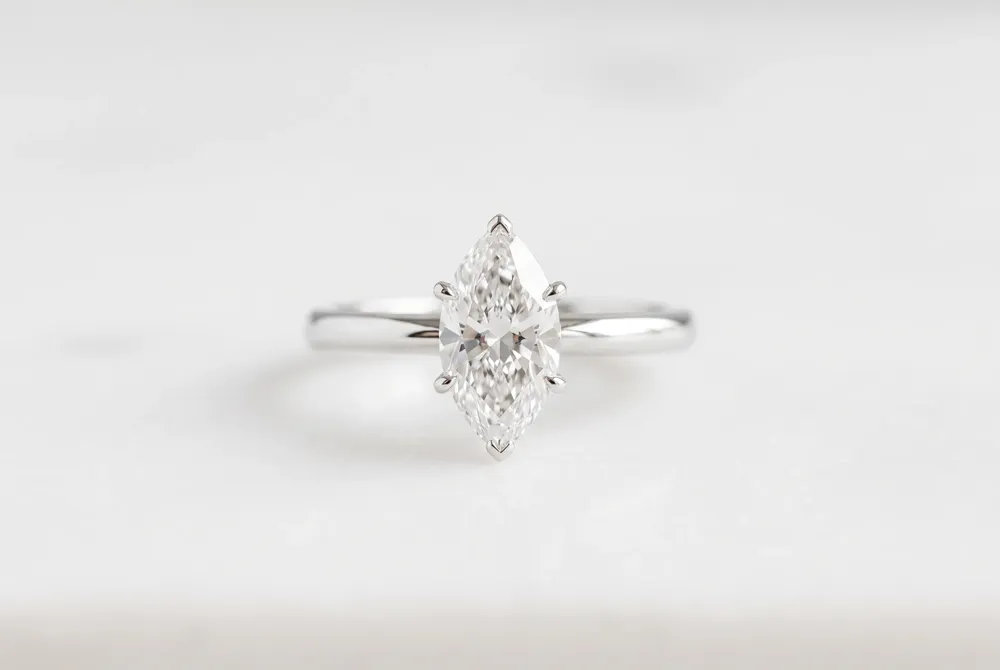
Marquise-cut engagement rings feature an elongated diamond with gently curved sides and two pointed ends. The shape is also known as a navette, or “little ship,” and its brilliant-style facets can create lively sparkle. Because more of the stone’s weight may spread across its face, a marquise can appear larger face-up than a round diamond of the same carat weight, as GIA’s marquise diamond guide explains.
The silhouette has a long history in bridal jewelry, yet it need not feel tied to a single era. Its tapered outline brings a distinctive, romantic character, while a clean setting or an east-west orientation can give the ring a more contemporary expression. At Avittam Diamond Jewels, bespoke ordering lets couples personalize a ring’s design, metal, and engraving, so the marquise shape can reflect their own preferences.
When comparing stones, look beyond carat weight and listed grades. GIA recommends assessing whether the two sides are balanced, the proportions create an appealing outline, and the points are clearly defined. A marquise may also show a bow-tie, a shadow across the center; some is typical, but a wide, dark band can distract from the stone’s brightness.
View each diamond face-up in ordinary lighting and at a natural distance, rather than relying only on a magnified image or grading report. This helps you judge the symmetry, outline, and bow-tie as they will appear when worn. Avittam Diamond Jewels’ virtual try-on tools offer another way to consider how a chosen shape and setting look on the hand.
Choosing Details With Confidence
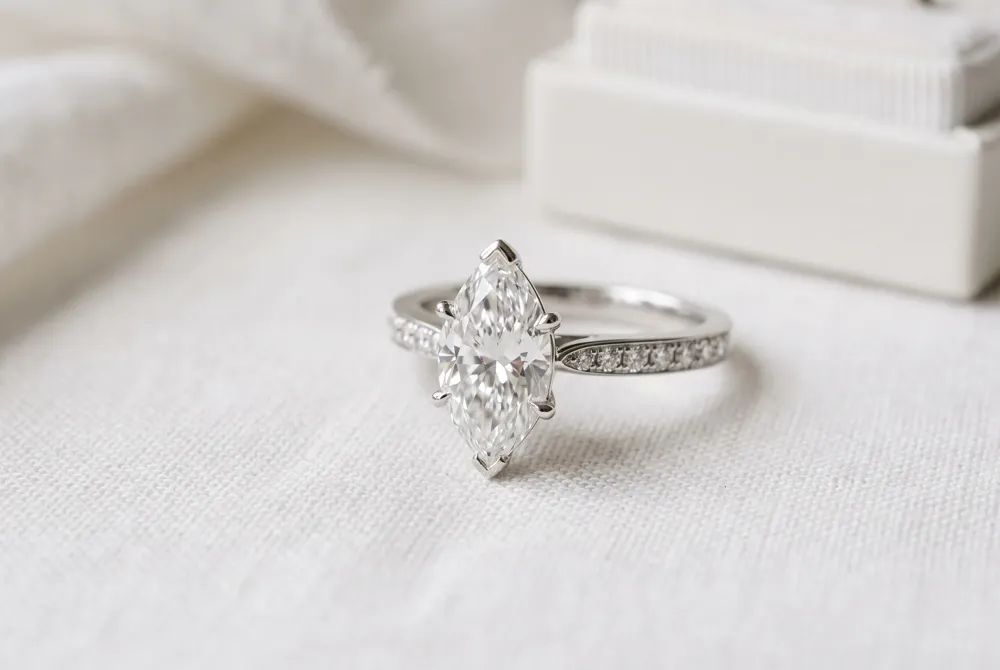
Marquise-cut engagement rings come in a range of styles, from understated solitaires to halos, side-stone and three-stone designs, bezels, vintage-inspired settings, and east-west orientations. The right frame depends on how much detail you prefer and how you want the center stone to sit on the hand. Exact designs, materials, and prices vary, so compare complete ring specifications rather than relying on a style name alone.
For daily wear, consider how the setting protects the marquise’s pointed ends. V-tip prongs can cover each point while leaving much of the diamond visible; a bezel provides broader metal coverage and a sleeker outline. Neither is universally best. Choose based on your preferred appearance and how you plan to wear the ring. The GIA marquise diamond guide recommends assessing the stone’s symmetry, outline, and any dark areas that may appear across the center (known as the bow-tie effect) in ordinary viewing conditions.
Metal also changes the overall impression. Platinum and white gold create a cool, bright setting, while yellow and rose gold bring warmer tones. View the diamond in the metal you are considering and in natural, everyday light, since its color can look different against each background.
A marquise may cost less per carat than a comparable round brilliant, but the difference depends on the individual diamond and its qualities. Compare the full ring price, grading documentation, proportions, symmetry, any visible bow-tie (a dark area across the center), and protection at both tips. Avittam Diamond Jewels offers bespoke customization of design and metal, and its marquise ring collection provides a place to compare styles. Its guide to finding a marquise ring within budget also discusses simple setting choices.
Before choosing a wedding band, try the two rings together. A contoured band can follow the engagement ring’s outline; a straight band may leave a small gap, which a spacer can help address.
Choose the Ring That Feels Like Yours
The appeal of marquise-cut engagement rings lies in their elongated outline: it gives a center stone striking presence and offers a distinctive alternative to a round diamond. The Gemological Institute of America’s marquise guide recommends judging the stone’s visible shape and symmetry as well as its proportions.
Treat the ten entries in this article as design directions, not ten verified purchases under $2,000. The supplied listings confirm only the marquise trilogy as an under-budget example; prices and availability can change. At Avittam Diamond Jewels, bespoke ordering lets couples personalize a ring’s design, metal, and engraving.
Before committing, confirm the price, center-stone shape and origin, documentation, protection for the pointed tips, and how the ring fits beside a wedding band. Ask for clear guidance on the individual diamond and setting, and choose the combination that feels personal to you.