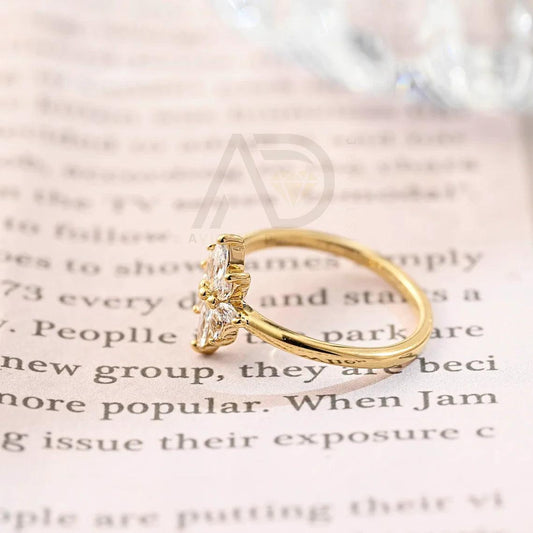

A Tale of Two Rings
The engagement ring enters the story in a moment of anticipation, the instant one person asks a question that changes everything. The wedding ring enters later, during a public ceremony, when the couple makes vows they intend to keep for life. Timing separates them as clearly as their designs.
An engagement ring typically arrives with the proposal, a standalone symbol of intent. It can be given months or even years before the wedding, and some couples wear it through a long engagement. The wedding ring, by contrast, appears on the wedding day, when the couple exchanges bands during the ceremony. That exchange marks the legal and emotional start of marriage.
The distinction in timing shapes their meaning. The engagement ring says, "Let's get married." The wedding ring says, "We are married." One looks forward, the other grounds a promise made in front of family and friends.
The Moment of Proposal vs. The Wedding Vow
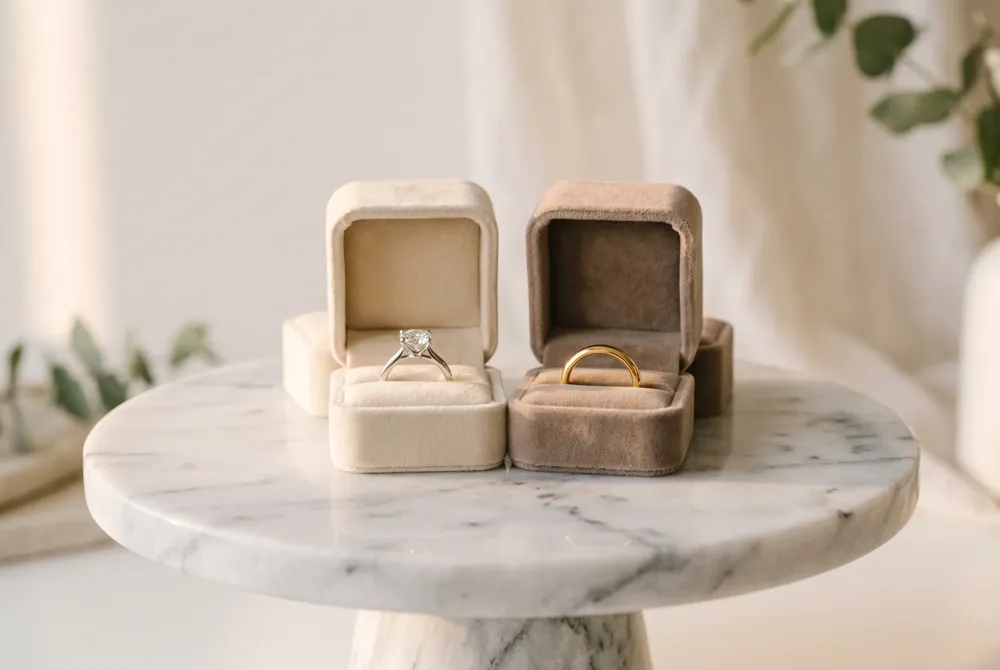
The engagement ring traditionally marks the proposal, often placed on the finger when one person asks the other to marry. The wedding ring arrives later, exchanged during the ceremony as both partners speak their vows. This timing difference shapes everything else about the two rings, from their design to their symbolism. The proposal is a singular moment of anticipation, while the wedding ring seals a commitment meant to last.
The engagement ring is often more ornate and eye-catching because its purpose is to spark immediate attention and signal a new chapter. The wedding ring is typically simpler, designed to be worn daily and to complement the engagement ring. In many cases, the wedding ring is crafted to sit flush against the engagement ring, creating a matched set that tells a continuous story. This difference in design reflects their separate roles in a couple's journey.
The Symbolism of Each Ring
Engagement rings and wedding rings also differ in what they symbolize. The engagement ring traditionally represents a promise to marry, a public declaration of intent. The wedding ring, exchanged during the ceremony, symbolizes the actual union, the moment two lives formally become one. As a guide from Brilliant Earth explains, "an engagement ring is a promise to get married, while a wedding ring is worn to show you are married." This distinction matters because it influences how each piece is valued and worn over time.
Engagement Ring. Typically given during a proposal to symbolize a promise to marry. It’s often more elaborate, with a prominent center stone, and is worn on the left ring finger.Wedding Ring. Exchanged during the wedding ceremony as a symbol of the actual marriage. More simple and durable, it often features a band that complements the engagement ring and sits closer to the hand.
The cost difference further distinguishes the two. Wedding bands average $600 to $1,200 per ring, while engagement rings average about $5,200. The higher price of the engagement ring stems from its center stone and intricate setting, while the wedding band prioritizes everyday wear. Understanding this gap helps couples budget realistically for both pieces without surprises.
| Aspect | Engagement Ring | Wedding Ring |
|---|---|---|
| Timing | Given at proposal | Exchanged at ceremony |
| Symbolism | Promise to marry | Actual union |
| Design | Ornate, with center stone | Simple band, durable |
| Average Cost | $5,200 | $600 to $1,200 per ring |
| Daily Wear | Need protective setting | Designed for daily use |
How Cost Shapes the Difference
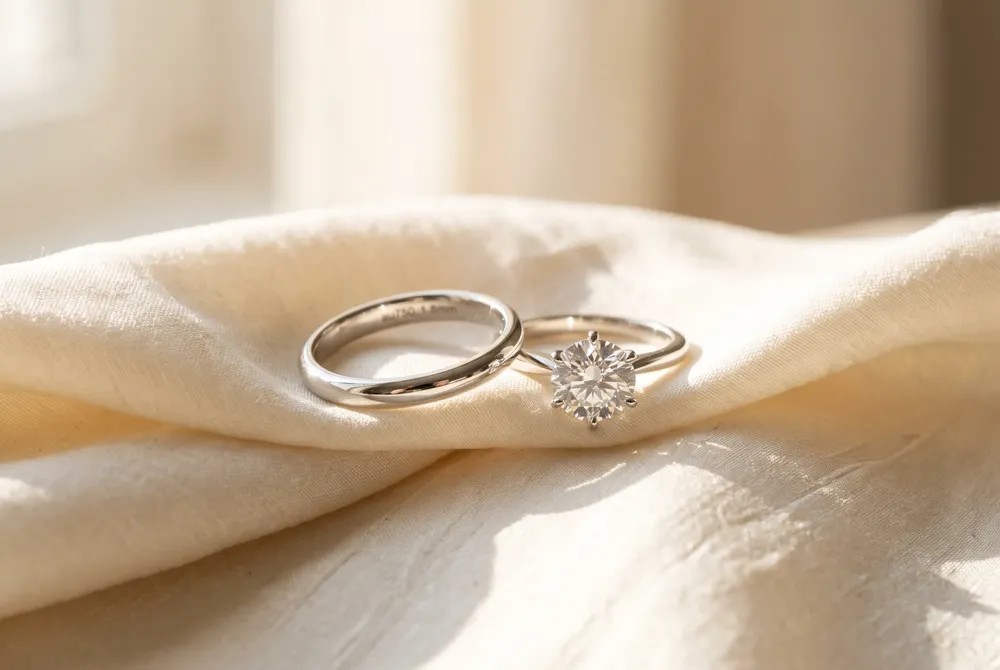
Engagement rings and wedding rings serve distinct purposes, reflecting different moments in your relationship. An engagement ring typically symbolizes the proposal and the promise to marry, while a wedding ring represents the vows exchanged during the ceremony. Choosing between them is not about picking a favorite; it's about understanding their complementary roles in your journey together.
Cost differences are often the first thing couples notice. According to Avittam Diamond Jewels, engagement rings average about $5,200, while wedding bands range from $600 to $1,200 per ring (source). This price gap stems from the center stone: engagement rings typically feature a prominent diamond, while wedding bands are simpler, designed for daily wear and durability.
The Symbolism Behind Each Ring
An engagement ring is a statement of intent, a sparkling harbinger of the union to come. It is traditionally worn on the left ring finger and often features a elevated gemstone. In contrast, a wedding ring is worn closest to the heart, placed on the finger during the ceremony as a continuous, unbroken circle. This difference in placement and design is detailed in our guide to engagement ring vs. wedding ring.
While engagement rings celebrate the individual spark of the proposal, wedding rings embody the shared, eternal commitment. The wedding band's seamless form is a metaphor for a lifelong bond, while the engagement ring's elevated design draws attention to the promise itself.
Design and Wear Preferences
Design choices also diverge. Engagement rings are often more ornate, with larger stones and intricate settings, while wedding bands are typically simpler, prioritizing comfort for constant wear. Some couples choose matching wedding bands, reinforcing their unity, while others select different styles that reflect individual tastes.
When deciding on your set, consider your lifestyle. A high-profile engagement ring might not suit hands-on work, whereas a low-profile wedding band is designed for everyday resilience. This practical consideration, alongside budget, is a key factor in your choice.
Practical Considerations: Budget and Stacking
Budget allocation is another critical difference. A common rule of thumb is to spend more on the engagement ring and reserve the wedding ring for a lower, more flexible price point. However, the total cost depends on the metal, gemstone, and design complexity. For those seeking affordable luxury, our moissanite options under $500 offer a brilliant alternative without compromising style.
Ultimately, whether you choose both rings or opt for a single ring, understanding these differences helps you select pieces that resonate with your unique love story. The engagement ring marks the beginning, the wedding ring the promise, and together they represent a complete narrative of your commitment.
| Aspect | Engagement Ring | Wedding Ring |
|---|---|---|
| Timing | At the proposal | During the ceremony |
| Symbolism | Promise to marry | The vow itself |
| Design | Ornate, raised center stone | Simple, continuous band |
| Cost | Average ~$5,200 | Average $600–$1,200 |
| Wear | On left ring finger (before marriage) | On left ring finger (after marriage) |
Designing for Daily Wear vs. Statement Moments
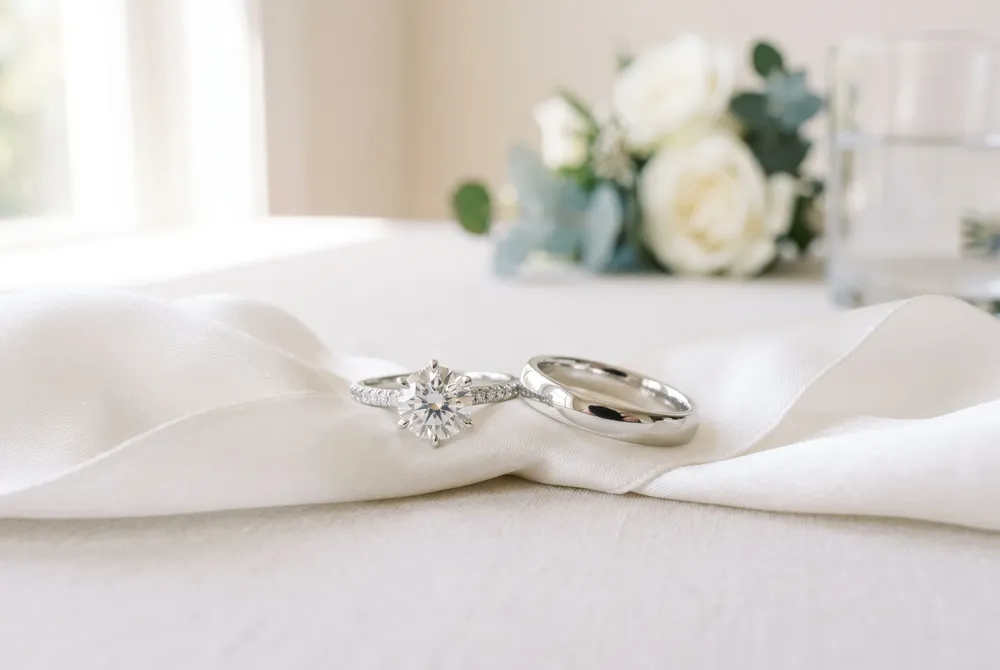
With the difference between a proposal ring and a wedding band clear, the next question is how a custom piece fits into the picture. A bespoke engagement ring gives you total control over the center stone, the metal, and the overall silhouette, which is ideal if you have a specific design in mind. A custom wedding band, in contrast, is often designed to sit flush against the engagement ring, so the two read as a single, cohesive set. This is where design continuity matters most: a custom cutter can shape the band's profile to nestle against the engagement ring's setting, avoiding the awkward gaps that can occur with off-the-shelf pieces.
Before you commit to a custom order, you should also weigh the practical difference in how each ring is worn. An engagement ring carries the center stone and is built for daily wear that endures hard knocks and hand soap, while a wedding band takes on the brunt of the rubbing against your other fingers and any tools you handle. That means the metal choice and the setting style need to match how you live, not just how the ring looks in the case. For a deep dive into how these roles shape the design, the engagement ring vs wedding ring comparison breaks down the symbolism and the practical trade-offs.
Matching the Budget to the Lifestyle
Cost is another place where the two categories diverge sharply, and this is where your research pays off. A typical engagement ring centers on a solitaire or a halo stone, often pushing the total well past a thousand dollars for a quality diamond, while a wedding band, especially a simple comfort-fit gold band, can come in under a few hundred. The average wedding ring cost in 2026 lands between $600 and $1,200 per ring, versus an engagement ring average of about $5,200, so the center stone is the real price driver. If you are shopping on a tighter budget, the moissanite engagement ring guide under $500 shows you can get a convincing sparkle without the four-figure price tag.
Engagement ring. Typically more ornate, taller in profile, and carries the center stone. The cost reflects the diamond or gemstone, and it is worn alone until the wedding, at which point it is stacked above or below the band.Wedding band. Simpler, lower-profile, and often set with small pavé stones or left plain. Designed to sit flush against the engagement ring, it is the primary ring you wear every day after the ceremony.Custom design. Gives you control over metal, stone shape, and fit. A custom approach works best when you want both rings to interlock or match in a way that ready-made sets rarely achieve.
That budget split is also why so many couples end up buying both pieces from the same jeweler. When the engagement ring and the wedding band come from the same atelier, you can request a matching metal finish, a shared engraving style, or a custom shape that makes the two stack perfectly. If you are still deciding whether to invest in a full set or just upgrade the center stone later, the wedding ring vs engagement ring guide explains how the roles differ and what you can safely skip.
When the Line Blurs
Some couples decide to merge the two rings into a single piece, either by wearing the engagement ring alone after the wedding or by choosing a hybrid design that works for both moments. A popular compromise is a wrap or a guard that surrounds the engagement ring, converting it into a band-like silhouette without removing the center stone. This works beautifully for those who want the drama of a large diamond for the proposal but prefer a lower-profile ring for daily wear. The key is to test the fit with your actual fingers, since a high-set center stone can spin or catch on fabric if the band is too loose.
In the end, the choice comes down to how you want to mark the two moments. The proposal is about the big, statement piece that says yes, while the wedding is about the ring that you will wear daily for decades. Whether you lean toward a custom engagement ring, a simple wedding band, or a matching set, the decision should reflect your taste and your lifestyle, not what the trends tell you. And if you are still weighing the options, the engagement ring vs wedding ring breakdown offers a clear side-by-side of the design, cost, and meaning.
Where to Wear Your Rings Together
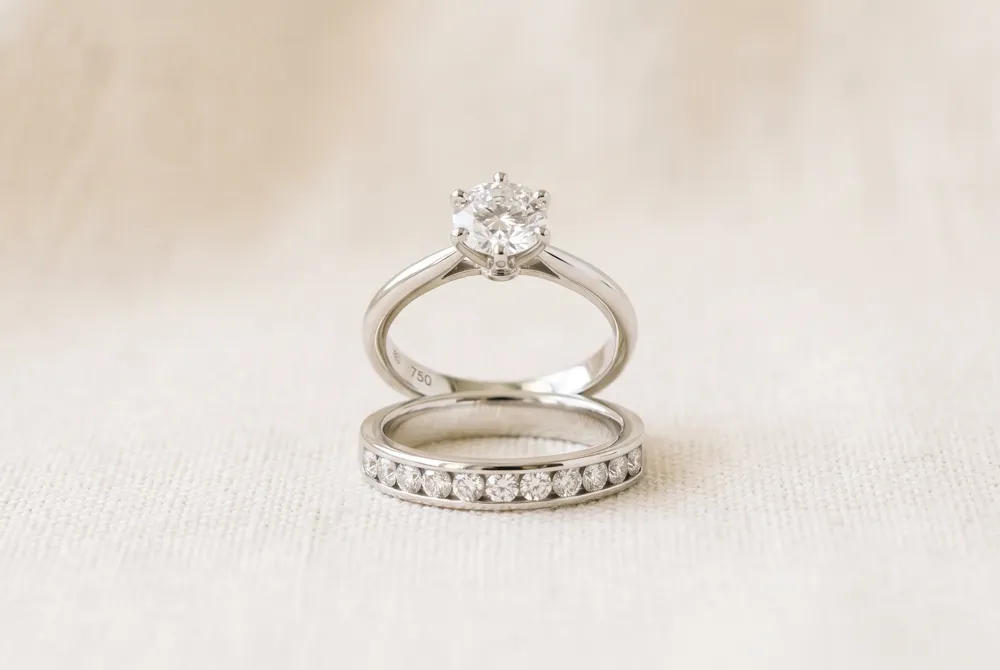
Before comparing costs or styles, it helps to settle the terminology. An engagement ring is the one presented at a proposal, symbolizing the promise to marry. The wedding ring, in contrast, is exchanged during the wedding ceremony itself, serving as the official emblem of the marriage vows. The difference is more than ceremonial: the two pieces are worn on the same finger but carry distinct meanings and traditions.
Timing. The engagement ring appears first, given moments after the question "Will you marry me?" The wedding ring arrives later, slipped on during the ceremony's vow exchange.Symbolism. An engagement ring represents a promise and a future together. The wedding ring represents the marriage itself, the union formally recognized.Design. Engagement rings are typically more ornate, featuring a prominent center stone, often diamond or moissanite, set high and proud. Wedding rings are usually simpler bands, designed to be worn daily, sometimes with a line of smaller stones or a plain metal finish.Cost. Because of the center stone, an engagement ring costs more. Wedding bands are generally more affordable, though prices rise with metal choice and any added diamonds.
These traits shine in real-world guidance. For instance, engagement rings are often described as the statement piece, while wedding rings are the workhorse. A common rule of thumb: the engagement ring is the "look at me" moment, the wedding band the "everyday" constant. This is why many jewelers, like Avittam, emphasize that the two serve different purposes even when worn together.
The Tradition of the Stack
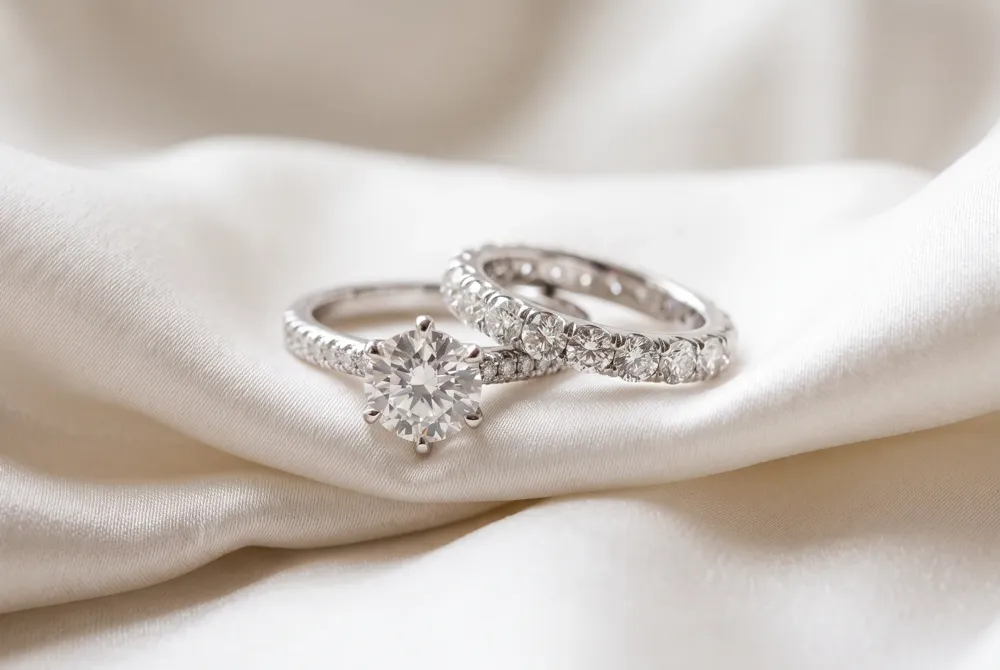
The Proposal Swing. The engagement ring makes its debut during the proposal. That's when the question is asked, the diamond catches the light, and the band slides onto the left ring finger. It's the piece that symbolizes a "yes" and the promise to marry.The Wedding Day Exchange. The wedding band arrives later, during the ceremony. Couples typically exchange these rings as they recite their vows, and the band often slides on first, resting closest to the heart. Some couples then add the engagement ring on top for a classic stacked look, which is also why lots of brides pause wearing their engagement ring during the ceremony.
Understanding this split in timing helps clarify the deeper distinction between the two pieces. The engagement ring is about anticipation and commitment. The wedding band is about the act of marrying and the day itself. If you're still unsure which is which, the difference is about the moment in the story, not just the jewelry.
The Symbolic Difference in Stones and Bands
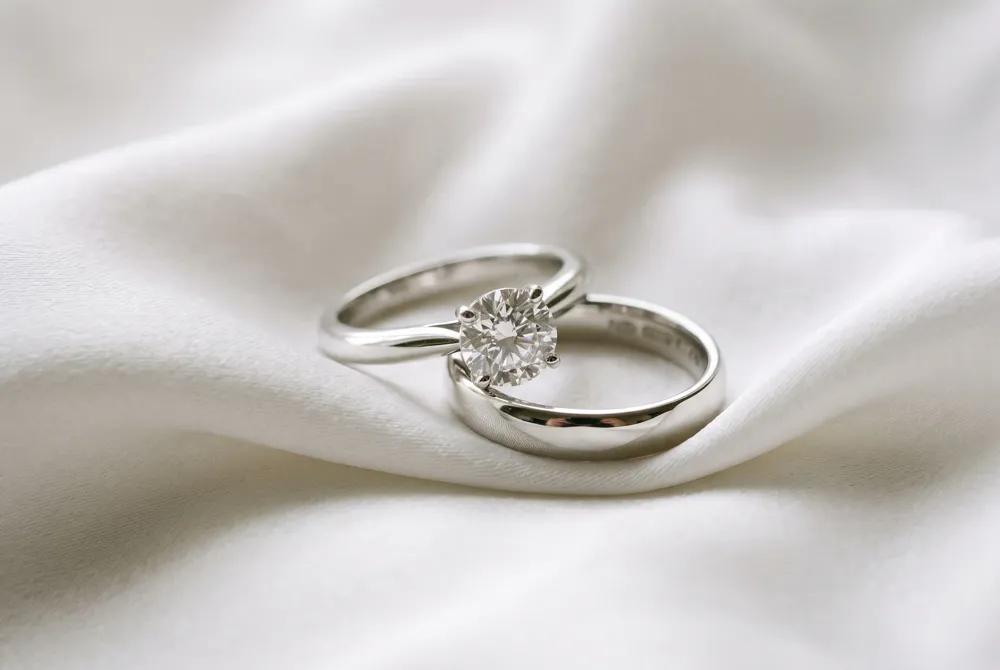
Wedding rings carry deep symbolic weight that reaches far beyond their physical beauty. While an engagement ring signals a promise to marry, the wedding band represents the commitment itself, a continuous circle with no beginning or end. This enduring shape has long symbolized eternal love and fidelity, a meaning shared across cultures and centuries. When choosing between an engagement ring vs. wedding ring, recognize that the wedding band is not merely a smaller version of the engagement ring but a distinct emblem of the vows exchanged on your wedding day.
The Moment of Proposal vs. The Wedding Vow
The engagement ring is presented during the proposal, a moment of anticipation and joyful promise. In contrast, the wedding ring is exchanged during the ceremony, often as the couple recites their vows. This timing difference is fundamental. The engagement ring vs. wedding ring distinction is not just about when you wear each piece but about the stage of your relationship they celebrate.
The proposal ring typically features a prominent center stone, often a diamond, designed to capture attention and signify the ask. Wedding bands, however, are usually simpler, focusing on the band itself and sometimes set with a row of small stones. This design difference reflects their distinct roles: one is a bold statement of intent, the other a daily, understated marker of a lifelong promise. For a deeper look at these differences, check out what sets them apart and how each contributes to your overall bridal jewelry.
Center Stone vs. Band: Where the Symbolism Lives
Much of the symbolism in an engagement ring comes from its center stone, which often dominates the design. This stone, frequently a diamond, is meant to represent the intensity and clarity of your love. The wedding band, by contrast, places its meaning in the unadorned circle of metal. The continuous band is a powerful symbol of unbroken commitment, with no beginning or end, echoing the infinite nature of marriage. While some couples choose matching wedding bands to reflect unity, others pick a design that complements but doesn't replicate the engagement ring.
This is where the engagement ring vs. wedding ring conversation becomes practical. The wedding band's simpler design means it's often more durable and better suited for everyday wear. It's the ring you'll likely wear alone during activities like gardening, exercising, or sleeping, so a comfortable, secure fit is essential. The engagement ring, with its elevated center stone, is often reserved for more formal occasions or worn stacked with the wedding band as a combined symbol of your union.
Design Differences and Costs That Reflect Purpose
Design choices between the two rings also highlight their different purposes. Engagement rings typically feature a solitaire setting with a single, prominent stone that raises the ring's profile. Wedding bands are flatter and sturdier, designed to sit flush against the engagement ring without causing wear to either piece. This is a critical consideration when shopping for both rings — you'll want to ensure they fit together harmoniously on your finger.
Cost is another practical differentiator. The engagement ring, with its larger center stone, typically carries a higher price tag. The average cost of a wedding band ranges from $600 to $1,200, while engagement rings average around $5,200. This price gap isn't arbitrary; it reflects the value placed on the center stone, which is the focal point of the proposal. However, this doesn't diminish the wedding band's importance, it simply recognizes that the two pieces serve different financial and sentimental roles in your journey together.
| Aspect | Engagement Ring | Wedding Ring |
|---|---|---|
| Timing | Given at proposal | Exchanged at ceremony |
| Symbolism | Promise to marry | Commitment and eternity |
| Design | Prominent center stone | Simple band, often unadorned |
| Cost | Average $5,200 | Average $600 to $1,200 |
| Everyday Wear | Occasional, stacked | Daily, durable |
Finding Your Perfect Pair
Shopping for a ring is exciting, but it's easy to get caught up in the sparkle. The key is to focus on a few practical details that will keep both rings looking beautiful and feeling comfortable for years to come. Whether you're exploring engagement ring vs wedding ring differences or just starting to browse, a little knowledge goes a long way.
Budget and the 2-Month Rule
Before you fall in love with a specific design, set a budget. A common guideline is to spend about two months' salary on an engagement ring, but that's just a starting point. What matters most is choosing something that fits comfortably within your financial plan. The average engagement ring costs around $5,200, while wedding bands typically range from $600 to $1,200 per ring, according to Avittam's cost guide. Remember, the perfect ring doesn't have to break the bank—there are beautiful options at every price point.
Matching Metals and Styles
To create a cohesive look, many couples choose to match the metal of their engagement ring and wedding band. This doesn't mean they have to be identical, but they should complement each other. If one ring is white gold and the other is yellow gold, the contrast can look jarring. Also, consider the setting: a prong setting is classic for engagement rings, while a channel or bezel setting might be safer for a wedding band that sees daily wear. For more inspiration, check out this guide on engagement ring vs wedding ring differences.
Lifestyle and Practicality
Think about your daily routine. If you work with your hands, a high-profile engagement ring might get in the way or catch on things. In that case, a low-set or bezel-set ring could be a smarter choice. Similarly, a wedding band with grooves or pavé stones might require more maintenance. The goal is to find rings that you'll feel comfortable wearing every day, not just on special occasions.
The Importance of Quality and Certification
For diamond rings, always look for a certificate from a reputable gemological laboratory, like the GIA or IGI. This ensures you're getting a genuine stone with the cut, color, clarity, and carat weight you're paying for. Don't hesitate to ask the jeweler about the origin of the diamond and whether it's conflict-free. For more education on what to consider, browse the Avittam Jewelry Education blog.