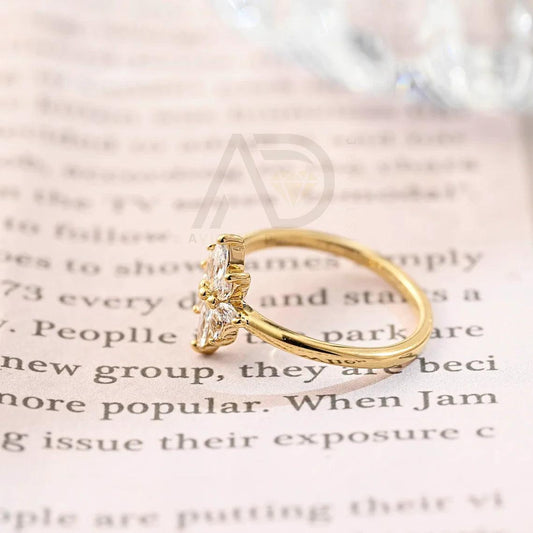

The Allure of a Vintage Silhouette
For the bride drawn to old-world romance, the emerald cut engagement ring moissanite offers a silhouette that feels both heritage-rich and refreshingly bright. Its long, step-cut facets create a mirrored, hall-like effect that echoes the geometric elegance of the Art Deco era, while the stone's modern fire adds a liveliness that vintage diamonds rarely match.
This combination of antique character and contemporary brilliance is what makes the style so compelling. A step-cut moissanite can appear nearly identical to a step-cut diamond when set in an engagement ring, yet it delivers that unmistakable sparkle at a fraction of the cost. In the seven reasons that follow, you will see exactly why this cut continues to win over brides who want timeless design without sacrificing light performance.
Emerald Cut Moissanite Key Facts
- The emerald cut is defined by long, parallel step-cut facets that create a hall-of-mirrors effect and a quiet, liquid glow rather than intense fire.
- Its linear geometry and Art Deco heritage make it a favorite for brides seeking vintage-inspired elegance from the 1920s and 1930s.
- A true emerald cut is always a step cut, but not every step cut is an emerald cut—the Asscher, for instance, features a square footprint with mitered corners.
- The emerald cut’s elongated silhouette flatters shorter or wider fingers, adding a graceful, hand-lengthening line that many brides prefer.
- Due to its open step facets, inclusions and symmetry are more visible in an emerald cut, so each stone is graded independently before setting.
- Moissanite’s higher refractive index delivers more fire and sparkle than diamond, yet the emerald cut deliberately favors subdued, elegant glow over spectacle.
- Step-cut moissanite, especially in emerald and Asscher shapes, echoes old mine and old euro cuts designed for candlelight, offering vintage charm without the premium price of natural diamonds.
- For a flattering pairing, choose a straight, plain band in the same metal as the ring, as curved bands tend to exaggerate the stone’s rectangular shape.
- The emerald cut’s step facets make it less prone to chips along the girdle than a brilliant cut, an advantage for everyday wear.
- Look for jeweler policies including lifetime warranty, trade-in and upgrade options, and free resizing windows (often 30–90 days) when purchasing an emerald-cut moissanite ring.
1. Step-Cut Facets Echo Art Deco Elegance
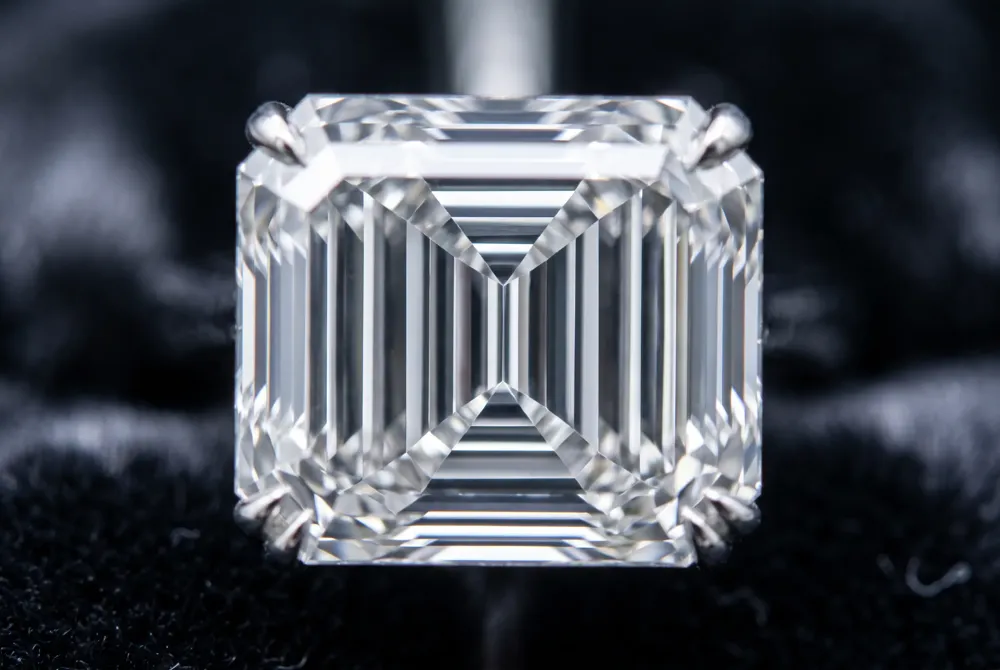
The emerald cut is defined by its long, linear, step-cut facets arranged in parallel rows that run along the stone’s perimeter. Unlike the brilliant cut’s many small, sparkling triangles, this geometry favors broad, open planes that create a hall-of-mirrors effect. Each step is a clean, horizontal line, so light travels through the stone in a subtle, gliding flash rather than a burst of fire.
That linear precision is exactly what gives the emerald cut its vintage Art Deco character. The 1920s and 1930s celebrated geometry, symmetry, and architectural order, and the emerald cut’s straight facets echo the clean lines of Art Deco jewelry from that era. The result feels like a piece of history reissued in modern form, a quiet nod to a period known for its sophisticated restraint.
This cut does not shout; it presides. The understated, refined presence of an emerald cut moissanite appeals to brides who prefer elegance over ostentation. Where a brilliant stone demands attention with its sparkle, the emerald cut invites closer inspection and rewards patient observation with its depth and clarity. For the wearer, this means a ring that feels both intentional and timeless, fitting seamlessly into a wardrobe of vintage-inspired styles. The step-cut facets’ linear order also complements a variety of settings, from clean solitaires to detailed halo designs, as seen in collections like Emerald Cut Moissanite Engagement Rings that focus on this silhouette.
2. A Silhouette That Flatters the Hand
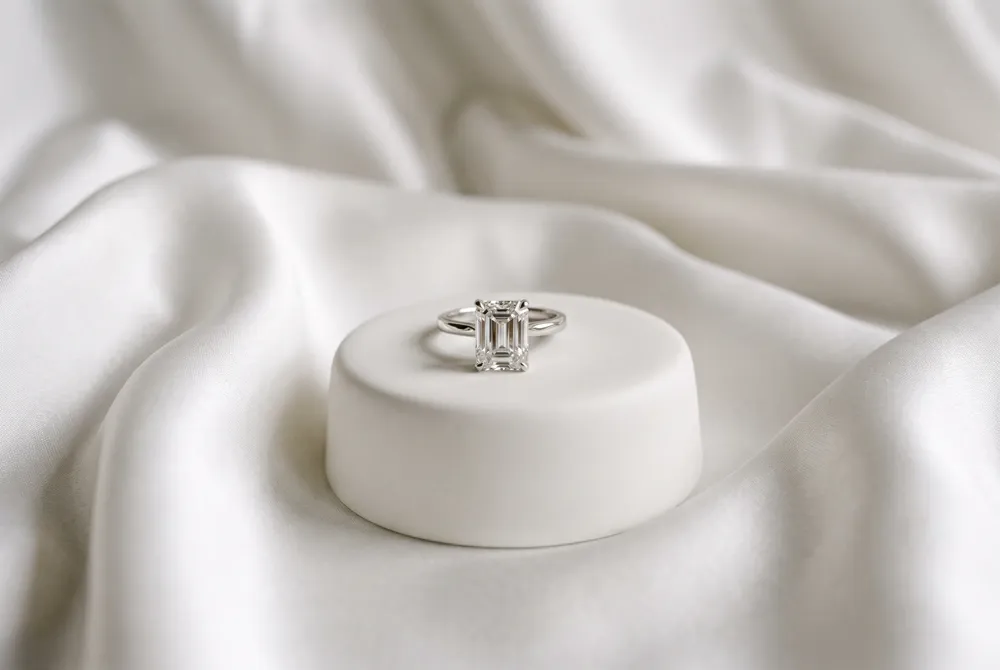
Because a true emerald cut relies on long, parallel step facets, it rewards precision in cutting. When evaluating a stone, look for a consistent, sharp outline with even corners and a clean, open appearance. Unlike brilliant cuts that hide flaws with sparkle, the emerald cut shows clarity and symmetry, so every facet must align cleanly across the crown and pavilion.
Proportion is another deciding factor. An emerald cut should have a balanced length-to-width ratio and a sensible depth. If the stone is too deep, it appears dark; too shallow, and it loses fire. When shopping online, request a magnified video or a 360-degree view, then check the stone under different lighting to confirm it doesn’t look milky or windowed.
The Influence of Setting Style
The setting can make or break the vintage illusion. A four- or six-prong basket with a high profile lets light dance through the stone, while a bezel or halo setting emphasizes the geometric step cuts. For a true vintage feel, choose a milgrain band or a pavé shank, both of which echo the delicate handwork found in antique rings.
| Setting Style | Effect on Stone | Vintage Vibe |
|---|---|---|
| Four-prong basket | Maximizes light entry | Classic solitaire look |
| Bezel | Adds protection, reduces visible size | Sleek, retro feel |
| Milgrain band | Adds texture, frames the stone | Antique detailing |
| Pavé shank | Adds side sparkle | Romantic, delicate |
Pairing the emerald cut with a plain or eternity band can also enhance its elongated profile, drawing the eye down the finger and reinforcing that vintage, elongated silhouette. Keep the band simple if the center stone is the star; a busy band can compete with the step facets and dilute the effect.
3. Brilliance With a Vintage Whisper
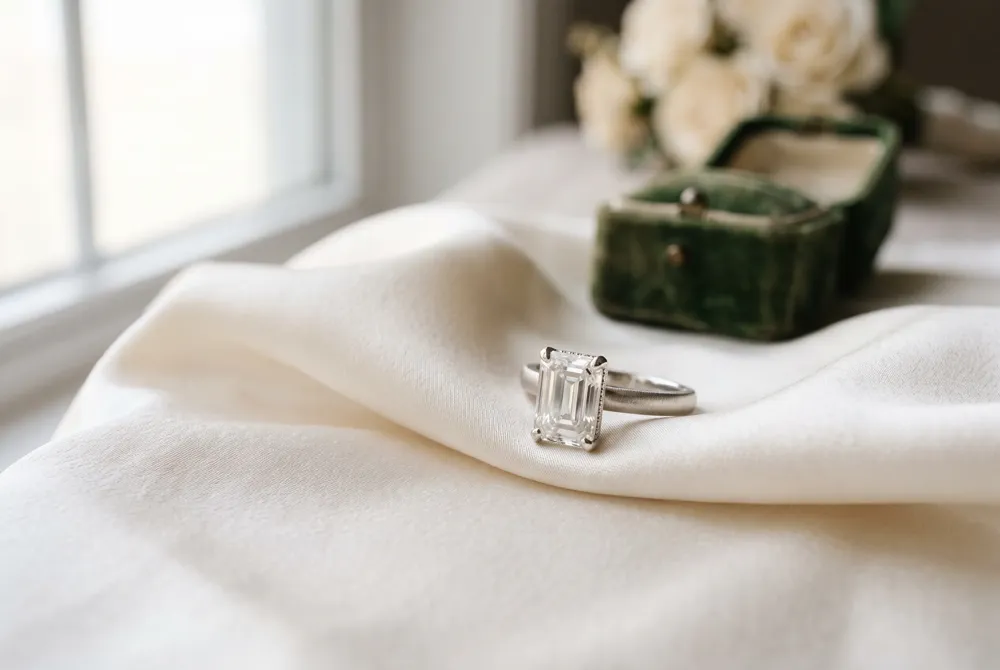
The terms emerald cut and step cut are often used as if they mean the same thing, but there is a meaningful difference that affects how a stone performs in the hand. Every emerald cut is a step cut, yet not every step cut is an emerald cut. The broader step cut family also includes the Asscher, which is essentially a square take on the same parallel facets.
What sets the emerald cut apart is its rectangular outline with trimmed corners, a detail that softens the lines and makes the stone easier to set securely. A true step cut, by contrast, refers to the facet pattern itself rather than the outer shape. Recognizing this distinction helps you understand why the emerald cut flatters certain hands and ring sizes more than its square cousin.
When you compare an emerald cut moissanite with an Asscher, the visual difference comes down to proportion and light behavior. The Asscher's square face tends to create a more uniform, organized sparkle within a compact footprint, while the emerald's elongated body draws the eye along the finger. That elongation makes the emerald cut especially flattering on shorter or wider fingers, where it adds a graceful line.
Does Brilliance Differ Between Emerald and Step Cuts?
Moissanite has a higher refractive index than diamond, which means it returns more fire and sparkle, but the emerald cut deliberately favors subtlety over spectacle. Long, open table facets act like calm pools of light, tossing a soft, glassy glimmer rather than an intense pinfire. If your idea of a moissanite ring is all about that bright, disco-ball effect, a brilliant cut such as the round or cushion will satisfy you more.
For the bride who wants quiet elegance with occasional flashes of color, the emerald cut's understated light play can be more alluring than an overtly flashy stone. The step-cut pattern shows less brilliance under most lighting but rewards close inspection with a depth that brilliant cuts simply cannot match. This softer, more refined light play also lets the clarity of the moissanite remain the star of the design.
Which Shape Feels More Elongated and Flattering?
Because the emerald cut is elongated, it creates an optical illusion that makes the finger appear longer and more slender. The Asscher, with its square footprint, does not have that same elongating effect, so it tends to sit heavier on the hand. If your priority is a delicate ballet look that visually stretches your finger, the emerald cut is the more flattering choice.
| Feature | Emerald Cut | Asscher Cut |
|---|---|---|
| Silhouette | Rectangular, elongated | Square, compact |
| Facet pattern | Step cut with long parallels | Step cut with small mitered corners |
| Light play | Soft glassy glow | Slightly brighter center |
| Finger effect | Visually elongates | Adds fullness |
| Best for | Vintage romance | Art deco symmetry |
As you shop, notice how each moissanite shape interacts with your hand in natural light. Try the emerald cut next to an Asscher side by side, both set in a low basket, and see which silhouette feels more like you. Both are step cuts, but they tell different stories, and that distinction matters far more than the jeweler's marketing materials suggest.
4. A Nod to Old Mine and Old Euro Cuts
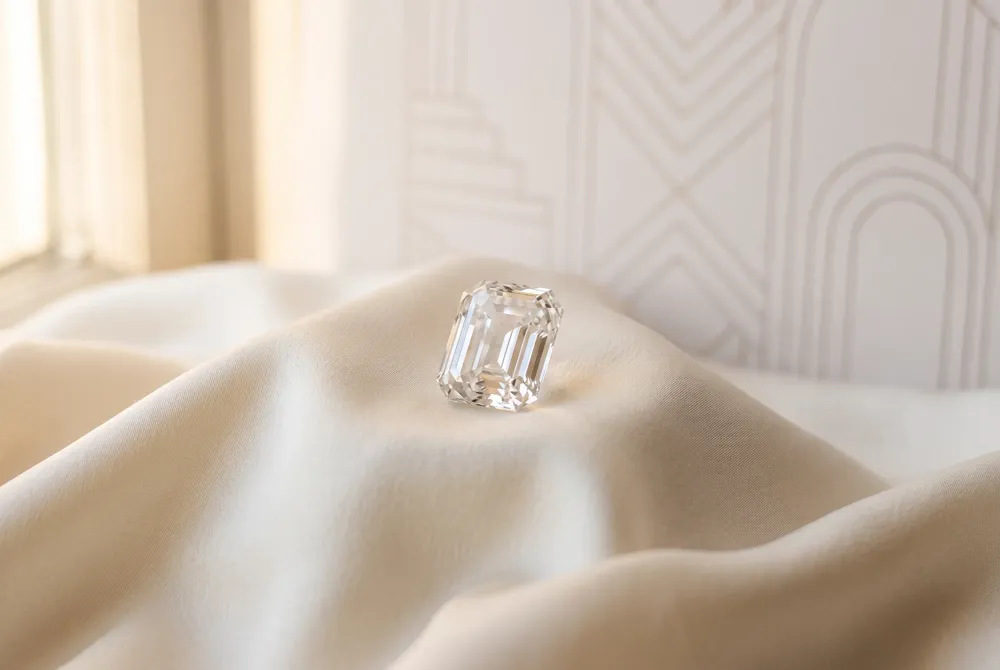
The emerald cut’s clean, rectangular lines and step-cut facets carry a direct lineage to the old mine and old European cuts favored in Victorian and Art Deco jewelry. These vintage silhouettes were designed for candlelight, with wide facets and a soft, romantic glow rather than the intense fire of modern brilliant cuts. Moissanite emerald cuts honor that historical character, offering the same understated depth that made antique diamond rings so sought after.
Vintage-inspired cuts like the old mine and old euro shapes are often associated with elongated emerald forms, which echo the proportions of step-cut stones. This connection is especially relevant for brides drawn to heritage aesthetics, where the emerald cut’s linear facets mirror the geometry of antique stones. Because moissanite is cut to emphasize these step facets, it preserves the vintage feel of a period heirloom while delivering modern brilliance.
Cultural Resonance: The Emerald-Cut Speculation
Cultural moments also shape the appeal of vintage cuts. When Taylor Swift’s engagement ring sparked speculation about an emerald-cut center stone, interest in this silhouette surged, with jewelers widely guessing the design featured an elongated old mine cut. While unconfirmed, that association has made the emerald moissanite a cultural touchstone for those who want classic elegance with a contemporary twist.
Moissanite’s affordability enhances this appeal, as it allows brides to honor historical diamond cuts without the premium price of a natural stone. Step-cut moissanite stones, particularly in emerald and Asscher shapes, offer a vintage character that feels both sophisticated and accessible. Whether paired with a simple band or a detailed setting, these cuts bring the old-world charm of heritage jewelry into a modern engagement ring.
| Cut | Vintage Association | Moissanite Appeal |
|---|---|---|
| Emerald | Art Deco, 1920s | Clean lines, step facets |
| Asscher | Art Deco, 1930s | Square elegance, vintage feel |
| Oval | Victorian, 1880s | Elongated, flattering |
| Radiant | Modern, 1980s | Brilliant, larger appearance |
Choosing a moissanite emerald cut is more than a style decision; it’s a way to embrace the romance of a bygone era. By channeling the geometry of old mine and old euro cuts, this gemstone offers a bridge between historical craftsmanship and modern wearability, making it an ideal choice for those who value both heritage and innovation.
5. The Perfect Companion Band
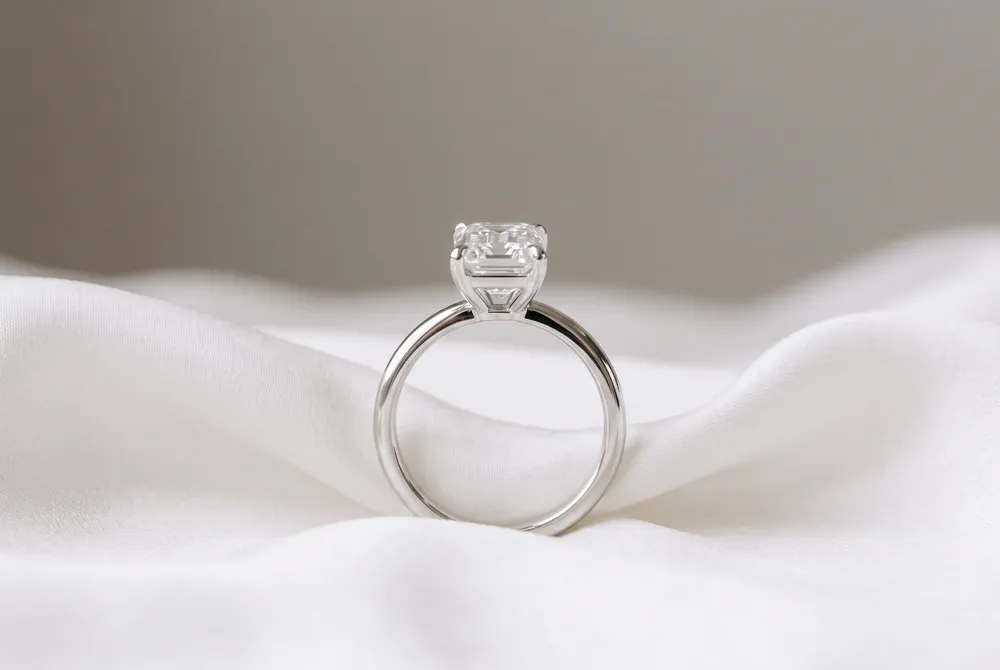
When pairing a band with an emerald-cut moissanite, a sleek, straight band remains the most flattering match. Its clean, uninterrupted lines echo the emerald cut’s long, step-cut facets rather than competing with them, so the center stone stays the focal point while the band adds a subtle frame. A plain straight band in the same metal as the ring, such as platinum or 14k yellow gold, reinforces the vintage aesthetic without adding visual noise.
For a more ornate look, shared prong settings are a natural choice. In this style, small prongs hold a row of round side stones, creating a continuous line of sparkle that mirrors the emerald cut’s parallel facets. This approach works especially well with step-cut moissanite because the shared prongs visually lengthen the hand and enhance the ring’s vintage character, evoking the romantic details of the Art Deco era.
Practical Guidance for Band Selection
Brides often wonder if a band should match the center stone’s cut exactly. The answer is no. The emerald cut’s geometry pairs best with bands that are straight rather than curved or contoured, as curved bands tend to exaggerate the stone’s rectangular shape. When shopping, consider the band’s thickness relative to the ring’s shank—a band between 1.5 and 2.5 millimeters offers durability without overwhelming the center stone, and it sits flush against a straight band for a comfortable fit.
Metal choice also matters. Whichever metal you select, ensure it matches the engagement ring’s band to avoid a mismatch in tone. For a cohesive vintage look, mix that metal with shared prongs set in the same finish, either polished for a bright, reflective surface or matte for a more understated feel. This attention to detail makes the pairing feel intentional, as if the two rings were designed together from the start.
| Band Style | Best For | Why It Works |
|---|---|---|
| Plain straight band | Minimalist brides | Echoes the emerald cut’s clean lines; lets the stone dominate |
| Shared prong band | Vintage lovers | Adds sparkle while mimicking step-cut facets; elongates the finger |
| Contoured or curved band | Avoid this | Can overwhelm the emerald cut’s rectangular shape and risk poor fit |
6. Craftsmanship and Authenticity You Can Trust
Selecting a ring involves more than evaluating the stone’s optical performance. The brand’s finishing, the precision of the setting, and the quality of after-sale support all shape the final experience. For brides considering an emerald cut engagement ring, focusing on these elements matters just as much as the moissanite’s promised brilliance.
Precision Cutting That Honors the Step Facets
An emerald cut depends on long, parallel step facets, where the cut’s alignment and proportions determine the final appearance. A well-cut stone minimizes light leakage and creates that signature hall-of-mirrors effect. When evaluating a prospective retailer, ask about the cut grade and the stone’s measurements, and look for a jeweler that uses imaging tools or provides a detailed certificate. Done well, an emerald cut moissanite ring appears crisp and refined.
What Customers Notice in Person
Customer reviews often mention the impact of a well-executed design, with testimonials from New York, Las Vegas, and Cullman frequently praising a moissanite ring’s clean lines and understated brilliance. A common theme is the jeweler’s willingness to guide each buyer through the choice of cut, setting style, and band width. Braverman Jewelry notes that step-cut stones can appear nearly identical to a diamond when set properly, which reassures shoppers who value both authenticity and appeal.
Confidence in the Making
Retailers who specialize in moissanite back their work with secure setting, clear messaging about the metal composition, and honest post-purchase policies. That commitment to quality and personalized service means your choice feels considered, not rushed. The final decision should balance the stone’s beauty with a brand that stands behind its promise, ensuring your vintage-inspired emerald cut moissanite ring remains a lasting symbol.
7. A Symbol of Timeless Love
One of the strongest pulls of heirloom brands selling emerald-cut moissanite, Family heirlooms, and custom design services is the ability to return, exchange, or upgrade your stone years down the road. Among artisans and legacy jewelers, a clear diamond upgrade policy matters because moissanite itself rarely loses its optical quality; the value you protect is in the design and the setting. Before committing to a brand, read the fine print on resizing, prong re-tipping, and whether they automatically cover the lifetime warranty.
Lifetime warranty. Covers loose stones, prongs, and most settings for as long as you own the ring, usually no questions asked.Trade-in and upgrade policy. Allows you to apply the original price of your moissanite center stone toward a larger or different cut, typically within three to five years.Free resizing window. A short initial period, often 30 to 90 days, where a jeweler will adjust the band size at no charge.
Is Moissanite a Suitable Engagement Ring Choice?
Ask any jeweler who works closely with alternative stones, and you will hear that moissanite has earned its place at the heart of the bridal market. Beyond its obvious affordability, the stone delivers the twin qualities that matter most in an engagement ring: exceptional brilliance and the resilience to withstand a lifetime of daily wear. For couples drawn to the vintage-inspired character of an emerald cut, moissanite offers a thoughtful meeting of old-world charm and modern practicality.
What sets emerald cut moissanite apart is its remarkable fire and brilliance. The long, step-cut facets and the stone’s high refractive index create a luminous, quiet glow that is often described as more elegant than a diamond’s flashy sparkle. This makes it particularly flattering in natural light, where the stone seems to gather the sun and release it in soft, silver-white beams. For those who love the aesthetic of a vintage silhouette but do not want to compromise on brilliance, this cut delivers both.
Built for Everyday Wear
Durability is a primary concern for any engagement ring, and moissanite rises to the challenge. On the Mohs scale, moissanite scores a 9.25, which places it just below diamond in hardness and well above other popular gemstones. This is 9.25 hardness claim [link source: moissanite hardness] not just a number; it means the stone resists scratches and chips during daily activities like typing, exercising, and household chores. The step facets of an emerald cut also make the stone less prone to chips along the girdle than a brilliant cut, which is an underappreciated advantage for a ring worn every day.
Moreover, moissanite’s resilience extends beyond physical hardness. Because it is a lab-created stone, it is free from the internal fractures and inclusions that can weaken natural gems. This gives it a remarkable structural integrity that makes it a reliable choice for a ring you intend to wear for decades, not just for special occasions.
A Thoughtful, Vintage-Inspired Choice
Beyond its performance, moissanite carries an emotional resonance that resonates with the modern bride. Choosing it is a statement of personal style, not just a compromise. The emerald cut, with its step facets and elongated silhouette, has a vintage character that pairs beautifully with both heirloom-inspired settings and minimalist bands. It is a stone that honors the past while being entirely of the present, a quality that many couples find deeply meaningful.
The affordability of moissanite also allows for greater flexibility in ring design. Instead of sacrificing on carat weight to stay within budget, you can choose a larger emerald cut stone and allocate funds toward a custom setting, a high-quality band, or even a subtle engraving inside the ring. This makes moissanite not just a practical option, but a thoughtful one that prioritizes what truly matters: the symbolism and sentiment of the ring.
Brilliance. Moissanite’s high refractive index produces a fire that exceeds diamond’s, creating a luminous, multi-faceted sparkle.Durability. Scoring 9.25 on the Mohs scale, moissanite resists scratches and chips, making it suitable for lifelong wear.Vintage Charm. The emerald cut’s step facets and elongated shape evoke the elegance of Art Deco and Victorian jewelry.Value. Moissanite offers significant cost savings compared to diamonds, allowing for larger stones or custom settings.
| Aspect | Moissanite | Diamond |
|---|---|---|
| Hardness | 9.25 Mohs | 10 Mohs |
| Brilliance | Higher fire and sparkle | Classic, higher dispersion |
| Cost per Carat | Fraction of diamond | Premium pricing |
| Durability | Excellent | Exceptional |
| Vintage Appeal | Fit for emerald cuts | Traditional, iconic |
Ultimately, moissanite is more than just an economical alternative. It is a jewel of its own kind, one that asks you to reimagine what an engagement ring can be. With its extraordinary brilliance, everyday practicality, and the nostalgic beauty of an emerald cut, it stands as a genuinely suitable, beautiful, and deeply personal choice for a love story that begins with intention.
Which Moissanite Cut Mimics Diamond Best?
For a bride drawn to old-world romance, the emerald cut moissanite offers a silhouette that feels both heritage-rich and refreshingly bright. Its long, parallel step facets create a hall-of-mirrors effect that reads as quiet luxury rather than loud sparkle. When your priority is a stone that whispers rather than shouts, this is the shape that carries the most authentic diamond-like presence.
The Emerald Cut: A Study in Elegance
The emerald cut is defined by its long, rectangular facets that run parallel to the girdle, creating a clean, architectural appearance. Unlike brilliant cuts, which prioritize fire, the emerald cut showcases clarity and a cool, liquid depth. This is why it reads as unmistakably diamond-like: it does not rely on flash to convince the eye, but on a calm, sustained glow that feels inherently refined.
Step Cut vs. Emerald Cut: Understanding the Difference
Because a true emerald cut relies on long, parallel step facets, it rewards precision in cutting. The terms emerald cut and step cut are often used as if they mean the same thing, but there is a meaningful difference that affects how a stone performs in the hand. A step cut is the broader category, while an emerald cut specifically features cropped corners, giving it a softer, more rectangular outline that flatters both the finger and the hand.
Does Brilliance Differ Between Emerald and Step Cuts?
The emerald cut produces a subdued, elegant glow rather than intense fire, which many brides find more diamond-like than the high-scatter brilliance of round brilliant stones. While a round brilliant sparkles with every movement, the emerald cut shimmers in a more measured, controlled way. This understated brilliance is precisely why it is a favorite for those who want a vintage-inspired silhouette without the inauthentic flash of a showy alternative.
However, because the emerald cut’s step facets act like wide windows, clarity is paramount. Inclusions are more visible in this cut than in a brilliant or radiant cut, so each stone is graded independently before setting. For the best light performance, choose a moissanite with excellent polish and minimal internal marks, and consider a higher clarity grade to preserve that clean, diamond-like openness.
Which Shape Feels More Elongated and Flattering?
The step cut’s elongated proportions can make the finger appear longer and more slender, a quality that appeals to brides seeking a graceful, hand-lengthening effect. Emerald cuts with a deeper table and square corners offer a classic, balanced look, while a longer, rectangular emerald cut adds a dramatic, vintage-inspired elegance. When selecting between the two, try on elongated emerald cuts to see which ratio best flatters your hand shape and personal aesthetic.
A Silhouette That Flatters the Hand
The emerald cut, with its clean lines and elongated rectangle, works beautifully on most hand shapes. On shorter fingers, a longer ratio visually draws the finger out; on slender hands, the straight edges add substance without overwhelming. Because the step cut’s open facets invite the eye to settle, a well-proportioned emerald moissanite can feel like a custom design created to flatter the hand as much as the stone itself, as detailed in expert guidance on choosing the right moissanite cut.
For those who prefer understated elegance, the emerald cut offers a diamond-like presence that remains quietly confident. It does not compete with the hand; it complements it. The result is a silhouette that feels both timeless and current, making it a favored choice for brides who want a ring that will age gracefully alongside their love story.
Practical Guidance for Band Selection
When pairing a band with an emerald-cut moissanite, a sleek, straight band remains the most flattering match. Its clean lines echo the step cut’s geometry, creating a cohesive look that enhances the stone’s architectural appeal. For a more vintage feel, consider a band with milgrain or a subtle filigree, which adds romance without overpowering the center stone.
| Consideration | Emerald Cut Moissanite | Step Cut Moissanite |
|---|---|---|
| Brilliance | Subdued, elegant glow | Clean, less fire |
| Sparkle | Low, measured shimmer | Minimal, refined |
| Appearance | Rectangular, cropped corners | Broader, often square or rectangular |
| Clarity visibility | Step facets act as windows | Similar, but more versatile in shape |
| Best for | Vintage lovers, understated elegance | Brides who prefer a modern, minimal look |
Embrace the Vintage Renaissance
When you weigh the seven reasons above, a pattern emerges: the emerald cut moissanite is not a fleeting trend but a return to a quieter, more deliberate kind of beauty. Its step-cut facets echo the glamour of the 1920s while offering the modern brilliance that today's brides expect. This combination of old-world charm and contemporary practicality is precisely why so many couples, drawn to the allure of a vintage silhouette, find themselves captivated by its understated fire.
Choosing this stone means embracing a silhouette that flatters the hand and rewards a discerning eye. The elongated lines create an elegant, slimming effect, while the large, open table invites admiration for the stone's exceptional clarity. If you are ready to explore emerald cut moissanite options, consider how the step-cut clarity standards ensure that only the finest stones, those without visible inclusions, make it into your setting. This focus on quality is what separates a beautiful ring from an extraordinary one.
Timeless Elegance, Personalized Service
There is a reason the emerald cut has endured for over a century: it does not shout; it whispers. Whether you choose a classic step cut for its architectural precision or a radiant cut for added sparkle, the result is a ring that feels both heritage-rich and refreshingly personal. At Avittam Diamond Jewels, we understand that this decision is about more than a gemstone; it is about the story you are beginning. Our experts work closely with you to select a stone that compliments your hand, your style, and your love story, ensuring that every facet reflects your unique taste.
As you hold that elegant silhouette against your finger, let it remind you of the timeless love it represents. The vintage renaissance is not just about aesthetics; it is about choosing a symbol that will remain as meaningful in fifty years as it is today. We invite you to visit our collection, where the craftsmanship and authenticity you trust meet the personalized care you deserve, to find the emerald cut moissanite that feels like it was made for you.