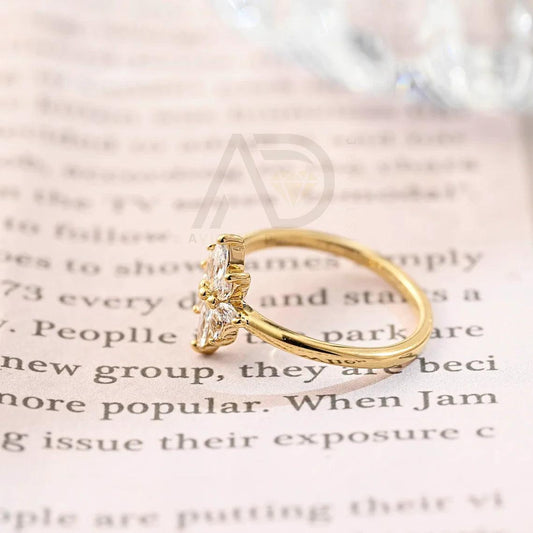

The Allure of the Marquise Cut
Born in 18th-century France, the marquise cut diamond carries a legend as captivating as its form. King Louis XV is said to have commissioned a royal jeweler to create a diamond that mirrored the smile of his mistress, the Marquise de Pompadour, resulting in an elegant, elongated silhouette with graceful curves and pointed tips.
With its brilliant 58 facets, a well-cut marquise sparkles with exceptional fire and light. The shape's unique proportions create an illusion of size, making a marquise cut engagement ring appear larger than a round diamond of the same carat weight while gently elongating the wearer's finger for a flattering, sophisticated look.
At Avittam Diamond Jewels, we understand the importance of finding a ring that feels both timeless and personal. Whether you are drawn to a classic north-south setting or a distinctive east-west orientation, the marquise cut offers a versatile canvas that works beautifully from vintage-inspired designs to modern minimalism.
The following seven considerations will guide you through evaluating cut proportions, managing the bow-tie effect, selecting color and clarity grades that balance beauty with value, and choosing a protective setting for the delicate tips. Each step brings you closer to the perfect marquise cut engagement ring.
Marquise Cut Diamond Selection
- A length-to-width ratio between 1.75 and 2.25 produces the most balanced and elegant silhouette for a marquise diamond.
- A well-cut marquise should have a table percentage within 53-63% and a depth percentage between 58-62% for maximum brilliance.
- The GIA does not issue a cut grade for fancy shapes like the marquise, placing the responsibility on the buyer to evaluate proportions and symmetry.
- A slight, softly defined bow-tie can add character, but a dark or wide bow-tie diminishes the diamond's brilliance.
- Marquise diamonds in the G to J color range appear near-colorless and look stunning in yellow or rose gold settings.
- A VS1 or VS2 clarity grade typically delivers an eye-clean stone for a marquise, allowing investment in larger carat weight or finer color.
- A 1.5-carat marquise can offer the same finger coverage as a 2-carat round diamond due to its elongated shape.
- V-prong settings provide excellent protection for the marquise's vulnerable pointed tips while allowing maximum light entry.
- Marquise cut diamonds generally cost 10 to 25 percent less than round brilliants of comparable quality due to more efficient rough crystal usage.
- The marquise cut symbolizes Cupid's arrow and romantic individuality, originating from King Louis XV's commission inspired by the Marquise de Pompadour.
1. Understand the Unique Shape & Proportions
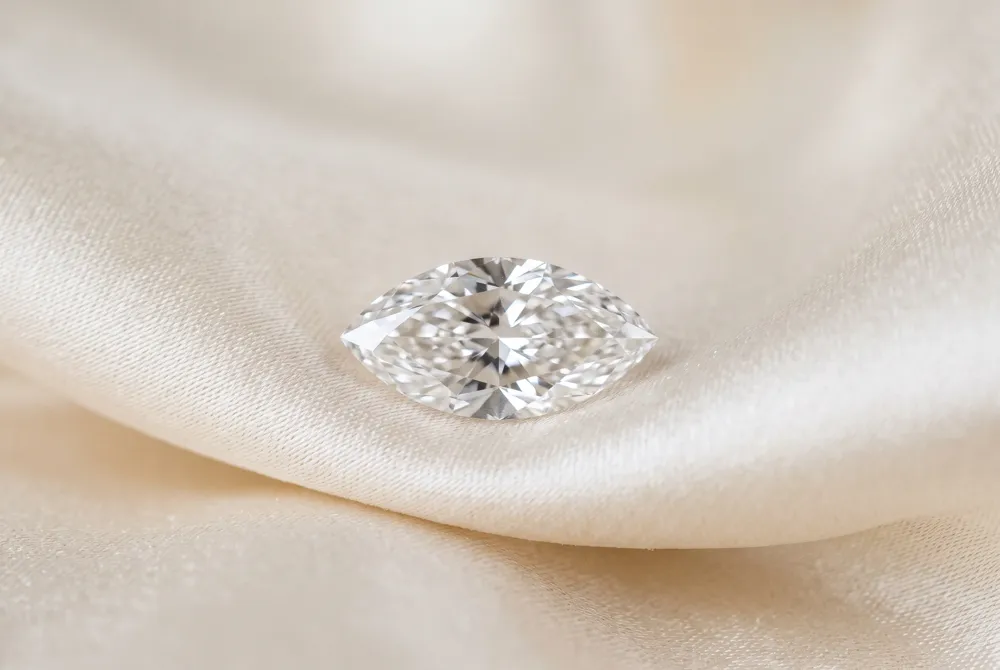
The marquise cut diamond is an elongated, boat-like shape with curved sides and pointed ends, a silhouette said to have been inspired by the smile of the Marquise de Pompadour. Its distinctive form, celebrated for its flattering effect on the finger, also maximizes carat weight, making the stone appear larger than its actual carat weight. This dramatic profile creates an unforgettable impression, effortlessly bridging vintage charm and modern sophistication.
Understanding the diamond's anatomy helps in selecting a beautiful stone. The widest central area is known as the belly, while the two curved sections from the belly to each end are the wings. The points are the vulnerable tips, and the girdle is the outer edge that holds the stone in its setting. The keel line runs along the bottom ridge where the pavilion facets meet. When you explore options for a marquise cut engagement ring, pay close attention to these features.
The length-to-width ratio determines the stone's overall silhouette. The trade generally prefers a ratio around 2:1, with most GIA-submitted stones falling between 1.75 and 2.25. A ratio near 2.0 produces a classic, elongated look, while a shorter ratio (closer to 1.6) can appear less graceful, and a very long ratio (over 2.2) may sacrifice brightness in favor of length. Well-balanced proportions ensure the diamond sparkles brilliantly while making the finger appear longer and more slender.
2. Assess the Cut: Beyond Carat Weight
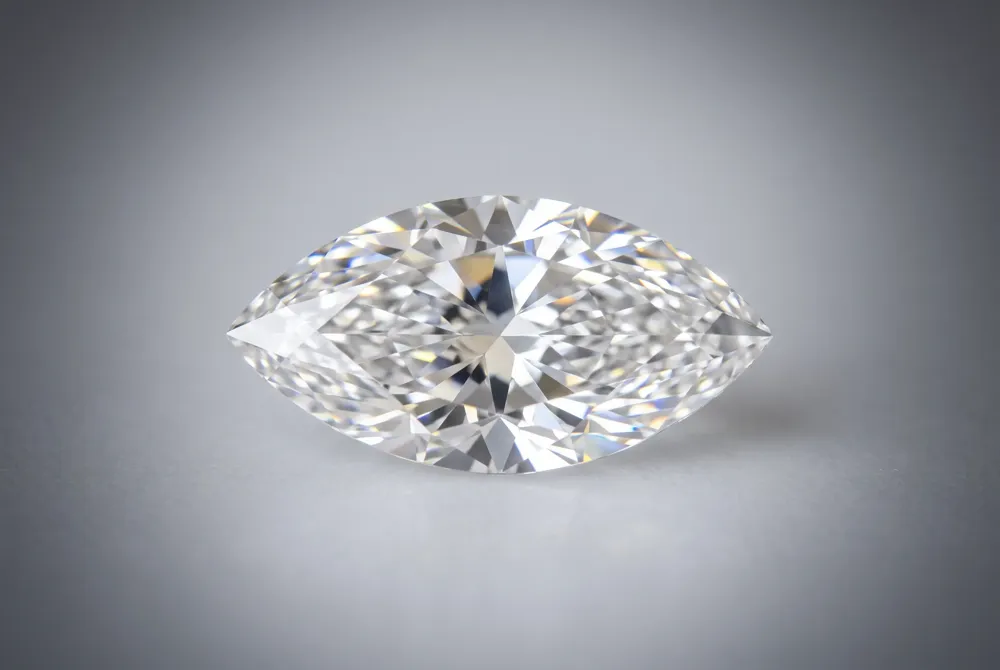
When selecting a marquise cut engagement ring, the precision of the cut is the single most influential factor in the diamond's beauty. The Gemological Institute of America (GIA), the world's foremost authority on diamond grading, does not issue a cut grade for fancy shapes like the marquise. This means the responsibility falls on you to understand which proportions and facets create a brilliant stone.
Proportions That Define a Stunning Marquise
Two measurements, the table percentage and the depth percentage, dictate how light moves through the diamond. A well-cut marquise will have a table within the 53-63% range and a depth between 58 and 62%. These ideal dimensions ensure that light enters the stone, bounces off the pavilion facets, and returns to the eye with maximum fire and scintillation. A diamond cut outside these parameters can leak light, reducing its sparkle and making a bow-tie shadow more prominent.
Symmetry: The Untold Centerpiece of Beauty
Symmetry deserves special attention because the marquise shape exposes even tiny imbalances. The two wings (the curves from belly to point) must mirror each other, and the left and right halves of the stone should be identical. Avittam Diamond Jewels recommends inspecting the stone's symmetry report; a marquise with excellent symmetry looks balanced from every angle and radiates a consistent, even pattern.
Without an official GIA cut grade for marquise diamonds, an expert evaluation becomes indispensable. The facets, which typically number 56 to 58, must be well-aligned to create the brilliant sparkle the cut is known for. A diamond with poor symmetry may appear lopsided or dull, while a precision-cut marquise transforms into a captivating jewel.
Table percentage. The size of the top flat facet relative to the diamond's width. The ideal range is 53-63%.Depth percentage. The height of the diamond from table to culet relative to its width. The ideal range is 58-63%.Length-to-width ratio. The shape's elongation factor. A ratio between 1.75 and 2.25 produces the most balanced and elegant silhouette.
3. Navigate the Bow‑Tie Effect
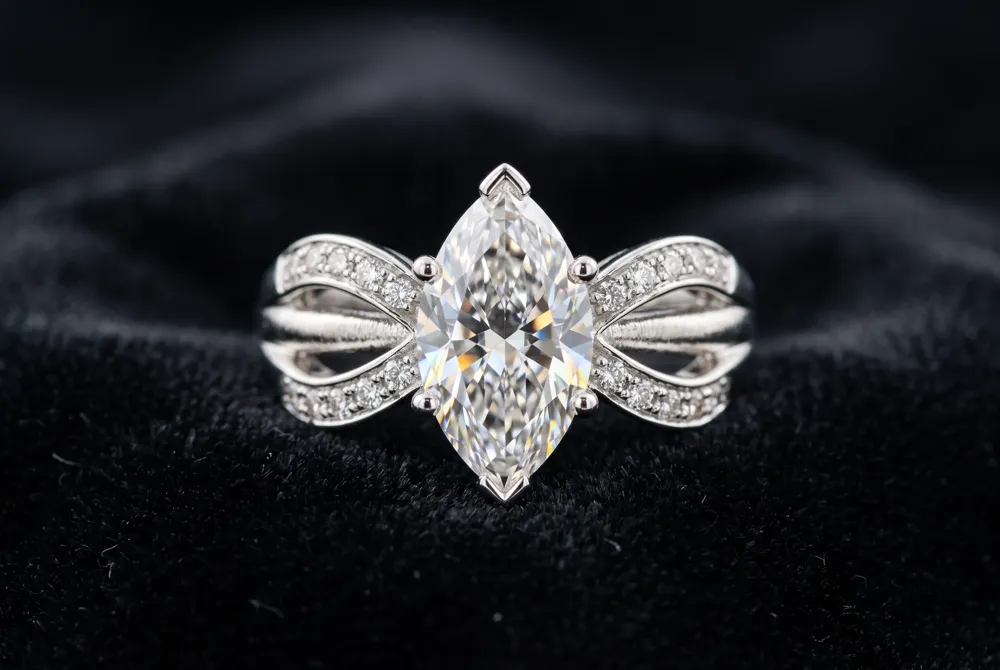
A defining characteristic of the marquise cut engagement ring is the bow‑tie effect, a shadowy area that can appear across the center of the diamond. This phenomenon occurs because the width facets in a marquise are shorter and steeper than the length facets, creating a dark reflection that resembles a bow‑tie. While most marquise diamonds exhibit some degree of this effect, it need not be a flaw.
A slight, softly defined bow‑tie can actually add contrast and character to a marquise. However, a dark, wide, or heavy bow‑tie can obscure the diamond’s brilliance and detract from its overall beauty. To evaluate a stone, view it face‑up under normal room lighting at a distance similar to how it would be seen when worn. A diamond with a minimal bow‑tie or one that shifts with movement is generally considered acceptable and visually appealing.
The bow‑tie effect is closely tied to cut quality. Diamonds with a slightly deep bottom portion and precise, well‑aligned facets tend to minimize the dark shadow, while those with shallow or overly deep cuts often show a more pronounced bow‑tie. Since the GIA does not assign a cut grade for fancy shapes like the marquise, choosing a diamond with excellent symmetry and carefully measured proportions is the best way to secure a stone with a pleasing light return.
When browsing at Avittam Diamond Jewels, we encourage you to request high‑resolution videos or a live consultation to inspect the bow‑tie in motion. A knowledgeable jeweler can help you distinguish between a subtle feature that adds dimension and a distracting shadow that compromises sparkle. The goal is a marquise that feels alive with light from every angle.
4. Balance Color and Clarity for Value
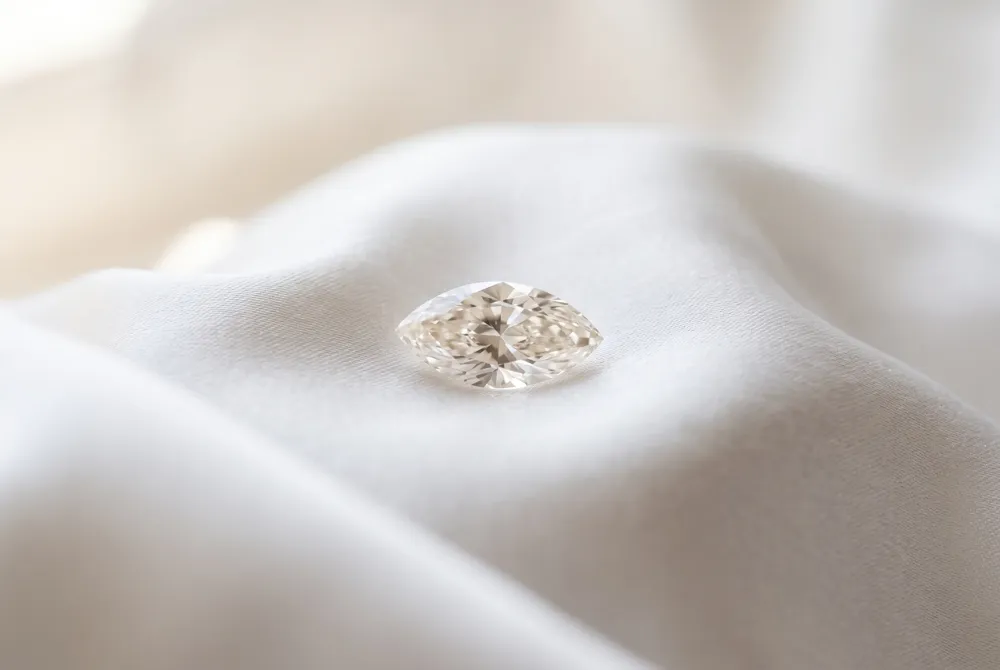
With its elongated shape and expansive table, a marquise cut engagement ring reveals body color more prominently than a round brilliant, particularly at the pointed tips. Many well-cut marquise diamonds allow you to choose a slightly lower color grade than you might select for other shapes, especially when set in a warm metal. A stone in the G to J color range offers a bright, near-colorless appearance that looks stunning in yellow or rose gold, while D–F grades are ideal for platinum or white gold settings.
The brilliant faceting of the marquise cut does an exceptional job of hiding inclusions, making clarity a place where you can find real value. A VS1 or VS2 clarity grade delivers an eye-clean stone that sparkles beautifully without visible flaws, allowing you to invest in a larger carat weight or finer color instead. For those working with bigger carat sizes, an eye-clean VVS2 grade offers extra peace of mind.
One of the most appealing attributes of the marquise cut is that it appears significantly larger than its carat weight. Because the shape is so spread out, a 1.5-carat marquise can offer the same finger coverage as a 2-carat round diamond. This optical illusion means you can achieve a dramatic look without stepping up to a heavier carat weight, pairing wonderfully with the color and clarity choices above to maximize both beauty and budget. At Avittam Diamond Jewels, every stone is carefully evaluated to ensure your marquise cut engagement ring delivers exactly this balance.
5. Choose a Protective Setting for the Tips
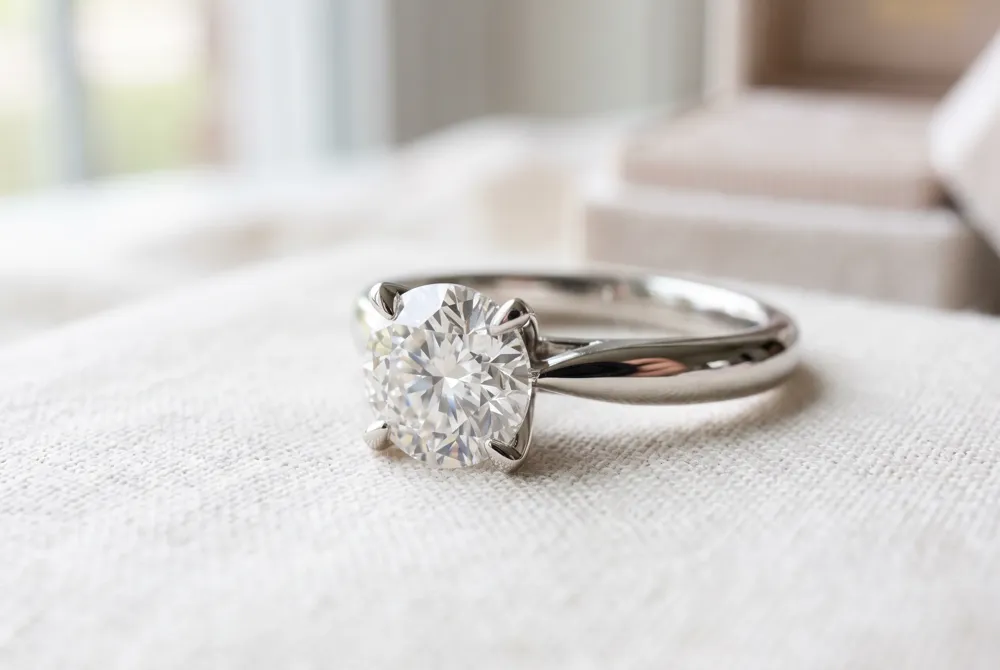
The marquise cut’s elegant pointed ends are also its most vulnerable feature, making the choice of setting a matter of both style and lasting durability. A setting that protects the tips without obscuring the diamond’s silhouette is essential for preserving the beauty of a marquise cut engagement ring for decades to come.
The most recommended approach is a V-prong setting, which uses a V-shaped prong to cradle each pointed tip. This provides excellent protection while allowing maximum light to enter the stone, preserving its brilliance. A bezel setting offers even more security by fully encasing the diamond’s perimeter in metal, creating a sleek, modern frame that is particularly effective at safeguarding the tips against accidental knocks. For those who desire the extra sparkle of a halo, a halo setting with V-shaped prongs on the center stone can be a secure and brilliant choice.
Beyond security, the setting defines the ring’s overall character. A timeless solitaire with V-prongs lets the diamond speak for itself, while an east-west setting offers a distinctive, contemporary flair. A three-stone setting, with the marquise flanked by two smaller diamonds, adds symbolic meaning and elongates the silhouette further. Avittam Diamond Jewels offers a bespoke service that allows you to choose between these styles in platinum, white gold, yellow gold, or rose gold, ensuring your marquise cut engagement ring is both secure and a true reflection of your personal taste.
6. Consider the Flattering Effect on the Finger
The marquise cut engagement ring is prized not only for its brilliant sparkle and royal history but also for its remarkable ability to flatter the wearer's hand. Its elongated silhouette draws the eye along its length, creating a graceful illusion that makes fingers appear longer and more slender. This refined contour naturally enhances the hand, lending a sense of elegance that many find exceptionally flattering.
Another distinctive advantage of the marquise cut is its ability to spread its carat weight across a larger surface area, often making it appear significantly larger than a round diamond of the same weight. A 1.5 carat marquise can offer similar finger coverage to a 2 carat round, delivering exceptional visual presence without the higher price tag. For those with shorter or wider fingers, the vertical orientation of a marquise cut engagement ring works to balance proportions, adding a sculpted quality to the overall look.
The marquise cut is also remarkably versatile in its orientation. The traditional north-south (vertical) setting maximizes the finger-lengthening effect. A more modern east-west setting places the stone horizontally, drawing attention across the width of the finger for a distinctive, contemporary look — a style seen on celebrities like Catherine Zeta-Jones and Portia de Rossi. At Avittam Diamond Jewels, couples can explore both orientations in a range of settings, ensuring the final piece complements their unique hand shape and personal style.
7. Weigh the Pros, Cons, and Budget
Choosing a marquise cut engagement ring is as much a practical decision as it is an aesthetic one. The cut offers advantages that few other shapes can match, but it also carries specific considerations that reward careful attention.
The Advantages of the Marquise Cut
The marquise cut is prized for its ability to look larger than its carat weight. Its elongated form creates a flattering, slimming effect on the finger while maximizing visible surface area. Many shoppers appreciate that a well-cut marquise can appear as substantial as a round diamond of higher carat weight. The shape also delivers brilliant sparkle through its 58 facets, and its romantic 18th-century French origin story adds a layer of meaning beyond the visual.
What to Watch For
The most common concern with the marquise is the vulnerability of its pointed tips. Protecting the tips with V-shaped prongs or a bezel setting is essential for long-term wear. The shape also demands precise symmetry to control the visible “bow‑tie” effect. A diamond with poor symmetry will show a dark, wide bow‑tie that diminishes brilliance, while a well-proportioned stone keeps the effect subtle or even visually appealing.
Value and Budget Guidance
Marquise cut diamonds generally cost 10 to 25 percent less than round brilliants of comparable quality, in part because they use rough crystal more efficiently. For a balanced approach, prioritize excellent symmetry and a cut that minimizes the bow‑tie. Setting choices affect the final price: a solitaire setting keeps the focus on the diamond itself, while a halo adds sparkle and perceived size but increases the overall cost. At Avittam Diamond Jewels, we guide every couple toward a ring that aligns with both their vision and their comfort — whether that means choosing a slightly lower color grade or investing in a protective setting that ensures lasting wear.
A thoughtfully selected marquise cut engagement ring delivers the drama of a larger diamond, the sparkle of a brilliant cut, and a story that sets it apart from convention — all within a budget that often undercuts round stones of similar appearance.
Are Marquise Diamonds Trending or Outdated?
The marquise cut engagement ring is far from a relic of the past. Contemporary buyers increasingly seek unique, personalized designs that offer a sophisticated alternative to the ubiquitous round brilliant, and the marquise cut’s elongated silhouette delivers exactly that. Recent market data confirms a notable resurgence in popularity, driven by a deep appreciation for the shape’s vintage-inspired elegance and its flattering, finger-lengthening effect.
Celebrity endorsements and the visual reach of social media have played a major role in this revival. High-profile rings on celebrities such as Victoria Beckham and Catherine Zeta-Jones have placed the marquise back in the spotlight, while platforms like Instagram and Pinterest showcase the cut’s versatility in modern settings, from east-west orientations to sleek solitaires. The marquise cut’s ability to look both vintage and contemporary makes it a natural fit for couples who want an engagement ring that stands apart without feeling dated.
Ultimately, the marquise diamond remains a timeless symbol of refined taste, celebrated for its ability to marry classic charm with modern sensibility. For those drawn to its regal heritage and distinctive beauty, the marquise cut engagement ring is a choice that feels both fashion-forward and enduring.
What Does a Marquise Diamond Symbolize?
The marquise cut engagement ring carries a symbolism as rich as its history. Its origins in 18th-century France, commissioned by King Louis XV to mirror the lips of his beloved Marquise de Pompadour, infuse the shape with an immediate sense of royal romance and regal elegance. Owning a marquise diamond is to connect with a story of passion and courtly love.
The elongated, pointed silhouette of the marquise cut is frequently described as Cupid's arrow, a poetic emblem of love that is both targeted and transformative. This shape, with its graceful curves coming to a sharp point, represents the spark of attraction and the deliberate journey of a shared life. It speaks to a love that is both passionate and directed.
Choosing a marquise cut engagement ring also makes a powerful statement about individuality. Its distinctive form stands apart from round cuts and other conventional shapes, signaling a couple's appreciation for the unique and the meaningful. At Avittam Diamond Jewels, we see this choice as a reflection of a love story that is not mass-produced but crafted with the same care and distinction as the diamond itself. It celebrates a bond that is both bold and deeply romantic, a commitment that evolves beautifully over time.
A Timeless Choice for the Discerning Couple
Selecting a marquise cut engagement ring is a journey through shape, proportion, light performance, protection, and personal style. The seven considerations outlined here equip you to balance brilliance and durability, understand the bow-tie effect, and evaluate a stone's true face-up size. A trusted jeweler makes that journey effortless.
Avittam Diamond Jewels offers a curated selection and bespoke design service that brings the timeless elegance of the marquise cut to life. With personalized guidance on symmetry, protective settings, and the ideal length-to-width ratio, their experts help you find a ring that reflects your story—without the need for a physical showroom.