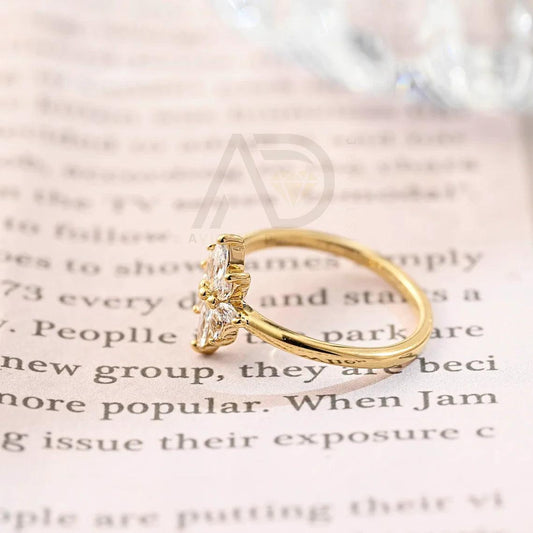

A Rare and Regal Silhouette
The marquise cut's defining trait is its elongated outline with pointed tips, a silhouette that emerged centuries ago and still carries an air of regal drama. That shape does more than look distinctive: the extended surface area can make the stone appear larger than its carat weight suggests, a practical advantage for shoppers who want maximum finger presence without inflating the budget. Many buyers first encounter the marquise through celebrity engagement rings, but its appeal goes far beyond fame. The cut remains a favorite among couples drawn to vintage-inspired elegance and a shape that flatters the hand with a slimming, finger-elongating effect.
Beyond the outline, the marquise is famous for its "bow-tie effect," a dark or shadowed region across the center that appears in certain light. This phenomenon is not unique to the marquise; oval and pear cuts display it too, but the marquise's dramatic length makes it more noticeable. A well-cut stone minimizes the bow-tie through precise proportions and symmetry, so shoppers should examine the diamond under multiple lighting conditions before committing. Choosing a marquise is as much about understanding this optical quirk as it is about admiring the shape itself, which is why expert guidance matters when evaluating individual stones.
How the Cut Shapes Appearance and Value
The marquise's elongated proportions create a distinctive sparkle pattern, with long, sweeping facets that catch light across the stone's length rather than concentrating brilliance in a small area. This characteristic gives the cut its signature flash, but it also means that proportions matter more than carat weight. A marquise with an overly narrow or overly wide outline can look unbalanced, so gemologists recommend focusing on length-to-width ratios that fall within a pleasing range. According to the GIA's marquise selection guidance, paying attention to the cut's proportions rather than size alone is the surest way to secure a stone that performs well.
Because the marquise is a fancy shape, it is often priced more favorably per carat than round brilliant diamonds of comparable quality. The elongated outline uses rough crystal more efficiently, which reduces waste and lowers cost. For buyers seeking a large-looking stone on a thoughtful budget, the marquise delivers outsized visual impact. However, the pointed tips are delicate and require protective setting styles, such as a bezel or V-tipped prongs, to prevent chipping. Selecting the right setting is as important as picking the diamond itself, and a knowledgeable jeweler can pair the stone with a design that safeguards its fragile ends.
Style profile. The marquise suits those who want a distinctive, elongated look that stands apart from round brilliants. Its vintage charm and dramatic length appeal to couples who value individuality over convention, and the shape pairs beautifully with side stones or a simple solitaire setting.Practical care. Because the tips are prone to damage, owners should choose protective prongs and avoid activities that could knock the stone. Regular inspection by a jeweler helps maintain the setting's integrity and keeps the marquise secure for decades of wear.
| Aspect | Marquise Cut | Consideration |
|---|---|---|
| Silhouette | Elongated with pointed tips | Flatters fingers, looks larger |
| Brilliance | Long sweeping facets | Check proportions, not carat weight |
| Bow-tie effect | Inspect under varied lighting | |
| Value | Often lower per carat than round | Efficient use of rough crystal |
| Durability | Tips are fragile | Need bezel or V-tipped prongs |
Marquise Diamond Essentials
- The marquise cut features an elongated, boat-like silhouette with pointed ends, reportedly commissioned by King Louis XV to mirror the smile of the Marquise de Pompadour.
- A marquise diamond appears larger than a round brilliant of the same carat weight due to its greater surface area per carat and elongated outline.
- The length-to-width ratio is the most critical factor;GIA recommends a range of 1.70 to 2.10 for an elegant appearance.
- Cut quality matters more than carat weight for marquise diamonds, as poor proportions can create a dull look or a prominent bow-tie effect.
- The pointed ends of a marquise are vulnerable to chipping, so the setting must protect the tips to ensure durability.
- A well-cut marquise minimizes the bow-tie shadow through precise angles and symmetry, allowing the stone to appear brilliant rather than hollow.
- The marquise's elongated shape creates a flattering, slimming effect on the finger, making it a favorite for vintage yet contemporary engagement rings.
- As a fancy cut, the marquise is not graded with the same strict table-and-crown structure as round brilliants, so expertise is essential.
- Avittam Diamond Jewels' gemologists personally evaluate each marquise for cut quality and bow-tie prominence, offering ethically sourced stones and bespoke settings.
- A deeper pavilion can hide the bow-tie, but overly deep cuts reduce brilliance and make the stone appear smaller than its carat weight suggests.
1. The Royal Origins of the Marquise Cut
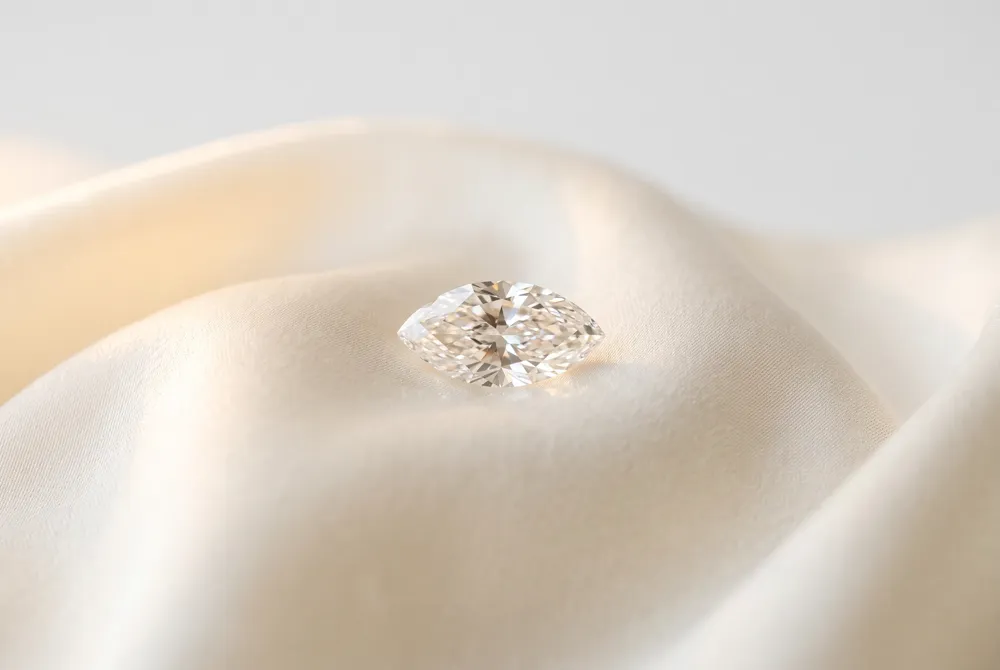
The allure of the marquise diamond lies in its distinctive elongated shape, a silhouette that reads as both regal and contemporary. With a rounded belly and two pointed ends, it creates the optical illusion of a larger, more refined stone, which is a central reason the cut remains a favorite among couples seeking an engagement ring that feels both classic and uncommon.
Experts at the Gemological Institute of America note that the marquise achieves its celebrated brilliance through a combination of its unique proportions and the precision of its faceting. Because the shape is long and narrow, the cut’s performance is especially sensitive to the quality of its symmetry and its length-to-width ratio. This means that selecting a high-quality marquise is less about carat weight and more about how carefully the stone is proportioned, a priority echoed in Avittam Diamond Jewels curated collection, where each diamond is evaluated for its cut quality rather than size alone.
What Makes a Marquise Cut Distinctive
The marquise diamond’s silhouette is its defining characteristic. Its elongated shape can make the finger appear longer and more slender, a detail many brides appreciate. In comparison to round brilliant or princess cuts, the marquise offers a more dramatic and individual statement, yet maintains a smooth, elegant profile when set in a well-designed band.
Unlike the round brilliant, which is judged primarily on its fire and brilliance across all angles, the marquise delivers a concentrated brilliance near its center, while the pointed ends can be more vulnerable to chipping if not protected by the setting. This is why a skilled jeweler will often recommend a V-shaped prong or a bezel setting to shield the tips. At Avittam Diamond Jewels, the in-house design team considers this vulnerability as a matter of course, integrating protective prongs seamlessly into the ring’s overall aesthetic so that beauty and durability are never traded against each other.
When considering a marquise diamond, the most important factor is the ratio of length to width. A classic marquise typically has a ratio between 1.70 and 2.00, though personal preference can extend this range. A longer ratio creates a more slender, dramatic look, while a shorter ratio yields a fuller, more rounded appearance. The Marquise Diamond Ultimate Guide explains that this flexibility is what makes the cut so versatile, allowing it to flatter a wide variety of hand shapes and personal styles.
For many couples, the marquise’s elongated shape is also a practical choice. Because it has a larger surface area per carat compared to many other shapes, a marquise can appear larger than a round brilliant of the same carat weight. This makes it an attractive option for those seeking maximum visual impact without exceeding their budget. At Avittam Diamond Jewels, this value proposition is central to the brand’s bespoke ordering service, where clients can select a diamond that prioritizes the cut’s proportions and the overall elegance of the ring.
Choosing the Right Marquise for Your Ring
When selecting a marquise diamond, the most important factor is the ratio of length to width. A classic marquise typically has a ratio between 1.70 and 2.00, though personal preference can extend this range. A longer ratio creates a more slender, dramatic look, while a shorter ratio yields a fuller, more rounded appearance. The Marquise Diamond Ultimate Guide explains that this flexibility is what makes the cut so versatile, allowing it to flatter a wide variety of hand shapes and personal styles.
Beyond ratio, the quality of the cut itself is paramount. A poorly executed marquise can show a visible bow-tie effect, a dark area that resembles a bow tie in the center of the stone. While a subtle bow-tie is common and can even enhance the stone’s character, a prominent one can diminish its brilliance. The Marquise Cut Diamond Guide emphasizes that examining the stone in person, or through high-resolution imagery, is essential to ensuring the bow-tie is minimal and the diamond’s overall performance is strong.
For couples who are drawn to the marquise’s elegance, visiting a trusted jeweler who understands the cut’s nuances is invaluable. At Avittam Diamond Jewels, the team offers a virtual try-on tool and detailed guidance to help clients assess how a marquise will look and fit, without the pressure of a showroom visit. This personalized approach ensures that every selection is made with confidence, and that the final ring reflects both the wearer’s style and the diamond’s true potential.
2. Why Marquise Diamonds Appear Larger
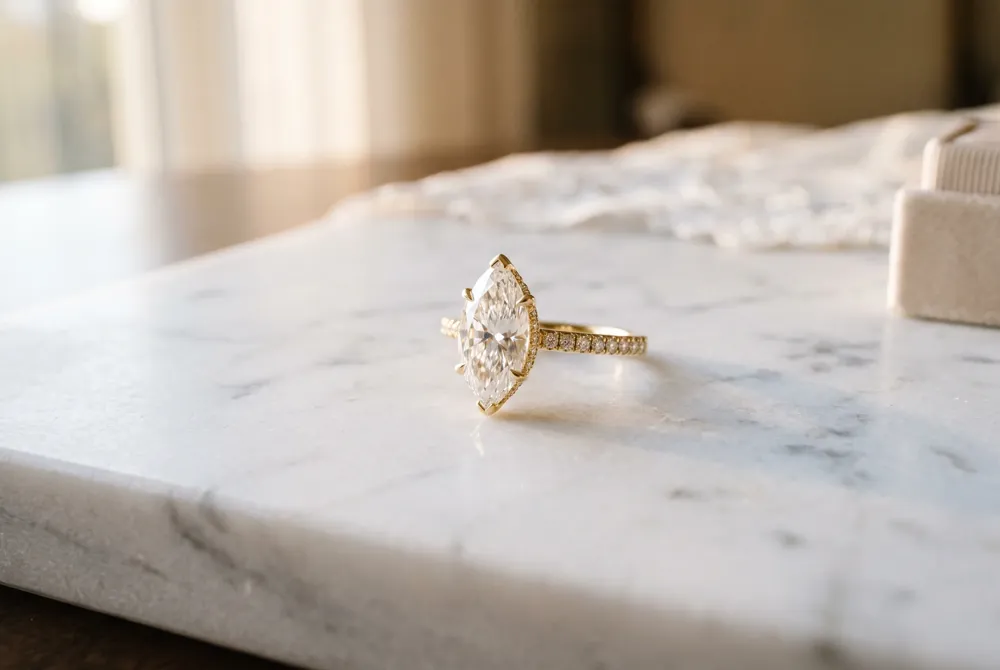
The marquise cut is famous for creating the illusion of a larger stone. Its elongated, boat-like silhouette spreads carat weight across a long surface area, so a 1-carat marquise can appear comparable to a 1.5-carat round brilliant when viewed from above. This optical advantage makes it a favorite among couples who want maximum visual impact without stretching their budget. For a detailed breakdown of how the shape affects perceived size, explore this marquise diamond guide.
At [Avittam Diamond Jewels], we specialize in marquise and other elongated cuts for bridal sets, helping you select proportions that flatter your hand and your budget. Our curated collection pairs the marquise silhouette with elegant settings, so you get that elongated, regal look without compromising on craftsmanship or ethics.
The Bow-Tie Effect and Its Impact on Brilliance
Every marquise diamond exhibits a bow-tie effect, a dark or shadowed area across the center caused by light reflecting through the tapered ends. The key is finding a stone where this effect is minimal, as a well-cut marquise shows only a subtle bow-tie that enhances its character. According to GIA’s marquise buying guide, focusing on proportions rather than carat weight alone is essential, since a poor cut can make the stone appear dull or elongated beyond proportion.
Our gemologists at Avittam Diamond Jewels personally inspect every marquise diamond to ensure the bow-tie is controlled and the brilliance is balanced. This attention to detail sets us apart from online marketplaces that ship uncertified stones, giving you confidence that the ring on your finger performs as beautifully as it looks.
Marquise vs. Other Elongated Cuts
Oval Cut. Ovals offer a softer, rounded elongation with a similar face-up spread. They tend to show less bow-tie, but the marquise provides a sharper, more distinctive regal silhouette that some couples prefer for its antique character.Emerald Cut. Emeralds feature step-cut facets and a rectangular shape, prioritizing clarity over brilliance. Marquise diamonds, with their brilliant facets, reflect more light and appear more lively, though they require careful cut selection to avoid the bow-tie.Pear Cut. Pears combine a rounded end with a pointed tip, creating an asymmetrical elegance. Marquise diamonds are symmetrical and offer a longer, more dramatic spread, ideal for those who want a striking yet balanced look.
When comparing shapes, consider what feels right for your style. At Avittam Diamond Jewels, we offer both marquise and oval options with free shipping and virtual try-on tools, so you can see how each silhouette looks on your hand before committing. For a deeper look at the marquise’s pros and cons, this expert buying guide offers practical advice on proportions and setting choices.
Sizing Your Marquise Ring
Because the marquise is elongated, it can make your finger appear longer and slimmer, a flattering effect that many brides love. However, its pointed ends are more vulnerable to chipping, so a protective setting with a v-prong or a bezel is recommended for everyday wear. Our design team at Avittam Diamond Jewels provides detailed product guides and engraving services to ensure your ring is both secure and personal.
| Shape | Perceived Size | Care Considerations |
|---|---|---|
| Marquise | Appears 10-15% larger than round | Protect pointed tips with v-prong |
| Oval | Similar spread, softer look | Less prone to chipping |
| Emerald | Less sparkle, more clarity | Requires secure prong setting |
| Pear | Asymmetric elegance | Shield the pointed end |
3. Elegant Finger Elongation
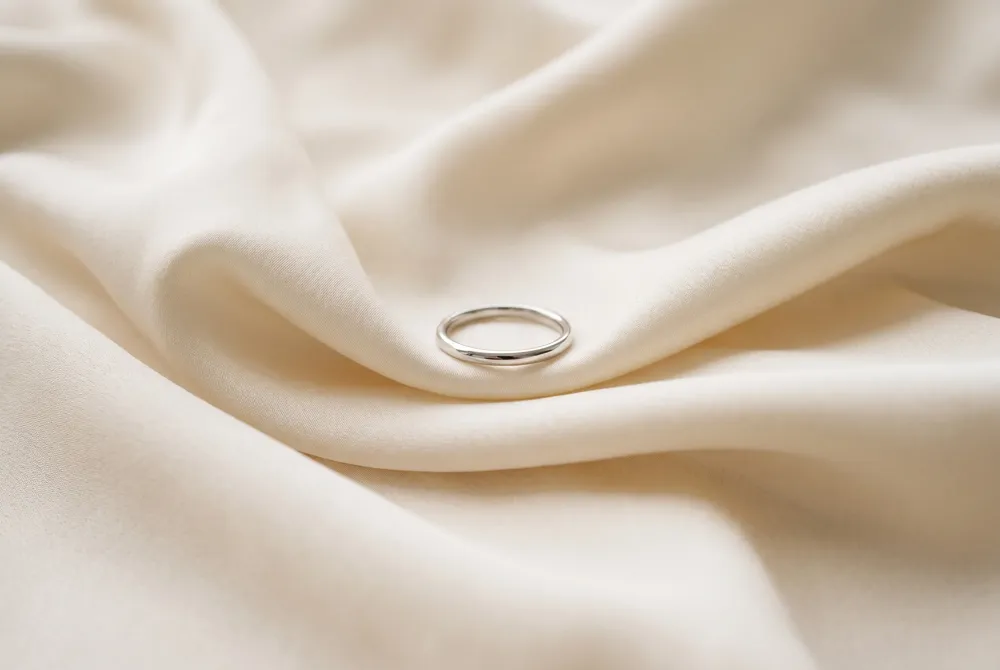
The marquise cut has never really left the spotlight. Its elongated, boat-shaped silhouette makes fingers look longer and more slender, which is why it remains a favorite for engagement rings and now for statement signet styles. Before committing to a marquise diamond signet ring, it helps to understand how this shape behaves, how to evaluate its quality, and which settings best protect its pointed tips. The sections below walk through each of these essentials.
A well-proportioned marquise diamond creates a flattering, elongated line across the finger. Experts at GIA note that focusing on the cut's proportions, rather than carat weight alone, matters most when choosing a marquise, since a poor length-to-width ratio can make the stone look dull or misshapen. A well-proportioned marquise, by contrast, maximizes brilliance and gives the finger a graceful, extended look that round cuts simply cannot match.
When browsing marquise diamonds, you will come across variations in length-to-width ratio, crown height, and pavilion depth. These factors determine how much light returns to the eye and how the shape appears on the hand. The How to Choose a Marquise Diamond guide from GIA is a reliable primer on what to look for, particularly if you are new to this cut.
4. Cost-Effective Luxury and Value
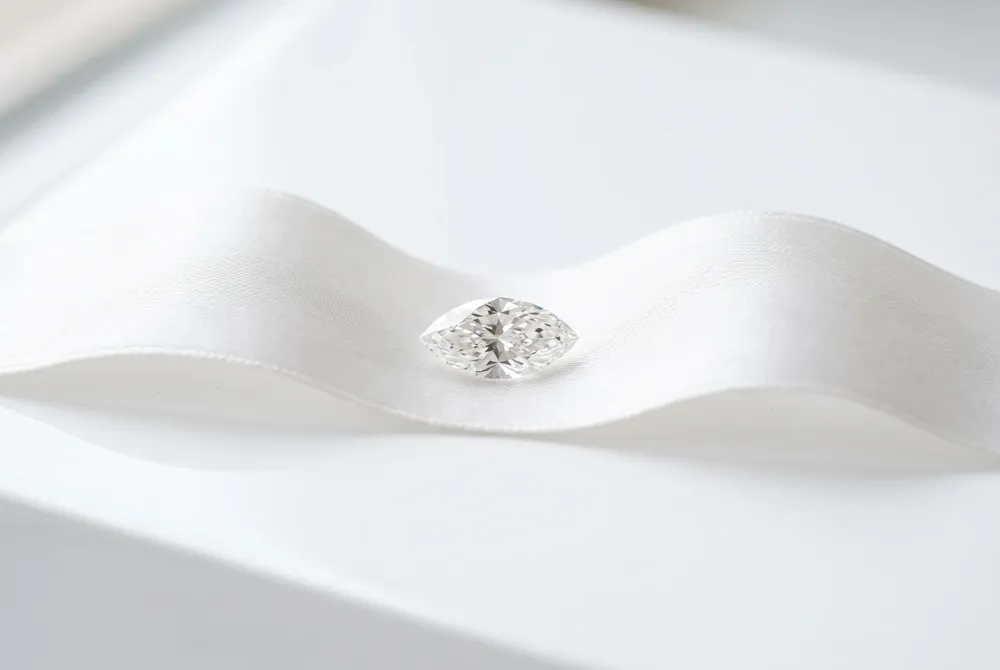
Among the many diamond shapes available today, the marquise cut stands apart for its elongated, elliptical silhouette with pointed ends. Often compared to the shape of a boat or a navette, this distinctive profile has roots that reach back to 18th century France. According to the GIA's marquise buying guide, the shape was supposedly commissioned by King Louis XV to mirror the smile of his mistress, the Marquise de Pompadour, giving the cut a regal legacy that endures in modern bridal jewelry.
For many couples, the marquise shape offers a flattering, elongating effect on the finger, making it a favorite among those seeking a vintage yet contemporary look. Its dramatic points and sweeping curves create an illusion of greater size and brilliance, a quality that has kept the shape relevant across generations of engagement ring design.
A Distinctive Choice in Modern Bridal Jewelry
While round brilliant diamonds remain the conventional favorite, the marquise cut appeals to couples who want a ring that feels personal and unconventional. The shape performs exceptionally well in settings that emphasize its length, such as solitaire pendants or halo designs that soften the pointed ends and add a touch of romance.
At Avittam Diamond Jewels, the marquise diamond is part of a curated selection of premium stones, offered alongside princess cuts and other shapes in ethically sourced collections. For shoppers considering a marquise engagement ring, understanding the shape's proportions and cut quality is essential, as the elongated form can be more sensitive to proportion imbalances than round brilliants.
Experts note that a well-proportioned marquise should follow a length-to-width ratio between 1.7 and 2.2, depending on the desired slenderness, and that the points should be well-protected by the setting to prevent chipping.
5. Key Features: The Bow-Tie Effect
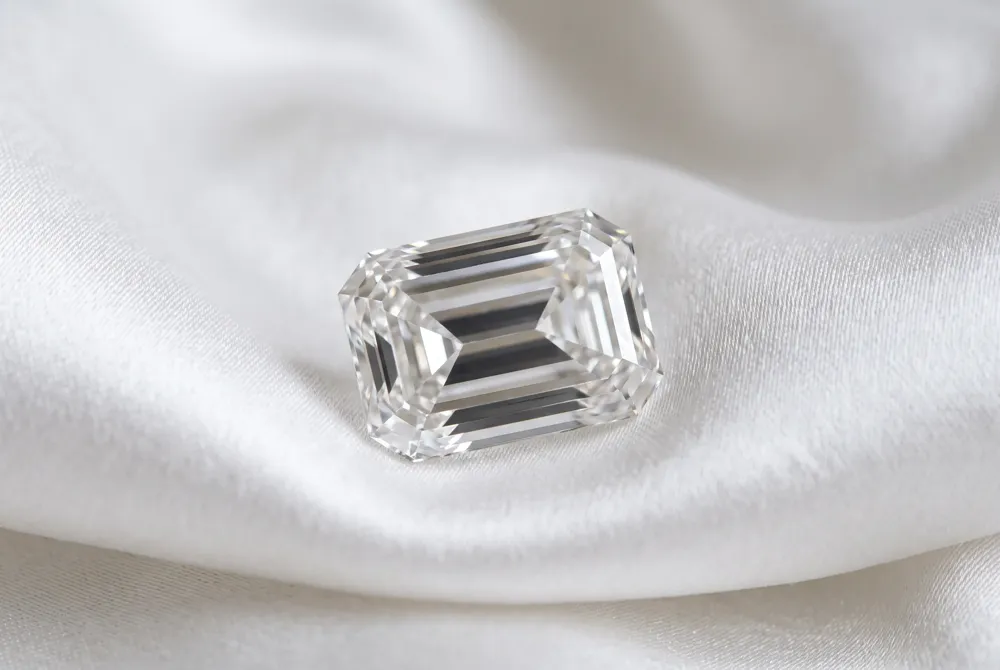
Of all the shapes a diamond can take, the marquise carries an unmistakable regality. Its elongated silhouette with pointed ends dates back to the 18th century, when a French marquise inspired a jewel that would echo her smile. That same graceful form remains a favorite among brides who want a ring that feels both vintage and modern, and it sits at the heart of Avittam Diamond Jewels' curated bridal collections.
Yet the marquise's beauty comes with a trade-off that every buyer should understand before falling in love with the outline. Because the stone is long and narrow, light often travels through it unevenly, creating a dark, shadowed zone across the middle. Gemologists call this the bow-tie effect, and its prominence varies dramatically from one marquise diamond to the next.
What Causes the Bow-Tie Effect
The bow-tie appears when the diamond's facets fail to reflect light uniformly back to the eye. In a well-cut marquise, the shadow remains soft and subtle, adding depth and drama without distracting from the sparkle. In a poorly proportioned stone, the dark band becomes broad and obvious, flattening the diamond and diminishing its brilliance. How to Choose a Marquise Diamond from the Gemological Institute of America explains that the quality of the cut, not the carat weight alone, determines whether that bow-tie stays flattering or becomes a flaw.
A high-quality marquise diamond minimizes the effect through precise angles and symmetry. When you are choosing a marquise cut, the GIA guide shows you exactly what to look for: sharp, even points, balanced proportions, and a table size that allows light to enter and exit cleanly. This is one of the few shapes where cut quality truly overrides size in creating a stunning ring.
How Much Bow-Tie Is Acceptable
Some bow-tie is natural in every marquise diamond, and a modest amount is often desirable. It gives the stone character and prevents it from looking flat. The goal is to find the sweet spot: a soft shadow that adds elegance, not a dark band that detracts from the stone's fire.
Experts recommend viewing the diamond in multiple lighting conditions before committing. A stone that looks beautiful under a jeweler's spotlight may reveal a pronounced bow-tie in softer, everyday light. For this reason, The Ultimate Marquise Engagement Ring Guide encourages brides to examine the diamond face-up, tilted, and in natural daylight to gauge how the effect changes.
This is where Avittam Diamond Jewels differentiates itself from the typical online retailer. Rather than selling diamonds that look good in a single photo, the brand's experts personally evaluate each marquise diamond for cut quality and bow-tie prominence. They guide you toward stones with minimal, flattering shadowing and away from those with pronounced dark zones, so you never have to guess at the effect from a screen.
Why the Bow-Tie Matters for Your Ring
The bow-tie effect influences more than sparkle. It affects the diamond's perceived size and shape. A stone with a heavy bow-tie can appear shorter and less elegant than its carat weight suggests, while a well-cut marquise retains that long, lean silhouette that makes the shape so flattering on the finger.
Setting also plays a role. In a prong or bezel setting, the points of the marquise are the most vulnerable to damage, and the bow-tie is often most visible when the diamond is set high. Avittam Diamond Jewels' design consultants consider these factors together, helping you choose a setting that both protects the stone and minimizes the shadow's impact.
For couples who want a marquise engagement ring, understanding the bow-tie effect is a prerequisite to choosing a diamond you will love for a lifetime. With the right expertise, the bow-tie becomes a subtle accent rather than a defect, and your ring delivers the elegant, brilliant look you envisioned.
| Bow-Tie Severity | Appearance | Impact on Ring |
|---|---|---|
| Subtle | Soft, faint shadow in center | Adds depth; ideal for most buyers |
| Moderate | Noticeable dark band when tilted | Can flatten sparkle; choose carefully |
| Pronounced | Broad, obvious dark zone | Detracts from beauty; avoid for best results |
6. Key Features: Length-to-Width Ratio
The marquise cut carries a name that suggests aristocracy, and the history behind that name is just as regal. Legend traces the silhouette to 18th century France, where King Louis XV is said to have commissioned a diamond cut to mirror the smile of his mistress, the Marquise de Pompadour. Whether the tale is fact or folklore, the elongated, boat shaped outline has carried a sense of courtly romance ever since.
Today's marquise diamonds hold onto that heritage while appealing to modern tastes. Their distinctive shape creates the illusion of greater size, since the long outline stretches across the finger and makes the stone appear larger than its carat weight suggests. This effect is one reason the cut remains a favorite among engagement ring buyers who want a dramatic presence without an oversized price tag. For guidance on selecting a quality marquise, the GIA's marquise guide offers a helpful starting point.
The Signature Silhouette
A marquise diamond is defined by its elongated shape with pointed ends and curved sides, resembling a football or an eye. The length to width ratio plays a central role in how the stone appears. A more elongated marquise, with a higher ratio, looks sleek and slender, while a shorter, wider ratio feels softer and more balanced. Most buyers find an ideal ratio between 1.75 and 2.25, though personal taste ultimately decides what feels right.
Because the pointed ends can be vulnerable to chipping, the marquise is often set with protective prongs or a bezel. This practical consideration does not diminish its beauty; it simply calls for thoughtful craftsmanship. When browsing options, pay attention to how the points are guarded and whether the symmetry of the two halves is even, as these details influence both durability and visual harmony.
Shape. Elongated, boat shaped outline with pointed ends and gently curved sides; creates a flattering, finger-lengthening effect. Brilliance. The marquise is a modified brilliant cut, featuring numerous facets that deliver exceptional sparkle and brilliance across the table and crown.Size Illusion. Because of its long silhouette, a marquise diamond often appears larger than a round brilliant of the same carat weight.
For couples drawn to this silhouette, the marquise offers a rare blend of vintage charm and contemporary elegance. Avittam Diamond Jewels carries a curated selection of marquise engagement rings, allowing you to choose the proportions, metal, and setting that suit your personal style. Their bespoke ordering service lets you customize every detail, from the cut of the stone to the engraving inside the band, so the final piece feels distinctly yours.
7. Evaluating Quality and Rarity
A Shape Born of Royal Favor
The marquise diamond traces its lineage to 18th-century France, where legend credits King Louis XV with commissioning a diamond cut to mirror the smile of his beloved, the Marquise de Pompadour. That elongated silhouette, often called the "navette" for its boat-like form, became a symbol of courtly elegance and remains one of the most distinctive shapes in fine jewelry. Its length and pointed ends give the stone a regal presence that few other cuts can match.
Why does this history matter to a modern buyer? Because a marquise is not a neutral choice. It carries an inherent drama and a sense of occasion that suits engagement rings designed to feel special. When you select a marquise from Avittam Diamond Jewels, you are choosing a shape with centuries of association with refinement, not a passing trend.
The Shape's Signature Appeal
The marquise offers two practical advantages beyond its beauty. First, its elongated outline makes the finger appear longer and more slender, a flattering effect that many brides appreciate. Second, for a given carat weight, the marquise has a larger surface area than most round cuts, so it looks bigger on the hand than its weight alone would suggest. This combination of visual impact and graceful proportion explains its enduring popularity.
Compared with the round brilliant's classic sparkle or the princess cut's crisp corners, the marquise prioritizes elegance and uniqueness. While round diamonds maximize brilliance and princess cuts offer a modern square, the marquise delivers a rare, elongated artistry that stands apart. At Avittam Diamond Jewels, this shape is presented as a curated option for those who want a ring that feels personal and uncommon.
The 2026 Trend Wave
Design forecasts for 2026 point to a renewed appetite for distinctive, vintage-inspired cuts, and the marquise sits at the center of that movement. According to a roundup of engagement ring trends for 2026, brides are moving away from purely conventional rounds toward shapes with personality and history. The marquise, with its royal pedigree and sculptural lines, fits this shift perfectly. For the buyer who wants a ring that feels both timeless and timely, the marquise is a compelling choice.
Avittam Diamond Jewels embraces this trend by offering marquise options in a range of settings, from solitaire bands to halo designs that enhance the stone's elongated form. The brand's marquise engagement ring guide helps customers understand how this shape behaves in different contexts, ensuring the final ring matches their vision.
| Feature | Marquise Advantage | Consideration |
|---|---|---|
| Finger appearance | Elongates and slims the finger | Length emphasizes its presence |
| Carat perception | Looks larger than round for same weight | Shape can appear smaller if too narrow |
| Brilliance | Distinctive, lively sparkle | Relies on cut quality |
| Style identity | Rare and regal | Not for the most traditional taste |
Ultimately, the marquise rewards a buyer who appreciates provenance and personality. For those ready to embrace a shape with a story, Avittam Diamond Jewels provides the expertise to select a marquise that is both beautiful and ethically sourced.
Marquise vs Round: Price and Appearance
The marquise cut carries a story as distinctive as its silhouette. Legend ties the shape to the 18th century, when King Louis XV of France commissioned a diamond cut to mirror the smile of his mistress, the Marquise de Pompadour. While historians debate the exact details, the name stuck, and the elongated form became a symbol of courtly elegance.
What makes the marquise immediately recognizable is its football-like outline with pointed ends, designed to maximize carat weight across a long table. That same elongated shape creates an illusion of size on the finger, making it a favorite for brides who want presence without a heavier stone. The effect is both flattering and dramatic, drawing the eye along the hand.
Why the Shape Endures
Unlike round brilliant diamonds, which prioritize raw sparkle above all, the marquise emphasizes elegance and character. Its narrow profile suits those who prefer a vintage-inspired look with modern polish. The cut also pairs beautifully with a variety of settings, from solitaire prongs to halo designs that soften the pointed ends.
Silhouette. The elongated outline with pointed tips that creates an illusion of length and size, ideal for slender fingers.Brilliance. The marquise has a large table that reflects light well, though its brilliance differs from rounds due to the narrower shape.Versatility. Works in prong, bezel, or halo settings, allowing customization for personal style preferences.
At Avittam Diamond Jewels, the marquise is offered in ethically sourced stones across a range of cuts and settings, with a bespoke ordering service that lets you customize the metal, design, and engraving. This personal touch ensures your marquise feels uniquely yours, not just a standard catalog piece. For guidance on proportions and quality, explore our detailed product guides before you choose.
| Feature | Marquise | Round Brilliant |
|---|---|---|
| Shape | Elongated, pointed ends | Circular, uniform |
| Size illusion | Appears larger per carat | Standard presence |
| Brilliance | Bright, but directional | Maximum sparkle |
| Best for | Vintage or unique looks | Classic, timeless appeal |
| Price per carat | Generally lower than rounds | Higher premium |
Are Marquise Diamonds Always in Style?
The marquise diamond is instantly recognizable by its elongated, boat-like outline with pointed ends. Its name traces back to the Marquise de Pompadour, a favorite of King Louis XV, who is said to have commissioned a stone shaped like her smile. That regal heritage still influences how the stone is perceived today: it carries a sense of old-world formality while adapting beautifully to modern settings.
Shape refers to the overall outline you see, while cut describes how well the diamond's facets interact with light. For a marquise, the two are tightly connected. The elongated silhouette creates a strong optical effect, making the diamond appear larger than a round stone of the same carat weight.
Proportions Matter More Than Carat
When choosing a marquise, proportion is the first consideration. The length-to-width ratio determines whether the stone looks graceful and slender or broader and more substantial. Most buyers prefer a ratio between 1.7 and 2.0, though personal taste plays a large role. A longer ratio suits those who want a dramatic, finger-lengthening effect, while a shorter ratio feels more balanced and traditional.
The GIA's marquise buying guide emphasizes that cut quality, not carat weight alone, should drive your decision. A well-proportioned marquise with excellent polish and symmetry will outperform a heavier stone with poor angles. At Avittam Diamond Jewels, our gemologists evaluate each stone using strict proportion benchmarks, so you receive a diamond that maximizes brilliance rather than just size.
The Bow-Tie Effect
Every elongated diamond, including the marquise, can display a dark bow-tie pattern across its center. This happens when certain facets fail to return light to the eye, creating two triangular shadows that meet in the middle. A subtle bow tie is common and often acceptable, but a pronounced one can dull the stone's appearance.
You can assess the bow-tie effect by viewing the diamond in different lighting conditions, including direct sunlight, diffuse daylight, and indoor spotlights. The marquise expert guide from Lumeira advises asking to see the stone under a variety of lights before committing. Our team at Avittam Diamond Jewels does the same work for you, using magnification and light testing to flag any stones with a distracting bow tie.
Cut Quality and the Ideal Marquise
Marquise diamonds do not have a standard round-brilliant cut grade. Instead, you rely on proportions, polish, and symmetry to judge quality. The GIA marquise guide outlines the key points: a well-cut marquise has even, symmetrical points, a smooth girdle, and facets that align precisely. Any deviation, such as a pointed tip that is slightly off-center, becomes visible once the stone is set.
We recommend requesting a cut-quality assessment beyond the standard certificate. Look for stones where the table percentage falls near the middle of the expected range, the crown and pavilion angles are balanced, and the points are well-protected. Avittam Diamond Jewels sources marquise diamonds that meet these strict criteria, and our gemologists provide a personalized cut assessment before you finalize your choice.
| Feature | What to Look For | Why It Matters |
|---|---|---|
| Length-to-width ratio | 1.7 to 2.0 | Shapes the overall silhouette |
| Polish | Excellent or ideal | Affects surface brilliance |
| Symmetry | Even points and facets | Prevents visible distortion |
| Bow-tie effect | Subtle or minimal | Preserves centered light return |
| Table percentage | Mid-range for marquise | Balances face-up appearance |
What to Look for When Buying a Marquise
A marquise diamond is as much about optical illusion as it is about fire. The elongated outline makes the finger appear longer and more slender, but that same drama comes with a tradeoff: the shape is notoriously sensitive to proportion. A marquise that is too narrow can look pinched, while one that is too wide loses the signature boat-like grace. The How to Choose a Marquise Diamond guide from GIA notes that a well-balanced marquise should have a length-to-width ratio that feels elegant rather than extreme. For most wearers, the sweet spot sits between 1.70 and 2.10, though personal taste and hand size ultimately rule.
Beyond ratio, the bow-tie effect is the marquise's defining characteristic. Every marquise shows some degree of a dark bow-tie shadow across the center; the question is whether it is subtle or distracting. A high-quality cut keeps that shadow soft and small, preserving sparkle across the table. When you view a loose stone, turn it under natural light and watch how the center behaves. If the dark area dominates, walk away. The Marquise Diamond Guide explains that an expert cut with precise faceting minimizes the effect, so the stone reads as brilliant rather than hollow.
Reading the Cut Grade
Cut grade is where many shoppers get lost. Because marquise diamonds are fancy cuts, they are not graded with the same strict table-and-crown structure as rounds. Instead, you rely on symmetry, polish, and the cutter's skill in balancing length, width, and depth. A stone with excellent symmetry will have mirrored halves and a consistent outline; any asymmetry becomes instantly visible in the long silhouette. The Marquise Diamond Buying Guide points out that depth percentage matters more than many buyers realize, since too much depth dims brilliance and too little creates a washed-out look.
When comparing stones, prioritize the cut over carat weight. A slightly smaller marquise with superior proportions will outshine a larger one with weak sparkle. This is exactly the kind of tradeoff that benefits from a guided eye. At Avittam Diamond Jewels, every marquise is selected with the proportions and brilliance in mind, and the team pairs each piece to your hand and style.
- Length-to-width ratio: aim for 1.70 to 2.10 for elegance
- Symmetry: mirrored halves and a clean outline
- Depth: balanced to avoid a dull or glassy center
- Bow-tie: soft and minimal, never dominating the table
| Quality Factor | What to Look For | Why It Matters |
|---|---|---|
| Ratio | 1.70 to 2.10 | Affects finger elongation and shape grace |
| Symmetry | Mirrored halves | Prevents a lopsided outline |
| Depth | Balanced percentage | Controls brilliance and light return |
| Bow-tie | Subtle shadow | Keeps the center bright and lively |
Ultimately, the best marquise is the one that looks alive on your hand. Take your time, compare stones side by side, and trust a jeweler who can articulate why one cut outshines another. With the right guidance and a well-proportioned stone, the marquise becomes the regal, flattering centerpiece you envisioned.
The 1-Carat Marquise: A Value Proposition
A 1-carat marquise diamond pairs the elongated silhouette royalty favored with a size that balances presence and everyday wear. Before you commit, it helps to understand how cut, proportions, and setting interact, since the marquise shape is more sensitive to symmetry than round brilliants. Trusted guides stress that the marquise's narrow outline makes its points vulnerable, so the right proportions matter more than carat weight alone.
Cut quality is the first priority. The marquise has a dramatic length-to-width ratio, usually between 1.70 and 2.10, and a poorly executed cut can create a bow-tie effect that dulls the center. A well-proportioned stone, as outlined in the How to Choose a Marquise Diamond guide, keeps light moving evenly across the crown and pavilion. For a 1-carat stone, this means checking the table percentage, depth percentage, and the symmetry of both pointed ends.
Proportions, Symmetry, and the Bow-Tie Effect
Because the marquise is an elongated cut, its proportions determine both brilliance and durability. The pointed tips are the most fragile part of the stone, so a V-tip prong or a bezel setting protects them from chipping. A deeper pavilion can hide the bow-tie effect, but overly deep cuts sacrifice brilliance and make the stone look smaller than its carat weight suggests. For a 1-carat marquise, aim for a depth percentage between 58% and 62% and a table percentage between 55% and 60%.
Symmetry is equally critical. With marquise diamonds, even a slight misalignment of the two halves can create a visible bow-tie shadow that reduces the stone's fire. Expert guides emphasize that while a subtle bow-tie is natural in elongated cuts, an extreme one signals a low-quality diamond. When comparing stones, place them face-up on a white surface and observe how light reflects across the center. This quick test helps you avoid a 1-carat marquise that disappoints in person.
Setting Styles That Complement the Shape
The setting you choose affects how the marquise appears on your finger. A solitaire setting with V-tip prongs is the classic choice, allowing the elongated shape to take center stage. Halo settings, which surround the marquise with smaller diamonds, add sparkle and can make the stone appear larger. However, be mindful of the halo's shape: a well-fitted halo should echo the marquise's outline, not distort it.
For a modern look, consider a three-stone setting with tapered baguettes or a pavé band that flows along the finger's curve. These options enhance the marquise's slimming effect and add a touch of personalized luxury. When you browse rings, ask about the setting's metal and how it interacts with the diamond's color. A yellow or rose gold band can warm a slightly lower-color stone, while white gold or platinum emphasizes whiteness.
Balancing Carat Weight and Finger Presence
A 1-carat marquise has a larger face-up area than a 1-carat round due to its elongated shape, so it often appears bigger on the finger. This makes it a smart choice for shoppers who want the visual impact of a larger diamond without the higher carat-weight price. However, the marquise's silhouette can also make it look longer and narrower, so try it on to see how it feels alongside the width of your hand.
When choosing a 1-carat marquise, prioritize cut quality over perfect color or clarity. A well-cut stone can mask minor inclusions and lower color grades, which means you can invest more in the proportions that deliver brilliance. For a refined shopping experience with personalized guidance, consider browsing Avittam Diamond Jewels collections, where ethically sourced diamonds and bespoke settings are curated for discerning buyers.
The Marquise Shape: A Study in Elegance
The marquise diamond owes its striking pointed oval silhouette to French royal history. Legend credits King Louis XV with commissioning a diamond cut to mimic the shape of the lips of his mistress, the Marquise de Pompadour. That aristocratic heritage still carries weight today, making the marquise a favored choice for brides who want a ring that feels regal rather than merely fashionable.
Shape. An elongated oval with two pointed ends, often described as a football or a boat shape. Its length creates a flattering, slenderizing illusion on the finger.Brilliance. Both the crown and pavilion facets are arranged to maximize light return, giving the marquise an intense, fiery sparkle that rivals round brilliant cuts. Carat value. Because the marquise has a larger surface area per carat than most round shapes, a marquise stone often looks larger than a round diamond of the same weight. Versatility. Its elongated profile pairs beautifully with side stones, halos, or a simple solitaire setting, and it can be set vertically or horizontally for a distinctive look.
For shoppers weighing this silhouette, the marquise's proportions matter more than carat weight alone. A well-proportioned marquise returns light evenly across its length, while a poorly cut stone can show a dark bow-tie effect near the center. Learning to read this tradeoff is one of the most important steps before you buy.
A Timeless and Distinctive Choice
Among diamond shapes, the marquise carries a singular distinction: it is one of the few cuts whose silhouette was born of royal desire rather than technical necessity. Legend traces its elongated, boat-like outline to the 18th century, when a French king reportedly asked a jeweler to craft a stone that echoed the smile of his beloved marquise. That origin story, whether strictly factual or romantically embellished, has gifted the shape a permanent aura of courtly intrigue that few other cuts can claim.
The marquise remains a favorite for those who want a ring that feels both historic and contemporary. Its extended outline creates a graceful, finger-lengthening line, while the pointed ends and curved sides catch light in a distinctive, elongated flash. For modern couples, this shape offers a way to stand apart from the ubiquitous round brilliant without sacrificing brilliance or sparkle. The design also lends itself beautifully to a range of settings, from a clean solitaire to a vintage-inspired halo.
For a deeper look at how this shape compares to other cuts and what to consider before choosing it, explore our marquise diamond guide.