
Understanding Two Essential Symbols of Love
An engagement ring and a wedding ring are two separate, deeply meaningful pieces. They differ in timing, symbolism, design, cost, and the traditions that surround how they are worn. This guide walks through each distinction to help you choose the rings that reflect your story.
Engagement Ring vs. Wedding Ring
- An engagement ring is presented at the proposal as a promise to marry, while a wedding ring is exchanged during the ceremony to seal the marriage bond.
- The engagement ring symbolizes a personal promise of future commitment, while the wedding ring's continuous circular form represents an unending union and fulfillment of that promise.
- Engagement rings are designed to command attention with a prominent center stone and intricate setting, whereas wedding bands are more subtle, lower-profile, and built for daily wear.
- Popular engagement ring styles include solitaire, halo, and three-stone settings, while wedding bands range from plain metal bands to diamond eternity and textured bands.
- Engagement rings are significantly more expensive, averaging $5,200 to $6,350 in the US, while women's wedding bands average $1,000 to $1,200 and men's bands about $500 to $600.
- In Western tradition, both rings are worn on the fourth finger of the left hand, with the wedding band placed closest to the heart and the engagement ring stacked above it.
- The engagement ring is traditionally given to one partner, while wedding rings are exchanged between both partners during the ceremony, with both spouses wearing a band afterward.
- Some couples choose a single ring for both purposes for simplicity and cost savings, but two rings allow for a coordinated bridal set with distinct symbolism.
- The terms 'wedding ring' and 'wedding band' are used interchangeably, though 'wedding band' often describes a simpler, plain metal design and 'wedding ring' may include more decorative styles.
- An engagement ring is typically larger than the wedding ring, with a prominent center stone and elaborate setting, while the wedding band is lower-profile for comfortable stacking.
1. Timing and Purpose of Each Ring
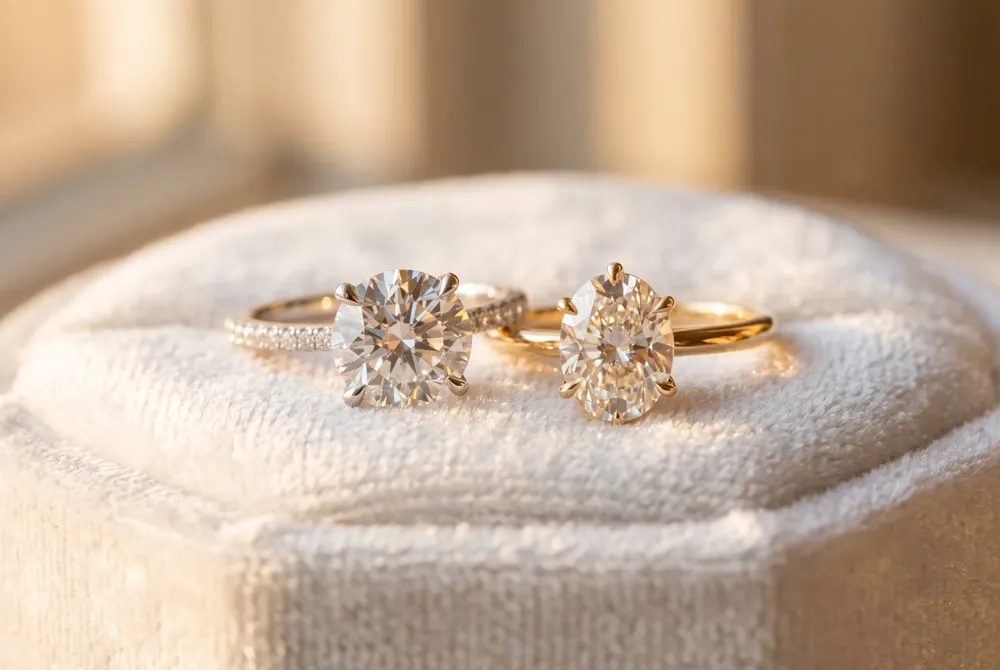
The distinction between an engagement ring vs. wedding ring begins with when each is given and what it represents. The engagement ring is the ring presented at the proposal, a tangible symbol of the promise to marry. It marks the beginning of a couple's formal journey toward marriage.
The wedding ring, in contrast, is exchanged during the wedding ceremony itself. As the couple recites their vows, this ring is placed on the finger to seal the marriage bond. Its circular shape has symbolized eternity and unbroken unity since ancient times.
These two rings mark different stages of a relationship: the engagement ring represents a promise of a future together, while the wedding ring represents the fulfillment of that promise. Some modern couples choose a single ring for both purposes, but the traditional separation allows each piece to carry its own distinct meaning.
2. Meanings: Promise vs. Eternal Union
The distinction between an engagement ring vs. wedding ring is perhaps most clearly felt in what each ring represents. The engagement ring is a personal promise — a declaration of intent to marry. Its center stone, often a diamond, is chosen for its strength and enduring brilliance to reflect the depth of that commitment.
The wedding ring, exchanged during the ceremony, shifts the meaning from promise to fulfillment. Its continuous circular form represents an unending union, with no beginning and no end. This design is a visual affirmation of the vows exchanged, symbolizing unity, loyalty, and the official bond of marriage.
For couples who appreciate layered symbolism, selecting rings that honor each meaning adds depth to the tradition. Avittam Diamond Jewels offers a curated selection of engagement rings with intricate settings and wedding bands with clean, simple lines, allowing each piece to speak to its distinct role in a couple's journey.
3. Design and Appearance: Ornate vs. Minimal
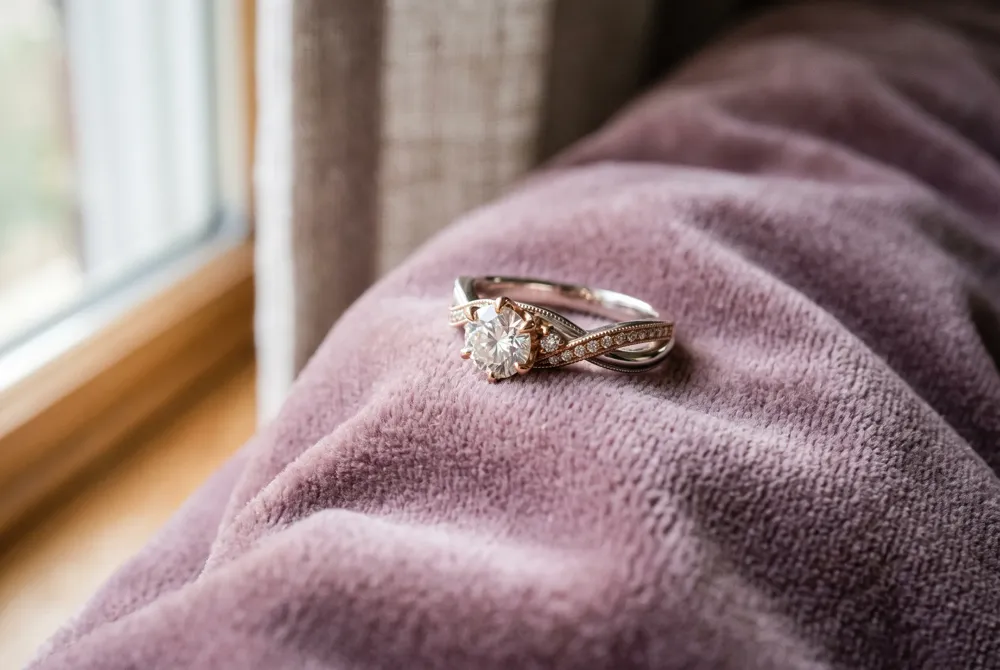
The design of an engagement ring vs. wedding ring is one of the most visually telling differences between them. An engagement ring is crafted to command attention, typically featuring a prominent center diamond or gemstone set in an intricate mounting that elevates the stone above the finger. A wedding ring, or wedding band, takes a more subtle approach — it is usually a plain metal band or a band with small accent stones set flush into the metal, designed for comfort and durability during a lifetime of daily wear.
Popular Engagement Ring Styles
Engagement rings come in silhouettes that highlight the center stone. The classic solitaire setting uses a single diamond on a clean, unadorned band, letting the stone's brilliance speak for itself. A halo setting surrounds the center diamond with a circle of smaller diamonds, adding extra sparkle and making the center stone appear larger. The three-stone style places a central diamond flanked by two side stones, often symbolizing the past, present, and future of a relationship. These designs often feature raised profiles, prong or bezel settings, and intricate metalwork such as milgrain or filigree.
Popular Wedding Band Styles
Wedding bands are designed to be both complementary and resilient. A plain metal band— in platinum, yellow gold, white gold, or rose gold — is the most traditional choice, valued for its timeless simplicity and comfortable fit. A diamond eternity band features a continuous row of diamonds set around the entire ring, offering lasting brilliance that pairs beautifully with an engagement ring.Textured bands, with hammered, matte, or brushed finishes, add subtle visual interest while remaining practical for everyday wear. Many modern bands also employ channel-set or pavé diamonds, where small stones are embedded directly into the band's surface.
When choosing both rings, thoughtful coordination ensures they sit together comfortably. Many couples select a bridal set where the wedding band is curved or notched to nest precisely against the engagement ring’s raised center stone. Avittam Diamond Jewels offers a curated selection of engagement rings and wedding bands designed to stack seamlessly, allowing you to build a cohesive bridal look that reflects both the occasion and your personal style.
4. Cost: Significant Price Gap
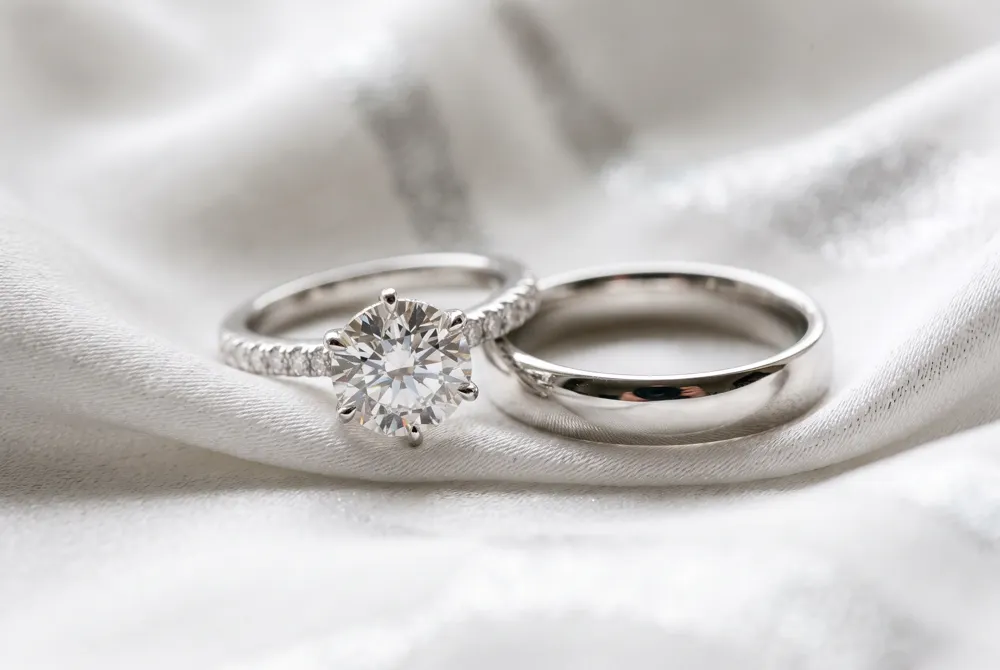
The cost difference between an engagement ring and a wedding ring is often the most practical distinction for couples planning their budget. Engagement rings are significantly more expensive, driven by the diamond at its center, the intricate setting, and the premium placed on a once-in-a-lifetime proposal piece. In the United States, the average engagement ring costs between $5,200 and $6,350, while women's wedding bands average roughly $1,000 to $1,200, and men's bands about $500 to $600.
That gap comes down to materials and craftsmanship. An engagement ring with a diamond of one carat may range from $5,000 to more than $15,000 depending on the stone's quality, while a classic gold or platinum wedding band can cost between $500 and $2,500. The engagement ring carries a larger diamond, more complex metalwork, and often requires more time from a skilled jeweler.
Many couples allocate a larger share of their jewelry budget to the engagement ring, then select a wedding band that complements it without exceeding their overall spending plan. At Avittam Diamond Jewels, clients can explore a curated collection of engagement rings and matching wedding bands side by side, making it easier to see how each price point corresponds to the size of the diamond, the choice of metal, and the intricacy of the setting—so the two rings work together in both style and cost.
5. Wearing Traditions: Stacking Order and Hand
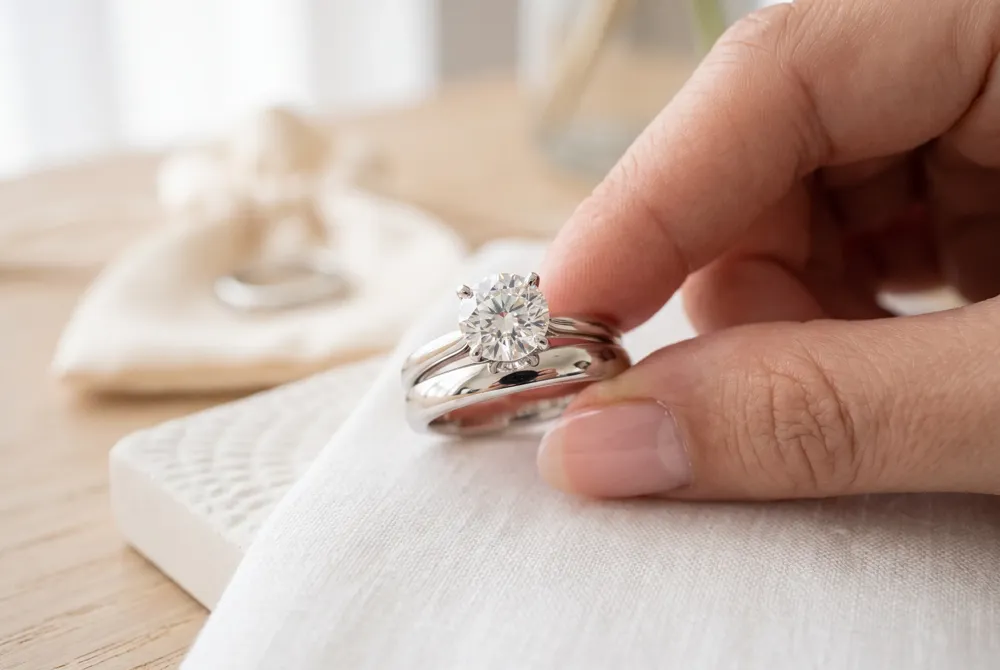
In Western tradition, both the engagement ring and the wedding ring are worn on the fourth finger of the left hand, a custom rooted in the ancient Roman belief in the “vena amoris” or vein of love that runs directly to the heart.
After the ceremony, the wedding band is placed on the finger first, closest to the hand and therefore nearest to the heart. The engagement ring is then stacked on top of it. Some brides temporarily move their engagement ring to the right hand during the ceremony to allow the wedding band to be placed first, returning the engagement ring above the band afterward.
Some couples choose to solder both rings together for a seamless, secure stack. Others wear the wedding band alone for daily activities, reserving the engagement ring for special occasions. There are no strict rules; the arrangement can be tailored to personal comfort and lifestyle. At Avittam Diamond Jewels, we offer bridal sets designed to nest perfectly together, ensuring a flush fit and consistent style that feels natural from the moment you put them on.
6. Who Wears Each Ring?
The question of who wears each ring marks a clear distinction in the engagement ring vs wedding ring tradition. The engagement ring is traditionally given to one partner — often the partner being proposed to, historically the woman — and is worn by that person from the moment of the proposal onward. This single sided gift represents an intention to marry and is typically chosen to suit the recipient's personal style.
In contrast, wedding rings (or wedding bands) are exchanged between both partners during the ceremony, symbolizing the mutual bond of marriage. After the ceremony, both spouses wear a wedding band as a daily reminder of their union. Men's engagement rings have grown in popularity among modern couples, reflecting a shift toward shared symbols of commitment. At Avittam Diamond Jewels, couples can explore coordinated wedding band sets that complement each other's personal taste and fit perfectly together.
Engagement Ring. Traditionally given to one partner during the proposal. It is worn alone during the engagement period and often stacked with the wedding ring after the ceremony.
Wedding Ring. Exchanged between both partners during the marriage ceremony. Both spouses wear a wedding band afterward, making it a symmetrical symbol of their lifelong commitment.
7. Flexibility: One Ring or Two?
The question of whether to wear one ring or two is a deeply personal decision, shaped by budget, tradition, and individual taste. While an engagement ring is given at the proposal and a wedding ring is exchanged during the ceremony, some couples choose to use a single ring for both purposes, especially when the engagement ring features a simpler band that can double as a daily wedding band.
Choosing a single ring offers simplicity and can reduce overall cost. However, the engagement ring may not be as comfortable for lifelong daily wear, and it may not stack smoothly with additional bands later. Many couples prefer the symbolism and creative possibilities of having two rings that nest together as a bridal set, allowing for a cohesive look where the wedding band is designed to fit flush against the engagement ring's setting.
For those who want the best of both options, Avittam Diamond Jewels offers curated bridal sets and custom design services that ensure a perfect fit between the engagement ring and wedding band. Whether you choose one ring or two, personal preference and lifestyle should guide your decision, and the right jeweler can help bring your vision to life.
Engagement Ring vs. Wedding Ring: Clarifying Common Questions
The terms 'wedding ring' and 'wedding band' are used interchangeably for the ring exchanged during the ceremony. In practice, 'wedding band' often describes a simpler, plain metal design, while 'wedding ring' may include more decorative styles. Most jewelers treat them as the same item, so clarifying your intention with the jeweler is the most reliable step.
There is no rule that an engagement ring must look different from a wedding ring, but tradition encourages a distinction. An engagement ring is typically ornate with a prominent center stone, whereas a wedding band is simpler and built for daily wear. Many modern couples choose complementary sets where the band echoes the engagement ring's metal or design; contoured bands that sit flush against the raised stone are a popular choice. The decision is personal.
The engagement ring is usually larger than the wedding ring. Its center stone and elaborate setting are designed to make a statement at the proposal, while the wedding band is lower-profile and comfortable for everyday stacking. Bridal sets often include a subtly curved band that nestles against the engagement ring without a gap, preserving both impact and practicality.
Choosing the Rings That Tell Your Story
From timing and symbolism to design, cost, and wearing traditions, the distinction between an engagement ring vs. wedding ring touches every element of a couple's jewelry journey. The engagement ring marks the promise and the start of a new chapter; the wedding ring seals that promise into an eternal union. Together, they tell a complete story.
The choice between one ring or two, ornate or minimal, stacked or separate, is yours to make. What matters most is that each piece reflects your personal style, your shared values, and the traditions you hold dear. Avittam Diamond Jewels offers a curated selection of ethically sourced diamonds and bespoke designs that let you craft rings as unique as your relationship.
As you consider the engagement ring vs wedding ring that will accompany you through life, remember that these symbols are more than jewelry—they are the tangible promise of a future built together. Let them be as meaningful as the journey they represent.