
Understand the Two Rings
The engagement ring vs wedding ring decision is about more than choosing two pieces of jewelry. Symbolism, design, fit, budget, and daily comfort all shape how the rings look and feel together, whether you buy them as a set or choose them at different times.
Traditionally, an engagement ring is given at a proposal, while a wedding band is exchanged during the ceremony. Yet tradition is a starting point, not a rule: some couples prefer a coordinated pair, while others choose distinct designs or wear only one ring. As Vogue’s ring-shopping guide advises, it is worth considering how the two pieces will sit together, even when they are purchased separately.
This guide explores seven avoidable buying mistakes, from treating the rings as unrelated decisions to guessing at fit or letting sales pressure set the pace. Thoughtful guidance can help you weigh personal style alongside practical details. Avittam Diamond Jewels offers bespoke choices in design, metal, and engraving, as well as product guidance and virtual try-on tools to support a more considered selection.
Choosing an Engagement and Wedding Ring Set
- Plan the pairing early: a setting’s height, stone shape, and side details can affect whether a wedding band sits flush or needs a curved, open, or custom-contoured design.
- Matching is optional: rings can coordinate through metal, finish, profile, or engraving without being identical; assess the complete pairing both stacked and separately.
- Proportion has no fixed rule: band width, finger shape, and setting height determine how the rings look and feel together, rather than a convention that one must be more prominent.
- Carat measures diamond weight, not its overall appearance or suitability. Consider cut, color, clarity, shape, setting, and personal preference when evaluating a stone.
- Daily comfort matters: setting height and exposed details may affect wear during work or activity. Try both rings together and notice any pinching, rubbing, shifting, or snagging.
- Set a comfortable budget and compare the complete design, including stone, metal, setting, craftsmanship, and customization. Review documentation, return terms, and resizing policies before purchase.
- Confirm ring size and timing early: some intricate designs can make resizing more difficult, while custom work may require production time and room for revisions.
1. Treating the Rings as Separate Decisions
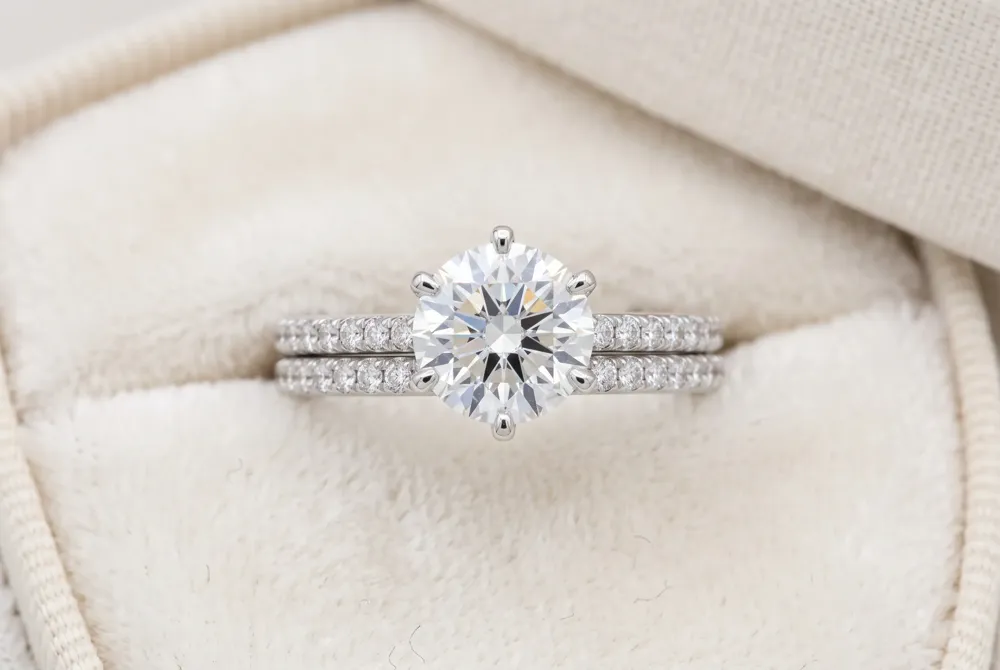
An engagement ring may be chosen first, but its future wedding band deserves a place in the decision from the beginning. A setting that looks graceful on its own can leave little room for a band, or create a gap that changes the look of the pair. Considering the engagement ring vs wedding ring together helps you avoid treating fit as an afterthought.
The center stone’s height and shape both affect how the rings meet. A high setting may leave room for a straight band, while a low setting, side stones, or an elongated center stone can prevent one from sitting flush. A curved or open band may follow the ring’s outline or make room around the setting. A custom contoured band is another option when a standard shape does not align well. Vogue’s ring-shopping guidance recommends considering band compatibility when selecting an engagement-ring setting.
Avittam Diamond Jewels offers bespoke ordering that lets couples customize a ring’s design and metal, which can help when planning a coordinated pairing rather than choosing each piece in isolation. Decide whether you want the rings to sit closely together or leave a deliberate space, then assess the combination on the hand. A neat visual fit matters, but so does comfort: the rings should not pinch, rub, or feel cumbersome when worn together.
Even if you plan to buy the wedding band later, keep its likely shape and profile in mind while choosing the engagement ring. Avittam Diamond Jewels’ detailed product guidance and virtual try-on tools can support that early planning from home. A considered pairing gives you room to personalize each ring while ensuring the finished set feels natural to wear.
2. Assuming Both Rings Must Match
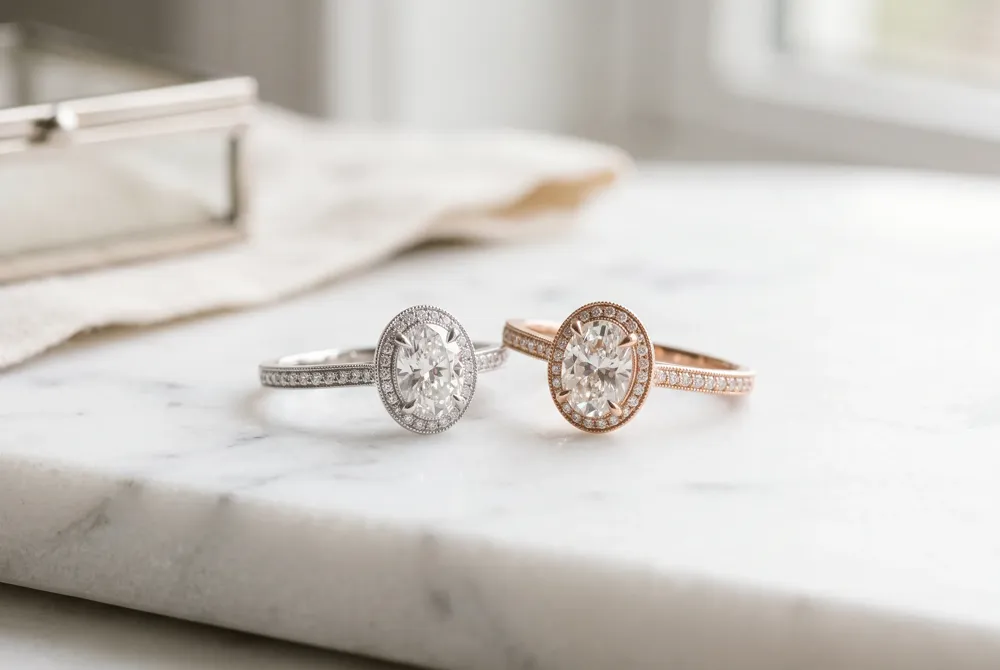
A common mistake in the engagement ring vs wedding ring decision is assuming the wedding band must copy the engagement ring. Matching metals can create a smooth, unified look, but different colors, textures, or levels of detail can feel just as considered when the contrast is intentional. Vogue’s ring-shopping advice recommends thinking about how the two pieces will pair, rather than treating them as unrelated purchases.
Couples can choose a coordinated bridal set, a complementary band shaped to sit beside the engagement ring, or two rings that express individual tastes. At Avittam Diamond Jewels, the bespoke service allows customers to customize each ring’s design and metal, so coordination need not mean identical pieces.
When considering mixed metals, look at how the colors work together and how the rings may wear side by side. Differences in finish or ornament can add character, while a shared detail, such as a similar profile or a subtle engraving, can create a visual connection.
Judge the complete pairing on the hand, both stacked and separately. A band should feel comfortable beside the engagement ring and still look finished when worn alone. Avittam Diamond Jewels offers bridal sets as well as customizable designs, giving couples room to weigh the overall pairing against each ring’s individual appeal.
3. Choosing Proportions by Convention
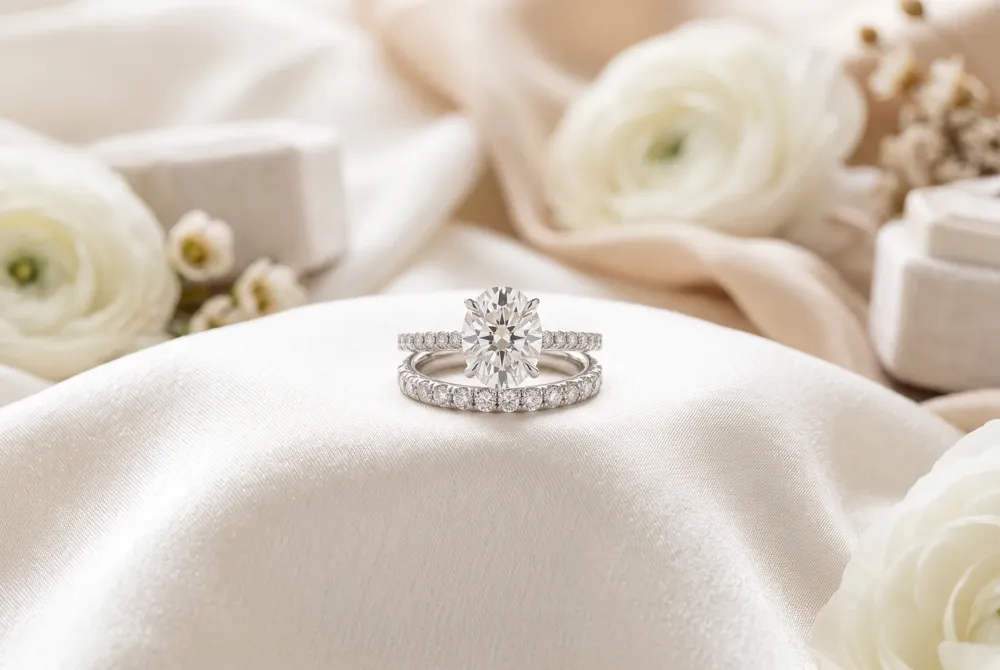
A common mistake in the engagement ring vs wedding ring decision is assuming the engagement ring must always be larger or more prominent. A center stone naturally draws the eye, but that does not mean the wedding band has to recede. A broad, sculptural band can be the stronger element, while a delicate engagement ring may suit a quieter pairing.
Proportion depends on the full design, not a fixed width or hierarchy. Band width, stone setting, finger shape, and the height of each ring all affect how the pair looks and feels. A narrow band beside a substantial setting may create contrast; two similarly weighted rings can feel more composed. Neither approach is a rule. The useful question is whether the pieces look intentional together and whether either one overwhelms the other.
Try the engagement ring and wedding band on together, since photographs may not reveal how their profiles meet or how much space the combined stack takes up. Notice whether the rings sit comfortably, shift or rub, and feel balanced from different angles. Vogue’s engagement-ring shopping advice also recommends considering how a band will pair with the setting. At Avittam Diamond Jewels, bespoke ordering allows couples to customize a ring’s design, metal, and engraving, so proportions can be considered as part of a coordinated choice rather than an afterthought.
4. Prioritizing Carat Over the Whole Design
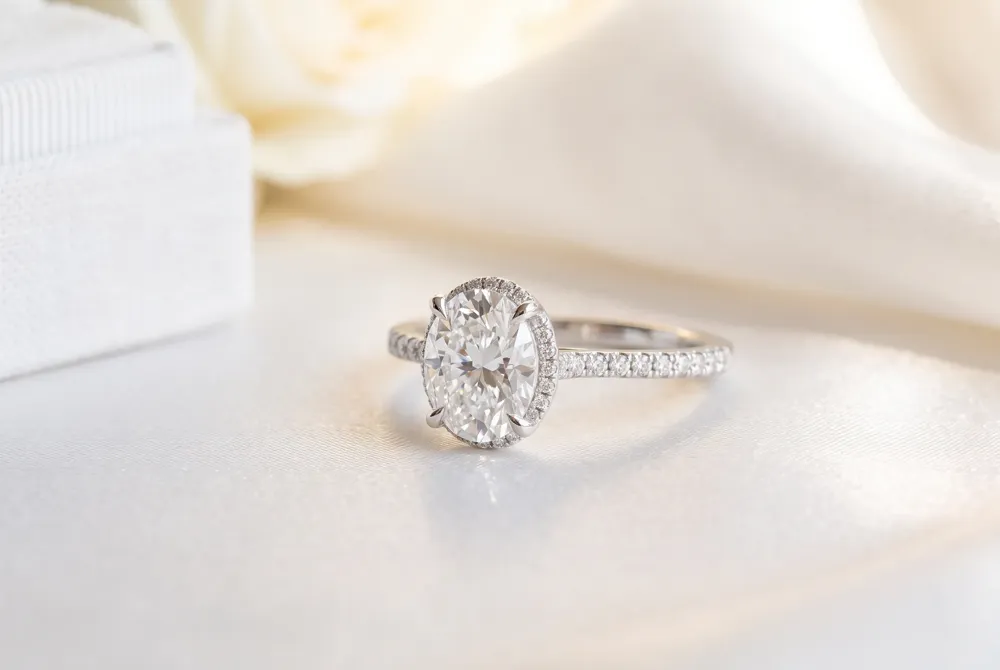
In the engagement ring vs wedding ring decision, a larger center stone or higher headline grade can seem like the clearest measure of value. Yet carat weight describes a diamond’s weight, not how lively it looks or whether the finished ring suits its wearer. Begin with the design they would enjoy wearing every day, then consider how the stone and setting work together.
The four Cs, cut, color, clarity, and carat, offer a useful framework for comparing diamonds, but a report cannot capture every quality that shapes their appearance. Cut and light performance affect how brightly a stone reflects light, while the setting frames it and contributes to the ring’s character. A smaller stone may feel more harmonious in one design than a larger stone in a setting that competes with it.
Shape also influences the impression of size. Oval and marquise diamonds may appear larger than round stones of the same carat weight, though the effect depends on the individual diamond and its cut. Treat shape as a matter of preference, not a promise about appearance.
A recognized grading report can help verify a diamond’s stated characteristics. Pair that information with a close look at the stone, in person where possible or through clear images and product details. Vogue’s engagement-ring shopping advice likewise encourages buyers to consider a diamond’s appearance and personal appeal, rather than relying on certificate grades alone.
At Avittam Diamond Jewels, curated diamond selections and detailed product guidance support that more complete assessment. Choose the stone for its character, then judge it in the setting and alongside the wedding band, so the full design feels considered rather than built around a single number.
5. Ignoring Lifestyle and Daily Comfort
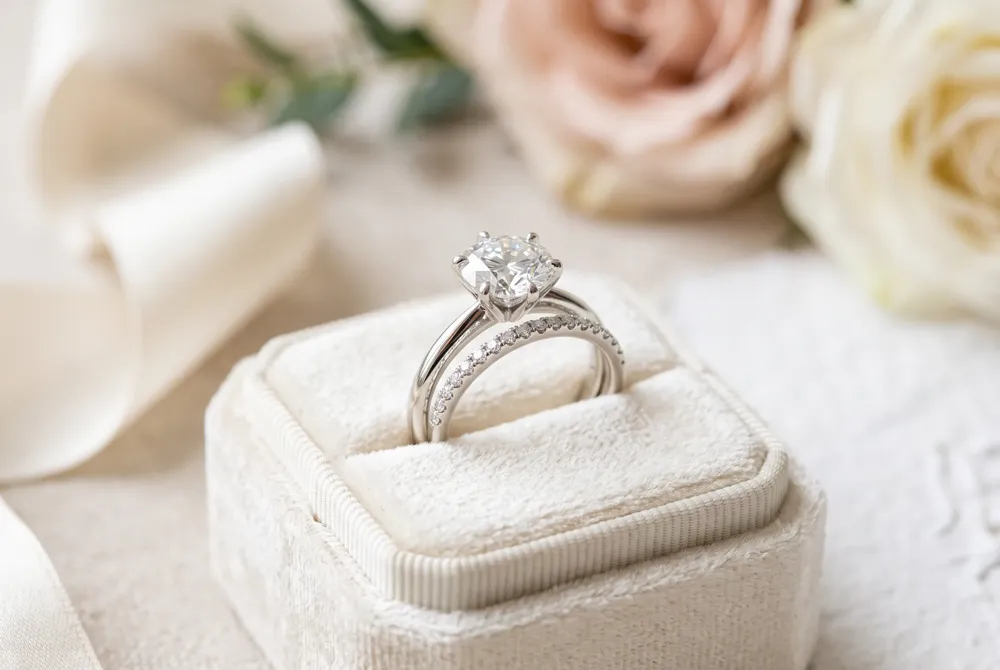
In the decision between an engagement ring and a wedding ring, a beautiful design still needs to suit the way its wearer lives. A raised center stone, exposed prongs, or fine details may catch on clothing and feel inconvenient during hands-on work, exercise, or other active routines. The right choice depends on the wearer’s habits, not on a rule that every ring should be low or delicate.
A lower-profile setting can sit closer to the finger and offer a more secure, practical feel; a higher setting gives the center stone greater prominence. Neither is universally better. Consider what the wearer values, and ask a jeweler how the setting may affect comfort, protection, and the way a wedding band sits beside it. Vogue’s engagement-ring shopping tips recommend considering band profile and fit alongside the engagement-ring setting.
Try the rings together, rather than judging them separately or relying only on photographs. Notice whether the set shifts, pinches, rubs, or feels cumbersome when the hand moves. A pair that looks graceful at rest should also feel comfortable through ordinary gestures and daily tasks.
Lifestyle can also shape how the rings are worn. Some people may prefer to remove a prominent engagement ring for work or activity and wear only the wedding band at those times. At Avittam Diamond Jewels, couples can customize a ring’s design, metal, and engraving, making it possible to discuss personal preferences and daily wear together when planning a bridal set.
6. Letting Budget or Sales Pressure Lead
In the engagement ring vs wedding ring decision, a clear budget can keep a beautiful design from becoming a source of financial strain. Set a spending range that feels comfortable for your household, rather than following a salary-based formula or treating your limit as flexible once a favorite ring appears. There is no universal amount that couples need to spend, and Vogue’s engagement-ring shopping guidance advises choosing according to the wearer and your own priorities.
Compare the complete design, not just the center stone or listed price. An engagement ring may cost more when it includes a substantial diamond, but that is not a rule: a detailed setting, custom work, or a diamond-set wedding band can also add considerable expense. Avittam Diamond Jewels offers bespoke choices in design, metal, and engraving, so it helps to decide which details matter most before requesting or reviewing a quote.
Ask for an itemized explanation of the stone, metal, setting, craftsmanship, and any customization. If you are comparing natural and lab-grown diamonds, consider their appearance, origin, personal significance, and fit with your budget rather than assuming one is automatically right for every couple. Avittam Diamond Jewels’ curated diamond selection and product guidance can help shoppers assess quality while considering the full ring design.
Be cautious if a seller pressures you to buy immediately or presents a limited-time offer as your only chance. Take time to review diamond documentation, return and resizing terms, and the overall value of each option. A thoughtful comparison gives you room to choose a pair that feels meaningful and financially sound, rather than letting urgency set the terms.
7. Guessing the Size and Leaving No Time
In the engagement ring vs wedding ring decision, an uncertain size or late start can turn a considered purchase into a rushed one. A discreet plan is better than a guess: check a ring the wearer already owns, use a ring-size guide, or arrange a professional measurement. If the ring is a surprise, choose a method that preserves the moment without relying on assumptions.
Resizing is not equally simple for every design. Pavé bands and intricate details can make adjustments more difficult or costly, so ask about fit and resizing before choosing a setting. At Avittam Diamond Jewels, couples can customize a ring’s design, metal, and engraving through its bespoke ordering service, making it especially worthwhile to confirm measurements and adjustment options early.
Custom work and some settings require production time, and a compressed schedule can leave little room for revisions. The Vogue engagement-ring shopping guide advises planning ahead for custom design and confirming measurements before purchase. Beginning early gives you time to compare designs and make thoughtful choices without treating the deadline as the deciding factor.
Before ordering, read the jeweler’s resizing, exchange, return, and warranty terms, particularly if the recipient has not tried on the ring. Ask what adjustments are included, whether an exchange is possible, and how coverage applies to the setting and stones. Avittam Diamond Jewels also provides detailed product guidance and virtual try-on tools, which can help narrow choices, but the written policies and final measurements still deserve careful attention.
Do not assume the engagement ring and wedding band will sit comfortably together just because each fits on its own. Try the pair together, checking for gaps, rubbing, pinching, or shifting, and ask whether a contoured band or another fit adjustment would help. Confirming the set well before the ceremony leaves time to refine the fit rather than settling for an uncomfortable combination.
The Difference Between the Rings
The distinction in the engagement ring vs wedding ring choice is primarily one of timing and meaning. An engagement ring is traditionally given at a proposal as a promise to marry; a wedding ring is exchanged during the ceremony to symbolize the vows and commitment the couple makes.
Design conventions can help you compare the two, but they are not rules. An engagement ring often has a prominent diamond or other gemstone, while a wedding band may be a plain metal circle, a diamond-set design, or a band shaped to complement the engagement ring. As Vogue’s engagement-ring shopping guide advises, it is worth considering how both pieces will feel and sit together, even if you buy them at different times.
You do not have to choose two rings. Some couples prefer separate pieces worn as a coordinated set; others choose one versatile ring to mark both the engagement and the marriage. Your decision can reflect personal style, daily comfort, and whether you want a distinct ring to commemorate the ceremony.
At Avittam Diamond Jewels, couples can personalize a ring’s design, metal, and engraving through the bespoke ordering service, allowing the piece or pair to reflect their preferences rather than a fixed tradition.
Wearing the Rings Together
When considering the engagement ring vs wedding ring, many couples in the United States follow a familiar stacking custom: the wedding band sits on the left ring finger, closest to the hand, and the engagement ring rests above it. The order places the band exchanged during the ceremony beneath the earlier proposal ring, creating a simple, coordinated set.
On the wedding day, some people temporarily move the engagement ring to the right hand. This leaves the left ring finger ready for the wedding band during the ceremony; afterward, the engagement ring can be returned above it. The approach is described in Vogue’s engagement ring shopping tips, which also recommends considering how the two rings will sit together.
This arrangement is a custom, not a requirement. Ring-wearing traditions differ across cultures, and comfort or personal preference may lead a couple to choose another finger, hand, or order. Avittam Diamond Jewels offers bespoke choices in ring design and engraving, allowing couples to consider how their pieces will look and feel as a set without treating tradition as a rule.
Choose With Intention
The engagement ring vs wedding ring choice is ultimately personal. Let the wearer’s style guide the design, while comfort, daily routines, and a thoughtful budget shape what works in practice. A pairing can be refined and distinctive without being dictated by tradition or a passing trend.
Assessing both rings together helps you consider how they look and feel as a pair. Allow time for sizing and any customization, and ask clear questions about materials, design, and the steps involved. Avittam Diamond Jewels offers bespoke choices in design, metal, and engraving, alongside virtual try-on tools that can help make online ring selection more considered.
There is no single correct way to wear or coordinate these pieces. Choose rings that feel comfortable in daily life and meaningful to the people wearing them. When personal preference leads and practical details receive equal care, the result can feel naturally yours.