
Finding Your Cushion Cut
A moissanite cushion cut brings together a softly rounded outline and the presence of a square or rectangular center stone. Its gentle corners lend the shape a romantic, enduring character, while its proportions and facets can create quite different impressions from one ring to another.
The choice is best made by looking beyond a single label. Consider whether you prefer a near-square or elongated silhouette, broad flashes or a finer, more scattered sparkle, and how the stone’s actual measurements sit on the hand. A setting can further shape the effect, from the clean emphasis of a solitaire to the protective frame of a bezel.
At Avittam Diamond Jewels, a bespoke ordering service lets couples personalize a ring’s design, metal, and engraving. That makes it easier to treat each decision as part of a considered whole, rather than relying on a specification alone.
As you compare options, focus on the balance that feels right for your style and everyday wear. The most meaningful cushion cut is not defined by one proportion or facet pattern, but by how the stone, setting, and personal preferences come together.
Shape, Facets, and Fire
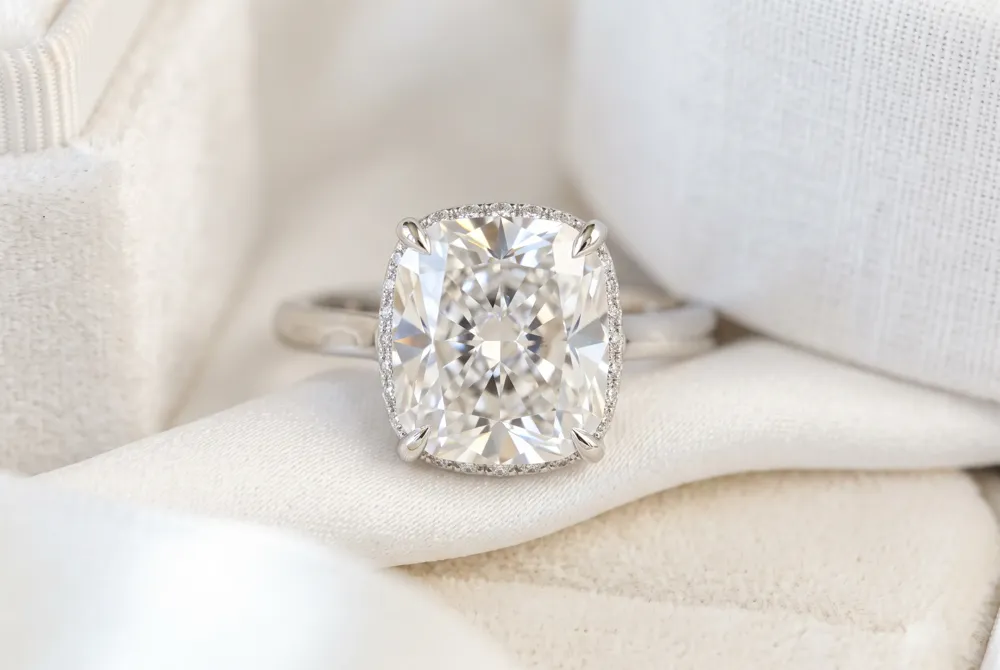
A moissanite cushion cut pairs a square or rectangular outline with gently rounded corners. Its soft silhouette recalls antique styles, yet it can feel equally at home in a clean, modern setting. The proportions shape the impression: a nearly square stone looks compact and balanced, while an elongated cushion creates a more rectangular line.
How does a cushion cut moissanite look, and what gives it its sparkle?
The answer lies partly in the facets. Larger facets can produce broad, distinct flashes of light, while a pattern of many smaller facets creates a finer, more fragmented shimmer often called “crushed ice.” That phrase describes an appearance, not an official quality grade; neither pattern is inherently better.
Moissanite bends and disperses light strongly, creating bright sparkle and colorful, rainbow-like fire. The balance between white light and colored flashes changes with the stone’s proportions, facet arrangement, and the lighting around it. A lively display may appeal to one wearer, while another may prefer broader, quieter flashes.
When comparing stones, look beyond labels and view clear images or videos from several angles, ideally in different lighting. Notice whether the cushion’s facets appear broad and defined or finely patterned, and whether its outline feels square or elongated. Avittam Diamond Jewels offers bespoke ordering, allowing customers to personalize a ring’s design, metal, and engraving, so the chosen stone can guide a setting that feels considered rather than generic.
Moissanite’s stronger rainbow-like fire compared with a diamond’s is a visual distinction, not a quality ranking. Choose the facet style and light play that suit your taste and the way you want the ring to look in everyday settings.
Choosing Proportions and Measurements
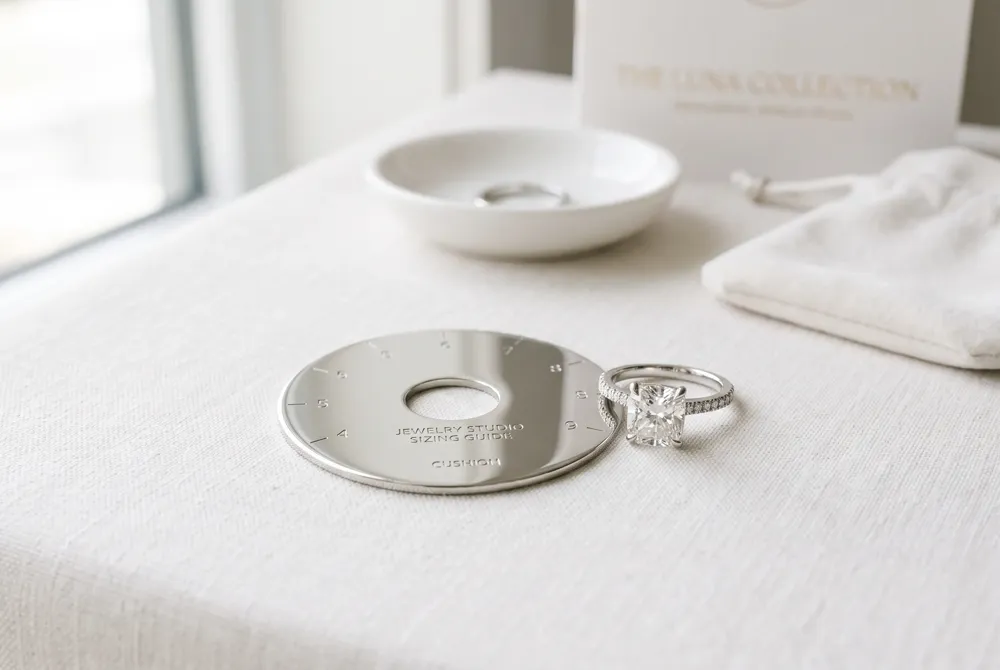
Choosing a moissanite cushion cut begins with its outline. A ratio close to 1.00 appears nearly square, while a higher length-to-width ratio gives the stone a more elongated, rectangular look. Neither proportion is universally best; the right choice depends on the silhouette you want on your hand.
A square cushion can feel compact and balanced, with similar visual emphasis across the finger. An elongated cushion adds more vertical coverage and may suit someone drawn to a longer outline but who still prefers the cushion’s softened corners.
How should you choose a cushion cut moissanite?
Start by comparing the stone’s actual length and width in millimeters. Diamond-equivalent weight (DEW) gives an approximate sense of how large a moissanite may look beside a diamond, but it cannot show the full face-up appearance. Two cushions with similar DEW may look different because their proportions and depth differ.
A deeper stone can show less surface area from above than its weight might suggest. Judge the visible size and appearance rather than relying on a weight figure or a seller’s cut label alone. Avittam Diamond Jewels provides product guidance and virtual try-on tools to help shoppers assess how a ring’s proportions may look before ordering.
Request clear close-up photographs or video, and compare stones on the hand when possible. Look for the balance of brightness and contrast, then note whether you prefer broad, distinct flashes or finer, crushed-ice reflections. Persistent dark patches or a transparent window may affect the stone’s overall appearance, so inspect those areas from more than one angle.
A thoughtful choice brings together outline, face-up measurements, sparkle, setting, and metal. If you are unsure how the dimensions will sit within a preferred setting, ask a jeweler to explain the stone’s proportions and fit before making a decision.
Settings That Suit the Cushion Shape
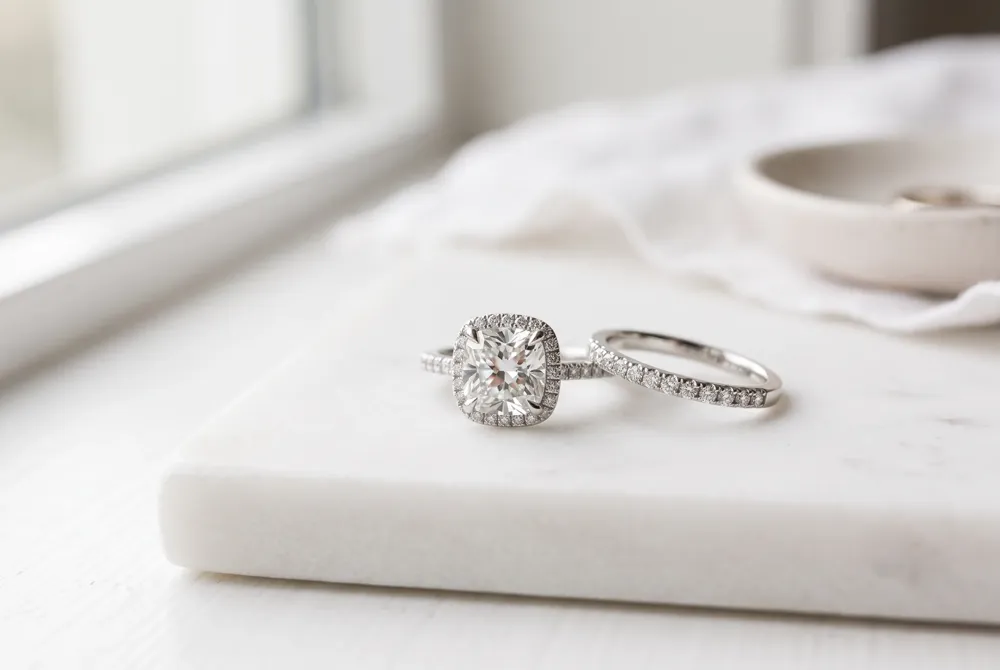
The setting shapes how a moissanite cushion cut looks on the hand, from a clean, stone-focused silhouette to a richly detailed design. Choose with your personal style, everyday routine, comfort, and preferred wedding-band pairing in mind.
A solitaire leaves the center stone in focus, while a halo frames it with smaller stones and can make it appear larger. Hidden halos tuck accents beneath the center, adding detail from the side. Pavé places small stones along the band; three-stone designs add side stones that give the center a more composed, balanced presence.
A bezel surrounds the cushion’s rounded perimeter with a precious-metal rim, emphasizing its outline and adding a protective border. Vintage-inspired settings use details such as milgrain or intricate metalwork to create an antique character. Whichever design appeals, consider how its profile feels during daily activities, how it sits beside a wedding band, and whether its construction securely holds the stones.
Metal also affects the stone’s appearance. Colorless D-F moissanite can complement white gold, platinum, or silver, while near-colorless G-I stones may pair well with yellow or rose gold.
Before deciding, view the ring from above and from the side, and ask how the wedding band will sit beside it. Avittam Diamond Jewels also offers virtual try-on tools, which can help you assess the overall look as you refine a design.
Moissanite Compared With Diamond
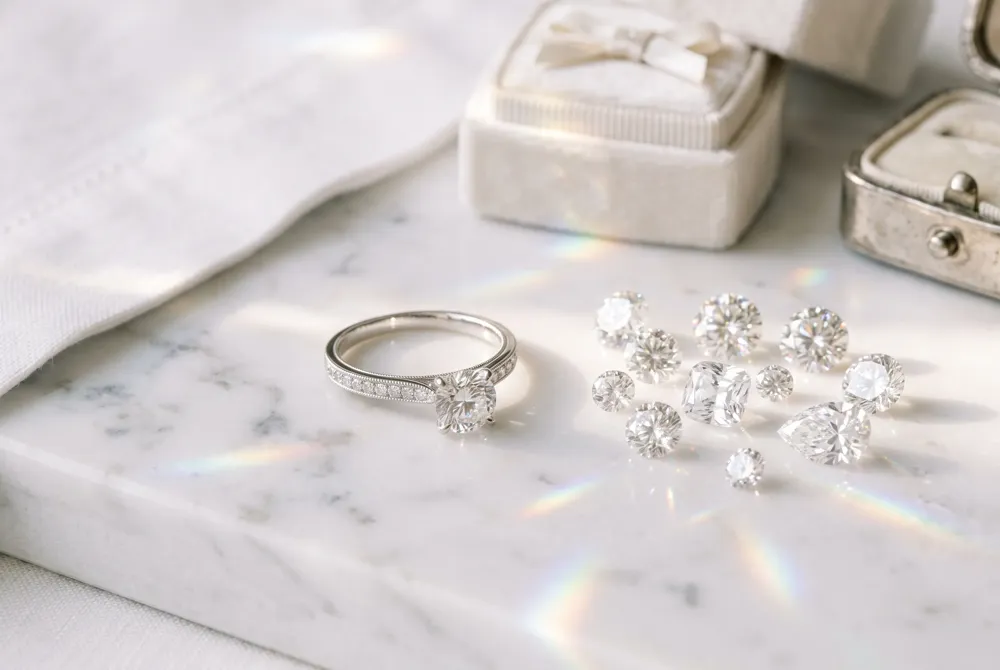
When you compare a moissanite cushion cut with a diamond, begin with what each stone is. Moissanite is silicon carbide, while diamond is made of carbon. A lab-grown diamond has the same fundamental composition as a mined diamond; moissanite is a distinct gemstone, not a synthetic or lab-grown diamond.
Natural moissanite is extremely rare and generally too small to cut for jewelry, so the stones used in rings are typically lab-created. That origin does not make moissanite a diamond substitute in a technical sense. It offers its own material identity and a different visual character.
Both stones are suited to regular wear, though diamond is harder. Moissanite measures about 9.25 on the Mohs hardness scale, compared with 10 for diamond. In practical terms, moissanite resists ordinary scratching, while care for either ring should include attention to its setting and metal.
The difference you may notice first is the light. Moissanite’s greater dispersion can create pronounced rainbow-like flashes, while diamond often presents a more restrained pattern of fire. Neither effect is universally preferable: you may love the vivid color in a moissanite cushion cut, or you may favor diamond’s familiar appearance.
Moissanite’s center stone generally costs a small fraction of a comparable diamond, but that is not a complete ring quote. Stone size and color, metal choice, and the complexity of a halo, pavé, or other setting all affect the total.
The choice comes down to your priorities: moissanite offers distinctive colored fire and a lower center-stone cost, while diamond carries its own material identity and tradition. Compare the actual stones and finished designs, then choose the one whose appearance and overall cost feel right for your everyday wear.
Tradeoffs to Consider Before Buying
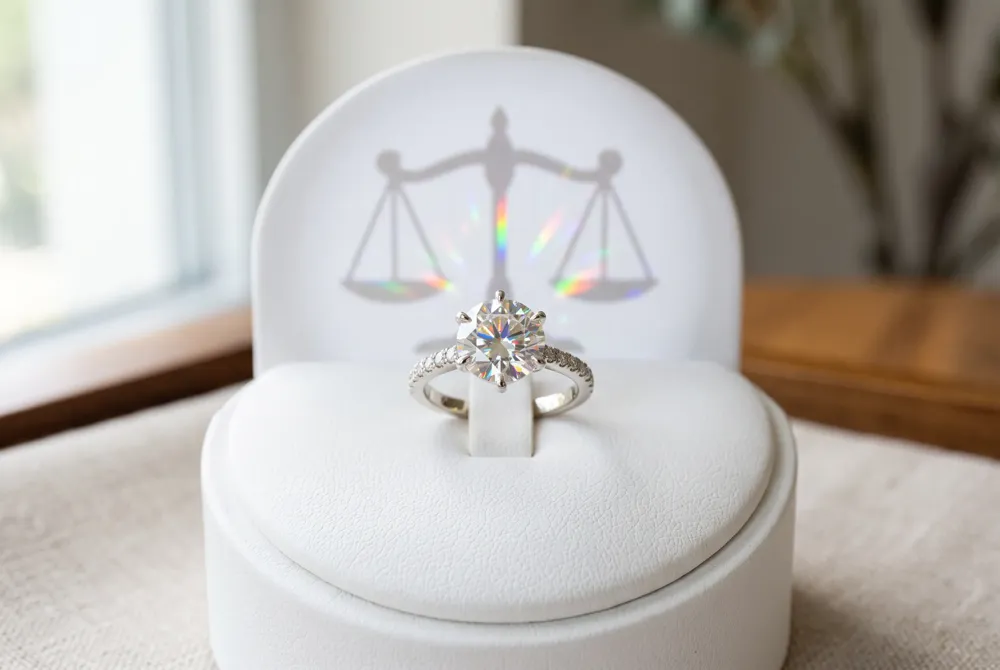
Before choosing a moissanite cushion cut, consider what matters most to you in a center stone. Moissanite is silicon carbide, a distinct gemstone rather than a natural or lab-grown diamond. If owning a diamond itself is important to you, moissanite may not feel like the right choice, regardless of its appearance.
Its vivid, rainbow-like flashes are another matter of taste. Some people enjoy the lively color in moissanite’s fire; others prefer the more restrained sparkle they associate with diamond. Neither look is inherently better. Detailed product guidance can help you assess how a stone’s character fits the ring you have in mind.
Moissanite is durable enough for everyday wear, though it is less hard than diamond. Its 9.25 Mohs rating indicates strong resistance to scratching in regular use, not fragility. As with any ring, thoughtful care can help protect the stone and setting.
Resale is worth considering, too. Moissanite generally has little resale value, so it makes more sense as a choice for its appearance and economics than as an investment.
When possible, view the actual stone in person or study clear, detailed imagery from several angles. Notice how the stone looks in different light. A careful visual review can help you decide whether moissanite’s distinctive fire feels right for a ring you expect to wear often.
Cut and Sparkle in Perspective
A round brilliant is often chosen for its lively sparkle, but a well-proportioned moissanite cushion cut can be bright and full of character too. The difference is not simply a matter of shape: proportions and facet arrangement influence how light appears across the stone.
Cushions can show broad, distinct flashes or a finer pattern of many small reflections. Neither style is inherently better. When comparing stones, look for balanced brightness, a facet pattern you enjoy, and an outline that suits your hand.
Which moissanite cut offers the most sparkle?
A round brilliant typically offers abundant sparkle through its faceting pattern, while a well-cut cushion can also appear bright and lively. There is no universally accepted industry definition of an ideal cushion cut, so labels such as “excellent” or “ideal” reflect a seller’s judgment rather than a shared grading standard.
Treat a cut label as a starting point, not a verdict. View the actual stone in clear photos or video, if available, and consider its brightness, reflections, and shape together. At Avittam Diamond Jewels, detailed product guides and virtual try-on tools can help you assess how a design may look before choosing. The most satisfying choice is the one whose sparkle and style feel right to wear every day.
A Personal Choice for Everyday Wear
A moissanite cushion cut can make an elegant engagement ring, with softly rounded corners and a silhouette that may look square or elongated. The right choice comes down to how the stone’s shape, sparkle, and setting feel to the wearer.
Bring the details together before deciding: compare the outline and facet pattern, check the stone’s actual face-up measurements, and consider how its proportions sit on the hand. A setting and metal should suit both personal style and daily routines. Moissanite’s vivid flashes of color are part of its character, so viewing detailed images or seeing stones in person can help you decide whether that fire appeals to you.
A cushion is suitable for an engagement ring if you enjoy its softer outline and distinctive sparkle. Moissanite resists ordinary scratching and works well for regular wear, but the ring’s metal and setting still need care.
Caring for a moissanite ring
For routine cleaning, soak the ring briefly in warm water with mild dish soap, then brush it gently with a soft toothbrush. Rinse it over a closed drain and dry it with a lint-free cloth. Remove the ring before swimming or cleaning with chlorine or bleach, which can damage the metal even when the stone remains unharmed.
Arrange an annual prong inspection, and tell the jeweler the center stone is moissanite before any repair work. These simple habits help protect the setting and keep the stone looking its best.
If you are weighing different stones, ask for clear images or guidance comparing their proportions, facets, and measurements.
Choose the Ring That Feels Yours
The best moissanite cushion cut is not defined by a single proportion or facet pattern. It is the one whose outline, sparkle, and presence feel right to the person who will wear it. A near-square silhouette may suit one couple, while another may prefer an elongated shape and the distinctive flashes of a particular stone.
Compare actual millimeter measurements and clear images or video, rather than relying on equivalent weight alone. Ask how the stone’s dimensions, color, and facet pattern are described, and whether you can view the exact center stone before deciding. These details help you judge its appearance for yourself and make a considered choice.
The setting completes that decision. A simple solitaire keeps attention on the cushion, while a halo or pavé band brings a more detailed look.
Take time to weigh these choices together, including how the ring feels on the hand and suits everyday wear. With thoughtful comparisons and questions, you can select a cushion cut that feels distinctly yours, rather than following a standard formula.