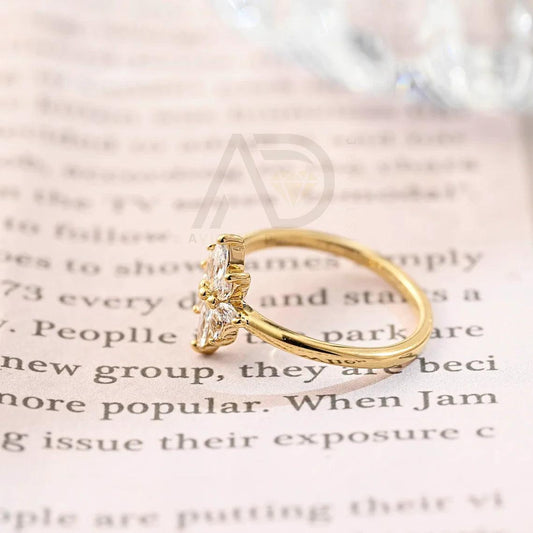

A Diamond Shape That Balances Brilliance and Modernity
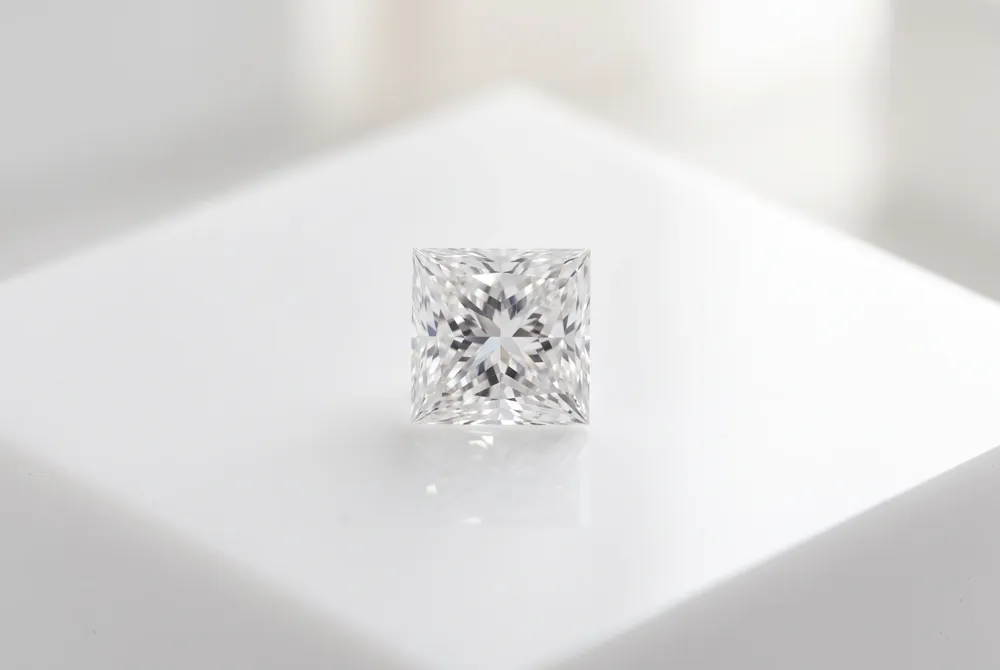
The journey toward the perfect engagement ring begins with choosing a shape that reflects both your personal style and the timeless beauty you wish to celebrate. The princess cut stands as a premier selection for those drawn to modern elegance and geometric precision. Technically classified as a square modified brilliant, this cut combines a square face-up profile with over fifty chevron-shaped facets, delivering exceptional fire and scintillation. Its crisp, pointed corners and pyramidal pavilion set it apart from the rounded silhouette of traditional cuts, offering a distinctive look that balances brilliance with a clean, architectural aesthetic.
Globally, the princess cut is the second most popular diamond shape for engagement rings, following only the round brilliant. This enduring appeal speaks to its ability to capture the sparkle of a round diamond while presenting a more contemporary, angular profile. As we explore the princess cut's rich history, its practical value, and the myriad of ways it can be styled, we invite you to consider how this modern classic might become the centerpiece of your own love story. Avittam Diamond Jewels offers a curated selection of meticulously crafted princess cut rings designed to help you discover the perfect balance of artistry and personal meaning.
The History of a Regal Cut
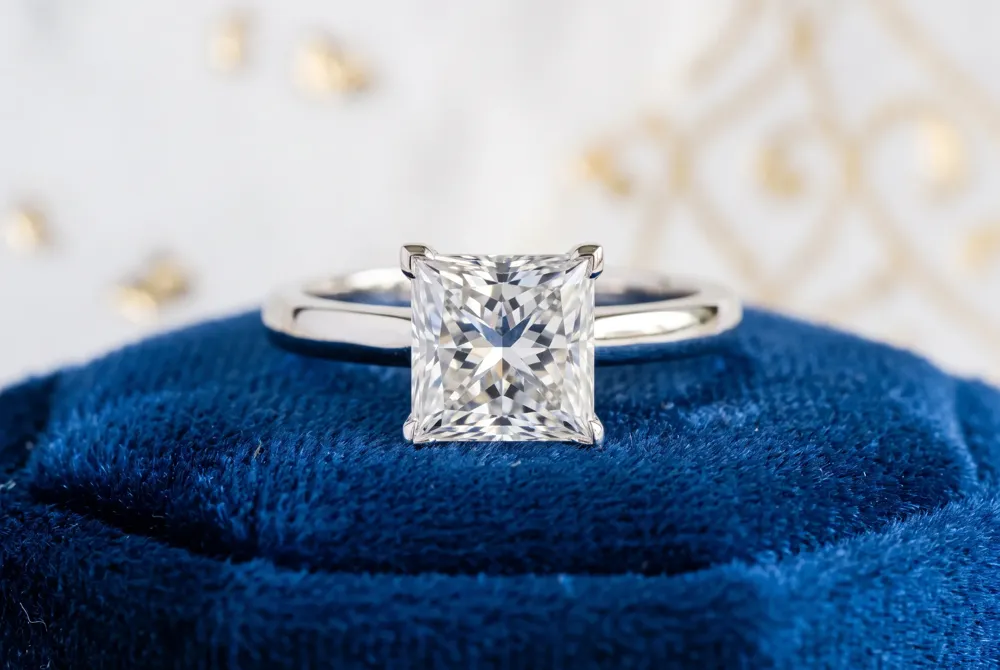
The princess cut first emerged in the 1960s, coined by London diamond cutter Arpad Nagy for his square geometric design. Nagy originally called it the "princess cut" before renaming it the "profile cut." The name endured and later became attached to the brilliant square cuts that followed.
In 1971, South African diamond cutter Basil Watermeyer developed the "Barion cut," a pioneering mixed cut that combined step and brilliant facets on the pavilion to maximize light return. This innovation paved the way for the modern square brilliant. A team of Israeli cutters—Betazel Ambar, Ygal Perlman, and Israel Itzkowitz—built on this foundation to create the "Quadrillion cut" in the late 1970s, which evolved into the modern princess cut as it is known today.
The cut gained widespread popularity through the 1980s and 1990s, becoming the second most popular diamond cut globally. Its blend of modern geometry with exceptional sparkle has secured its place as a lasting favorite for engagement rings, offering a sophisticated alternative to traditional round diamonds.
Why the Princess Cut Sparkles Uniquely
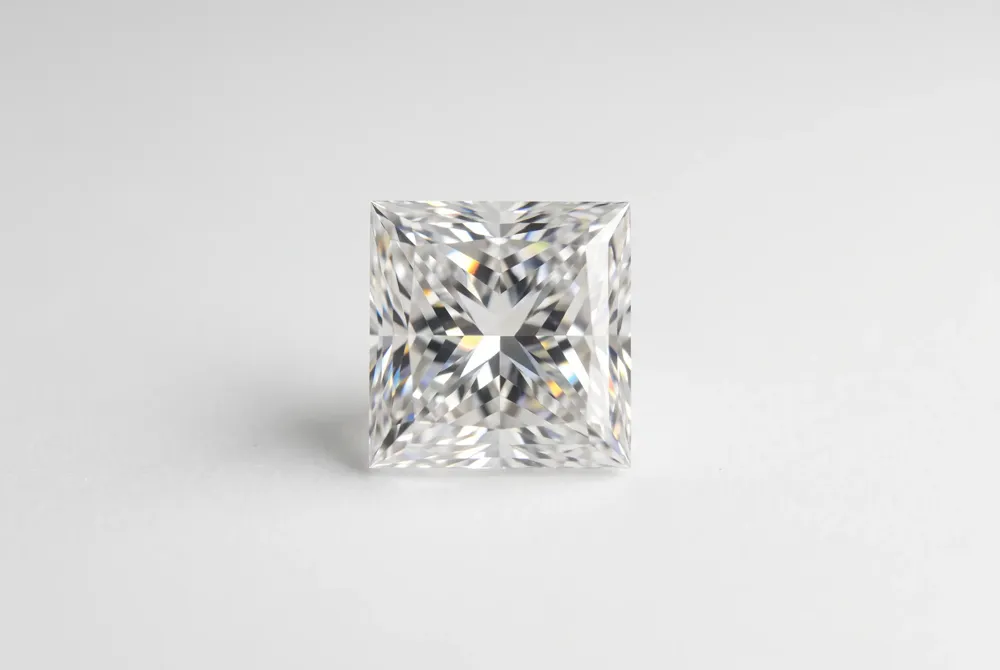
You may know the princess cut by its technical name, the "square modified brilliant," a classification that hints at its complex interior architecture. Unlike traditional round brilliants, the princess cut features 50 to 58 facets arranged in distinctive chevron patterns. These geometric facets are engineered to capture light from every angle and reflect it back with a sharp, modern brilliance that feels both fresh and sophisticated.
This faceting structure allows the princess cut to nearly match the light performance of a round brilliant diamond, yet it delivers a uniquely geometric sparkle. Where a round brilliant's flash is soft and evenly diffused, a princess cut produces bold, angular flashes that play across the stone's square face. The result is a lively, contemporary shimmer that makes it an ideal choice if you are seeking something distinctive but equally radiant.
Achieving this exceptional light return depends on precise proportions. For a princess cut, the table and depth are carefully calibrated to ensure that light enters the diamond fully and is reflected back toward the eye rather than escaping through the sides. A diamond cut to these specifications will appear luminous and fiery, maximizing its sparkle at any carat weight. At Avittam Diamond Jewels, we personally select every princess cut in our collection to meet these performance standards, so you can be confident in your choice.
How the Princess Cut Compares to the Round Brilliant
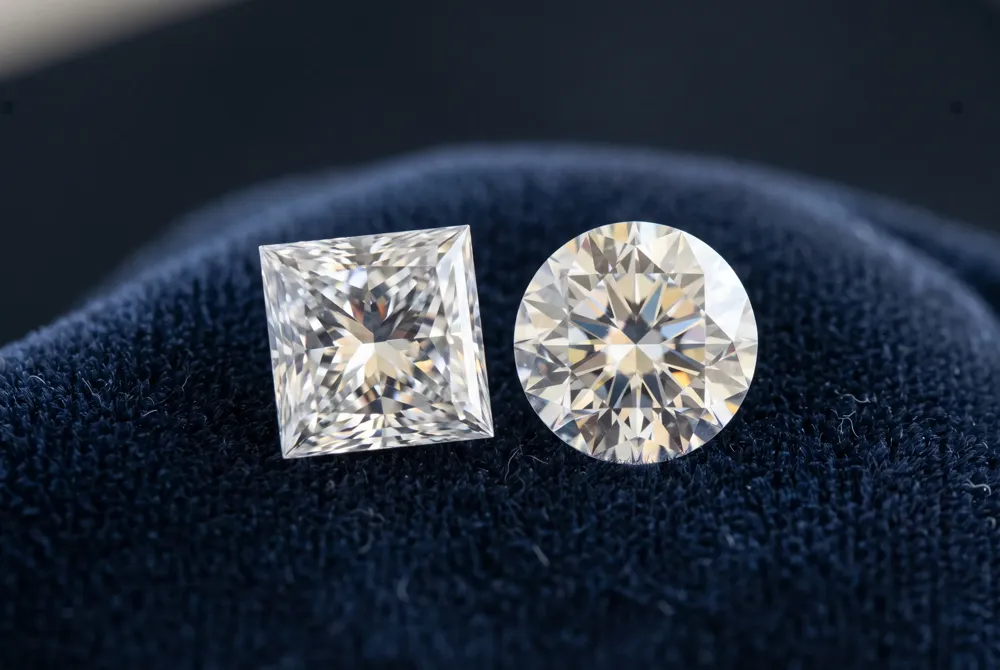
When you compare the princess cut to the round brilliant, the most noticeable difference lies in sparkle. The round brilliant is renowned for delivering the highest possible brilliance, thanks to its mathematically optimized proportions. The princess cut offers a nearly comparable brightness but with a distinct, angular pattern of light that creates a modern, bold look rather than the traditional, uniform fire of a round diamond.
Another major distinction is cost. Princess cut diamonds typically cost 20% to 30% less per carat than round brilliants of equivalent color and clarity. This price advantage is driven by the cutting process — a princess cut retains up to 80% to 90% of the rough diamond crystal, while a round cut wastes roughly 55% to 60% of the rough. For the same budget, a princess cut often yields a stone that appears larger than its round counterpart, due to its square silhouette and wide diagonal span.
The two shapes also differ in durability. The round brilliant has no sharp edges, making it very resistant to chipping. The princess cut's four pointed corners are more vulnerable and require a setting with V-shaped prongs or a bezel for protection. Ultimately, your choice may come down to aesthetic preference: the timeless, universal appeal of a round brilliant versus the clean, geometric elegance of a princess cut. Our team of experts is here to guide you through this decision, offering personalized advice to help you find the diamond that perfectly reflects your style.
Do Princess or Round Diamonds Look Larger?
A common question among engagement ring shoppers is whether a princess cut or a round brilliant diamond appears larger at the same carat weight. The answer has both an optical component and a geometric one. The round brilliant's precisely engineered facet pattern maximizes light return, creating a powerful brilliance that draws the eye across the entire stone, giving it a vibrant, open presence. Meanwhile, the princess cut offers a larger face-up surface area because its square silhouette and shallower depth allow more of the carat weight to be spread across the top.
Research indicates that a princess cut diamond can appear up to 10% larger than a round diamond of identical carat weight due to its diagonal measurements. The round brilliant, by contrast, is cut to maximize fire and brilliance, which means more of its carat weight is distributed in its depth and pavilion, making its visual diameter slightly smaller.
For couples prioritizing a bold, expansive look without increasing carat weight, the princess cut offers a distinctive advantage. At Avittam Diamond Jewels, we guide you through this choice, helping you select a well-proportioned princess cut that maximizes its footprint while delivering exceptional brilliance.
The Price Advantage of a Princess Cut
One of the most compelling reasons to choose a princess cut diamond is its remarkable value. The princess cut's square outline closely mirrors the natural shape of a rough diamond octahedron, cutters can preserve up to 80–90% of the rough crystal, whereas cutting a round brilliant typically wastes 55–60%. This efficiency means a princess cut diamond costs roughly 20–30% less per carat than a comparable round brilliant.
For a well-cut 1-carat natural princess cut diamond with G-H color and VS2-SI1 clarity, you can expect a price between $3,000 and $6,000. The full range for a 1-carat stone spans from roughly $1,500 to $12,000, driven primarily by cut precision, color grade, and clarity. Premium stones with ideal proportions and GIA certification naturally sit at the higher end of the spectrum.
This price advantage means you can often choose a larger princess cut diamond for the same budget you would allocate to a smaller round brilliant. At Avittam Diamond Jewels, we curate a selection of certified princess cut diamonds that balance exceptional cut quality with accessible pricing, allowing you to invest in a stone that makes a striking visual statement without compromising on craftsmanship.
Color and Clarity: What to Look For
The brilliance of a princess cut can forgive subtle imperfections, making color and clarity choices more forgiving than with many other shapes. A well-cut stone hides body color and small inclusions remarkably well, allowing you to prioritize visual beauty over the highest grades.
For the metal's color, a practical guideline applies: White metals like platinum or white gold reflect the diamond's body color, so a G to I color grade keeps the stone looking bright and colorless. Yellow or rose gold settings absorb warmth, making J or K color diamonds appear pleasingly white without the premium of higher grades.
Clarity is where the princess cut truly rewards smart shopping. The cut's faceting pattern and sparkle mask small inclusions, so VS2 or SI1 clarity offers an eye-clean stone at a sensible price. In many cases, a G/VS2 princess cut can appear visually identical to a D/IF stone at nearly half the cost.
One caution applies: avoid stones with inclusions near the four vulnerable corners. A flaw at a corner weakens the structure and risks chipping. For the best value, choose a diamond that is eye-clean across its entire face, then trust the princess cut's natural ability to hide the rest.
Ideal Proportions for Maximum Beauty
A princess cut diamond's beauty depends more on its proportions than any other factor. Unlike round brilliants, which receive a cut grade from the GIA, most fancy shapes do not, making it essential to understand the specific measurements that deliver superior light performance.
The ideal table percentage for a princess cut diamond falls between 68% and 72%, with the sweet spot often found at 69% to 70% among top-tier stones. This range pairs with a moderately high crown height of 10.5% to 14%, which enhances the diamond's ability to refract light and produce exceptional fire. Diamonds with tables exceeding 72% are often cut to maximize carat weight rather than brilliance, resulting in a flatter appearance and diminished sparkle.
Depth should fall between 71% and 75%, ensuring good light return from the pavilion. For a classic square look, the length-to-width ratio should be 1.00 to 1.05, with 1.00 to 1.02 preferred. Stones above 1.05 appear visibly off-square. Because the American Gem Society (AGS) is the only major lab that assigns an overall cut grade to princess diamonds, an AGS 0 Ideal certification provides reliable assurance of excellent light performance.
At Avittam Diamond Jewels, each princess cut diamond in the collection is curated to these precise standards, so you can be confident the stone you choose has been prioritized for brilliance over yield. The result is a diamond that delivers the maximum sparkle and fire you expect from a premium square modified brilliant.
Princess Cut Size Chart and Measurements
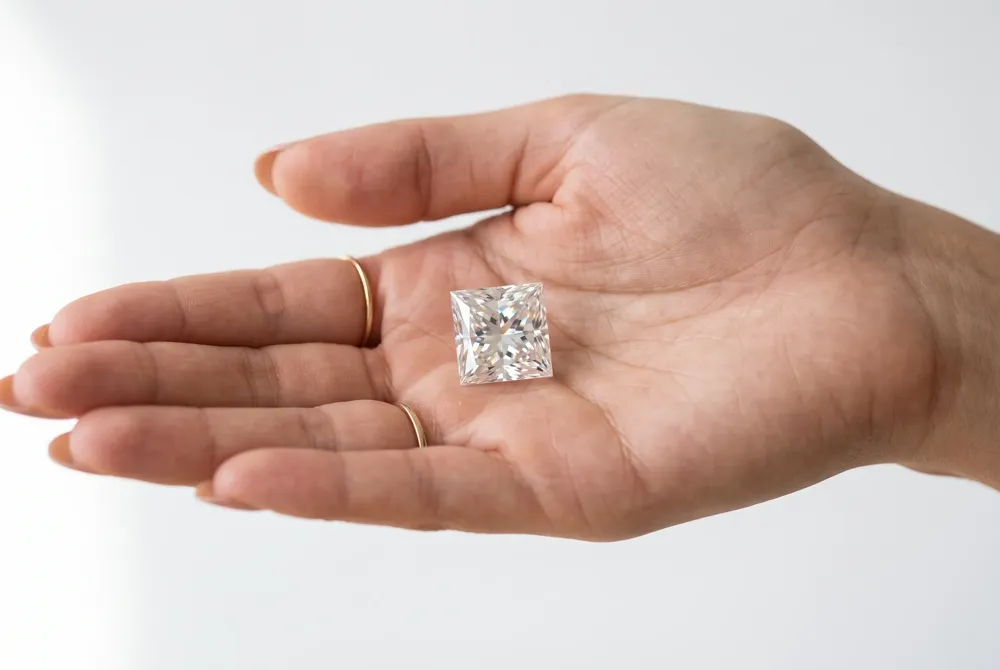
A princess cut diamond size chart is an essential tool for visualizing how carat weight translates into the actual face-up dimensions of the stone on your hand. Since princess cut diamonds are square, the millimeter measurements in the chart represent the width of the diamond across its top, offering a clear guide to its presence on the finger.
| Carat Weight | Typical Width (mm) | Notes |
|---|---|---|
| 0.25 ct | ~3.5 mm | Ideal for delicate settings or accent stones |
| 0.50 ct | ~4.5 mm | Refined presence; popular for solitaire rings |
| 1.00 ct | ~5.5 mm | Classic center-stone size with bold sparkle |
| 1.50 ct | ~6.2 mm | Noticeably larger; strong visual impact |
| 2.00 ct | ~7.0 mm | Dramatic surface area; substantial yet elegant |
A well-known effect among collectors is what many call the 'phantom carat effect': a princess cut carries more of its weight in depth than a round brilliant, so its face-up surface area can be slightly smaller than a round diamond of the same carat weight, its face-up surface area can be slightly smaller than a round diamond of the same carat weight. A 0.50-carat princess cut, for example, appears visually closer to a round stone of about 0.42 to 0.45 carats. Understanding this relationship helps you choose a stone that feels both substantial and beautifully proportioned for your setting.
At Avittam Diamond Jewels, each princess cut diamond is presented with precise millimeter specifications, allowing you to compare how different carat weights will appear on your hand. By balancing carat weight with these real-world dimensions, you can select a princess cut that delivers the perfect combination of sparkle, presence, and value.
Protecting the Sharp Corners
The princess cut's crisp, square silhouette and four pointed corners give it a distinctly modern personality. Those same corners, however, make the diamond more vulnerable to chipping than a round brilliant, whose continuous curved edge distributes impact more evenly. This does not mean the cut is fragile — it simply requires thoughtful protection.
The most secure solution is a V-prong setting, in which each corner is cradled by a tiny metal V that shields the tip while keeping the stone fully exposed to light. A bezel setting, where a thin metal rim wraps around the entire diamond, offers the highest level of protection by encasing all four corners. Channel settings and four-prong heads also provide reliable corner security. With any of these designs, a princess cut ring is well-suited for daily wear.
At Avittam Diamond Jewels, every princess cut ring is set by craftsmen who understand the geometry of the stone, ensuring the prongs or bezel rest precisely where they are needed most. The result is a ring that pairs the cut's bold, architectural beauty with the durability a lifetime of daily wear demands.
Classic and Contemporary Setting Styles
The square silhouette of a princess cut diamond invites a wide range of setting possibilities, from understated solitaires to elaborate designs. Each setting style offers a different way to frame the stone’s clean geometry and enhance its brilliance.
Solitaire Settings
A solitaire setting places the princess cut diamond as the sole focal point, allowing its crisp lines and sharp corners to take center stage. This minimalist approach emphasizes the stone's natural radiance and is ideal for those who appreciate a clean, timeless look. A four-prong or V-prong setting secures the corners while keeping the diamond exposed to maximum light.
Halo and Pavé Settings
A halo of smaller diamonds encircles the princess cut, adding extra fire and making the center stone appear larger. This style works beautifully with a pavé band, where tiny diamonds line the shank, creating a continuous sparkle. The contrast between the geometric center and the delicate surrounding stones produces a balanced, opulent aesthetic.
Three‑Stone and Split Shank Designs
Three-stone settings feature two side stones that frame the princess cut, often using tapered baguettes or round brilliants to echo the square shape. Split shank bands divide the ring’s shoulder into two strands, adding architectural interest and a modern feel. Both styles draw the eye toward the center while offering a sophisticated, layered look.
Bezel and Cathedral Settings
A bezel setting wraps a metal rim around the entire diamond, offering exceptional protection for the vulnerable corners. This sleek, contemporary option suits active lifestyles and creates a seamless, flush profile. Cathedral settings, with graceful arches that rise to hold the stone, add a romantic, vintage-inspired drama while keeping the diamond secure.
Metal Choices and Pairing with Bands
Platinum provides a crisp, white framing that enhances the diamond’s brightness and offers unmatched durability. Yellow gold creates a warm contrast with the cool sparkle of the princess cut, while rose gold softens the geometric edges for a romantic feel. The princess cut also pairs well with contoured or chevron wedding bands, which fit snugly against the ring’s square profile for a gap‑free bridal set. At Avittam Diamond Jewels, you can select from a range of metals and custom-design the perfect setting that reflects your personal style.
Why the Princess Cut Remains a Stylish Choice
Some diamond shapes rise and fall with fashion cycles, but the princess cut has proven to be anything but a fleeting trend. Recent U.S. wedding studies show the princess cut holds steady at 8% of engagement ring center stones, tied with the emerald cut for its place among the top choices for a modern diamond shape. This consistent demand speaks to its ability to evolve alongside modern tastes without losing its distinct identity.
What can make a princess cut feel dated is not the shape itself but an outdated setting — bulky double halos or very thin micro-pavé bands belong to a different era. Today's most sophisticated princess cut rings embrace clean, architectural settings. A well-crafted solitaire with protective V-prongs or a refined bezel setting puts the diamond's sharp geometry and brilliant faceting front and center, creating a look that feels both current and enduring.
The appeal of the princess cut extends across generations, especially among millennials and Gen Z couples who value its combination of modern design and affordability. At Avittam Diamond Jewels, we offer the princess cut in carefully curated settings that emphasize its crisp lines and impressive light return, making it a lasting choice for those who seek a ring that is simultaneously striking and refined.
Selecting Your Princess Cut Ring with Confidence
Choosing a princess cut diamond is an exciting step, and a thoughtful approach ensures you find a stone that sparkles for a lifetime. Start with the fundamentals: rely on grading reports from reputable laboratories like GIA or AGS. While GIA does not assign an overall cut grade for fancy shapes, AGS provides a cut grade for princess diamonds, making their 0 Ideal grade a reliable indicator of superior light performance.
Cut quality matters most for brilliance: Look for a table percentage between 63% and 69% and a depth between 69% and 76%, with a length-to-width ratio close to 1.00 for a classic square appearance. Because certificates alone cannot capture a diamond's real-life beauty, we recommend requesting HD videos and ASET images from your jeweler. Avittam Diamond Jewels offers detailed visual tools and personalized consultations to help you evaluate each stone's performance from every angle.
Once you have identified a well-cut princess diamond, match it to a setting that protects its vulnerable corners. A bezel or V-prong setting shields the pointed edges and keeps the center stone secure for daily wear. Avittam Diamond Jewels' bespoke service allows you to custom-design the perfect ring, selecting metal, setting style, and engraving details with expert guidance every step of the way.
Embrace the Modern Classic
The princess cut endures as a choice that balances brilliance, value, and modern elegance. Its sharp, geometric silhouette and exceptional sparkle offer a distinct alternative to traditional round diamonds, while its cost-effectiveness allows for a larger stone within the same budget. For couples seeking a ring that feels both confident and timeless, the princess cut is a lasting expression of love.
At Avittam Diamond Jewels, our curated princess cut collection reflects this enduring appeal. Each stone is selected for its balanced proportions and secure, protective setting, ensuring your ring is as durable as it is beautiful. We invite you to explore our curated selection and discover a princess cut ring that speaks to your personal style.