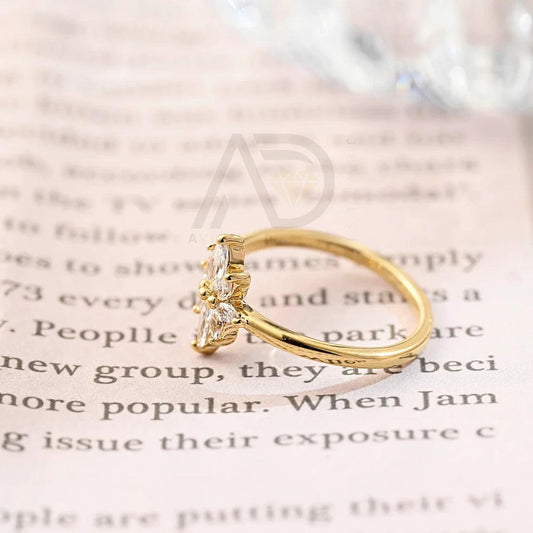

A Distinctive Shape, Considered Carefully
Marquise engagement rings offer a distinctive alternative for couples drawn to an elongated silhouette, softly curved sides, and two pointed ends. The shape can look larger face-up than a round diamond of the same carat weight, while its length draws the eye along the finger. A faint bow-tie shadow may be part of its character, but a broad, dark one can distract from the stone’s appearance. GIA’s marquise diamond guide recommends assessing the stone face-up in normal lighting.
This article presents seven design directions, not seven verified products under $1,000. The available research does not confirm seven specific marquise rings at that price, and none of the styles should be read as a product recommendation or price claim from Avittam Diamond Jewels. Its bespoke ordering service allows customers to customize a ring’s design, metal, and engraving, so a tailored direction can be discussed without assuming a particular specification or cost.
The final price depends on the diamond, setting, metal, and design details. Before treating any ring as within budget, confirm that its center stone is marquise-cut and request a current, itemized quote. Proportion and symmetry shape the outline; restrained accents can keep attention on the center stone, while secure coverage at both tips helps address the shape’s vulnerable points. Avittam Diamond Jewels offers detailed product guidance and virtual try-on tools to help shoppers assess appearance before making a decision.
Marquise Ring Selection Guide
- Marquise diamonds have an elongated outline, curved sides, and two pointed ends; compare each stone face-up rather than relying on carat weight alone.
- A marquise may appear larger face-up than a round diamond of similar carat weight, though visible spread varies by stone.
- Assess aligned points, balanced curves, and overall symmetry in ordinary lighting; a symmetrical stone may still have an outline that does not suit your preference.
- A length-to-width ratio of about 1.75 to 2.25 is a broad visual reference, not a universal grading standard; lower ratios tend to look wider and higher ones longer.
- Some bow-tie contrast is common in marquise diamonds; view the stone without magnification and consider whether a dark central shadow distracts from its brightness.
- The pointed ends are the diamond’s most vulnerable areas; V-prongs, bezels, or partial bezels can provide coverage, but the setting must also secure the stone appropriately.
- A north-south solitaire emphasizes the marquise’s length, while an east-west orientation offers a less traditional look; neither orientation alone confirms comfort or reduced snagging.
- Halos, pavé bands, and three-stone settings add detail and accent stones, which can affect the ring’s proportions and total price.
- Ring cost depends on the center diamond, setting complexity, metal, and accent stones; request a current itemized quote and verify availability before purchase.
- Avittam Diamond Jewels offers bespoke ordering, allowing customers to personalize design and metal; its available information does not verify specific marquise styles under $1,000.
1. A Protective V-Prong Solitaire
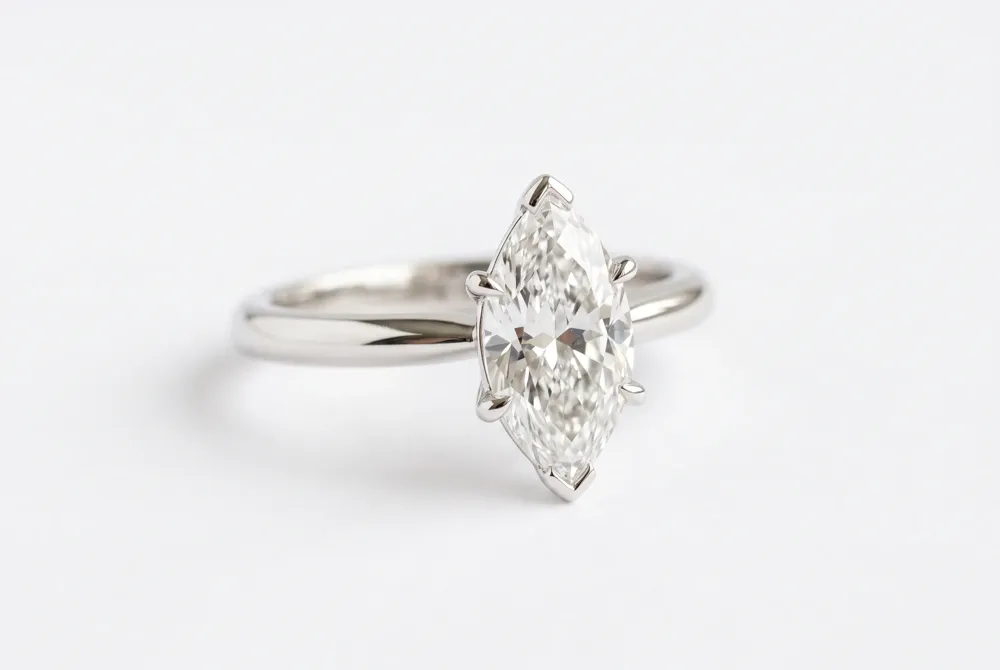
A north-south solitaire gives the marquise outline room to stand on its own. A simple band keeps the eye on the center stone, while the elongated shape creates a clean, composed look. When considering marquise-cut rings, judge the stone face-up and choose proportions that feel balanced to you.
The pointed ends need particular care. V-shaped prongs can help shield both tips, but the setting should also hold the diamond securely and fit its outline well. The Gemological Institute of America’s guide to choosing a marquise diamond recommends checking that the points and curved sides are balanced, and notes that a thin girdle can raise the risk of chipping.
A refined, expensive-looking effect depends less on carat size than on symmetry, a pleasing face-up outline, and careful setting work. Avittam Diamond Jewels offers bespoke ordering, allowing customers to personalize a ring’s design, metal, and engraving; review those choices alongside the diamond’s proportions and tip protection.
Treat this solitaire as a design direction, not a confirmed product under $1,000. Before buying, ask the seller to verify that the center is marquise-shaped, both tips are protected, and the quoted price covers the complete ring.
2. A Fine-Band Halo Design
A fine-band halo gives marquise engagement rings a delicate frame, with small accent stones surrounding the center and adding sparkle without competing with its elongated outline. The narrow band keeps the overall design restrained and lets the marquise remain the focal point.
A halo can also make the center look broader because the surrounding stones add width. If you prefer a particularly slender silhouette, compare how different halos sit against the center stone in detailed images or in person. Avittam Diamond Jewels offers bespoke ordering, so shoppers can discuss design preferences such as the band and setting when considering a personalized ring.
Treat this style as an option to explore within your budget, rather than assuming a particular halo ring falls below a set price. The available retailer information does not verify a specific marquise halo product under $1,000. For proportion guidance, the Gemological Institute of America’s advice on choosing a marquise diamond recommends assessing the stone’s outline and symmetry, as well as its appearance face-up.
3. A Slim Pavé Band
A slim pavé band brings a fine line of sparkle to a marquise center, adding detail while keeping the ring’s overall profile delicate. The small accent stones draw the eye toward the center without overwhelming its long, pointed outline, making this a graceful option among marquise-cut rings.
The band’s detailing changes the ring’s character, and the added stones can affect its total price. Ask for a complete quote that includes the center diamond, pavé stones, setting, and metal rather than assuming a particular design falls within your budget. Avittam Diamond Jewels offers bespoke ordering, so customers can customize a ring’s design and metal; confirm the full specification and price before proceeding.
Assess the center diamond face-up in ordinary lighting. Check that its points align, its curved sides look balanced, and any bow-tie shadow across the center is not so dark or broad that it distracts from the stone. GIA’s marquise diamond guide recommends evaluating symmetry and viewing the bow-tie without magnification at a normal distance.
Treat a slim pavé band as a design direction, not a confirmed product recommendation: the available sources do not verify that a particular pavé marquise ring is available below $1,000. Avittam Diamond Jewels also provides detailed product guidance and virtual try-on tools to help shoppers review design choices before ordering.
4. A Warm-Toned Vintage-Inspired Ring
Yellow or rose gold gives marquise cut engagement rings a softer, more characterful mood. Paired with fine milgrain detailing, engraved shoulders, or a delicate halo, a warm-toned setting can suggest vintage craftsmanship without obscuring the center stone’s distinctive outline.
Metal color can also influence how a diamond’s warmth appears. Yellow and rose gold may harmonize with a stone that shows a subtle tint, while white metals can make that warmth more noticeable. This is a matter of personal preference, so assess the actual diamond in natural-looking light rather than relying on its grade alone. The Gemological Institute of America’s marquise diamond guide recommends judging a stone’s shape and appearance face-up under normal viewing conditions.
Keep decorative accents measured: fine milgrain or restrained engraving can enrich the design, while oversized motifs may compete with the marquise’s long, balanced form. At Avittam Diamond Jewels, bespoke ordering allows couples to customize a ring’s design and metal, making it possible to consider warm tones and detailing in relation to the center stone. Treat this style as design inspiration, not as confirmation of a particular ring or price.
5. A Sleek Bezel-Set Marquise
A bezel gives marquise cut engagement rings a clean-lined, contemporary profile. A slim metal rim holds the diamond around its edge and, depending on the design, can cover some or all of its outline, including the delicate points.
That coverage can offer a composed look and protect vulnerable tips, but it also changes how much of the marquise shape remains visible. Compare the ring from above and from the side, and ask how the setting secures both ends. GIA’s marquise diamond guidance notes that the pointed tips are the stone’s most vulnerable areas.
The finished ring should feel comfortable against the finger, with no sharp edges or bulky sections that catch on clothing. A bezel is one style to consider, not evidence of a specific ring’s availability or price below $1,000. At Avittam Diamond Jewels, bespoke ordering lets couples customize a ring’s design and metal, making it possible to discuss the balance between tip coverage and a clear view of the stone.
6. An East-West Marquise Solitaire
Among marquise cut engagement rings, an east-west solitaire offers a distinctive alternative to the traditional north-south setting. The diamond sits horizontally across the finger, changing the ring’s visual line and giving its elongated silhouette a contemporary character.
This orientation may appeal to couples who want a less familiar look without adding a halo or side stones. It is a design direction to request and compare, not evidence of a particular price or a verified ring under $1,000. A horizontal setting also does not guarantee that the diamond will snag less.
The two pointed ends still need protection, whatever the orientation. Ask how the setting secures each tip, then consider whether its profile feels practical for the wearer’s daily activities. The GIA’s guidance on choosing a marquise diamond recommends assessing the points and the stone’s symmetry, as well as viewing its appearance face-up under normal lighting.
Review the specific stone and construction before deciding whether this orientation suits both your style and everyday wear.
7. A Three-Stone Marquise Design
A three-stone setting gives a marquise center a more detailed frame, with side stones adding sparkle and visual balance while leaving the elongated outline in view. The proportions and placement of the accents matter: they should complement the center rather than crowd its pointed ends.
The extra diamonds and setting work can raise the finished ring’s price, so compare the complete cost, including the center stone and mounting, with your budget. Avittam Diamond Jewels offers bespoke ordering that allows customers to customize a ring’s design and metal, making the full specification worth discussing before settling on a style.
Look closely at the center diamond face-up. Check whether its two halves appear balanced, whether its spread suits the stated carat weight, and whether light performance looks appealing in ordinary viewing conditions. GIA’s marquise guidance recommends assessing symmetry and viewing the stone without magnification, since a grading description or carat weight alone cannot show how it will look on the hand.
The supplied sources do not verify a specific three-stone marquise ring priced under $1,000. Treat this design as inspiration, not a product recommendation, and confirm the stone, setting, and final price before buying.
Understanding the Marquise Shape
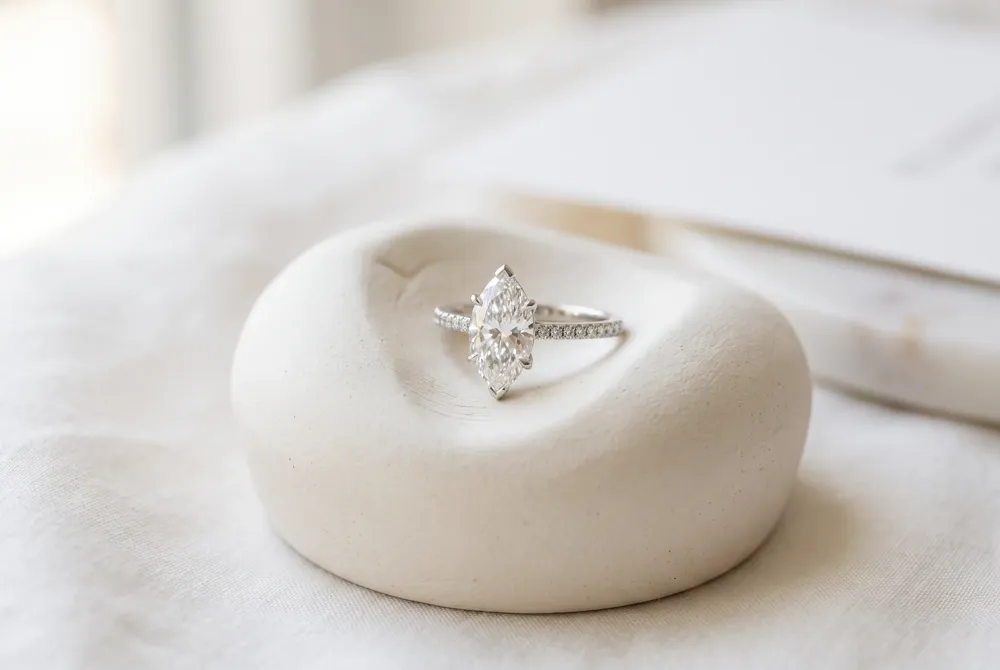
A marquise-cut engagement ring centers on a diamond with an elongated outline, gently curved sides, and two pointed ends. Its brilliant-style facets reflect light across a graceful silhouette, giving the ring a distinctive presence that can feel at home in both classic and contemporary settings.
The marquise shape can appear larger face-up than a round diamond of similar carat weight, though the visible spread varies from stone to stone. When comparing marquise cut engagement rings, assess the actual outline and brightness rather than assuming that carat weight alone predicts how large a diamond will look.
Symmetry and shape both matter: look for aligned points and balanced curves, then view the diamond face-up in ordinary lighting to judge any dark shadow across its center. The Gemological Institute of America’s marquise diamond guide explains how to assess these features.
Why the Marquise Shape Endures
Are marquise-cut engagement rings still in style? Their appeal rests less on any passing trend than on a distinctive outline: an elongated body and two pointed ends that create a graceful line on the finger. A marquise can also appear larger face-up than a round diamond of the same carat weight, as GIA explains.
A north-south solitaire gives the silhouette a classic, unadorned presence. Turn the diamond east-west for a more contemporary expression, or choose a bezel that frames its outline and covers more of the tips. Each approach changes the ring’s character, so consider how it feels on the hand as well as how it looks.
At Avittam Diamond Jewels, bespoke ordering allows couples to customize a ring’s design, metal, and engraving. That personal choice can keep a marquise design true to the wearer’s taste, whether the preference is for a traditional solitaire or a more modern setting.
Evaluating a Marquise Diamond
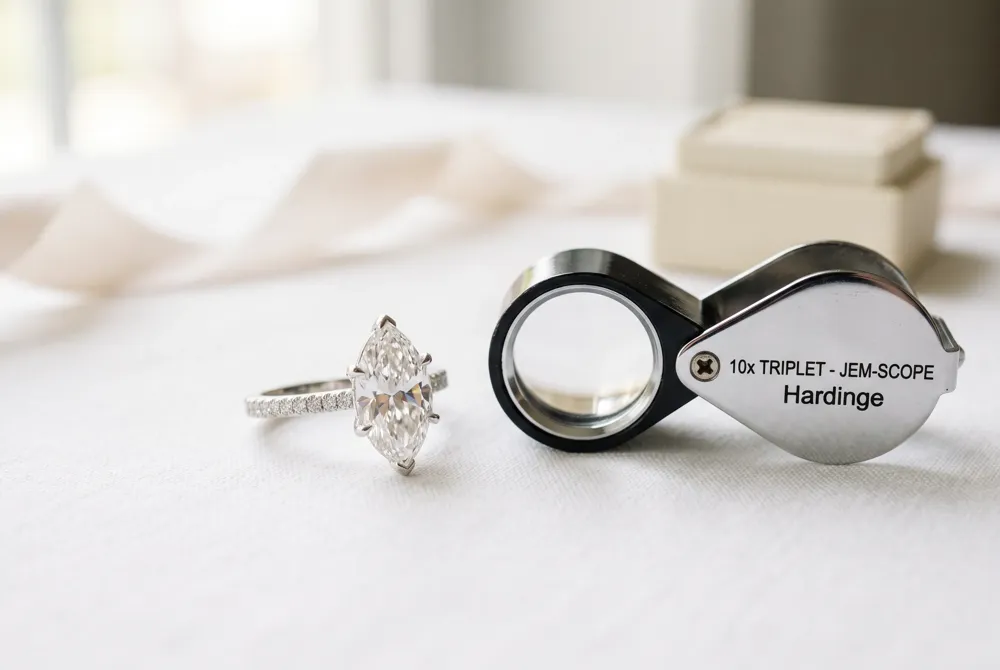
When comparing marquise cut engagement rings, begin with the diamond’s outline. Viewed face-up, the points should align, the curved sides should look balanced, and neither end should appear blunt or uneven. GIA’s marquise diamond guide explains that symmetry and shape appeal are related but distinct: a symmetrical stone may still have an outline you do not prefer.
Measurements describe a diamond, but they cannot determine which outline will feel balanced on the hand. Compare stones side by side and choose the proportions that suit your preference.
Measurements such as table, depth, and ratio describe a diamond, but they cannot tell you on their own how lively it looks. View it face-up in ordinary lighting, then change the angle and distance. Some bow-tie contrast is common; a wide, dark shadow that dominates the center may distract from the stone’s brightness. The visual effect can shift with viewing conditions, so judge the diamond as you would normally see it.
Assess color and clarity in the individual stone rather than choosing by grade alone. Warmth may be more noticeable near the pointed ends, while the visibility of inclusions depends on their size and position. Avittam Diamond Jewels offers detailed product guidance and virtual try-on tools to help shoppers review appearance and consider how a ring may look when worn.
Finally, make sure the design protects both tips. A well-chosen marquise should suit your preferred outline and appearance, while its setting gives the vulnerable points appropriate coverage.
Settings for Style and Protection
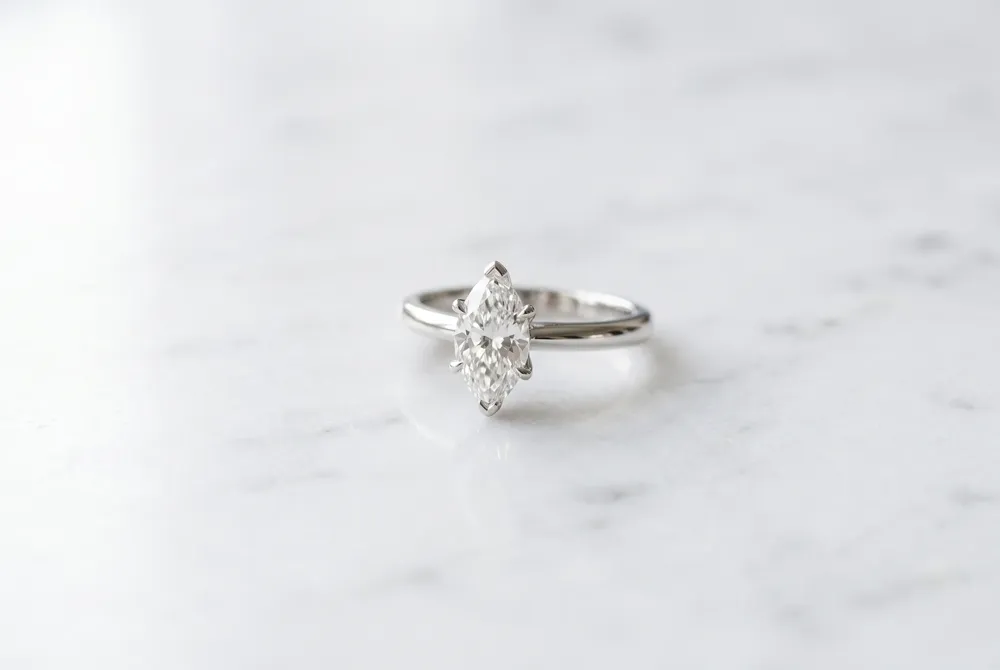
For marquise cut engagement rings, the setting shapes the look and helps shield the diamond’s pointed ends. GIA identifies those tips as the stone’s most vulnerable areas, so ask a jeweler to assess how they are protected and how securely the diamond sits.
V-shaped prongs can cover each point while leaving the marquise outline visible. A bezel or partial bezel provides more coverage, with a cleaner, more defined edge. Either approach should hold the stone firmly without putting undue pressure on its tips. GIA’s marquise diamond guidance explains why the points and girdle deserve particular attention.
A solitaire keeps attention on the center stone, while a halo or three-stone design adds surrounding detail. Split shanks bring a more architectural profile. North-south orientation emphasizes the diamond’s length; an east-west setting turns it across the finger for a less traditional appearance.
Your choice should balance the style you love with daily comfort and habits. Try the ring on, consider whether a wedding band will sit flush, and have a knowledgeable jeweler inspect the fit and security of both tips before regular wear. Periodic checks can catch looseness or wear early. Avittam Diamond Jewels offers bespoke ordering, allowing couples to personalize a ring’s design and metal to suit their preferences.
Setting a Thoughtful Budget
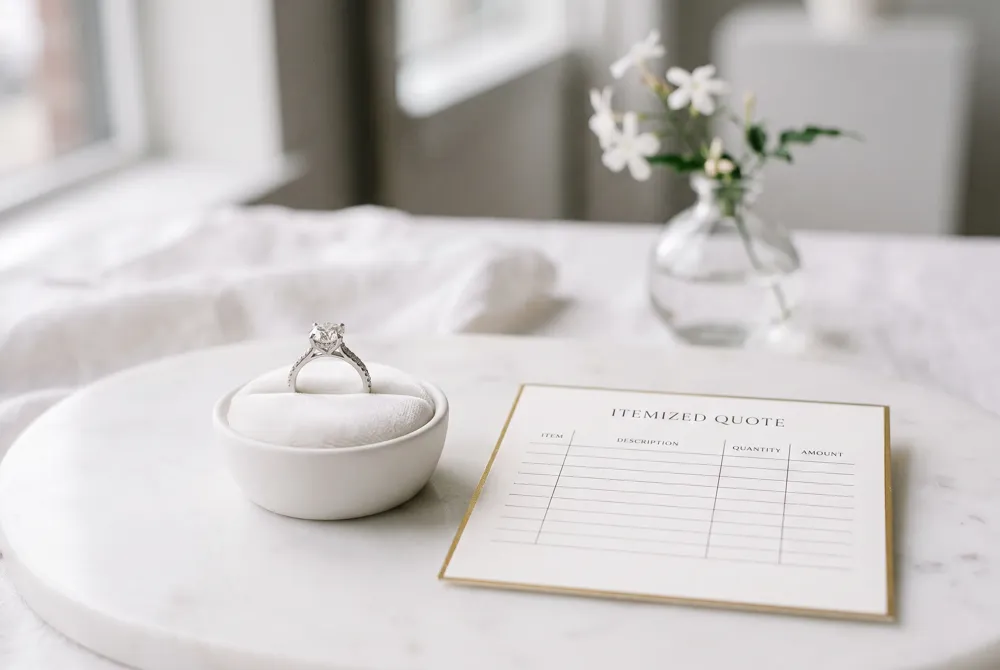
How much does a marquise-cut engagement ring typically cost? There is no single typical price. The total depends on the center diamond’s carat weight, color and clarity, the setting’s complexity, the metal, and whether accent stones are included.
A considered choice is not always the highest grade in every category. Compare the individual diamond’s appearance, including its symmetry and any visible inclusions, rather than assuming its grade guarantees a particular look. A simple setting can also keep attention on the marquise outline, while a halo or pavé details add stones and craftsmanship that affect the price.
Avittam Diamond Jewels offers a bespoke ordering service for personalizing a ring’s design, metal, and engraving. Treat any customization as a conversation with the jeweler, not as an assumed option at a particular price; request a current, itemized quote before deciding.
The available sources do not substantiate seven specific marquise rings priced under $1,000. Before relying on a budget listing, verify that the center stone is marquise-shaped, confirm current availability, and ask for the full price, including the setting and any added stones. GIA’s marquise diamond guidance can help you assess the stone’s proportions and appearance, but it does not verify ring prices or product availability.
Choose the Look, Then Verify the Details
Marquise cut engagement rings bring together a distinctive silhouette, generous face-up presence, and a range of styles, from understated solitaires to richly detailed designs. The right choice is the one whose proportions, setting, and metal feel true to the wearer. A marquise can appear larger face-up than a round diamond of the same carat weight, though the effect varies by stone; GIA’s marquise diamond guide explains the shape’s visual characteristics.
Before deciding, view the diamond face-up and check that its points and curved sides look balanced. Assess whether a dark bow-tie shadow distracts from its appearance, compare the outline and measurements, and confirm that both tips have suitable protection. Ask for the complete ring price, including the center stone, setting, and any customization.
The seven designs discussed here are styling directions, not verified products priced below $1,000. Avittam Diamond Jewels offers bespoke ordering that allows the design, metal, and engraving to be personalized. Before purchasing, request current product-level pricing and details, then use a consultation to discuss the diamond and setting that best suit your preferences and budget.