
The Appeal of a Pear
Pear-shaped engagement rings bring a distinctive line to the hand: a rounded end flows into a tapered point, creating an elongated, teardrop silhouette. The shape feels familiar yet individual, with a graceful direction that sets it apart from a symmetrical round stone.
Choosing a moissanite or diamond engagement ring begins with the qualities that matter most to you. Consider how each stone looks, the setting that complements its outline, how the ring will feel in daily wear, and how the choice fits your budget. At Avittam Diamond Jewels, bespoke ordering lets you personalize a ring’s design, metal, and engraving.
The sections ahead consider how moissanite and diamond differ, how to assess a pear’s proportions and silhouette, and how a setting can protect its pointed tip. Metal, orientation, and lasting style also shape the decision, helping you choose a ring that feels considered and personal.
Two Gemstones, Different Character
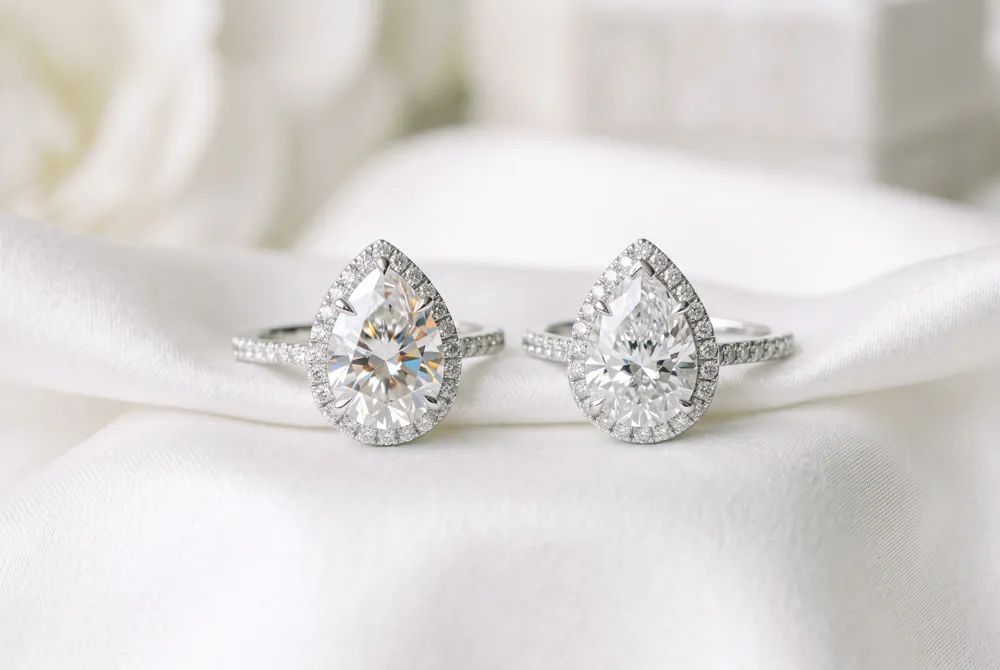
A ring with a moissanite or diamond center stone may share a graceful outline, but its center stone makes a distinct impression. Diamond is a crystalline form of carbon. Moissanite is silicon carbide, a separate gemstone usually created in a laboratory for jewelry.
Lab-grown moissanite is not a lab-grown diamond. A lab-grown diamond is still diamond, with the same essential composition as a natural diamond; moissanite has its own composition and optical character. A curated selection of premium diamonds lets couples consider the stone alongside their preferred design, metal, and engraving.
How do moissanite and diamond engagement rings compare?
The most noticeable difference is often the sparkle. Moissanite tends to show vivid rainbow flashes, while diamond is commonly associated with a more balanced mix of white brilliance and colored light. Neither effect is automatically better. Cut and lighting also shape what you see, so compare stones under clear, natural-looking light or through detailed imagery before deciding.
Both gemstones are durable choices for an engagement ring worn regularly. Diamond ranks 10 on the Mohs hardness scale, while moissanite ranks about 9.25. Hardness describes resistance to scratching, not protection from every kind of damage, so a secure setting and routine care matter for either stone. Avittam Diamond Jewels offers bespoke design, making it possible to consider the setting as part of the stone choice rather than as an afterthought.
Is moissanite a lab-grown diamond?
No. Most fine-jewelry moissanite is laboratory-created, but it remains moissanite, not diamond. For pear-shaped engagement rings, either gemstone can suit the elongated silhouette. Consider the center stone’s appearance and material, then check that any accent stones complement it. Your preferred sparkle, budget, and priorities around gemstone sourcing can guide the decision without treating one option as universally right.
Budget and Stone Selection
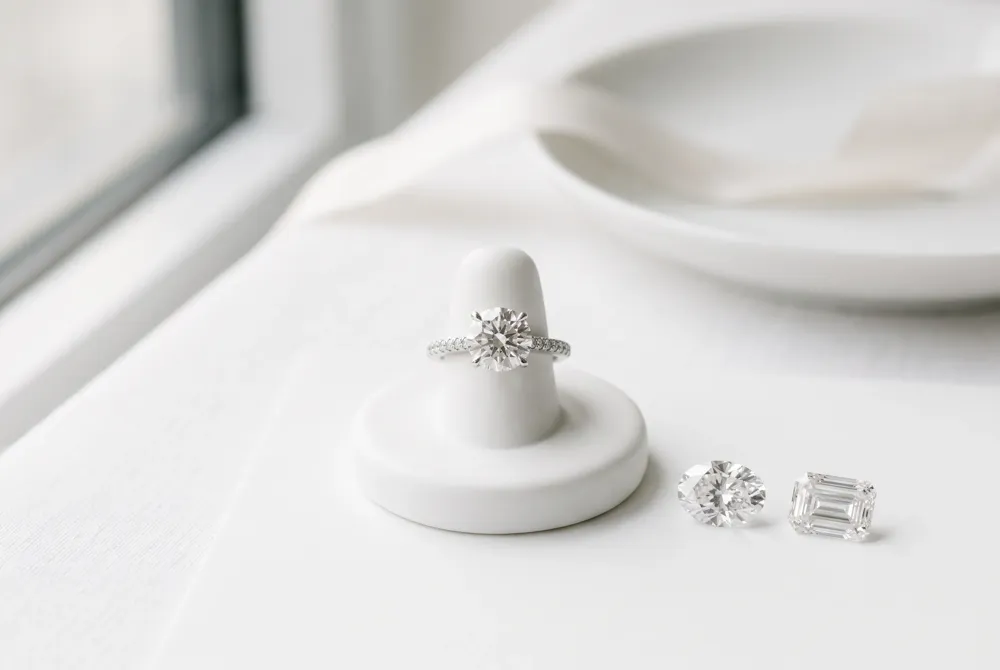
A ring with either a moissanite or diamond center stone can suit different budgets and priorities. Moissanite generally costs considerably less than a diamond of comparable size, but the final price depends on the stone’s quality and cut, as well as the ring’s setting. That difference may leave room to consider a larger-looking center stone, a particular metal, or personal details in the design.
Diamond prices reflect several characteristics, including carat weight, cut, color, and clarity. Rather than comparing carat numbers alone, review the specifications and appearance of the individual stones, along with the setting and any accent gems. Moissanite and diamond are distinct materials, so consider their different sparkle and origin as well as their cost.
With pear-shaped engagement rings, face-up dimensions can be especially useful: an elongated outline may look substantial relative to its carat weight. Compare the stone’s measurements and overall proportions, not just its weight, to judge how much presence it will have on the hand.
Budget choices are personal. One couple may prioritize a larger center, while another may prefer a particular setting, metal, or engraving. The balance can reflect your style and available budget rather than a fixed formula.
Reading the Pear Silhouette
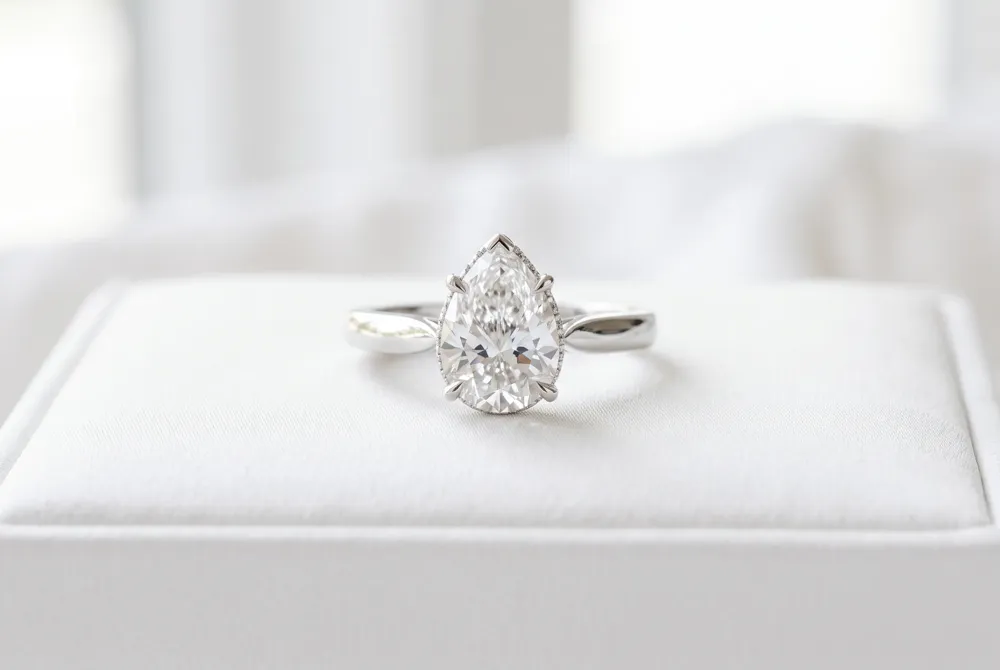
For pear-shaped engagement rings, the stone’s outline is as personal as its sparkle. A pear is a modified brilliant with one rounded end and one pointed tip, and its shape can feel softly rounded or distinctly long and slender.
Length-to-width proportions influence that impression. A longer pear appears more elongated, while a lower ratio gives the stone a fuller, plumper look. Neither is automatically better; consider which silhouette feels balanced on the wearer’s hand and suits their style.
When reviewing a stone, look for shoulders that flow evenly from the rounded end toward a centered point. Clear photographs can help, but a 360-degree view, when available, makes it easier to assess the outline and how the stone looks from different angles.
Some pear cuts show a bowtie, a darker band across the center caused by uneven light return. A faint, even effect is generally normal, while a heavy or opaque band may distract from the stone’s appearance. Compare the view in motion as well as in a still image.
These visual checks matter whether you are considering a diamond or a moissanite center-stone design. However, diamond-specific grading recommendations should not be applied automatically to moissanite. Couples can discuss their preferred outline and stone with a jeweler when assessing a particular ring.
Choosing the Pear Cut and Setting
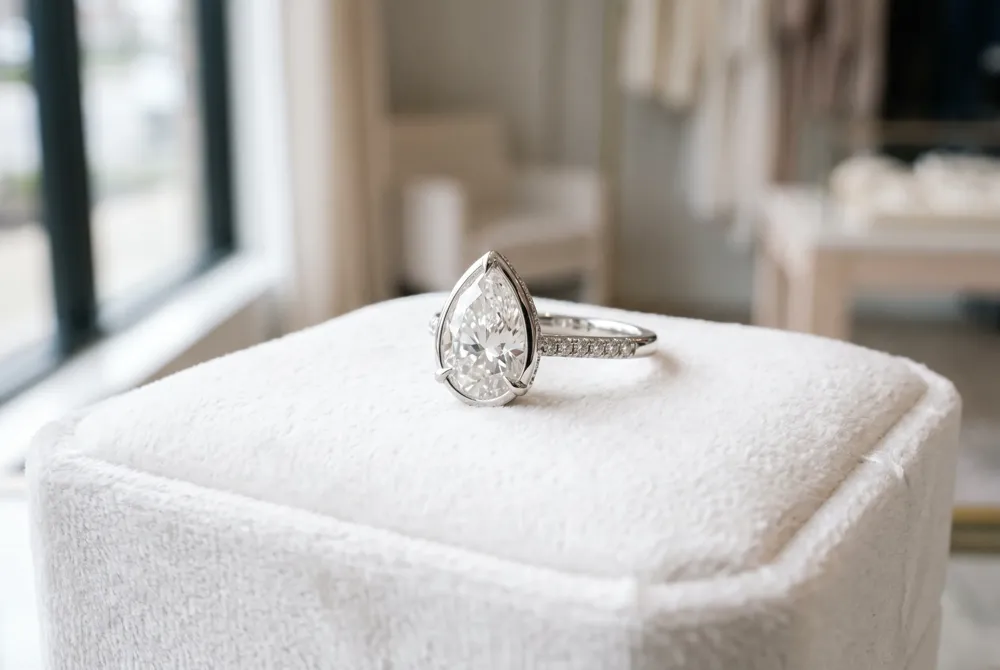
The setting shapes how a pear center stone reads on the hand, whether you choose a ring with a moissanite or diamond center stone. A solitaire keeps attention on the teardrop outline, while a halo frames it with smaller stones. Side stones and three-stone designs add companion gems; a hidden halo places accents beneath the center stone, and a Toi et Moi setting pairs two center stones. Availability depends on each jeweler’s designs.
Pear-shaped engagement rings are traditionally set north-south, with the point facing the fingertip, while an east-west setting turns the long axis across the finger for a more distinctive look. The setting also affects the ring’s height and profile, which can change how comfortably it sits beside a wedding band. A V-shaped prong at the tip helps protect this exposed point; a lower setting may feel more practical for everyday wear.
For the familiar appearance of a round diamond, a round brilliant moissanite offers a comparable outline and balanced faceting. Its rainbow-like fire remains more pronounced, so the sparkle will not be identical. Personal guidance can be useful when weighing these differences.
With elongated cuts, compare the stone’s proportions and light return rather than relying on the cut name alone. View clear images or a virtual presentation, and consider how the stone looks under different lighting. Avittam Diamond Jewels provides virtual try-on tools and detailed product guides to help shoppers assess a design before ordering.
Protecting the Point
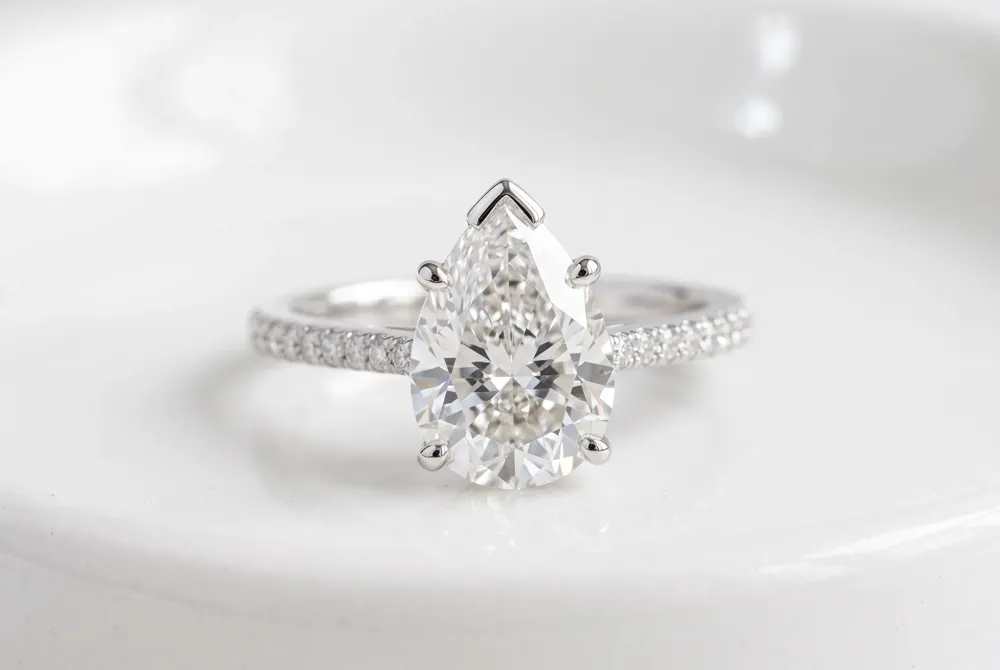
With pear-shaped engagement rings, the pointed tip is the area most exposed to knocks, so its protection deserves close attention. A V-tip prong curves around the point to shield it, while a bezel surrounds the stone’s edge with metal. Additional side prongs can create more points of contact along the stone.
Is a three-prong or five-prong setting better for a pear-shaped engagement ring? Neither is right for every stone. A three-prong design may leave more of the gem visible, while five prongs can offer added support. But the number alone does not determine security: prong placement, construction, the stone’s proportions, and workmanship all matter.
A lower-profile setting may be a practical choice for daily activities because it keeps the stone closer to the hand. It can also change the ring’s appearance, so weigh comfort and protection against the look you want. A V-tip can be considered with either a moissanite or diamond center stone.
Ask a qualified jeweler to assess how a specific stone is held, including whether its point is securely covered, and to recommend routine care. This assessment is more useful than choosing a setting by prong count alone.
Metal and Personal Style
Which metal should I choose for a pear-shaped engagement ring? Start with the finish you enjoy seeing against your skin and the center stone. Platinum and white gold create a cool, bright effect, while yellow gold adds warmth and rose gold brings a softer contrast. Each can complement pear-shaped engagement rings, but the same stone may look different as the metal around it changes.
Consider daily wear alongside appearance. Platinum is known for its durability, while white gold offers a similar bright tone. Whichever finish you prefer, ask how the setting will protect the pear’s exposed point. A well-fitted V-shaped prong can shield the tip, and the metal and setting should work together to hold the stone securely.
Couples may also consider their preferred ring design, metal, and engraving. When comparing a ring with a moissanite or diamond center stone, view the center stone with the metal and setting together. That side-by-side assessment can help you judge the overall color and character before settling on a finish.
Orientation and Lasting Appeal
How should a pear-shaped engagement ring be worn?
There is no required way to wear pear-shaped engagement rings. Pointing the tip toward the fingertip is the traditional choice and can create an elongated line, but turning it toward the hand or wearing the stone east-west offers a different look. Try each direction and notice which feels natural on your hand.
If you plan to wear a wedding band beside the ring, test the pairing before deciding. The pear’s orientation and the setting’s height can affect whether a straight band sits close or leaves a gap. These details can be considered together. For a closer look at stone choices, see our 10 best pear-shaped engagement rings for small hands.
Are pear-shaped engagement rings a timeless choice?
The pear silhouette has appeared in antique and contemporary jewelry, giving it a lasting presence beyond any single fashion moment. Its distinctive outline can feel traditional or modern depending on the setting and accents. Couples can shape a design around their own preferences.
Choose the version that suits your preferred silhouette, sparkle, comfort, and sense of meaning. A ring feels enduring when it reflects the person who wears it.
A Ring That Feels Like Yours
A pear-shaped ring comes together through more than its outline. The gemstone’s character, the pear’s proportions, the setting’s protection, and the metal all shape its presence. A ring with either a moissanite or diamond center stone may share a silhouette, yet offer different kinds of sparkle and distinct practical considerations.
As you compare pear-shaped engagement rings, focus on how each stone looks in person and how securely its point is held. Consider personal details alongside fit and daily wear.
Thoughtful guidance can help you weigh those choices without rushing toward a particular stone or style. The right ring is one whose proportions, comfort, and protection suit the wearer, and whose details feel meaningful long after the proposal.