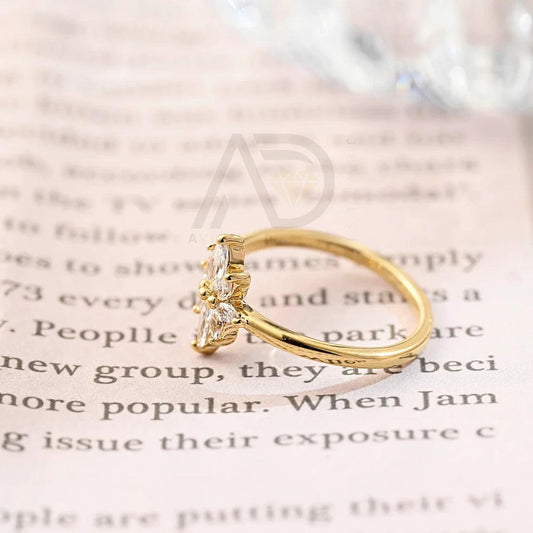

The Appeal of the Marquise
Marquise cut engagement rings offer a distinctive alternative for couples weighing a diamond’s presence against its carat weight, setting, and budget. The shape has an elongated outline, softly curved sides known as wings, and two pointed ends. Its long silhouette can make a diamond appear larger face-up than other shapes of the same carat weight, a characteristic noted in the Gemological Institute of America’s marquise diamond guide.
On the hand, that length may create the impression of longer, slimmer fingers. The effect is personal, though: proportions, the individual stone, and the wearer’s own sense of style all shape how the ring looks. A considered choice begins with viewing the diamond on the hand, not relying on carat weight alone.
At Avittam Diamond Jewels, couples can explore a curated selection of diamond cuts and settings, with bespoke ordering available for adjustments to design, metal, and engraving. That personal approach helps keep the marquise’s striking outline in balance with the details that make a ring feel distinctly your own.
Start With Shape and Proportion
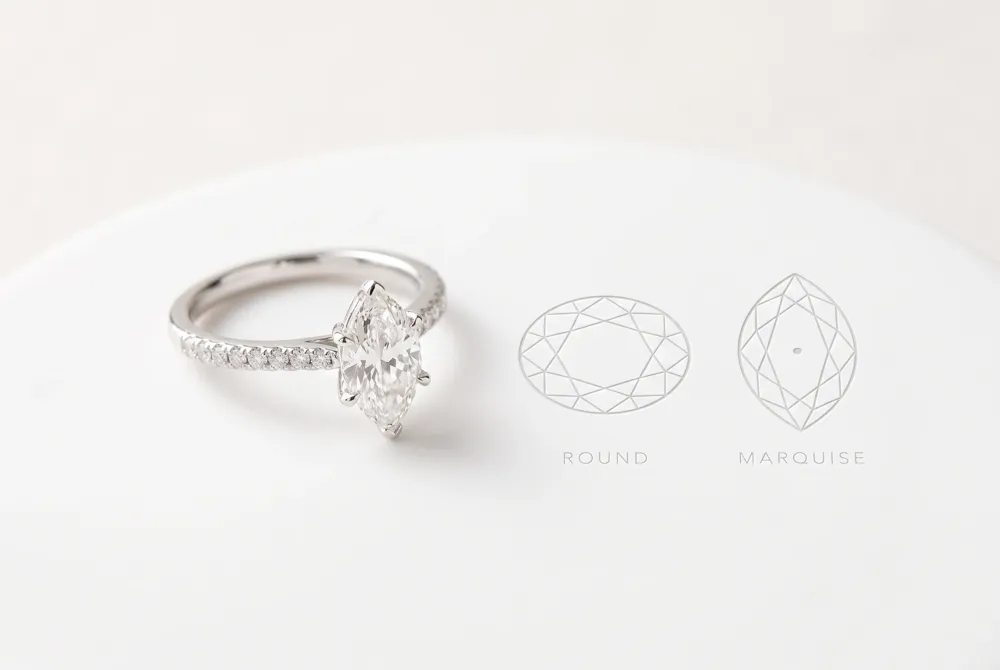
For marquise cut engagement rings, proportion shapes the stone’s presence on the hand. The length-to-width ratio compares the diamond’s tip-to-tip length with its width at the widest point. A ratio around 1.85-2.00 is a useful reference for a balanced outline, while roughly 1.75-2.15 can suit different preferences. These are visual guides, not requirements, as GIA’s marquise diamond guidance also emphasizes that preferred proportions are a matter of taste.
A lower ratio gives the stone a fuller, broader outline; a higher one creates a longer, slimmer silhouette. Compare stones face-up and notice how each shape sits on your hand rather than relying on a number alone. Avittam Diamond Jewels’ virtual try-on tools can help you consider scale as you compare designs.
Carat measures weight, not visible dimensions. Millimeter measurements show the face-up length and width, while depth and proportions affect how much of that weight appears across the surface. A one-carat marquise may measure about 10 × 5 mm, but individual stones vary. Its elongated outline can make it look larger than many other shapes of the same weight, so compare measurements as well as carats.
The right scale depends on your preferred look and hand. A smaller stone can feel delicate, while a larger or broader outline offers more finger coverage. Compare the exact dimensions with your finger and ring size; a ring sizer or virtual try-on can make that judgment more intuitive.
Is a 2- to 2.5-carat marquise considered large? Generally, yes. It tends to have noticeable presence, though the effect depends on its proportions, your finger size, and the setting. A 2.5-carat example may measure about 14.1 × 7.05 mm, but that is only a reference, not a guarantee. Avittam Diamond Jewels offers bespoke ordering, allowing the setting and design details to be personalized around the stone you choose.
Assess the Diamond’s Visual Performance
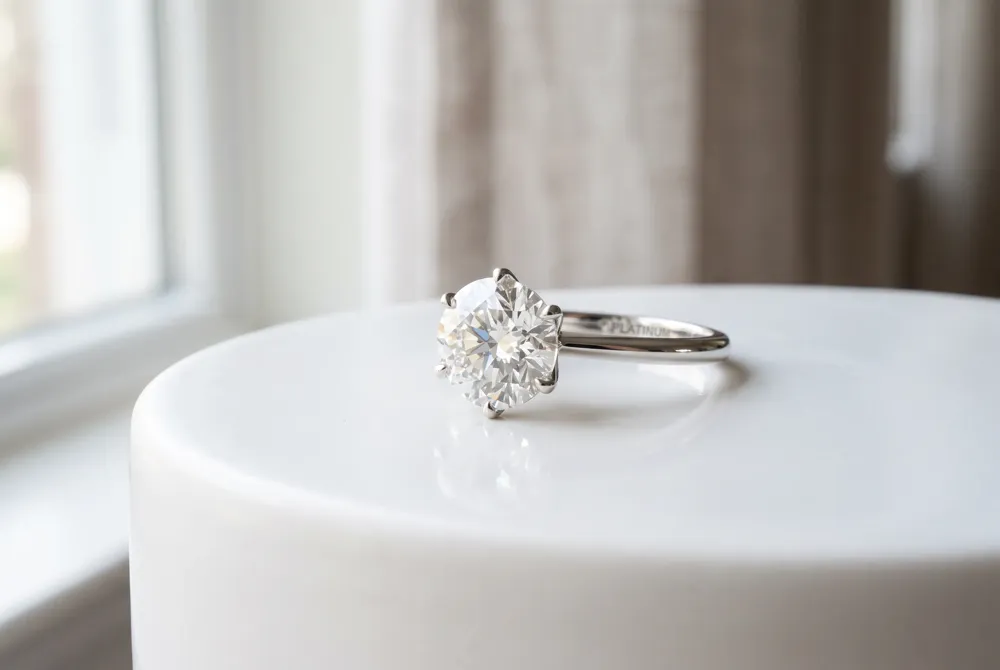
When comparing marquise cut engagement rings, look beyond a grading report to how the individual diamond performs in person. The Gemological Institute of America does not assign an overall cut grade to marquise diamonds, so measurements and symmetry grades are useful context, not a verdict on beauty. GIA recommends assessing the stone’s outline and appearance directly.
Marquise diamonds are brilliant cuts, commonly with 56 to 60 facets. Their facets can return bright flashes of light, fire, and scintillation, but the effect depends on the individual stone. Table, depth, and length-to-width figures help you compare candidates, yet they cannot show whether a diamond looks lively or evenly bright.
A bow tie is a band of shadow or contrast that may cross the center of a face-up marquise. Some contrast is common and can give the stone definition; a broad, dark, or watery-looking area may distract or make the diamond seem less bright. A bow tie alone is not a reason to reject a stone. Judge whether its overall light and dark pattern appeals to you, as explained in GIA’s marquise diamond guidance.
View the diamond face-up, without magnification, in ordinary lighting. Turn it slowly or watch clear video from different angles to see whether brightness holds as the stone moves. Check that the wings curve smoothly, the points align, and both halves look balanced. Symmetry matters, but a symmetrical outline may still be too broad or slender for your taste.
For online comparisons, Avittam Diamond Jewels provides detailed product guides and virtual try-on tools to help shoppers review a ring’s appearance and consider how its shape may look when worn. Ask a knowledgeable jeweler to discuss the specific diamond, including any visible bow tie and how its proportions relate to its light performance. A considered choice rests on the stone you see, not numbers alone.
Balance Color and Clarity
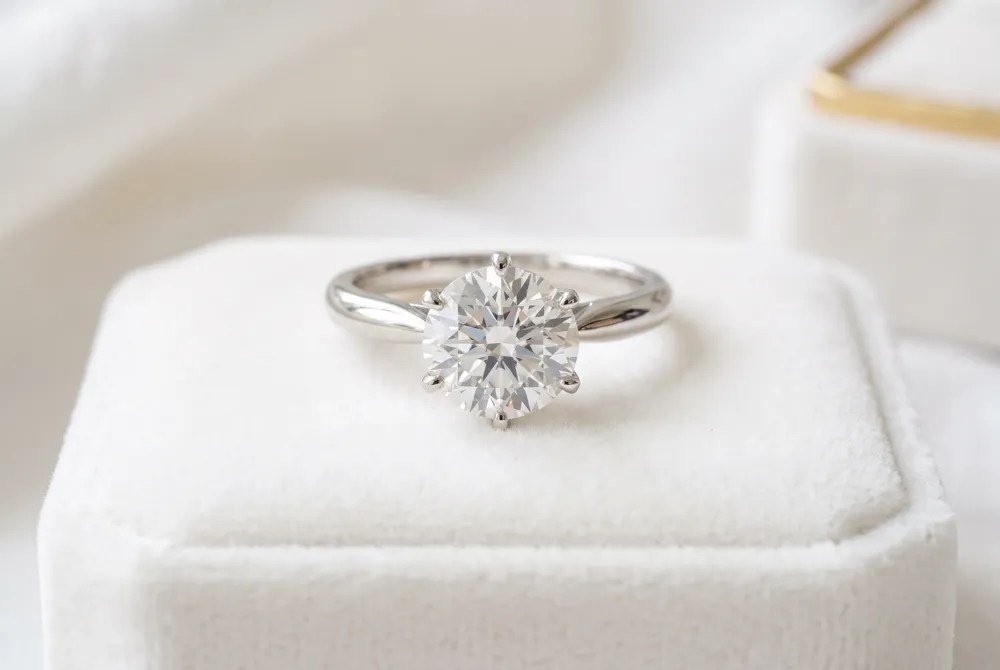
Color can be easier to notice near a marquise diamond’s pointed ends, so judge the whole stone rather than relying on its grade alone. The metal you choose also affects how its color reads: yellow or rose gold can harmonize with some warmth, while white metals tend to suit a preference for a more colorless appearance.
With yellow or rose gold, H, I, or J color grades may be worth considering, but they are not automatic recommendations. Compare the individual diamond in its intended setting and decide whether any warmth is visible to you. A custom design from Avittam Diamond Jewels can be tailored to your chosen metal, helping you assess the stone as part of the finished ring.
Brilliant facets may disguise some inclusions, but their visibility varies from stone to stone. Look at clear, well-lit images or video, and check whether an inclusion catches your eye without magnification. A higher clarity grade is useful only if it makes a difference you can see and value.
For marquise cut engagement rings, a detailed view of the actual diamond is more informative than a grade in isolation. Avittam Diamond Jewels’ guide to choosing a marquise engagement ring offers further considerations for comparing stones and settings.
Choose Protection for the Pointed Tips
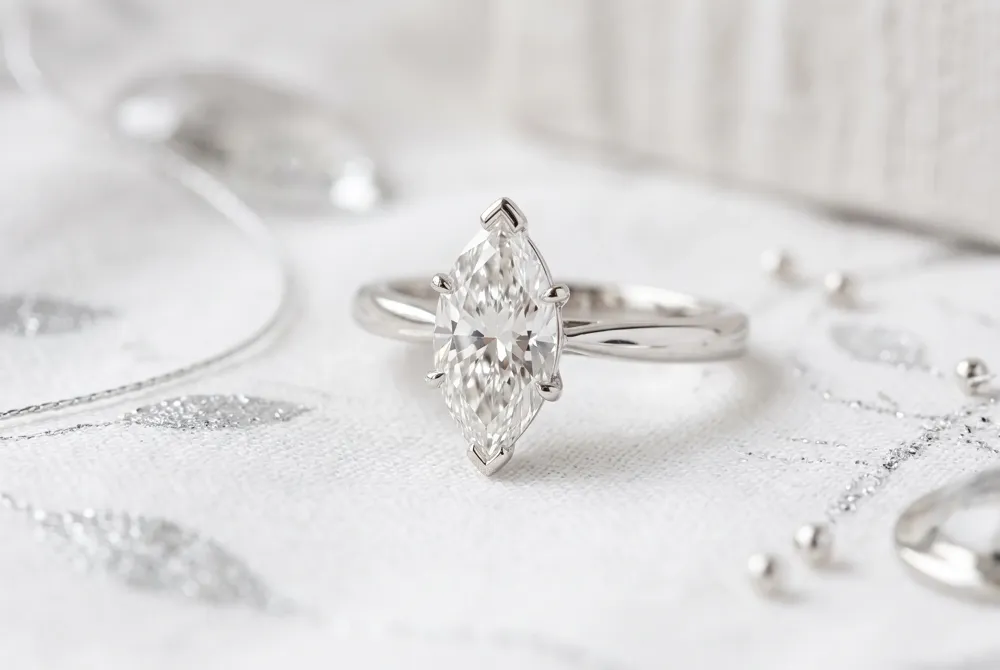
The two pointed ends of a marquise diamond are more exposed than rounded edges, so they deserve deliberate protection. When comparing marquise cut engagement rings, consider both how securely the center stone is held and how much of its graceful outline remains visible.
V-prongs placed over the tips, paired with prongs along the sides, can shield the vulnerable points while keeping the diamond’s shape in view. The Gemological Institute of America’s guidance on marquise diamonds also notes that the girdle contributes to durability and that a very thin girdle can increase chipping risk. Ask how the setting supports both ends, rather than judging the design by appearance alone.
A halo creates a border of smaller stones around the center diamond, adding sparkle and presence while offering coverage near the tips. A bezel or partial bezel can provide more coverage for a sleek, defined look.
Match the Setting to Your Style
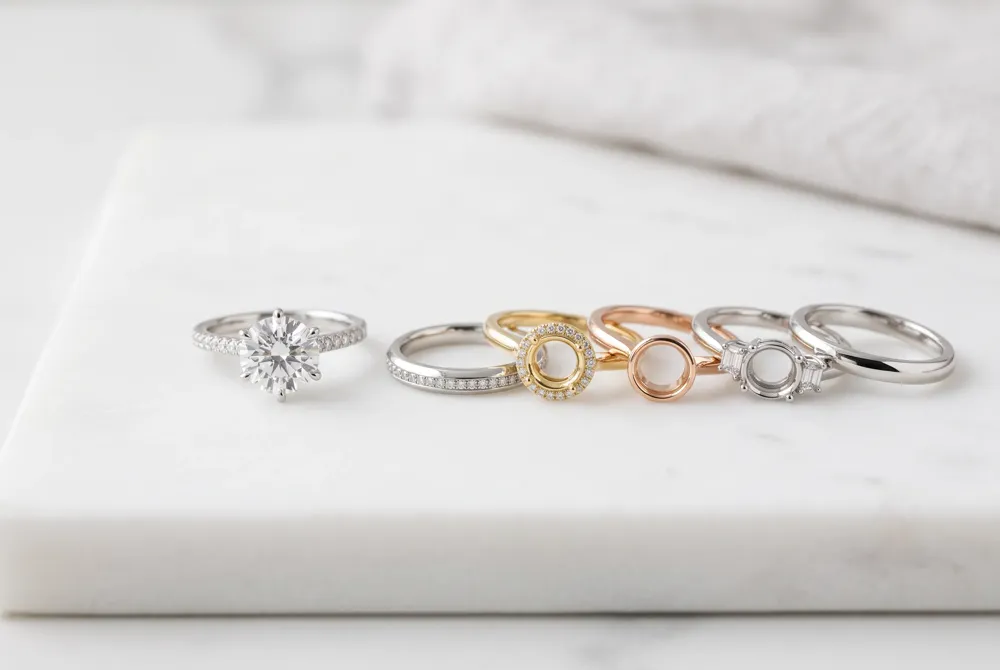
The setting shapes the character of marquise cut engagement rings, from a quiet focus on the center diamond to a more detailed design. A vertical solitaire follows the stone’s elongated line, while an east-west setting turns it horizontally for a less conventional profile.
Consider the setting and the diamond’s proportions together. A halo adds width around the center and can make the marquise appear less slender, so a particularly elongated stone may help preserve the outline you prefer. The GIA’s marquise diamond guide explains how orientation and proportion affect the shape’s appearance.
Different constructions offer distinct looks, but not every design suits every stone. A bezel frames the diamond closely, while a cathedral setting raises it above the band. Pavé adds small stones along the band; an open band leaves more space around the center, and a three-stone design brings side diamonds into the composition. In each case, confirm that the setting accommodates and protects both pointed ends.
Metal color adds another layer of expression. Yellow gold lends a warm, vintage-inspired character, white gold creates a crisp backdrop, and rose gold offers a softer tone. Two-tone gold and platinum are also possibilities shown in marquise ring designs, rather than limits on the available palette.
At Avittam Diamond Jewels, couples can personalize ring design, metal, and engraving through the bespoke ordering service. Consider how the finished ring will sit beside a wedding band or other jewelry, and whether you prefer a minimal silhouette or additional detail. The most satisfying choice brings the stone, setting, and your personal style into harmony.
Plan the Budget Around What Matters
For marquise cut engagement rings, a sensible budget is shaped by the trade-offs you care about, not by a universal price or ideal carat size. The available guidance does not establish a fixed budget formula, so consider the center diamond and setting together at your chosen price point.
Compare a diamond’s face-up measurements and appearance as well as its carat weight. A stone that presents beautifully on the hand may suit you better than one with a higher weight but less appealing proportions or light performance. Natural marquise diamonds are generally described as less expensive than comparable round diamonds, but price depends on the individual stone and market conditions. A lower price or claimed discount alone does not prove good value.
The Gemological Institute of America’s marquise diamond guide explains that preferred proportions are ultimately a matter of personal taste. That makes it useful to compare the stone’s outline, measurements, and appearance directly rather than treating a carat threshold or price comparison as a rule.
Should I choose a natural or lab-grown marquise diamond?
Let your preferences about origin and budget guide this choice. Natural and lab-grown diamonds can both offer the marquise’s distinctive shape and brilliance, but each stone should be assessed on its own merits. Review its grading report, proportions, and appearance, and weigh the center diamond against the setting and design details you value.
For a lab-grown stone, ask for an individual assessment of transparency and any blue or gray nuance, since these characteristics can affect its appearance. Avittam Diamond Jewels offers bespoke ordering that lets you customize a ring’s design and metal, giving you a way to shape the setting around your priorities without relying on an unsupported promise of savings.
Make the Choice Personal
Are marquise-cut engagement rings still in style? Yes. Their elongated silhouette has a distinctive character that suits both vintage-inspired and contemporary designs, so the choice need not depend on a passing trend.
A traditional vertical solitaire keeps attention on the stone’s graceful outline. Turning it east-west creates a more unexpected look, while carefully chosen accents can add vintage detail or a modern edge. The Gemological Institute of America’s marquise guide describes both orientations and notes that proportion is ultimately a matter of taste.
Make the design feel like yours by considering the details you will see and wear every day: the metal, the setting, and whether an engraving would carry personal meaning. Avittam Diamond Jewels offers bespoke ordering that allows customers to customize design, metal, and engraving, so these choices can reflect your preferences rather than a standard template.
Before deciding, look at the diamond as a whole. Review its proportions, the visibility of its bow tie, the balance of its symmetry, and how securely the setting protects both tips. Consider its scale on your hand, too. Avittam Diamond Jewels provides detailed product guides and virtual try-on tools to help shoppers assess a ring’s appearance online. The most satisfying choice brings these practical checks together with a style that feels unmistakably personal.
Choose With Confidence
Before choosing among marquise cut engagement rings, compare the individual diamond’s measurements, outline, brightness, and bow-tie effect in clear images or video. A grading report provides useful details, but it cannot replace seeing how the stone looks face-up; GIA’s marquise diamond guide also advises judging the shape and symmetry for yourself.
Check that the setting fits the center stone and protects both pointed ends. Then weigh the complete design against the size, metal, and budget you have in mind. At Avittam Diamond Jewels, bespoke ordering allows couples to personalize a ring’s design, metal, and engraving, so these choices can reflect the wearer rather than a template.
Treat proportion ranges as useful starting points, not rules. A broader outline may feel more balanced to one person, while another may prefer a longer silhouette. The right marquise is the one whose appearance, setting, and details feel natural on the wearer’s hand.