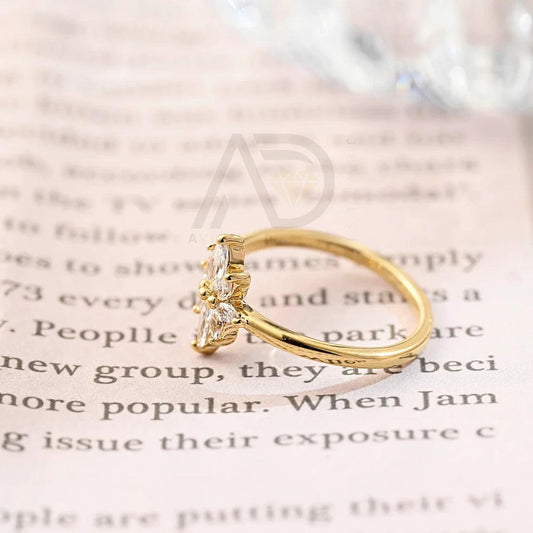

A Ring That Reflects Your Style
A pink moissanite ring offers a distinctive alternative for an engagement or anniversary, bringing color and personality to a piece worn close every day. Shades can range from delicate baby pink to deep rose, so the stone’s tone helps set the mood, from soft and romantic to richly expressive.
Choosing between a princess-cut and pear-shaped engagement ring is a matter of silhouette, with no universal winner. A princess cut gives the ring a crisp, geometric outline; a pear shape pairs a rounded end with a tapering point for a more elongated, fluid silhouette. The right choice depends on the appearance you love, the setting design, and how the ring will fit your everyday style.
As you compare designs, consider how the setting protects any pointed end. Metal choice also changes the overall impression, especially alongside a colored center stone. At Avittam Diamond Jewels, you can explore designs and discuss the details that will make a ring feel distinctly yours.
What Pink Moissanite Offers
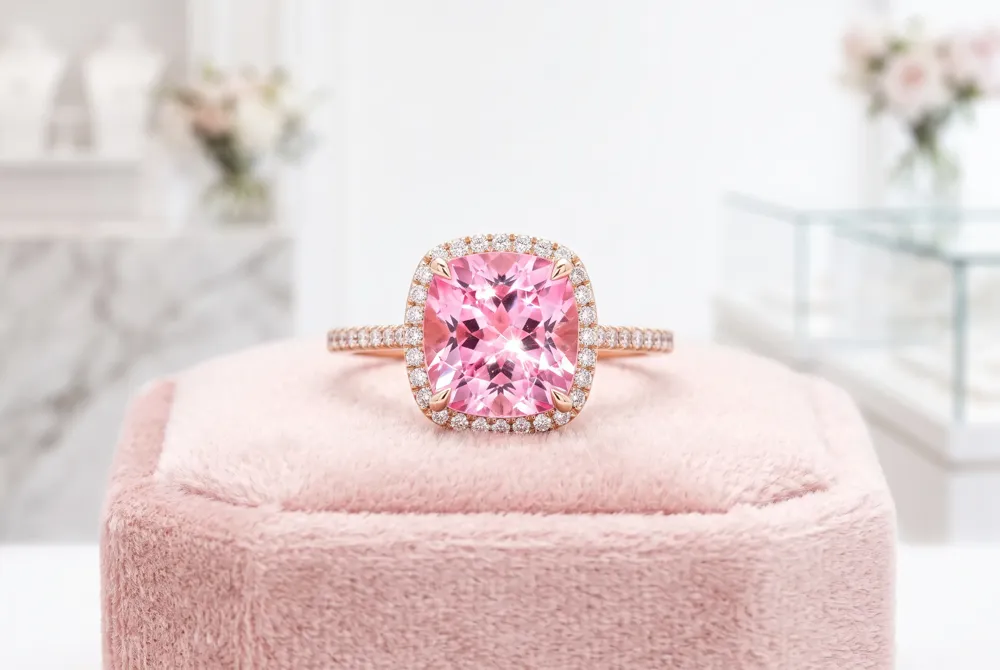
A pink moissanite ring pairs a distinctive gemstone with a color choice that feels personal rather than traditional. Moissanite is silicon carbide, a gemstone in its own right, not a diamond or a lab-grown diamond. The moissanite used in jewelry is lab-created; natural crystals are rare and generally too small to cut into jewelry stones.
Pink moissanite brings that distinct identity into an engagement or anniversary ring. Its colored appearance offers an alternative to a conventional colorless center stone, while the choice of setting and details can shape the overall mood. Since information about the origin and grading of pink color can vary, ask the seller to describe the specific stone rather than assuming how its color was produced.
Light is another part of moissanite’s character. Its dispersion can create vivid rainbow-colored flashes, sometimes called fire, alongside bright reflections. Some wearers welcome this lively display; others prefer a quieter, more restrained sparkle. The effect can be especially noticeable in larger stones, so consider how the ring looks in different lighting and at the size you intend to wear.
The right choice is ultimately about the appearance you enjoy seeing on your hand. At Avittam Diamond Jewels, couples can explore settings that give the stone’s color and sparkle a considered frame. Reviewing those details together helps you choose a piece that feels distinctive without relying on a generic promise about what a pink stone should look like.
As you compare a pink center stone with other colored options, focus on clear product descriptions and images that show the stone from more than one angle. A thoughtful purchase starts with knowing what is being offered and deciding whether its particular balance of color and fire suits your taste.
Princess Cut and Pear Silhouettes
A princess-cut pink moissanite ring has a crisp, square outline that brings a contemporary, architectural quality to the hand. Its compact geometry gives the center stone a clear, defined presence, while its faceting creates lively sparkle.
By contrast, pear-shaped engagement rings have a rounded end that narrows to a pointed tip, forming a teardrop silhouette. The elongated outline can draw the eye along the finger, while a princess cut reads as more compact and geometric. These are visual differences, not a ranking: the right shape depends on the proportions and character you most enjoy wearing.
Pear stones can vary in balance and symmetry. Look at the stone from several angles, checking that the rounded end and taper feel harmonious, and consider whether you prefer the point directed toward the fingertip or toward the hand. That orientation can change the impression of the ring, so it is worth assessing in the setting you intend to wear.
Avittam Diamond Jewels offers designs in both silhouettes. When comparing options, try both shapes on your hand with similar-sized stones where possible. This makes it easier to notice how each outline sits against your fingers, rather than relying on a display image or carat label alone.
Give yourself time to consider the ring from different angles and in the orientation you would naturally wear it. The princess cut may feel right if you are drawn to clean lines and symmetry; a pear may appeal if you prefer a more fluid, elongated shape. The best choice is the one whose proportions feel personal and comfortable in your daily style.
If you are deciding between the two, Avittam Diamond Jewels’ guide to princess cut and pear-shaped pink moissanite rings offers a closer look at how each shape can frame a pink center stone. Use it as a starting point, then trust what you see when the ring is on your hand.
Sparkle, Cut, and Stone Size
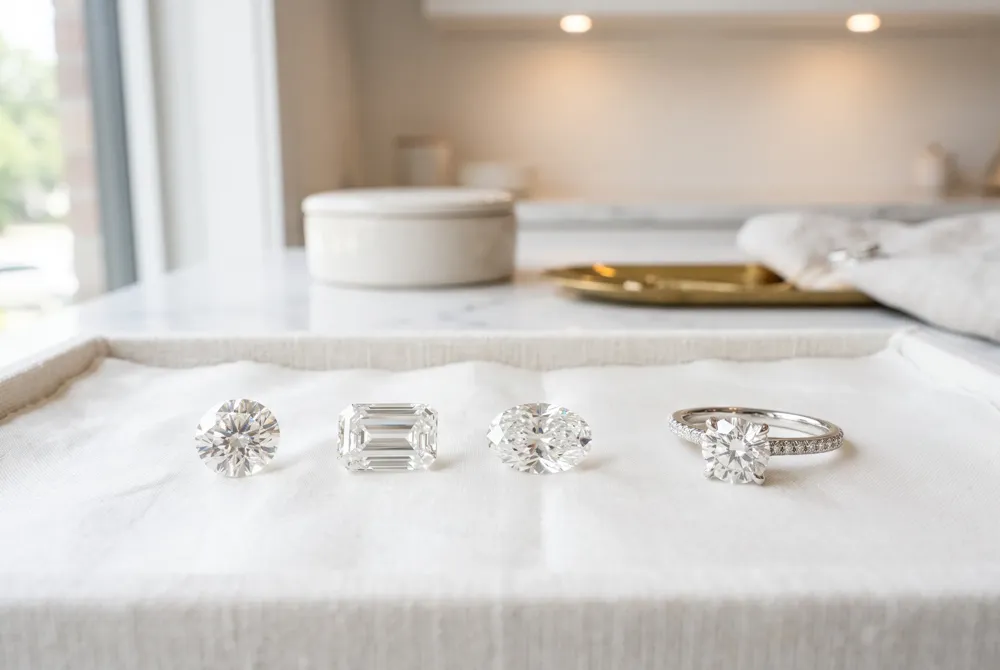
The appeal of a pink moissanite ring comes not only from its color but also from the way its facets handle light. Moissanite has a higher refractive index and dispersion than diamond, which can create more noticeable rainbow-colored flashes, often called fire. Some wearers enjoy this lively effect; others prefer a quieter, whiter sparkle. Neither preference is more correct, so consider how the stone looks in the lighting where you expect to wear it.
Cut quality shapes that impression. A well-proportioned stone can return light effectively, while proportions that are too shallow or too deep may allow light to escape and give the gem a glassy appearance. Where a seller provides a cut grade, look for a clearly stated seller-specific grade such as excellent or ideal, and review photographs or video as well. These labels are not based on a universal grading standard. Avittam Diamond Jewels offers a bespoke ordering service for customizing a ring’s design, metal, and engraving, so shoppers can consider the stone and setting together rather than treating sparkle as a feature in isolation.
Moissanite is often described by its millimeter measurements and diamond-equivalent weight, since it weighs less than a diamond of comparable face-up size. The equivalent figure can help with broad comparisons, but it does not tell the whole story. Fancy shapes vary in proportion, and a princess-cut stone and a pear-shaped stone can present different outlines even when their measurements or stated equivalent weights seem similar.
When comparing a princess-cut ring with pear-shaped engagement rings, pay attention to the stone’s face-up dimensions and how its outline looks on the hand, as well as any carat-equivalent description. Avittam Diamond Jewels’ pink moissanite ring design guide offers design ideas to consider as you compare styles.
Ask the seller to explain what the measurements and grades refer to, and compare images taken at a consistent scale when possible. The available information here does not establish a universal grading standard or specific grading and color behavior for pink moissanite. For that reason, request clear details about the individual stone rather than assuming that a description for colorless moissanite applies equally to a pink stone.
Protecting Each Shape in Its Setting
When selecting a pink moissanite ring, consider how the setting supports the stone as well as how it frames its color. Princess-cut corners and a pear’s pointed tip deserve particular attention because exposed points can be more vulnerable to knocks.
A four-prong setting that covers the princess cut’s corners can help shield them while preserving the stone’s crisp outline. Channel-set or pavé bands can echo its clean geometry, adding detail along the ring without competing with the center stone.
For pear-shaped engagement rings, inspect the point closely and look for a design that secures it rather than leaving it exposed. A protective setting can reduce the risk of damage, though no setting makes a ring immune to hard impacts. Avittam Diamond Jewels offers bespoke ordering, so couples can consider the setting and metal as part of a design tailored to their preferences.
Each setting style creates a different balance of emphasis, sparkle, and coverage. A solitaire keeps attention on the center stone, while a three-stone design adds flanking stones. Pavé introduces small accents along the band, and a halo surrounds the center with additional stones that can make it appear larger.
A bezel uses a metal rim around the stone, giving the ring a defined profile and added coverage at its edges. It may suit someone who values a more enclosed look, while prong settings leave more of the stone visible. Neither is universally best; the right choice depends on the stone’s shape, the wearer’s habits, and the preferred design.
Before choosing, view the ring from the top and sides, paying particular attention to how the setting meets each pointed end. Avittam Diamond Jewels’ design service makes those practical details part of the personal design conversation.
Choosing Metal and Overall Design
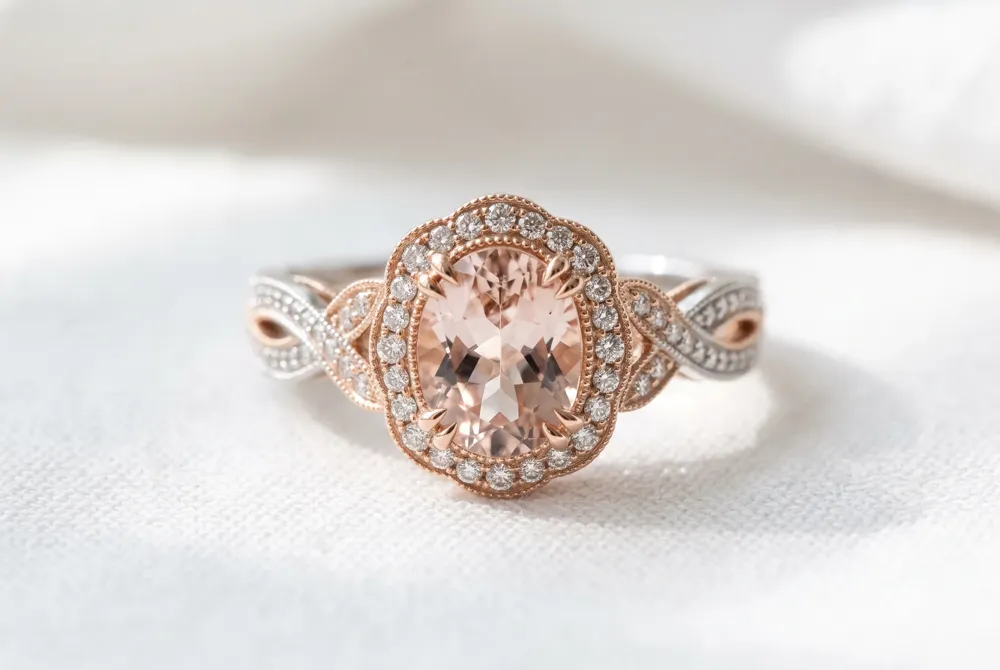
A pink moissanite ring feels most considered when its stone, metal, setting, and scale work together. Rather than choosing a shape in isolation, think about the jewelry you already wear and whether you prefer a quiet, classic profile or a more expressive design.
Rose-gold pavé offers one coordinated option: the warm metal echoes the color of pink moissanite, while small stones along the band add detail. Pink stones can vary in tone, however, so compare the actual gem with the metal instead of assuming every shade will pair equally well. Yellow gold can also create warmth, while white metals give the design a cooler contrast.
For a ring worn often, 14k gold and platinum are popular choices for durable settings. Rose or yellow gold may suit colored moissanite particularly well, but the final effect depends on the stone’s hue, the setting’s proportions, and the wearer’s preferences.
A princess-cut stone can bring geometric drama through its crisp outline; radiant shapes offer another bold, angular look. Pear-shaped engagement rings take a softer, elongated direction. Choosing colored moissanite adds a distinctive, nontraditional note, whether the setting is pared back or richly detailed.
Consider how much visual emphasis you want on the center stone. A simple setting keeps attention on its color and shape, while pavé or other accents add texture and sparkle. At Avittam Diamond Jewels, couples can explore design and metal choices, with engraving available for a personal finishing touch. That flexibility can help balance enduring style with details that feel individual.
Durability, Care, and Everyday Wear
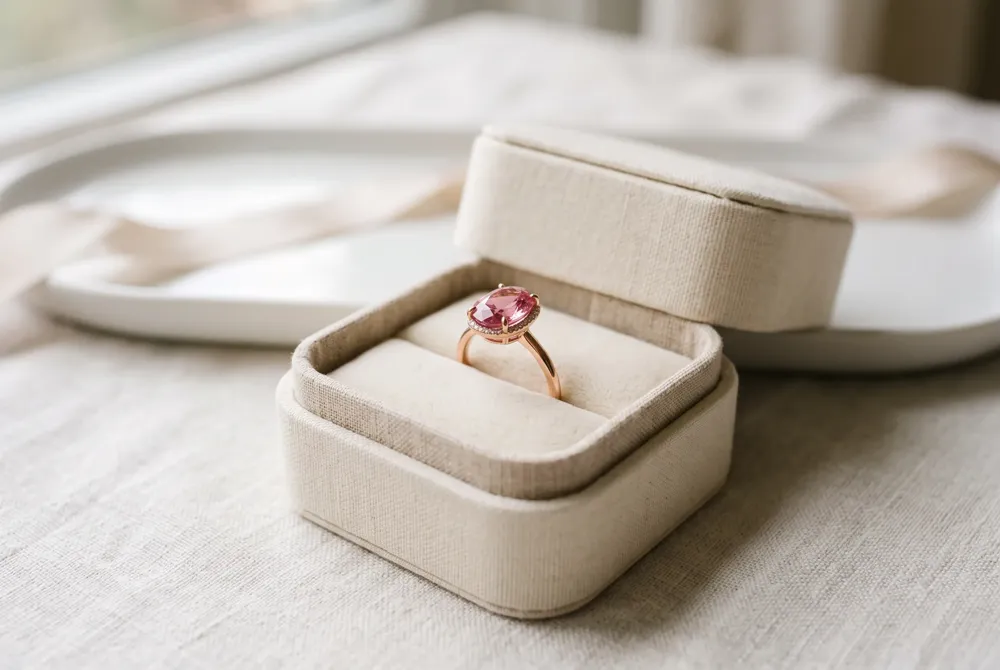
A pink moissanite ring can be suited to frequent wear, but a durable gemstone still needs thoughtful care. Moissanite rates 9.25 on the Mohs hardness scale and is highly scratch-resistant.
Hardness does not make a ring immune to damage. A princess cut has exposed corners, while a pear-shaped stone has a vulnerable point. Avoid knocks against hard surfaces, and ask a jeweler to check that the setting holds the stone securely. For Avittam Diamond Jewels customers, setting options allow protection to be considered alongside appearance.
How should you clean a moissanite ring?
For routine cleaning, soak the ring for ten minutes in warm water with mild dish soap. Gently brush it with a soft toothbrush, rinse carefully, then dry with a lint-free cloth. This simple method can remove everyday residue without requiring specialized equipment.
Remove the ring before swimming in a pool or handling cleaning products. Chlorine and bleach can damage the metal, even though they do not harm the moissanite itself. Taking the ring off also reduces the chance of a setting catching or being struck during daily activities.
When should a jeweler inspect the setting?
Have the prongs checked periodically, particularly if the ring receives frequent wear or has taken a knock. If repair work is needed, tell the jeweler that the center stone is moissanite. Moissanite may change color temporarily under a jeweler's torch and return to normal as it cools. A clear conversation before work begins helps the jeweler choose an appropriate approach.
Making a Confident Purchase
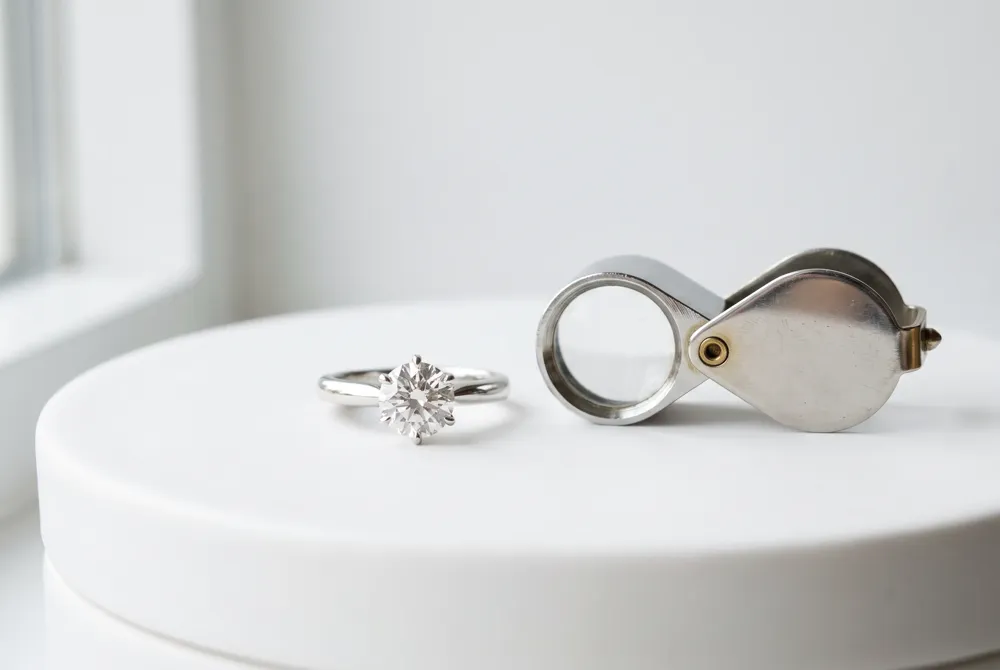
A confident pink moissanite ring purchase starts with clear information about the individual stone and the complete ring. Ask what documentation is available and look for specific details such as color and clarity grades, measurements in millimeters, diamond-equivalent weight (DEW), cut grade, and a unique identifier that connects the stone to its report.
Moissanite does not have a single universal grading body, and GIA does not grade it, so report formats and terminology may differ between sellers. Treat a report as one source of information, not a guarantee that every seller uses the same standards. Request plain explanations of any grades or descriptions that are unclear.
Some sellers describe gem-quality moissanite as VVS clarity or better, meaning inclusions are generally difficult to see without magnification; terminology varies between sellers. For many shoppers, the stone’s cut and appearance in person may matter more than small differences in clarity. Ask for photographs or video in varied lighting, and make sure the seller states the stone’s characteristics clearly rather than relying on broad claims.
Fit and scale deserve the same care as stone quality. Confirm your ring size, review the seller’s sizing and return or exchange terms, and, if possible, try on a ring with a similar stone size and shape. Avittam Diamond Jewels offers virtual try-on tools and detailed product guides to help shoppers assess the design online. For inspiration on choosing a look, see pink moissanite ring designs.
The total cost depends on more than the center stone. Setting style, metal, stone size and color, accent stones, and design complexity all shape the final price. Moissanite may leave room in a budget for a more detailed setting, but compare complete ring specifications rather than assuming a particular saving.
A buying guide notes that moissanite has little resale value, so it is better chosen for its appearance and the economics of the purchase than as an investment. If the ring is meant to mark a lasting commitment, focus on whether its shape, color, fit, and craftsmanship feel right for the person who will wear it.
Choose the Shape You Love Wearing
The choice between a princess-cut and pear-shaped engagement ring comes down to the silhouette you prefer. A princess cut offers a crisp, geometric outline; a pear shape brings a tapered, elongated form with a softer, more expressive profile.
When comparing a pink moissanite ring, look at the actual stone from several angles. Notice how its sparkle reads in different light, whether the proportions feel balanced, and how the setting supports the corners or pointed tip. Try each shape on your hand, too: the same design can feel quite different once its scale and orientation are seen in place.
Metal, band width, and setting details complete the impression. A protective setting can frame the stone while helping shield its vulnerable points, and a well-chosen fit makes the ring feel natural through daily wear. Avittam Diamond Jewels offers personalized guidance as couples consider their preferences.
Take time to compare the details rather than deciding from a photograph alone. The right pink moissanite ring is the one that feels comfortable on your hand, considered in its craftsmanship, and unmistakably true to your style.