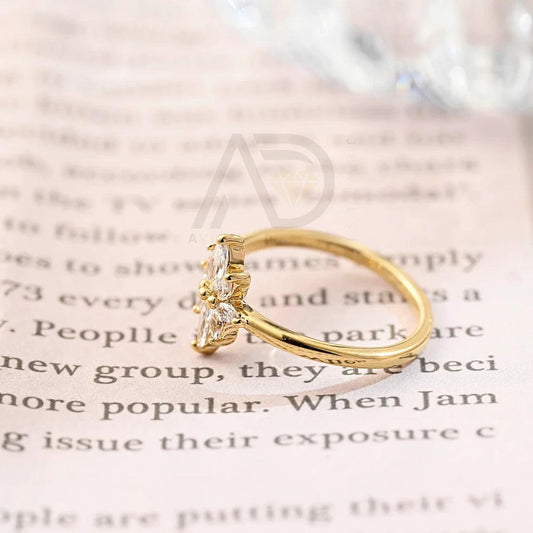

A Meaningful Pairing
Choosing how to wear an engagement ring and wedding ring is personal, not a test of etiquette. Some couples favor the familiar pairing on one finger; others prefer separate hands, a single ring, or a different arrangement for daily life. There is no required way to wear them together, and the design of the rings can be as influential as tradition as Vogue notes.
The distinction between an engagement ring and a wedding ring begins with what each traditionally represents. An engagement ring marks the promise to marry, while a wedding band represents the commitment made in marriage. Together, they can tell the story of two milestones, whether they match closely or express distinct tastes.
Traditions and cultural customs may suggest a hand or stacking order, but comfort and individual meaning matter too. The shape of a setting, the fit of the bands, and the demands of everyday routines can all influence what feels right.
What Each Ring Represents
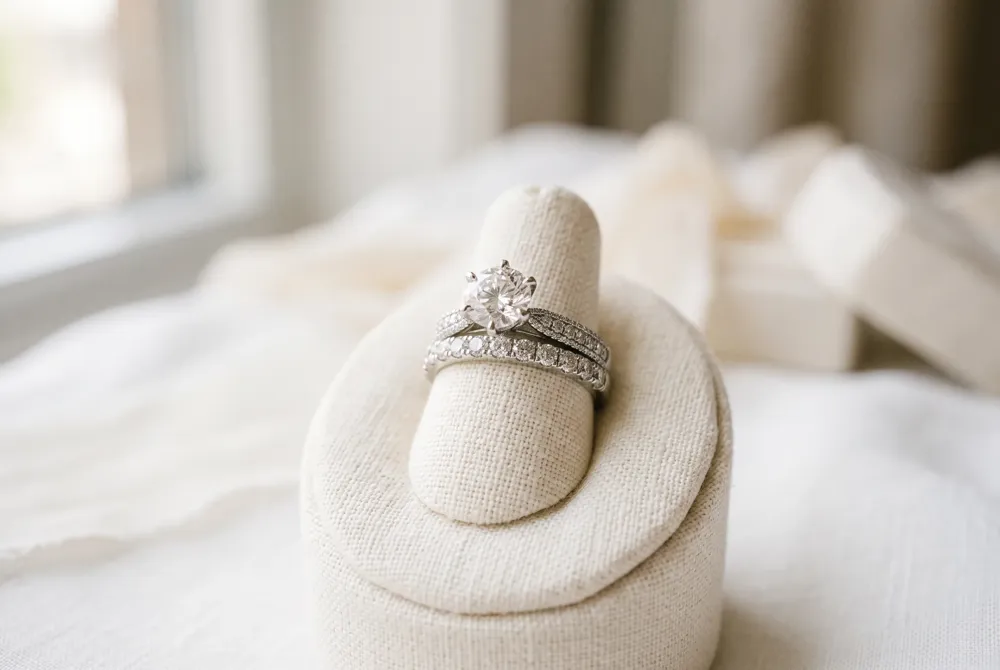
The difference between an engagement ring and a wedding ring begins with the moment each marks. An engagement ring is traditionally given at a proposal as a promise to marry. A wedding ring, exchanged during the ceremony, represents the vows and commitment the couple makes to one another.
Their customary designs often reflect these roles. Engagement rings commonly feature a prominent diamond or other gemstone, while wedding rings may be simple metal bands or include smaller stones. But these are conventions, not requirements. A plain engagement ring, a more ornate wedding band, or a coordinated bridal set can all express the same commitment.
Choosing Whether to Wear Both
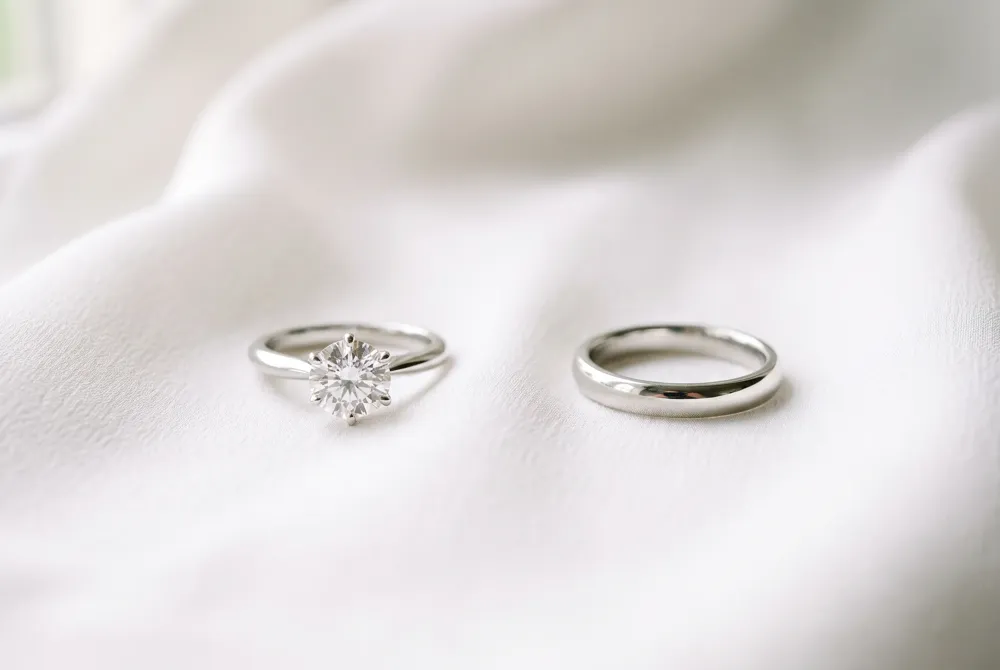
Do you wear both an engagement ring and a wedding ring? Many people wear the pair together, often stacked on one finger, but there is no required arrangement. The choice can reflect your routine, comfort, and the way the rings sit together, as well as what each piece means to you. Vogue’s guide to wearing wedding and engagement rings also describes several options beyond the familiar stack.
Wearing the rings on separate hands can give each design room and may suit a pair that feels crowded on one finger. You can also change the arrangement for different occasions, wearing both for a celebration and choosing a simpler option for daily activities.
Some people wear only a wedding band day to day and save the engagement ring for special occasions. Others prefer the reverse, or alternate depending on work, comfort, or personal style. When exploring the engagement ring versus wedding ring, remember that wearing both is a choice, not a condition of honoring either milestone.
A useful test is to try each option during an ordinary day. Notice whether the rings move comfortably, catch on clothing, or interfere with the tasks you regularly do. The most satisfying choice is the one that feels natural in your life and carries the meaning you want, whether that means wearing both, one, or neither at a particular moment.
One Ring for Both Milestones
Can an engagement ring also serve as a wedding ring? Yes. You are not required to own or wear two separate rings. A single ring can mark both milestones if that choice feels right for your relationship, style, and daily routine.
The distinction between an engagement ring and a wedding ring is customary, not a rule about design. An engagement ring is traditionally given at a proposal, while a wedding band is exchanged during the ceremony. Their meaning comes from the moment and commitment they represent, so one thoughtfully chosen ring can carry both.
For a ring you plan to wear every day, consider how its setting feels during ordinary tasks and whether it suits your routine. A raised center stone may catch on clothing or be less convenient for hands-on work, while a lower profile or simpler design may feel easier to wear. The ring should fit securely without feeling restrictive.
You can keep that original ring as your sole piece for as long as you wish. If your preferences change, a complementary band can be added later, chosen to sit neatly beside the setting or to offer a deliberate contrast. There is no need to decide on a two-ring set simply because it is customary; wearing one ring or both is a personal choice.
Traditional and Alternative Ring Orders
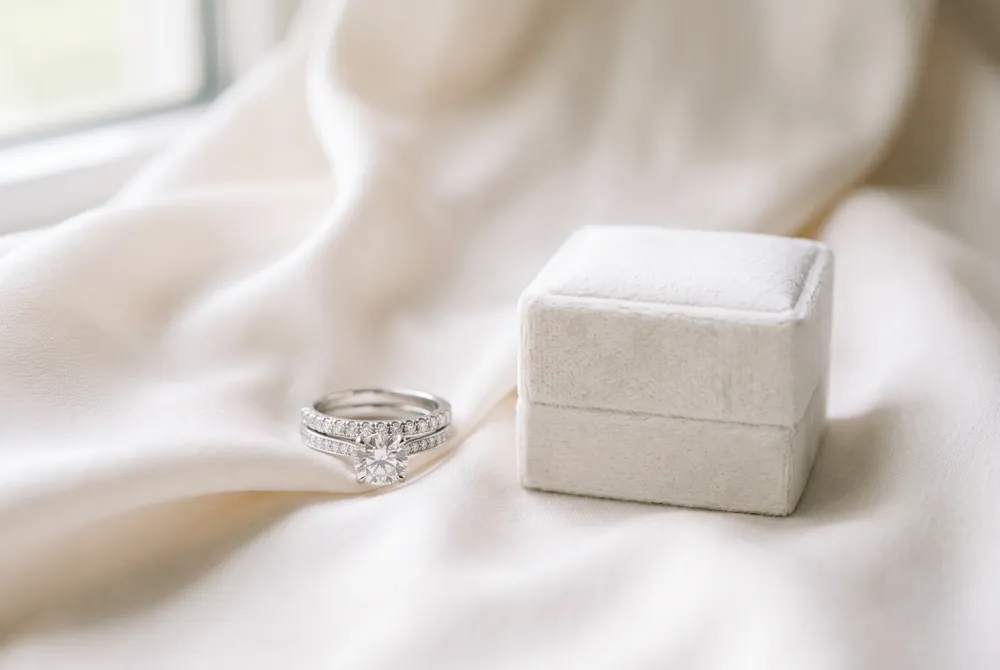
In the familiar Western arrangement, the wedding band goes on first, closest to the hand on the ring finger, with the engagement ring above it. Some people believe this order symbolizes placing the marriage bond nearest the heart. It is a meaningful tradition, not a requirement. Vogue’s guide to wearing wedding and engagement rings describes several ways couples adapt the arrangement to suit their rings and preferences.
For a ceremony, some wearers temporarily move the engagement ring to the right hand so the wedding band can be placed on the left ring finger. Afterward, they return the engagement ring above the band. Others leave the engagement ring in place if the rings fit comfortably together.
A chronological order reverses the stack: the engagement ring sits closest to the hand, followed by the wedding band. This can reflect the sequence from proposal to marriage, and may suit a prominent center stone paired with a more modest band. The choice between engagement ring and wedding ring placement can also come down to how the settings meet and whether the stack feels comfortable.
Ring customs differ across cultures, and not everyone wears both rings on the same hand or in the same order. Let tradition inform the choice, but give equal weight to personal meaning, fit, and comfort.
Finding a Pairing That Fits
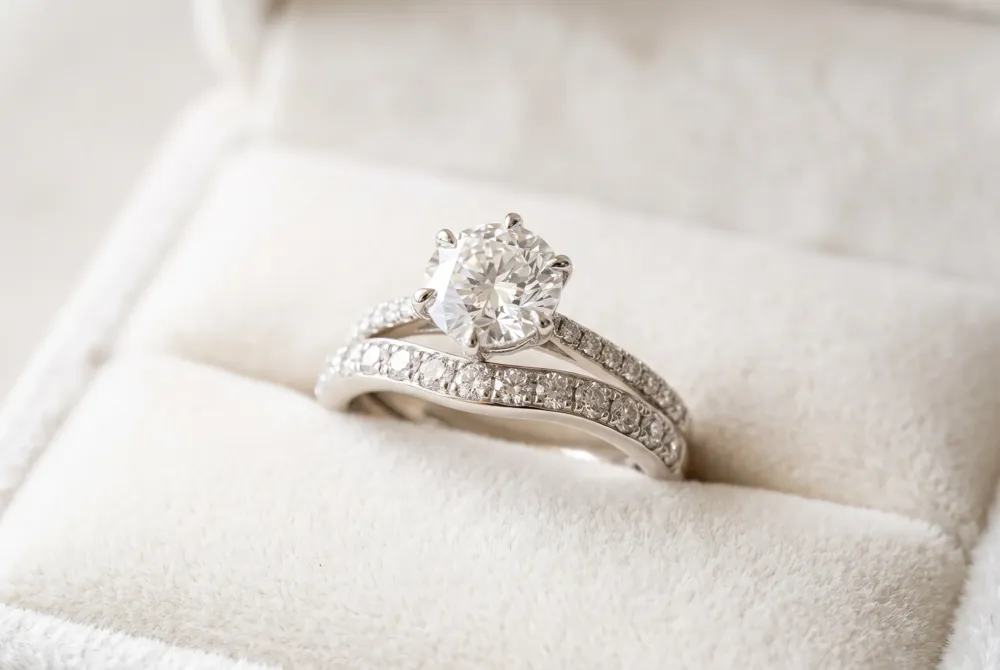
When choosing an engagement ring and wedding band together, look beyond whether their metals match. The shapes, profiles, and settings determine how the rings meet, how they feel side by side, and whether the band sits close to the engagement ring.
Try the rings on together and check for gaps, rubbing, or pressure, then view the pairing from above and from the side. A set that looks balanced in a photograph may feel different on the hand, especially if a raised setting or prominent center stone affects how the bands sit.
A coordinated design can create a seamless look, but exact matching is not necessary. You might echo a detail from the engagement ring, such as its metal or setting, or choose a contrasting band to make the combination feel more individual. Personal preference and ring design can guide how the pair is worn.
If a straight band does not sit comfortably beside a distinctive setting, consider a curved or contoured band shaped to follow the ring’s outline.
When comparing an engagement ring with a wedding ring, think of the pair as two pieces that should work well together, not as a set that must be identical. Comfort deserves as much attention as appearance: if a combination pinches, rubs, or feels awkward, another shape or arrangement may suit you better. Let the rings’ design and your personal style guide the final choice.
Keeping the Rings Aligned
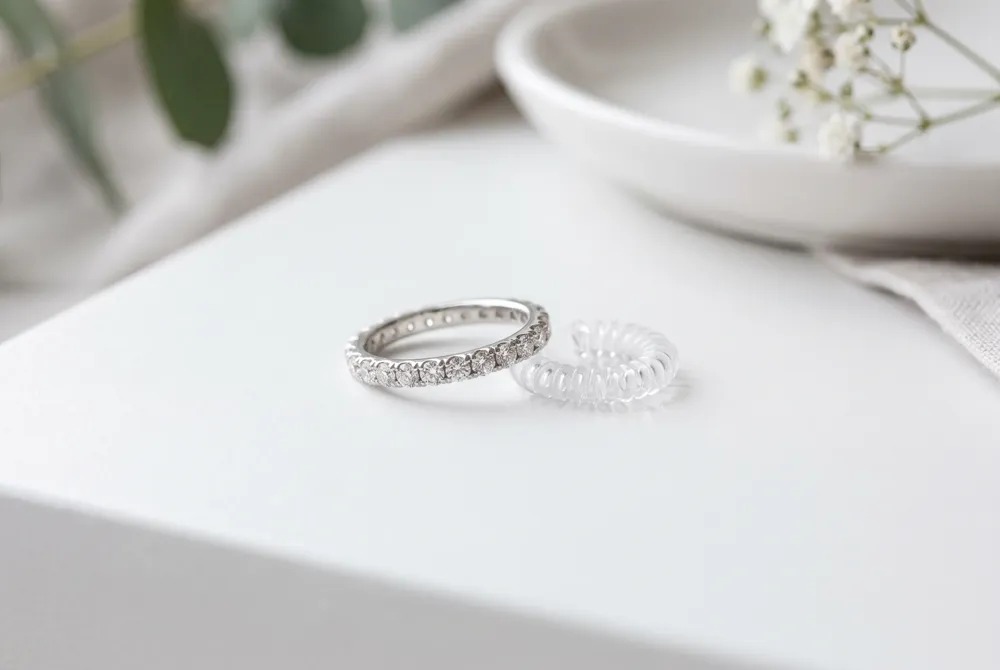
If your engagement ring and wedding band shift or leave a gap, begin by looking at how their shapes and settings meet. A contoured or fitted band may follow the outline of an engagement ring and sit neatly beside it, though the result depends on the design of each piece.
If you already own both rings, a connector or discreet ring adjuster may help limit movement while keeping the pieces separate. These options can suit someone who wants a steadier stack without permanently changing the rings, but comfort and appearance vary with the set.
Professional soldering is another option. A jeweler joins the rings so they remain aligned as one piece. The trade-off is less flexibility to wear them separately, and resizing may become more involved because the rings are connected.
Before choosing an adjustment, ask a jeweler to assess the set in person. They can consider how the rings meet, whether they feel comfortable during daily wear, and how a change may affect cleaning and care. If you value the freedom to wear either ring alone, make that preference clear before agreeing to soldering.
A well-aligned pair need not be perfectly flush from every angle. The right solution balances a pleasing fit with comfort and the way you want to wear the rings. For broader guidance on how to wear your wedding and engagement ring, consider both the design and your preferred arrangement.
Building a Personal Ring Stack
A wedding ring stack can grow from the two pieces that matter most: an engagement ring and a wedding band. From there, an anniversary or eternity band can mark another chapter, while a personal or heirloom ring can add its own meaning. There is no required order for the added bands; choose an arrangement that feels comfortable and true to you.
For a unified look, repeat the metal of your engagement ring or choose a wedding band with a profile that follows its lines. A contoured band may sit neatly beside a distinctive setting, while a plain band can leave a detailed center stone in focus.
Contrast can feel just as considered as a match. Different metals, finishes, band widths, or diamond details add dimension without requiring every ring to look alike. The goal is balance: let each piece contribute to the stack while preserving the character of the engagement ring. For ideas on wearing rings in different combinations, Vogue’s guide to wedding and engagement rings notes that personal preference and the designs themselves can shape the arrangement.
Try the complete stack together rather than judging each band on its own. Multiple rings can feel different from a single band, and their edges or settings may touch as your hand moves. Check the fit from more than one angle, and make sure the rings feel secure without pinching or restricting movement.
Balancing Ring Proportions
Is an engagement ring usually larger than a wedding ring? Often, it appears that way: an engagement ring may feature a prominent center stone, while a wedding band is commonly a simpler, lower-profile design. This familiar contrast is a convention, not a rule.
A wedding band can be wide, set with diamonds, or designed to make a strong statement. An engagement ring, in turn, may be understated, with a modest stone or a clean band. The difference between an engagement ring and a wedding ring is not defined by size, but by each piece’s design and the meaning it holds.
When worn together, consider how the rings’ profiles, settings, and widths relate from the side as well as from above. A high setting beside a substantial band can create a bold, dimensional pairing; a delicate band may give a larger center stone more visual space. The right balance depends on how the pieces meet and feel on the hand.
Choose the scale that feels comfortable and true to the wearer, not one that assumes the engagement ring must dominate.
Personal preference and ring design can shape how the pair is arranged.
Setting a Comfortable Ring Budget
Is there a three-month rule for engagement ring spending? No formal or time-honored tradition requires couples to spend three months’ salary. The figure is a marketing-driven guideline, not a measure of commitment or ring quality.
The familiar formula developed through diamond advertising. Early campaigns suggested spending one month’s salary, and later promotions raised the proposed benchmark. This advice is a marketing-driven guideline, not a fixed rule.
A more useful starting point is your own financial picture: upcoming expenses, savings goals, and the amount you are comfortable spending without strain. Then consider which qualities matter most to you, such as the stone, setting, metal, or workmanship. A carefully chosen ring can feel meaningful at many price points.
When comparing an engagement ring with a wedding ring, remember that the two pieces may serve different roles and need not command equal spending. Set a shared limit, discuss priorities openly, and weigh craftsmanship and design against your day-to-day financial needs. The right budget is one you choose with confidence, not one dictated by an advertising slogan.
Wear Them Your Way
Tradition can offer a graceful starting point for deciding how to wear an engagement ring and wedding ring, but it need not dictate the arrangement. The familiar order places the wedding band closest to the hand, with the engagement ring above it, yet couples may choose another hand, finger, or pairing that suits them. Vogue’s guide to wearing wedding and engagement rings reflects this flexibility.
Think about what feels comfortable through an ordinary day, as well as what carries meaning for you both. You might wear the rings together, separate them, or keep one for occasions when it feels right.
Whether your choice follows a custom or creates a new one, let comfort and personal significance guide it. The engagement ring and wedding band do not need to sit in a prescribed order to belong together. Their meaning comes from the promise and marriage they represent, and that shared significance matters more than the arrangement on your hand.