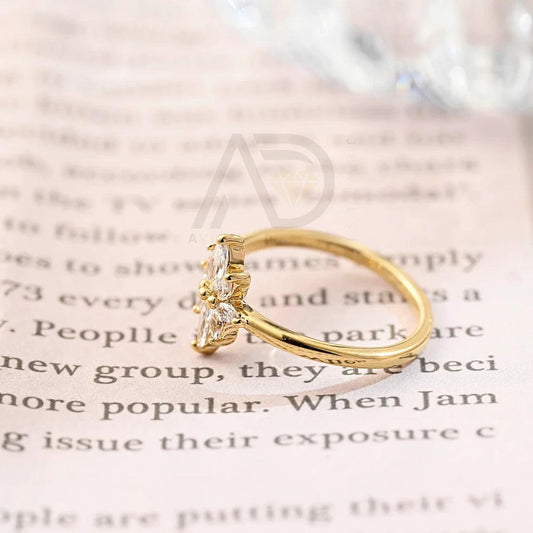

Two Elongated Silhouettes
When comparing a marquise cut engagement ring with pear shaped engagement rings, carat weight alone cannot tell you which will look larger on the hand. Both cuts have elongated outlines that can create generous face-up coverage and draw the eye along the finger. A marquise often presents especially broad visible coverage for its weight, but the result depends on the individual stone.
The shapes make different impressions. A marquise has two pointed ends and a balanced, symmetrical outline; a pear pairs one rounded end with a single tip, creating a softer, more asymmetrical silhouette. Each can feel striking without appearing oversized, though proportions and setting influence how much of the diamond is visible.
At Avittam Diamond Jewels, detailed product guidance and virtual try-on tools help shoppers consider a ring’s appearance beyond its carat weight. Compare the stones’ actual measurements, proportions, cut, and settings, then picture them against your hand and preferred style. The choice is personal, too: finger proportions, desired presence, and comfort in everyday wear all matter. Avittam’s bespoke ordering service also lets you personalize a ring’s design, metal, and engraving, so the silhouette can feel distinctly yours.
The Shapes Behind the Comparison
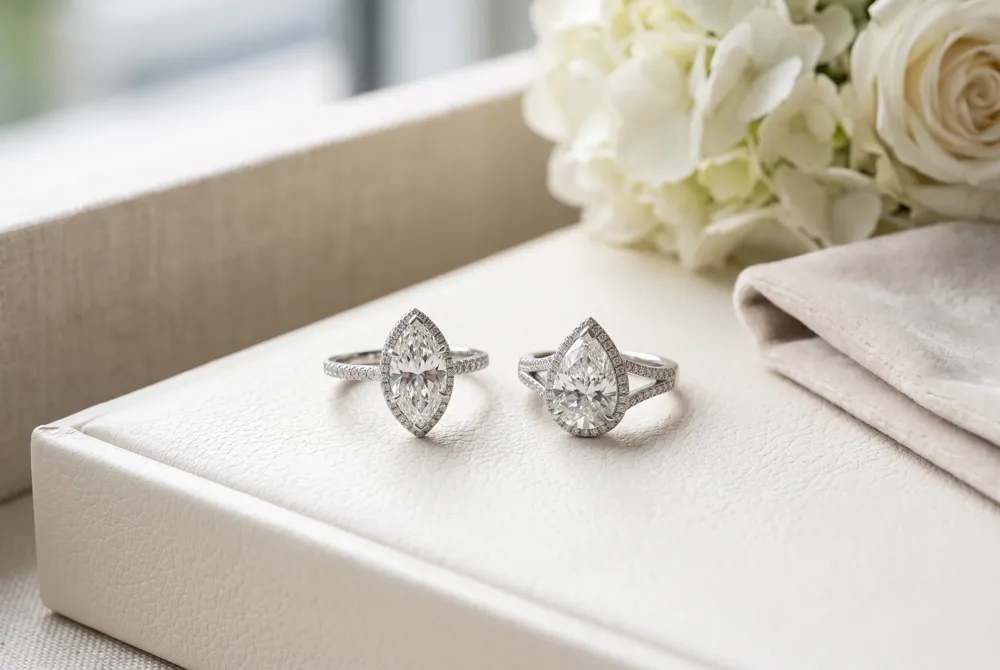
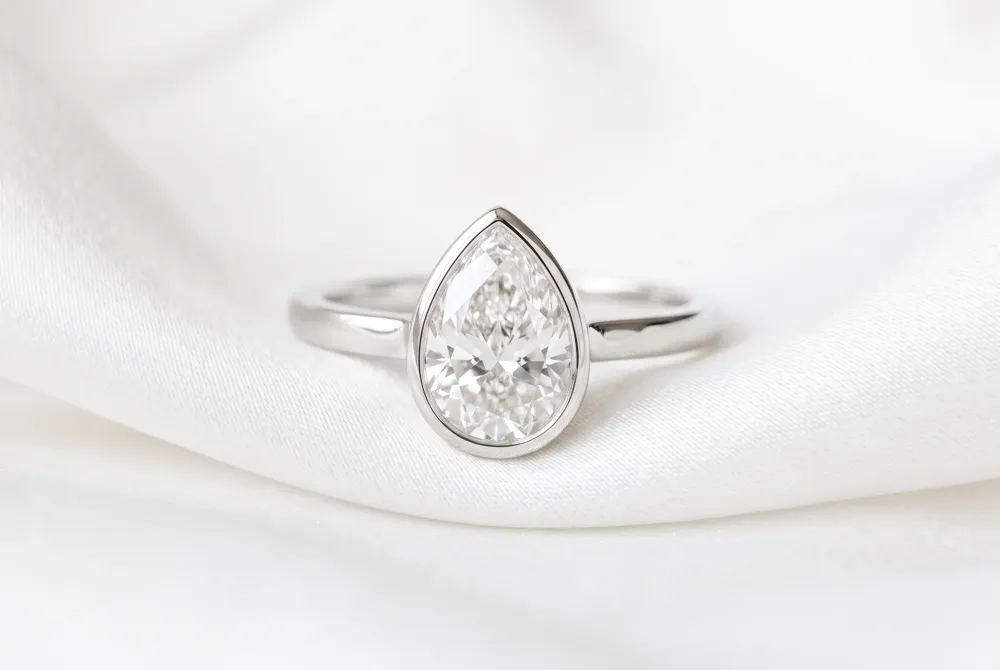
The outline is the first distinction between a marquise cut engagement ring and pear shaped engagement rings. A marquise diamond has curved sides that meet at two pointed ends, creating a long, balanced silhouette. A pear has one rounded end and one tapered point, giving it the familiar teardrop outline.
That difference shapes each ring’s character. The marquise tends to feel symmetrical, dramatic, and precise, while the pear blends a rounded, softer impression with an asymmetric taper. Neither look is inherently more refined; the choice depends on whether you prefer crisp balance or a more fluid outline.
Pear and teardrop are two names for the same cut. Pear is the standard gemological term, while teardrop is a descriptive name for its outline. In either shape, the finished impression also depends on the setting, which can frame the center stone or make its silhouette feel more prominent.
Both are modified brilliant shapes and can show lively brilliance, but the shape alone cannot promise a particular level of sparkle. Cut execution, symmetry, and the individual diamond’s response to light matter. Avittam Diamond Jewels’ curated diamond selection and bespoke ordering service let couples consider the stone alongside their chosen design, metal, and engraving.
A pear can be set point-up or point-down, changing the direction and character of its tapered line. Marquise diamonds are generally presented along their long axis, though a setting can still make the overall design feel classic or more distinctive. The orientation that suits you is best judged as part of the complete ring, rather than as an isolated stone.
Both outlines end in delicate points, so protection belongs in the design conversation. A pear has one tip to secure; a marquise has two. Protective prongs or a bezel can help shield these areas, while Avittam Diamond Jewels’ customizable settings allow the setting choice to be considered as part of a personalized ring design.
In short, the marquise offers a two-pointed, geometric profile, while the pear balances a rounded end with a single point. Their visual character and the pear’s orientation options set them apart, but each calls for careful attention to its pointed end or ends.
What Determines Face Up Size
Carat describes a diamond’s weight, not the dimensions you see when looking down at the ring. For a marquise cut engagement ring or pear shaped engagement rings, the visible spread depends on how that weight is distributed across the stone’s face.
Both elongated outlines can cover more finger area than a round diamond of equal weight, creating an impression of greater size. A marquise often has particularly generous face-up coverage per carat, but that is a general tendency, not a guarantee that every marquise will appear larger than every pear. A well-proportioned pear can also look substantial beside a round of the same weight; that comparison does not establish how it will look beside a marquise.
When comparing stones, look at their face-up measurements in millimeters and view them side by side if possible. The shape name and carat figure alone cannot show whether one diamond will look broader, longer, or more prominent on your hand. For a closer look at the two silhouettes and their visual differences, see Avittam Diamond Jewels’ comparison of marquise and pear engagement rings.
Depth matters because some of a diamond’s weight can sit below the visible surface. A deeper stone may carry more weight without looking proportionally larger from above, while a well-executed cut can help the face appear balanced and bright. Proportions also shape the outline: a narrow marquise reads differently from a fuller one, just as a slender pear differs from a rounded profile.
The setting influences the final impression, too. A halo can extend the ring’s visible footprint, while a broad band may make the center appear less prominent; a finer band can give it more visual emphasis. Avittam Diamond Jewels offers personalized design choices, including setting and metal customization, so the finished ring can be considered as a whole rather than by its center stone alone.
For the fairest comparison, assess each diamond’s measurements, proportions, light performance, and setting together. Then consider how each looks on your hand. The stronger choice is the one whose visible presence and silhouette feel right to you, not simply the stone with the higher carat weight.
Choosing Marquise Proportions
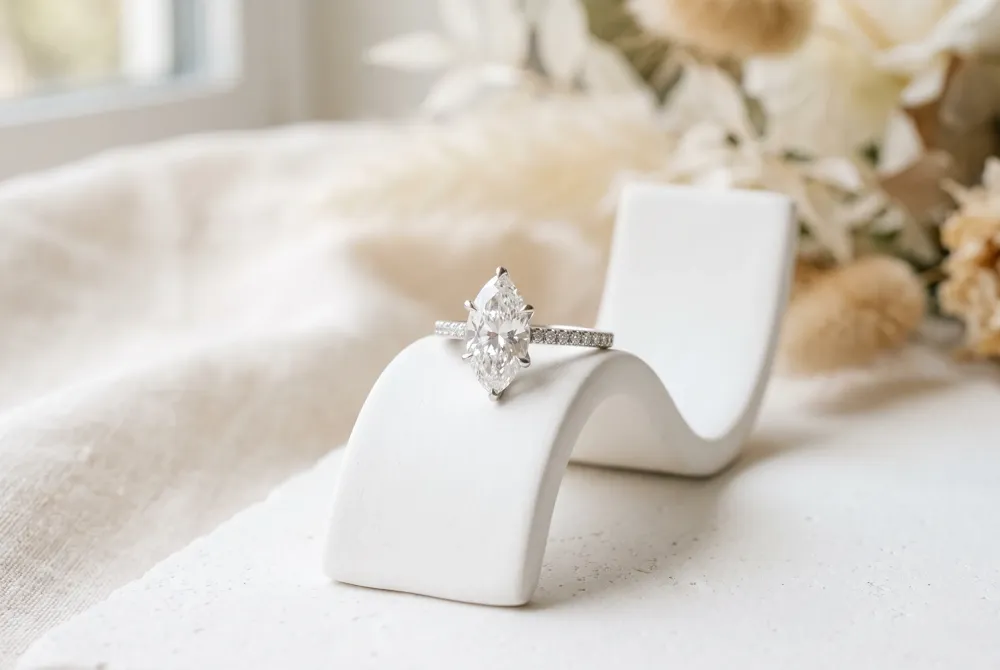
When choosing a marquise cut engagement ring, consider the length-to-width ratio: the diamond’s length divided by its width at the broadest point. This measurement describes the stone’s outline, not its quality. A lower ratio creates a fuller, wider shape, while a higher ratio gives the diamond a longer, narrower profile. Taken too far, that narrowness can make the stone look thin.
There is no single ideal proportion. The right balance depends on whether you prefer a broad, graceful silhouette or a more dramatic line along the finger. A well-proportioned marquise should feel harmonious from end to end, with neither its width nor its length overwhelming the other.
Carat weight alone will not tell you how large a marquise looks from above. Compare the face-up measurements of the individual stones, since their dimensions vary with proportion. When weighing the marquise against pear shaped engagement rings, compare actual outlines and visible surface area rather than relying on carat figures alone. Our marquise and pear shape comparison offers a closer look at how their silhouettes differ.
Examine the diamond from directly above. Its two tips should align, and the curved sides should appear balanced rather than lopsided. Check that the stone sits straight in its setting, because even a slight tilt can make its long outline look uneven. Also look across the center for a dark bow-tie shadow, which can interrupt the stone’s brightness. Detailed imagery can help reveal these features, while viewing the diamond in varied lighting gives a fuller sense of its appearance.
At Avittam Diamond Jewels, detailed product guidance and virtual consultations can help you compare proportions and face-up dimensions against your hand. Bring your preferred outline into the conversation, along with how you want the ring to sit and feel. The goal is not to follow a fixed ratio, but to find a marquise whose shape looks balanced to your eye and suits the design you have in mind.
How Each Shape Sits on the Hand
A vertically set marquise cut engagement ring draws the eye from one fingertip direction to the other, creating a long, balanced line that can make the finger appear slimmer. Its paired points give the silhouette a striking symmetry, while the pear’s rounded base and single tapered tip create a gentler, more asymmetrical effect. Pear shaped engagement rings also guide the eye along the finger, but their rounded end softens the outline and offsets the point. Wearing the point toward the fingertip emphasizes the lengthwise line; turning it the other way changes the effect. Neither shape is universally more flattering. One may appeal to someone who prefers bold symmetry, while the other may feel right for someone drawn to softer curves.
The impression on your hand depends on more than the outline. Finger proportions, the stone’s actual length and width, its orientation, and the height of the setting all affect how the ring reads. So does the amount of diamond visible above the setting: a high mounting may show more of the stone, while a lower profile can feel closer to the hand.
When comparing styles, look at the whole ring rather than relying on carat figures alone. Similar-weight diamonds can have different face-up measurements, and a band or setting can change the visual balance. Avittam Diamond Jewels offers virtual try-on tools to help shoppers assess a design from home; detailed views of the setting can also help you judge how much of the stone remains visible.
Whenever possible, compare similar designs on your own hand, either in person or through a clear virtual presentation. Notice whether the points feel graceful or too pronounced, whether the stone looks balanced beside your finger, and whether the setting feels comfortable for daily wear. The right choice is the one whose proportions and presence feel natural to you, not the one presumed to suit a particular hand shape.
Evaluating Brilliance and Bow Ties
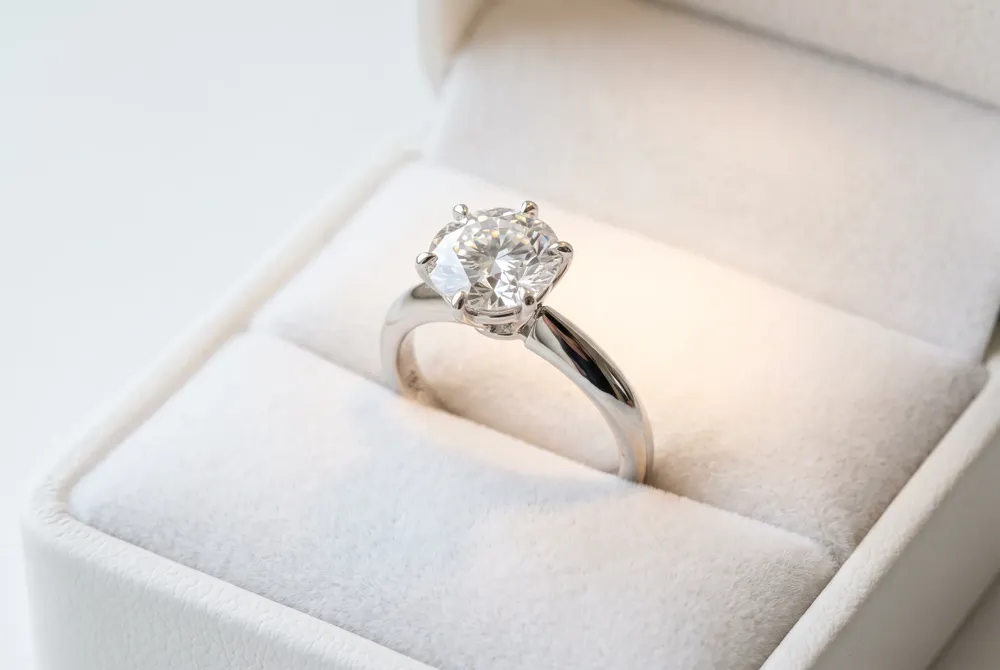
A beautiful marquise cut engagement ring or pear setting depends on more than its outline. Both shapes can show a bow tie, a darker area across the center caused by uneven light reflection or light leakage. Its presence and strength vary from one diamond to another, so carat weight alone cannot predict how noticeable it will be.
When comparing pear shaped engagement rings with marquise stones, inspect the individual diamond rather than relying only on measurements or a grading report. Look for lively light return across the face and a central shadow that does not distract from the stone’s sparkle. A faint bow tie may be part of the pattern; a pronounced, persistent dark area can interrupt it.
Symmetry helps each silhouette look intentional. A pear should have balanced curves on either side of its center line, while a marquise should appear evenly aligned from one pointed end to the other. At Avittam Diamond Jewels, curated diamond selection and virtual try-on tools can help shoppers consider a stone’s appearance as part of a personalized online buying experience.
View the diamond in more than one lighting environment, if possible. Bright display lighting can make a stone sparkle, but softer or more ordinary light may reveal a shadow that is less apparent at first glance. Turn the stone gently and observe whether its brightness shifts evenly or leaves a distracting dark band across the center.
Check clarity and color along with light performance. Inclusions near the center or at the pointed ends may be easier to notice in these elongated shapes, and color can appear more concentrated toward the tips. These are characteristics to judge on the actual stone, not automatic reasons to rule it out.
As general appearance guidance, G-H color may pair well with white gold or platinum, while I-J can complement the warmth of yellow or rose gold. These are starting points rather than fixed rules: metal choice, the diamond’s overall appearance, and personal preference all shape the final impression.
Protecting the Diamond’s Points
The pointed ends of a marquise cut engagement ring or pear shaped diamond are more exposed to knocks than rounded parts of the stone. For everyday wear, the setting should protect those vulnerable points without obscuring the silhouette you chose.
A pear has one tip to secure, while a marquise has two. V-shaped prongs can cup each point, and well-fitted side prongs help keep the diamond stable. A partial bezel can add a shield around the ends while leaving more of the stone visible. A full bezel encloses the outline more completely, though its band of metal can make the shape appear less open and elongated.
The broader design affects both protection and presentation. A solitaire keeps attention on the center diamond, while a halo frames its outline and can make the stone appear larger. Side stones add detail and visual width, but the prongs and surrounding elements should not leave the main diamond’s points exposed.
Avittam Diamond Jewels offers customizable ring designs, including choices of setting and metal, so protection and appearance can be considered together. When comparing pear shaped engagement rings with a marquise, look beyond the top view: a raised setting may expose the points more to impacts, while a lower profile may feel more practical during daily tasks.
Consider how the ring will fit your routine, including whether it may catch on clothing or come into contact with hard surfaces. Comfort, setting height, the wearer’s activities, and the way the design sits on the hand all matter. Avittam Diamond Jewels provides virtual try-on tools to help you assess a design’s appearance before settling on a style; confirm that its point protection and fit suit regular wear as well.
Try on comparable settings when possible, or use virtual viewing to compare how a solitaire, halo, and protective bezel frame the diamond. The right choice balances a secure hold with a clear view of the stone’s distinctive outline.
Pear Orientation and Wedding Bands
With pear shaped engagement rings, orientation and the wedding band work together to shape the look of the finished set. Traditionally, the pear’s point faces the fingertip, drawing the eye outward along the hand and potentially making the finger appear longer.
Some wearers prefer the point facing toward the hand. This reverses the visual direction and gives the ring a different character, but neither orientation is more correct. Choose the one that feels natural on your hand and suits the way you want the diamond to read.
A curved or contoured band can follow the pear’s outline, bringing the two rings close together without crowding the tip. A V-shaped band offers another option: its angled center can frame the point and echo the diamond’s taper.
A straight wedding band may also pair well, depending on the engagement ring’s setting height and shape. It can sit beside the ring with a small space between the bands, creating a deliberate contrast rather than a flush fit. Neither approach is inherently better; the setting determines what feels balanced and comfortable.
Try the engagement ring with the bands you are considering, checking how they sit together from above and from the side. Notice whether the rings stay in place, feel comfortable through ordinary movement, and create the relationship between shapes you prefer. A marquise cut engagement ring has points at both ends, so its band pairing calls for a different outline; comparing designs in person can clarify which silhouette feels right.
At Avittam Diamond Jewels, bespoke ordering lets you customize a ring’s design, metal, and engraving, making it possible to coordinate the engagement setting and wedding band around your preferred orientation and fit. A considered bridal set should feel cohesive on the hand while still allowing each piece to retain its own shape.
A Distinctive Marquise by Design
For couples drawn to a less familiar silhouette, a marquise cut engagement ring offers a distinct alternative to pear shaped engagement rings. Its two pointed ends create an elongated outline with generous presence across the finger, while the shape can feel at home in both vintage-inspired and contemporary designs.
The cut is associated with an 18th-century French tradition in which King Louis XV commissioned a diamond shape inspired by the lips of the Marquise de Pompadour. It is best understood as a historical account, not a technical fact about how a marquise diamond performs. The enduring appeal lies in the silhouette itself, which can give a ring a sense of character without dictating a single style.
Design choices that make the ring personal
A north-south solitaire puts the diamond’s length in line with the finger, keeping attention on its outline. An east-west setting turns that line across the hand for a more unexpected look. Side stones can add contrast or extra detail, while the choice of yellow, white, or rose gold, or platinum, changes the mood of the finished ring. An engraving can bring a private meaning close to the design.
None of these choices is required. The stone’s proportions, the wearer’s hand, preferred style, and daily routine can guide decisions about orientation, setting, and band. A slimmer profile may suit someone who prefers a delicate feel, while a more substantial band or protective setting may better match their habits.
At Avittam Diamond Jewels, bespoke ordering lets couples customize a ring’s design, metal, and engraving. That service makes personalization part of the design process, with choices shaped around the individual diamond and wearer rather than a preset formula. A considered marquise can feel distinctive and personal while retaining the graceful character that first drew the couple to its shape.
Price and Value in Context
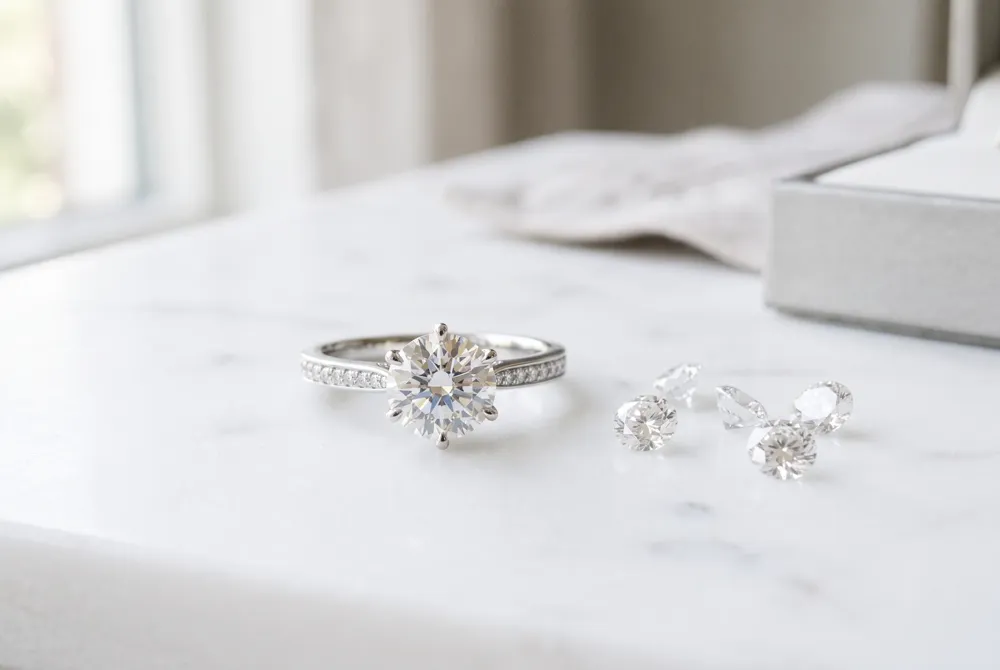
How does the price of a marquise-cut diamond compare with other diamond shapes? Marquise and pear diamonds generally cost less per carat than round brilliant diamonds, though the difference depends on the individual stone and current market conditions. Neither shape has a fixed price advantage over the other.
A marquise cut engagement ring can appeal to shoppers who value visible size: its elongated outline often spreads across the finger, giving the stone a generous face-up presence. That appearance alone does not establish greater value. A larger-looking diamond may still cost more, or perform less beautifully, than a smaller stone with stronger cut quality and symmetry.
Price reflects several considerations, including cut quality, symmetry, proportions, color, clarity, and carat weight. Market demand also plays a part. Pear shaped engagement rings may be more sought after than marquise styles at a given time, which can influence availability and pricing; marquise designs have also attracted renewed interest. These trends do not create a dependable price ranking between the shapes.
For a fair comparison, look at marquise and pear diamonds of similar weight and quality, then consider their measurements, outline, and light performance alongside the asking price. A stone should be assessed in person or through clear imagery under different lighting, since a pronounced bow tie or uneven symmetry can affect its appeal.
Avittam Diamond Jewels offers a curated selection of premium diamonds and bespoke ordering, including customization of a ring’s design, metal, and engraving. That gives couples a way to weigh the character of each stone against the details they want in the finished piece, rather than choosing on carat weight or price alone.
Compare the specific stones in front of you, not just the shape names. The most satisfying purchase balances a price you are comfortable with, the appearance you love, and the quality of the diamond itself.
Choose the Stone That Feels Yours
A marquise cut engagement ring often delivers generous face-up coverage through its long, pointed outline. Pear shaped engagement rings offer a different balance: an elongated line softened by a rounded end. Neither silhouette is guaranteed to look larger in every setting, and the right choice depends on the individual stone and the way it sits on your hand.
Compare the diamonds’ millimeter measurements and proportions rather than relying on carat weight alone. Then look closely at cut performance, symmetry, and any bow-tie shadow under more than one kind of light. These details shape the stone’s visible presence and sparkle. Avittam Diamond Jewels offers a curated selection of diamonds and a bespoke service for tailoring a ring’s design, metal, and engraving to your preferences.
Consider practical details alongside appearance. A marquise has two points to protect, while a pear has one; secure tip settings can help shield either shape. The setting also affects how the ring pairs with a wedding band, whether you prefer a close fit or a deliberate gap. Avittam Diamond Jewels provides virtual try-on tools and detailed product guidance to help you assess proportions and design choices from home.
When possible, compare both silhouettes on your hand, noting how their length, orientation, and setting feel in daily wear. Let the measurements inform your decision, but give equal weight to the outline that feels most personal. A ring should not only suit your hand; it should feel like a considered expression of your own style.