
Choosing a Stone for Its Light
A princess-cut engagement ring pairs a crisp, geometric outline with a lively play of light. Its appeal depends not only on the square silhouette, but also on the character of the stone at its center.
For couples weighing these two stones, the difference is often in the sparkle’s color. Moissanite tends to show more vivid rainbow fire, while diamond is commonly associated with a whiter, more balanced brilliance. These are general tendencies, not a definitive finding that one stone sparkles more in a princess cut.
The choice also reaches beyond appearance. Avittam Diamond Jewels offers ethically sourced diamonds and bespoke options for design, metal, and engraving, giving couples room to shape a ring around their own priorities.
This guide considers gemstone identity, appearance, price, and durability, then turns to the preferences that make a ring feel personal. Compare individual stones in different lighting, and look closely at their cut and color rather than relying on a general rule.
Two Gemstones With Distinct Identities
The first distinction between these stones is their identity. Diamond is crystalline carbon; moissanite is silicon carbide, a separate gemstone with its own character, not a type of diamond or a substitute pretending to be one.
Natural moissanite is exceptionally rare, so nearly all moissanite used in engagement rings is lab-created. Diamonds may be mined or lab-grown, but a lab-grown diamond is still diamond, with the same composition as a mined stone. The distinction matters when comparing a princess cut: similar outlines do not make the two materials identical.
From a distance, the stones may appear alike, but their light can differ. Diamonds tend to give a crisper, whiter brilliance, while moissanite often shows more vivid rainbow fire. The precise impression depends on the individual stone and viewing conditions, so comparing appearance in person can help clarify which feels right.
At Avittam Diamond Jewels, the choice is grounded in the stone’s identity as well as its appearance. Its curated selection of ethically sourced diamonds and bespoke ordering service give couples considered options. Consider those details alongside budget, everyday wear, and the meaning you attach to choosing a diamond.
What Sparkle Looks Like in Each Stone
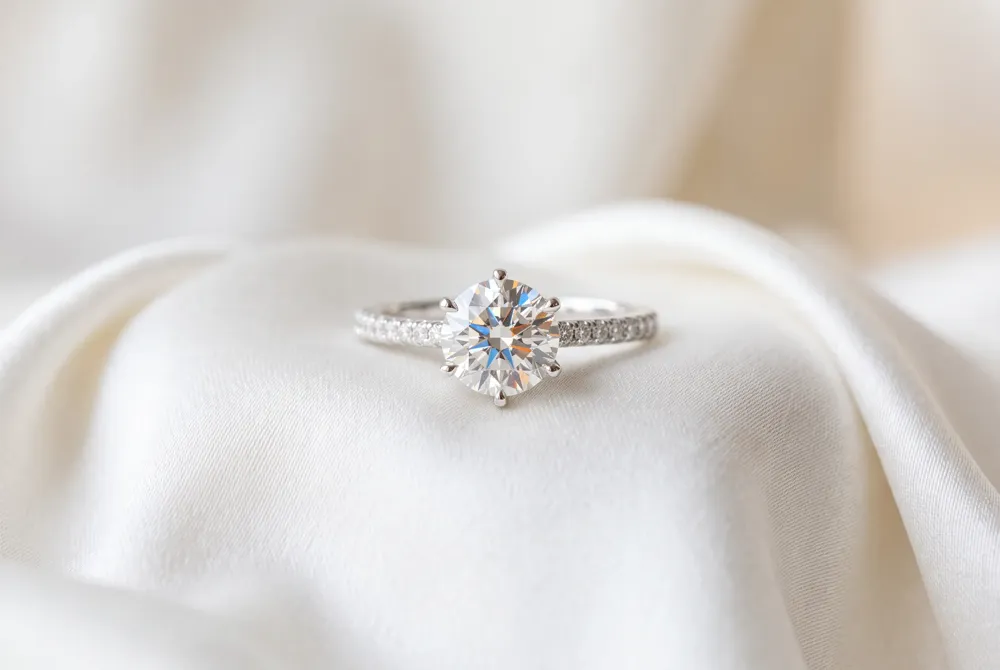
Both stones can look lively, yet each handles light in its own way. Brilliance is the bright return of white light. Fire describes the colored flashes that appear as light separates into spectral colors.
Moissanite’s higher refractive index and dispersion can produce vivid rainbow flashes. Diamond tends to show a more balanced mix of white brilliance and colored fire, often giving its sparkle a crisper, more restrained character. Neither look is universally better; the difference is one of visual preference.
A princess cut gives both stones a clean, geometric outline, but the final display depends on the individual stone’s cut quality and the lighting around it. Compare stones in more than one setting if possible, since the same gem may look different under bright store lights and softer everyday light.
If you are drawn to pronounced rainbow flashes, moissanite may suit your taste. If you prefer a whiter, subtler sparkle, a diamond may feel more natural. Avittam Diamond Jewels’ curated diamond selection and bespoke service let couples consider the stone alongside their preferred metal, setting, and engraving, rather than treating sparkle as a choice in isolation.
Reading the Princess Cut With Care
A princess cut gives either stone a crisp, contemporary character. Its square-style outline and pointed corners create a geometric presence, while the arrangement of facets shapes the way light moves across the stone.
In general comparisons, moissanite tends to show vivid rainbow fire, while diamond often presents a more balanced blend of white brilliance and colored flashes. These are broad tendencies, not results from a direct, controlled comparison of princess-cut stones. The available comparisons do not establish that either material sparkles more in this particular cut.
The appearance of an individual stone depends on its cut quality, facet arrangement, and overall quality, as well as the lighting around it. A well-cut princess stone in either material can look bright and refined. The viewer’s preference matters too: one person may welcome conspicuous color flashes, while another may favor a more restrained effect.
When choosing, compare princess-cut stones in person or through clear images made under similar lighting. Look for how each stone handles both stillness and movement, rather than relying on a general description of its sparkle. Avittam Diamond Jewels’ princess-cut comparison discusses the contrast between diamond’s crisp white sparkle and moissanite’s colorful fire. Avittam Diamond Jewels also offers bespoke ordering to help couples shape a ring around the stone they choose.
Distinguishing Stones Without Guesswork
How can you tell moissanite and diamond apart? A casual look at the two stones may not settle the question: the stones can appear similar, and a princess cut, setting, and lighting all affect what you see. Sparkle offers clues, not proof.
Viewed side by side, moissanite often gives off stronger rainbow-colored flashes, while diamond tends to show a more balanced blend of white brilliance and colored fire. These are general visual tendencies, not a dependable identification method. Avittam Diamond Jewels provides detailed product guidance to help you assess your chosen diamond's characteristics rather than infer its identity from sparkle alone.
There is also a structural difference: moissanite bends light in a way that can create a doubling effect, while diamond does not. Under close inspection through the side of a moissanite, you may notice double reflections. The effect can be subtle, though, and its absence does not establish that a stone is a diamond.
A magnifying glass can help with close viewing, but appearance alone is not conclusive, and a simple testing device may not provide a reliable answer. For confident identification, ask a qualified jewelry expert to examine the stone. When you select a diamond through Avittam Diamond Jewels, our curated selection and product information offer a clear starting point for understanding the stone you are considering.
Durability for a Ring Worn Daily
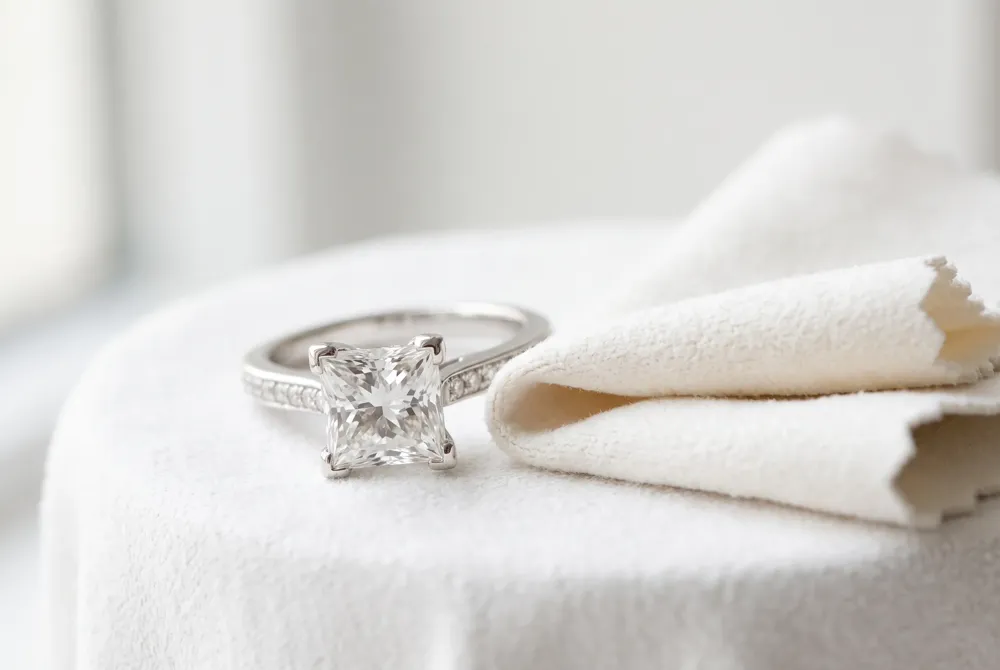
Both stones can suit everyday wear when properly set and cared for. Diamond rates 10 on the Mohs hardness scale, while moissanite is generally rated 9.25, according to Avittam Diamond Jewels’ comparison guide. Diamond is more resistant to scratching, but hardness is not the same as overall durability, and neither stone is impossible to damage. A hard impact can chip either gem.
The setting matters as much as the center stone. A princess cut has exposed corners that can be more vulnerable to knocks, so protective prongs or a bezel may help shield them. The right design depends on the stone and how you wear your ring. The setting and metal can be tailored to the design; discuss corner protection and your daily habits with a jewelry professional before choosing.
Routine care helps preserve a ring’s appearance. Clean moissanite with mild soap or a jewelry cleaner, and limit repeated exposure to pool chemicals and shower products, which may dull its shine over time. Arrange regular checks so a jeweler can assess the setting and prongs, especially if you wear the ring daily. Careful construction, appropriate protection, and simple maintenance support long-term wear for either stone.
Price, Proportion, and the Ring Budget
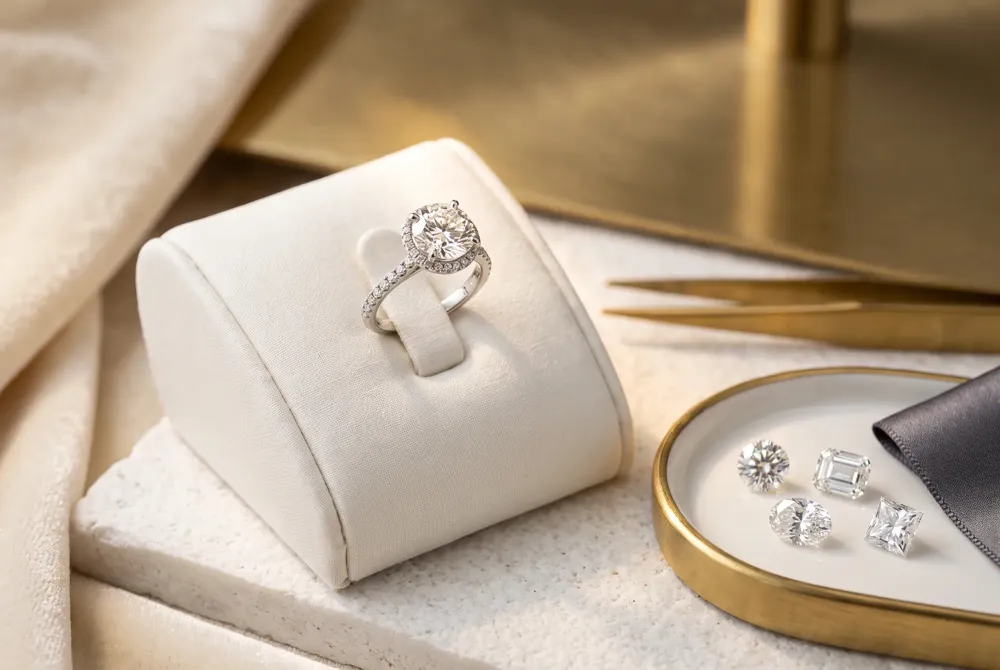
For either ring, the stone is only one part of the price. Moissanite generally costs less than diamond, but the difference depends on the individual stones and the finished design. Metal choice and setting detail also shape the total.
Diamond pricing reflects cut, color, clarity, and carat weight, as well as whether the stone is mined or lab-grown. Moissanite is often priced by its millimeter dimensions rather than carat weight. Because it is lighter than a comparable diamond, comparing carat figures alone can give a misleading sense of visual size.
A lower-cost moissanite may leave room in the budget for a larger-looking center stone or a more intricate setting. That budget flexibility does not make moissanite and diamond the same gemstone or equivalent in value; each has a distinct identity and appearance.
When considering a princess cut, compare the actual measurements, cut quality, color appearance, setting, and total ring price. Round-stone price examples do not establish what a specific princess-cut ring should cost, and two stones with similar measurements may still look different.
At Avittam Diamond Jewels, ethically sourced diamond selections and bespoke design options allow couples to consider the stone, metal, and engraving together. The jewelry team can help you compare available choices and shape a setting around your preferences and budget.
Comparing Moissanite With Lab-Grown Diamond
The distinction between these stones begins with what each one is. A lab-grown diamond is a real diamond made of carbon, while moissanite is silicon carbide. Both can be created in a laboratory, but their shared origin does not make them the same gemstone.
Their light has a different character, too. Moissanite tends to produce more vivid rainbow fire, while diamond offers its own balance of white brilliance and colored flashes. Neither appearance is identical to the other, and the look of a princess cut also depends on the individual stone and its cut quality.
Diamond is harder, while moissanite remains a durable choice for a ring worn regularly. Moissanite is generally less expensive, but the price of either ring depends on the stone’s characteristics and the setting. At Avittam Diamond Jewels, curated diamond choices and bespoke options let couples consider the stone alongside the metal, design, and engraving.
Diamonds are commonly evaluated through the 4Cs: cut, color, clarity, and carat weight. Moissanite should be assessed using the specific characteristics provided for that stone, rather than assuming diamond grading conventions apply in the same way.
Before choosing, ask about the stone’s origin and what documentation accompanies it. Then weigh gemstone identity as well as appearance and price: a lab-grown diamond offers diamond properties, while moissanite brings its own distinctive fire. Avittam Diamond Jewels’ detailed product guidance can help frame those questions as you compare options for a setting that reflects your preferences.
Let Personal Priorities Guide the Choice
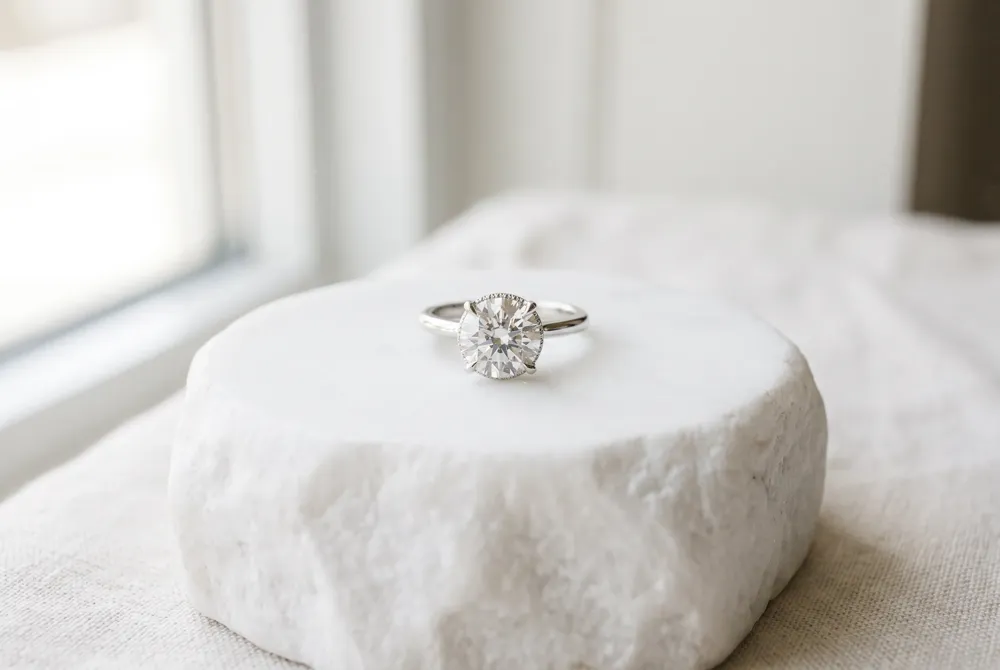
When choosing between these stones, begin with the kind of light you want to see every day. Moissanite tends to display vivid rainbow flashes and usually costs less, while diamond offers a whiter, more balanced sparkle and a distinct gemstone identity. Neither preference is more meaningful than the other.
Durability and origin also deserve consideration. Both stones can suit daily wear, although diamond is harder and more resistant to scratching. Moissanite is typically lab-created; diamonds may be mined or lab-grown. Ask about the origin and documentation of the specific diamond you are considering rather than relying on broad assurances about sourcing.
For a princess cut, there is no universal winner. The individual stone’s cut quality, the ring’s setting, the lighting in which you see it, and your own taste all shape its appearance. If possible, compare stones side by side, then consider the full ring: center-stone proportions, metal, setting, and how comfortably the design suits daily wear.
Avittam Diamond Jewels offers personalized design choices, including metal and engraving, through its bespoke ordering service. That flexibility can help you assess the complete ring rather than choosing a stone in isolation. A thoughtful decision reflects the wearer’s style and priorities, not a single definition of sparkle.
Choose the Sparkle That Feels Like Yours
The distinction between these stones is one of character, not a universal winner. Moissanite often gives a more pronounced rainbow fire, while diamond tends toward a whiter, more balanced sparkle. Available evidence does not establish which stone performs better in a princess cut, so the individual stone matters.
Compare stones in lighting that feels familiar, and consider how their proportions sit in the setting. Expert guidance can help assess cut and color quality and confirm a stone’s identity. Avittam Diamond Jewels offers a bespoke ordering service for tailoring a ring’s design, metal, and engraving, with virtual try-on tools to help you consider its look.
The most meaningful princess-cut ring is the one whose appearance, gemstone identity, and budget feel right to the couple wearing it. Take time to make the choice with confidence, then let the ring reflect your shared sense of beauty.