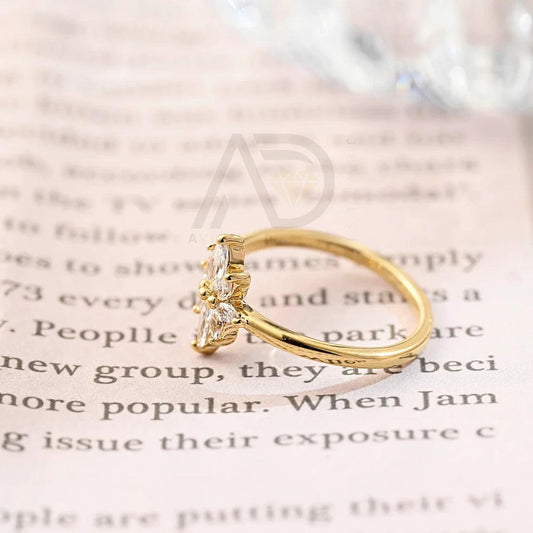

A Side by Side Starting Point
Choosing a center stone for pear-shaped engagement rings is not simply a matter of deciding which gem looks brighter. A moissanite vs diamond side by side comparison can help you consider the character of each stone, how it wears, and what the full ring means to your budget and preferences.
The two gems may look similar at a glance, yet they are made of different materials: diamond is crystalline carbon, while moissanite is silicon carbide. Diamond is a distinct gemstone, not a different form of moissanite, and a visual resemblance does not make the stones interchangeable.
A thoughtful comparison looks at the balance of white brilliance and colorful fire, the stone’s identity, everyday durability, and the cost of the complete ring. For diamonds, cut, color, clarity, and carat weight offer a familiar grading framework; moissanite has its own visual character rather than the same diamond identity. Avittam Diamond Jewels offers a curated selection of diamonds and bespoke options for customizing a ring’s design, metal, and engraving.
Neither choice is right for every wearer. You may prefer moissanite’s pronounced rainbow flashes and lower purchase cost, or favor a diamond’s traditional identity and distinctive balance of light. If appearance alone leaves questions, a professional assessment can help clarify what you are considering. The best starting point is the look, meaning, and priorities you want your pear-shaped ring to reflect.
What Sets the Gemstones Apart
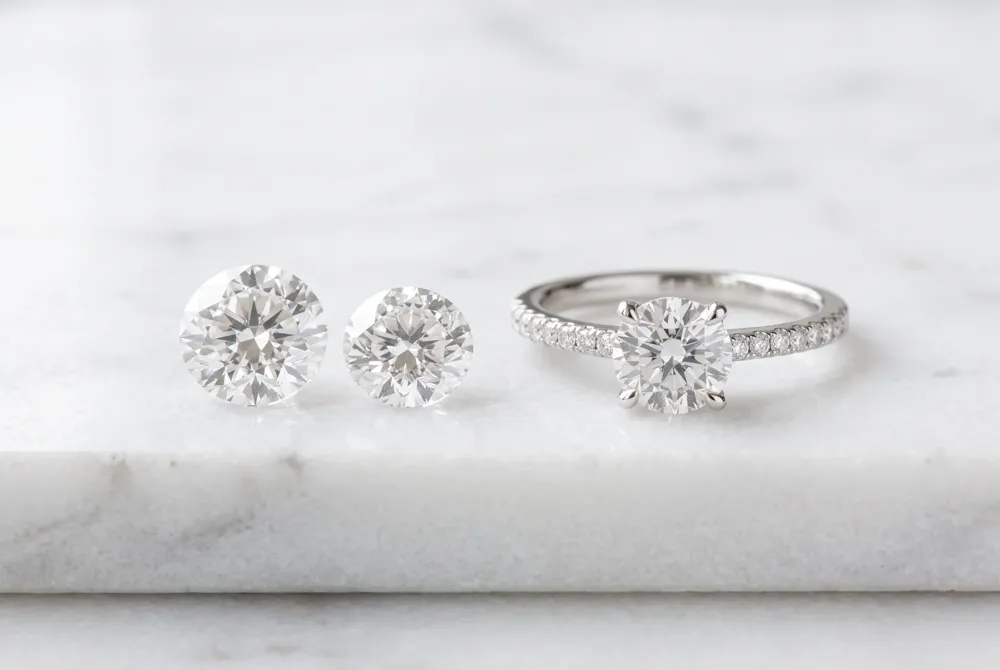
A moissanite vs diamond side by side comparison begins with what each stone is. Moissanite is silicon carbide; diamond is crystalline carbon. They may resemble one another in a setting, but they are distinct materials, not different versions of the same gem. Diamond is also the name of the carbon gemstone, not a label for moissanite.
Nearly all moissanite used in jewelry is lab-grown, since naturally occurring material is exceptionally rare. Diamonds may be mined or lab-grown, and a lab-grown diamond remains a diamond. That distinction can help couples comparing pear-shaped engagement rings decide whether they are drawn to moissanite as an alternative gemstone or specifically want a diamond.
Viewed together, the stones can look similar, but their light has a different character. Moissanite tends to show stronger rainbow-colored flashes, while diamond offers a crisp balance of white brilliance and colored fire. Looking at both in varied lighting can reveal which effect feels more at home with your style.
For shoppers who want to assess diamond options from home, Avittam Diamond Jewels offers a curated selection of ethically sourced diamonds and a bespoke service for customizing a ring’s design, metal, and engraving. Comparing the stones is not about declaring one universally better; it is about weighing material, origin, appearance, and personal preference.
Both gems can suit everyday wear, though diamond is harder. On the Mohs scale, diamond rates 10 and moissanite 9.25. That difference does not make moissanite unsuitable for a ring, but it is useful context when considering long-term wear. Avittam Diamond Jewels also provides detailed product guidance and virtual try-on tools, helping shoppers consider how a stone and setting may look together before making a choice.
Two Distinct Expressions of Brilliance
In a moissanite vs diamond side by side comparison, the distinction is often less about how much a stone sparkles than the character of its light. Moissanite tends to show vivid rainbow-colored flashes, while diamond offers a balanced blend of bright white brilliance and more restrained color.
That contrast reflects how each gem disperses light. Moissanite separates more light into spectral colors, creating its pronounced fire; a diamond’s colored flashes are generally subtler. The stones are different materials, too: diamond is crystalline carbon, while moissanite is silicon carbide, a distinction noted in the reference on diamond.
The effect is not fixed. Lighting, cut, stone size, and setting all shape what reaches the eye, and a pear outline alone does not guarantee a particular sparkle. In bright direct light, rainbow fire may seem especially vivid; softer or indoor lighting can reveal a different balance of white and colored flashes.
For a fair comparison, view stones of similar face-up size under the same lighting conditions, then examine them in more than one environment. This is especially useful when considering pear-shaped engagement rings, where the individual stone and design influence the finished look. Avittam Diamond Jewels offers a curated selection of diamond cuts and settings, with bespoke options to tailor the ring’s design and metal to personal taste.
A preference for lively, colorful fire may draw you to moissanite; a more balanced white brilliance may feel closer to your idea of a classic diamond ring. At avittamdiamondjewels.com, detailed product guidance and virtual try-on tools support a considered choice without requiring an in-person showroom visit.
Reading the Differences by Eye
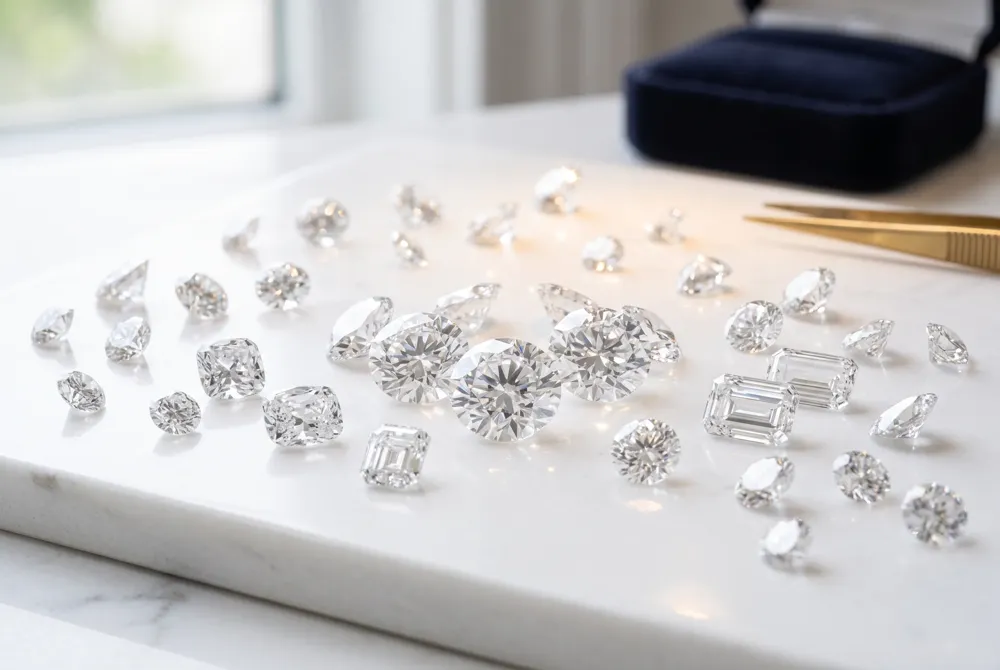
In a moissanite vs diamond side by side comparison, the eye can offer useful clues, but it cannot always settle a stone’s identity. In pear-shaped engagement rings, the finished setting can also limit the angles available for close inspection, so treat a visual impression as a starting point rather than a verdict.
Notice the character of the sparkle in more than one kind of light. Moissanite may show vivid rainbow flashes, while a diamond often presents a more balanced mix of white brilliance and colored fire. Neither look is fixed: lighting, the stone’s cut, and the way the setting frames it can soften or exaggerate the difference. Viewing the ring in daylight and indoor light may help you decide which appearance you prefer, but it does not prove what the center stone is.
A jeweler may also inspect the stone under magnification. Moissanite can show double refraction, which may make facet edges or reflections appear doubled when viewed at a suitable angle. The effect can be subtle, and it is not a conclusive test, particularly when the stone is already set. Avoid scratch tests or relying on a single handheld tool. Diamonds have distinctive physical properties, but identifying a stone may require appropriate gemological examination rather than one simple check.
For a reliable assessment, ask a qualified jeweler to examine the stone with suitable instruments and review any grading or identification documentation. A basic diamond tester may not distinguish every moissanite, so ask what the test can and cannot establish. Avittam Diamond Jewels offers detailed product guidance and virtual try-on tools to help shoppers consider ring appearance and fit before ordering; its moissanite and diamond comparison guide can help frame the visual trade-offs. For certainty about a particular ring, request a professional assessment rather than relying on photographs or the naked eye alone.
A Professional Assessment of Stone Identity
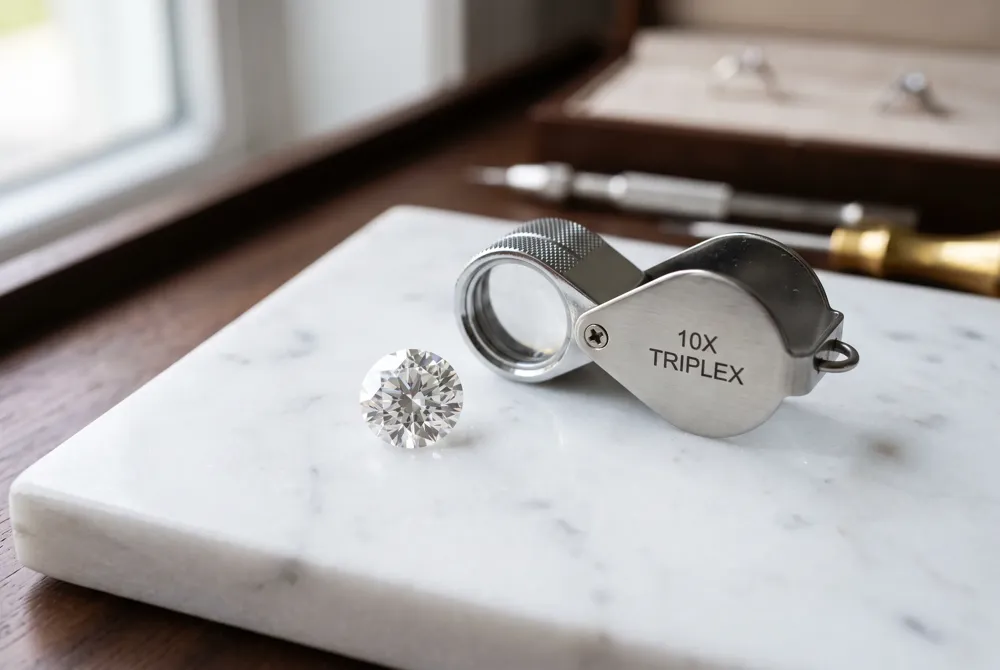
Start with the ring’s documentation. A grading report or purchase record should identify the center stone; if a diamond report includes a report number, check it with the issuing laboratory and ask a jeweler to explain any details that are unclear.
Gemological identification relies on more than a single visual clue. A qualified jeweler may consider the stone’s optical features under magnification, along with suitable testing of thermal and electrical properties. Basic diamond testers measure heat response, and moissanite can give a result that is not conclusive on its own. Diamond identification may require more advanced examination when a simulant is involved.
A loupe examination may reveal doubled facet edges in moissanite because it has double refraction, but the effect can be subtle and is not a dependable test by itself. For a mounted pear-shaped stone, the setting can also limit what a jeweler can inspect, so a professional assessment is preferable to trying to interpret one clue at home.
Avoid scratch tests or other improvised methods. Hardness does not establish identity, and a scratch test can damage the stone or setting. At Avittam Diamond Jewels, detailed product guidance and virtual try-on tools support a more informed shopping process, while documentation and a qualified jeweler remain the right route when you need to verify a stone already in a ring.
Price and the Complete Ring
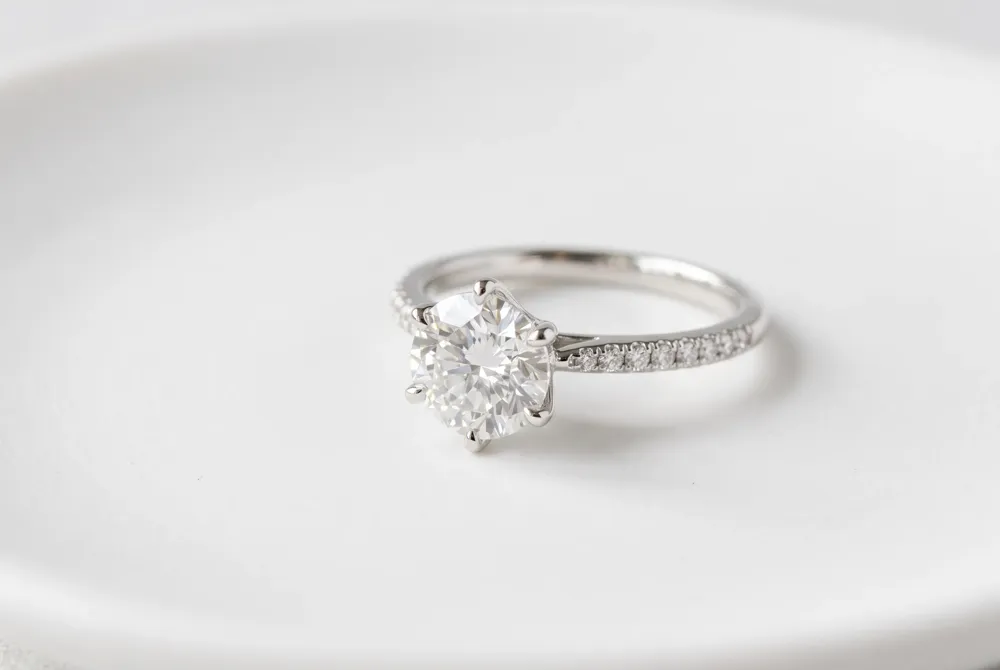
For couples comparing pear-shaped engagement rings, moissanite’s lower typical price can create more room in the budget for a larger center stone or a more detailed setting. The difference is not a fixed price gap: diamond prices vary with size, cut, color, and clarity, while moissanite prices vary by size and grade.
A diamond’s price reflects its individual characteristics, and the familiar four Cs offer a framework for assessing diamond quality. They are not a direct grading system for moissanite, so compare each stone by its own specifications rather than assuming that similar labels mean identical value.
Shape alone does not determine cost. When comparing pear-shaped stones, look at dimensions and overall quality, then review the complete ring price, including the metal, setting work, and any accent stones. Two rings with a pear outline can differ substantially in price because their center stones and designs differ.
A pear-shaped moissanite ring will generally cost less than a comparable ring with a natural diamond, but a lab-grown diamond offers another route to a genuine diamond at a lower typical price than a mined one. Lab-grown diamonds remain diamonds, whereas moissanite is a distinct gemstone made of silicon carbide. The distinction matters when deciding what the budget is meant to buy.
At Avittam Diamond Jewels, the bespoke ordering service lets you customize a ring’s design, metal, and engraving, making it possible to consider the setting alongside the center stone rather than treating it as an afterthought. Compare stones with similar dimensions and review the full price before choosing. The right balance depends on the appearance you prefer, the amount you wish to spend, and whether a diamond’s identity is part of what makes the ring meaningful to you.
Weighing the Personal Trade-Offs
A moissanite vs diamond side by side comparison is most useful when it reflects what matters to you, rather than treating one stone as the automatic choice. Moissanite generally costs less and offers vivid rainbow flashes; diamond brings a familiar balance of white brilliance and colored sparkle. For a pear-shaped engagement ring, either look can feel considered and personal.
That difference in price can leave room in the budget for a larger center stone or a custom design. At Avittam Diamond Jewels, bespoke ordering lets you personalize a ring’s design, metal, and engraving, so the setting can carry meaning beyond the choice of gemstone. Compare the complete ring, not only the center stone, when deciding where your budget belongs.
Durability is another practical consideration. Diamond rates 10 on the Mohs hardness scale, while moissanite rates 9.25; both are suitable for regular ring wear, but diamond offers greater resistance to scratching. Neither stone is indestructible, so thoughtful care matters whichever you choose.
Personal meaning may weigh just as heavily as appearance. Some couples value the tradition and rarity associated with diamond, while others are drawn to moissanite’s distinctive fire and more accessible price. Resale expectations may also matter to some shoppers, but future value is not guaranteed for either choice. Avittam Diamond Jewels offers a curated selection of premium diamonds for those who place particular importance on choosing a diamond center stone.
Whenever possible, view both stones side by side in more than one lighting condition. Clear images can help when an in-person comparison is not practical, but seeing how each stone’s light and color appeal to you is especially valuable. Choose the one whose appearance, meaning, and place in your budget feel right for the ring you intend to wear.
Choosing a Pear Shape That Feels Personal
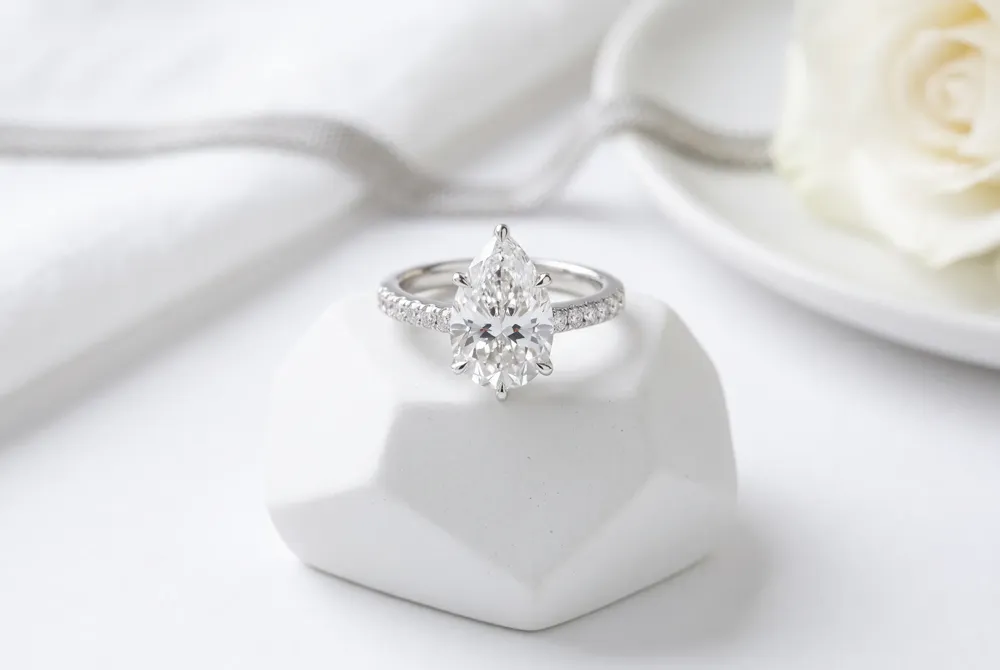
When choosing among pear-shaped engagement rings, begin with the silhouette rather than a checklist of trends. Look for a graceful curve, balanced shoulders, and a distinct point, then consider how the outline sits against your hand. These design preferences are personal, so assess the shape on its own merits before comparing gemstone materials.
A useful moissanite vs diamond side by side comparison places stones of the same shape in a similar setting and lighting. This makes it easier to consider the difference in appearance alongside origin and price, without treating any one feature as a universal advantage. Avittam Diamond Jewels offers a curated selection of diamonds, giving couples a way to explore diamond options as part of that decision.
The pear’s pointed tip deserves particular attention when you assess the setting. A protective V-prong can help shield the point, while secure side prongs hold the broader edges in place. Consider how the setting’s profile and metal work with the stone’s color and overall design, as well as how comfortable the ring feels for regular wear.
Before ordering, confirm your ring size carefully and review detailed images that show the stone from several angles. A virtual try-on can also help you judge the proportions on your hand, though it should complement rather than replace accurate sizing information. Avittam Diamond Jewels provides virtual try-on tools and bespoke options for customizing a ring’s design, metal, or engraving, so your preferred details can guide the final choice.
A considered choice brings the outline, setting, gemstone, and fit together. Compare what you can see, ask questions about the details that matter to you, and give yourself room to choose a ring that feels personal rather than simply following a standard.
A Choice Made With Confidence
The most useful moissanite vs diamond side by side comparison is the one that reflects what you want to see and value each day. Moissanite offers vivid rainbow fire and a lower purchase price; diamond has its own distinct identity, a balanced play of white and colored light, and greater hardness.
Those distinctions can guide your choice, but visual clues cannot confirm a stone’s identity with certainty. Ask for clear documentation, and seek assessment from a qualified gemologist if the material or origin is unclear. A diamond is crystalline carbon, while moissanite is silicon carbide, a separate gemstone sometimes used as a diamond simulant (moissanite).
For couples considering pear-shaped engagement rings, compare stones in person or under consistent lighting, and notice which kind of sparkle feels most like you. At Avittam Diamond Jewels, ethically sourced diamonds and bespoke options for design, metal, and engraving give shoppers a way to make a diamond ring personal.
Take time to consider the complete ring, not only the center stone: its silhouette, setting, meaning, and place in your budget all matter. Then choose the pear-shaped ring that feels right to wear and right to keep.