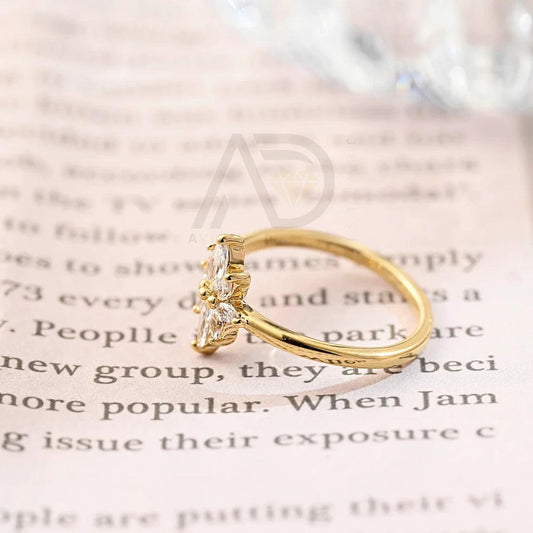

A Side-by-Side First Look
Two bright stones may look remarkably similar at first glance. As you move them, turn them, or change the light, their distinct sparkle can emerge. One may return a crisp balance of white light and subtle color; the other may show more vivid rainbow flashes.
The question is not only which stone looks brighter, but how its appearance changes with lighting and viewing angle. Cut, measurements, and the character of each individual stone also shape what you see.
Moissanite is a distinct gemstone, not a type of diamond. Natural moissanite is rare, so jewelry stones are generally laboratory-created. The comparison is best understood through several considerations: appearance, material identity, everyday wear, and budget. Looking at both stones in the same light can help you decide which character of sparkle feels right for your ring.
What the Sparkle Reveals
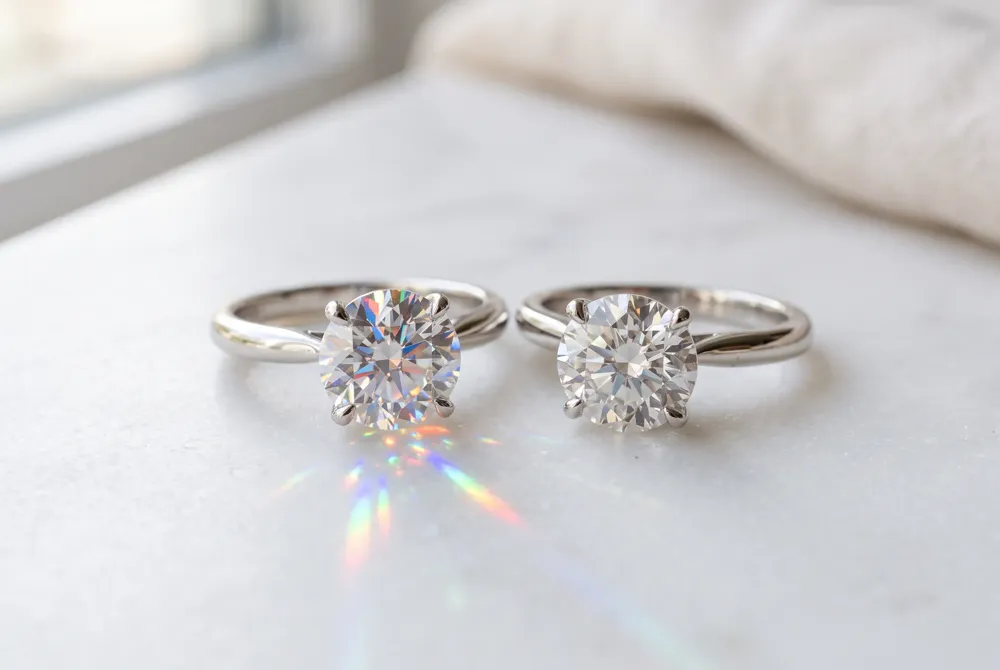
The first distinction is often not how much a stone sparkles, but the character of its light. Brilliance is the return of white light, while fire describes the colored flashes created as light separates within a gemstone.
Moissanite tends to produce stronger, more frequent rainbow flashes. A diamond usually shows a more balanced interplay of white brilliance and subtler fire, though the individual stone’s cut influences the result. Neither effect is inherently more beautiful; the preference depends on whether you favor vivid color or a quieter, crisp sparkle.
The difference reflects how each material bends light. Reported refractive indices are 2.65 for moissanite and 2.42 for diamond, meaning moissanite bends light more strongly. These figures help explain its lively flashes, but they do not determine beauty on their own: cut, proportions, and the way a stone is viewed also shape its appearance.
Another optical clue is that moissanite is doubly refractive, while diamond is singly refractive. Viewed closely from the side, moissanite may show doubled facet details. The effect can be subtle, so its absence does not settle the question.
Can you identify a stone by sight alone? Sometimes, but not reliably. Extra rainbow fire or doubled facet details may offer clues, yet size, lighting, cut, and viewing angle can change what you notice. A qualified gemologist can examine the stone with appropriate instruments for a more confident identification.
For an engagement ring, the comparison is also personal. Seeing stones side by side can clarify which light feels right to you, while professional assessment helps confirm what each stone is.
How Lighting Changes the Comparison
The appearance of moissanite and diamond can change as the light changes. Both stones reflect light in sunlight and indoors, but moissanite often sends back more colorful rainbow flashes, while diamond tends to show a more balanced mix of white brilliance and fire.
Sunlight and spotlights can make moissanite’s colored flashes especially noticeable, particularly in larger stones, as jewelry retailers describe in their comparison of moissanite and diamond sparkle. This is not a guarantee for every stone or setting: cut, viewing angle, and the light itself all affect what you see.
For a meaningful comparison, view both stones under the same light, then rotate them and look again in another setting. Indoor lighting and daylight can each reveal sparkle, but a photograph or a broad claim about how a stone looks in one environment cannot show how your particular stones will respond. An in-person comparison remains useful when you want to judge the stones’ light in real time.
Is moissanite a real gemstone, and does it shine in the dark?
Moissanite is a real gemstone, usually laboratory-created for jewelry, and it is distinct from diamond. Neither stone produces visible light in darkness. Moissanite sparkles by reflecting and dispersing incoming light, so without a light source there is no sparkle to see.
Color, Cut, and the Individual Stone
When comparing the stones, separate a stone’s body color from its sparkle. Both can look colorless or near-colorless, yet some moissanite may show yellow, green, gray, or brown tint under certain lighting. That tint can be easier to notice in a larger stone, so compare stones of similar size in more than one setting.
Diamond color is assessed on a recognized grading scale. Moissanite seller terms such as “colorless” or “near-colorless” should not automatically be read as equivalent to a diamond grade. If a retailer compares a named moissanite variety with a particular diamond grade, treat that as the retailer’s product description, not a universal grading standard.
Cut shapes the pattern and crispness of light return in both materials. A well-cut diamond can show crisp flashes as it moves; moissanite’s doubled facet junctions may look less crisp on close inspection. Avittam Diamond Jewels’ side-by-side comparison guide can help you consider how sparkle character affects your preference.
Retailer-specific descriptions should remain attached to the products they describe. For example, one retailer presents its Forever One Colorless and Near Colorless varieties as comparable to particular diamond color grades, and describes a Hearts & Arrows cut as aiming for a more even balance of white and rainbow sparkle. These are product claims, not standards that apply to moissanite as a whole.
Shape also changes the impression. Emerald and asscher cuts tend to show broader sheen rather than the more conspicuous flashes associated with brilliant-style cuts, making the visual contrast between stones feel subtler. Cut and setting can be considered together with the look you want.
Moissanite and Lab-Grown Diamonds
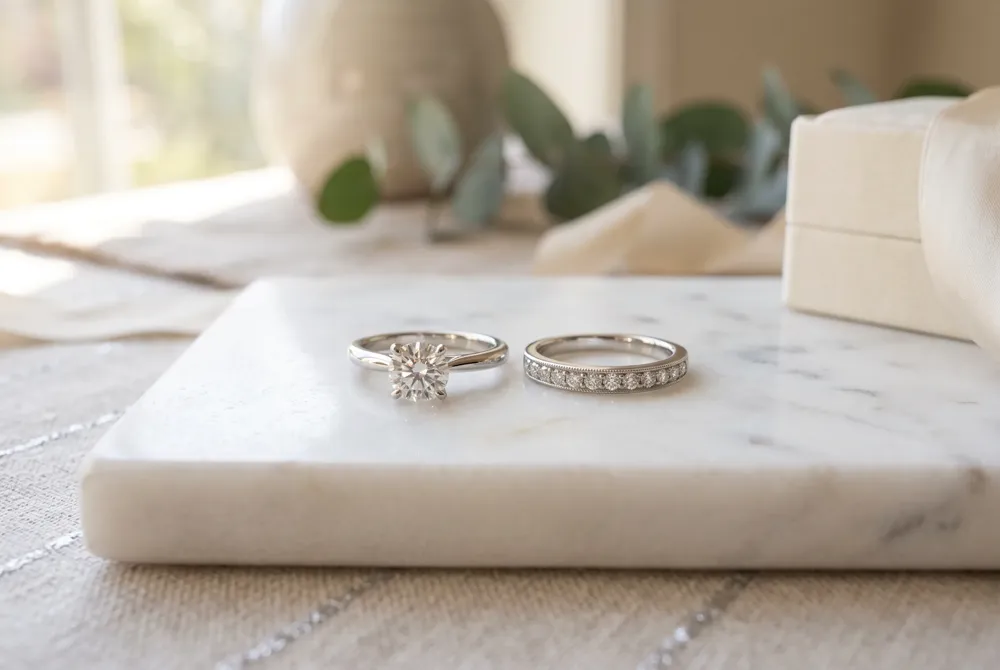
Similar brightness can obscure an important distinction: moissanite is silicon carbide, while a diamond is carbon. A laboratory-grown diamond is still diamond, not a diamond imitation, and shares the physical, chemical, and optical properties of a natural diamond.
Natural moissanite is extremely rare, so most moissanite used in jewelry is created in a laboratory. That origin does not make it a lab-grown diamond. The materials remain distinct, even when their size and sparkle seem similar at a glance.
Side by side under the same light, moissanite often gives off more prominent rainbow flashes. A well-cut lab-grown diamond can show the familiar balance of white brilliance and colored fire associated with diamond. The difference is one of sparkle character, not simply brightness.
A lab-grown diamond is evaluated using diamond color and clarity standards, while moissanite is assessed as a different gemstone. For couples who want diamond identity as well as its appearance, a diamond offers both its distinct material identity and familiar appearance.
During a lighting comparison, rotate both stones and look beyond their overall brightness. Notice whether you prefer moissanite’s more colorful flashes or a diamond’s familiar light pattern. The choice may also reflect budget and whether owning a diamond matters in its own right.
Everyday Wear and Stone Care
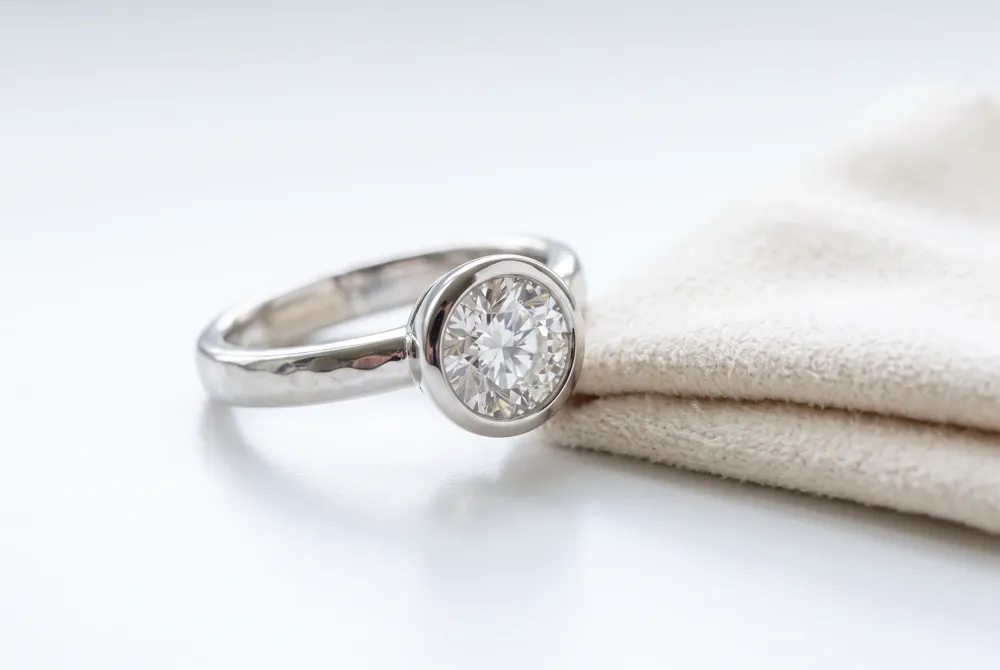
A practical question is how each stone will hold up to everyday wear. Diamond ranks 10 on the Mohs hardness scale, while moissanite ranks about 9.25. Both are suitable for engagement rings worn regularly, but diamond is more resistant to scratching.
Hardness is not the same as toughness. Hardness describes resistance to scratches; toughness concerns how well a stone withstands a blow. Moissanite is generally resistant to major breaks, while diamond has cleavage planes that can make it vulnerable to a sharp impact in a particular direction. Either stone can chip or sustain damage, so neither should be treated as indestructible.
The setting matters as much as the stone when considering long-term wear. Pointed tips and thin girdles can be vulnerable, and secure prongs or a protective bezel can help shield exposed areas. Couples can consider the setting and metal alongside the center stone.
Regular care helps preserve a ring’s appearance. Moissanite is not generally described as turning cloudy with age, but soap, hand cream, dirt, and other residue can dull the look of either gemstone. Gentle cleaning may restore visible brightness, while the stone’s quality and condition also affect its appearance.
Have the claws and band checked periodically, especially if the ring is worn often or exposed to knocks. Scratches and wear can affect the setting even when the center stone remains intact. Choosing a secure design and matching care to your daily routine can help protect both moissanite and diamond over time.
Identification Beyond Appearance
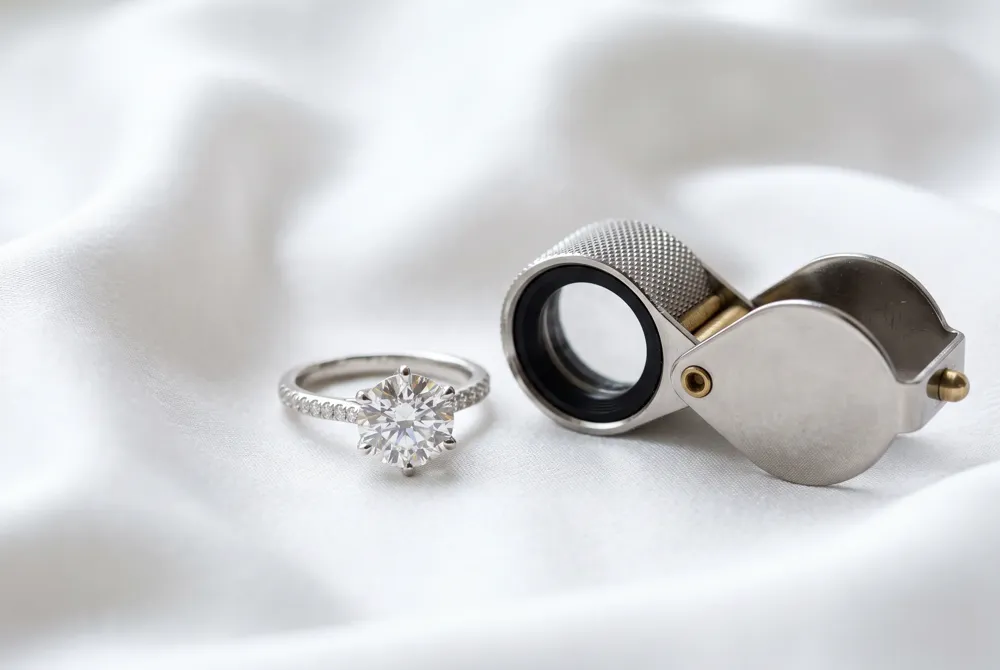
Comparing the stones can reveal differences in sparkle and color, but appearance alone cannot confirm a stone’s identity. If a description needs to be verified, treat visual clues as a starting point, not proof.
A basic thermal diamond tester may mistake moissanite for diamond because the stones conduct heat in similar ways. A tester designed to distinguish moissanite can provide a useful screening result, but it should not be treated as definitive identification.
UV light is not a reliable shortcut either. Reactions vary between stones, and the device, testing setup, and way a result is measured can affect what appears. Fluorescence alone cannot establish whether a stone is moissanite or diamond.
When identity matters, ask a qualified jeweler or gemological laboratory to examine the stone with appropriate instruments. This is especially prudent before purchase or when you need to confirm the description of a stone already set in a ring.
Product guidance and virtual try-on tools can help you assess a ring’s appearance and fit online. Those aids support your decision, while independent examination remains the right route when laboratory-level identification is needed.
Price, Measurements, and Personal Priorities
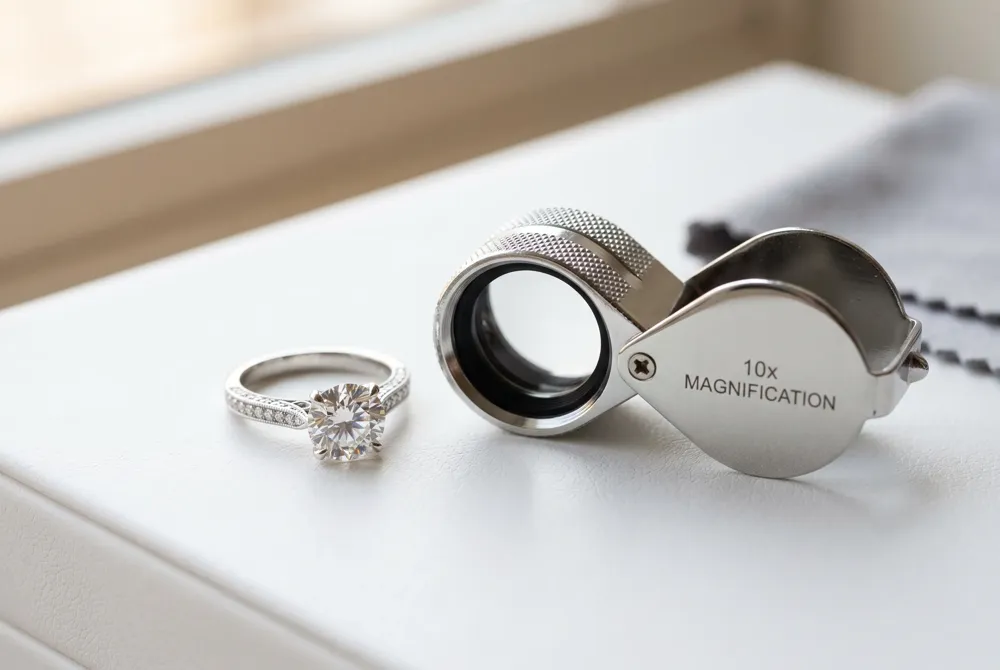
Price is often a practical starting point when weighing these stones. Moissanite generally costs less than a diamond of comparable size, while diamond pricing reflects the individual stone’s cut, color, clarity, carat weight, origin, and whether it is mined or laboratory-grown. The setting and design also shape the final cost.
Retailer-listed price examples can illustrate the difference, but they are not current or universal market quotes. A more useful comparison is to review each stone’s specifications and ask what the quoted price includes.
Why compare measurements as well as carat weight?
Carat measures weight, not the stone’s face-up dimensions. Since moissanite and diamond differ in density, stones with the same carat weight may not present the same visible size. Compare measurements in millimeters, along with cut and setting, to understand how much of the stone will show when worn.
The choice also comes down to what you want the ring to express. Moissanite may appeal if you enjoy vivid rainbow flashes or want a larger-looking stone within a lower budget. A diamond may be the right fit if owning a diamond specifically matters to you, or if you prefer its distinct balance of white brilliance and colored fire.
Before deciding, compare well-cut stones of similar dimensions under the same lighting, in person or through clear, color-accurate images. Review trustworthy specifications and seek knowledgeable guidance if the differences are difficult to judge.
Choose the Light You Love
Comparing moissanite and diamond is most useful when it helps you recognize what each stone does with light. Moissanite often offers more pronounced rainbow flashes, while a well-cut diamond may show a more restrained balance of white brilliance and colored fire. Neither response is universally better; the right one is the one you enjoy seeing on your hand.
For a thoughtful comparison, view stones with similar cuts and face-up measurements, then look at them in more than one lighting condition. Ask for clear documentation of a diamond’s grading and the details available for a moissanite, and consult a qualified jewelry professional if a stone’s identity or grading is uncertain.
At Avittam Diamond Jewels, couples can explore curated diamond options and personalize a ring’s design, metal, and engraving through the bespoke ordering service. That gives the decision room to reflect not only the sparkle you prefer, but also the details that make a ring meaningful to you both.
A ring can be a promise, a personal expression, and a lasting part of your shared story. Take the time to choose the light, craftsmanship, and symbolism that feel like yours.