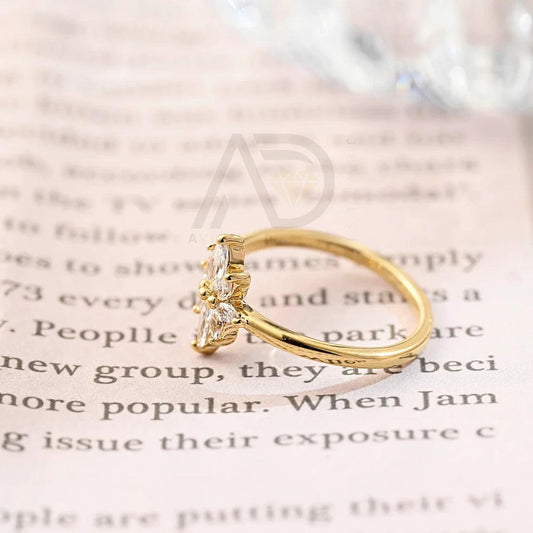

A Distinctive Shape with Lasting Grace
A marquise cut engagement ring offers an elegant alternative for couples drawn to an elongated silhouette with a distinctive, romantic character. Its curved sides and pointed ends give the diamond a graceful outline that feels individual without losing its sense of tradition. The shape can also appear larger face-up than a round diamond of the same carat weight, according to the Gemological Institute of America.
Choosing well means looking beyond carat weight or a single grade. Proportions influence whether the stone feels slender or softly full; symmetry and light performance shape its presence; and the pointed ends call for thoughtful protection. The setting and metal then bring the diamond’s character into focus, while measurements and price help you compare options with care.
At Avittam Diamond Jewels, curated diamond selection and detailed product guidance support a considered online experience, with virtual try-on tools and bespoke options for design, metal, and engraving. The right marquise is ultimately the one whose outline, sparkle, and setting feel harmonious to you. Careful visual assessment, alongside expert guidance, can help turn that personal preference into a confident choice.
The Marquise Silhouette and Its Appeal
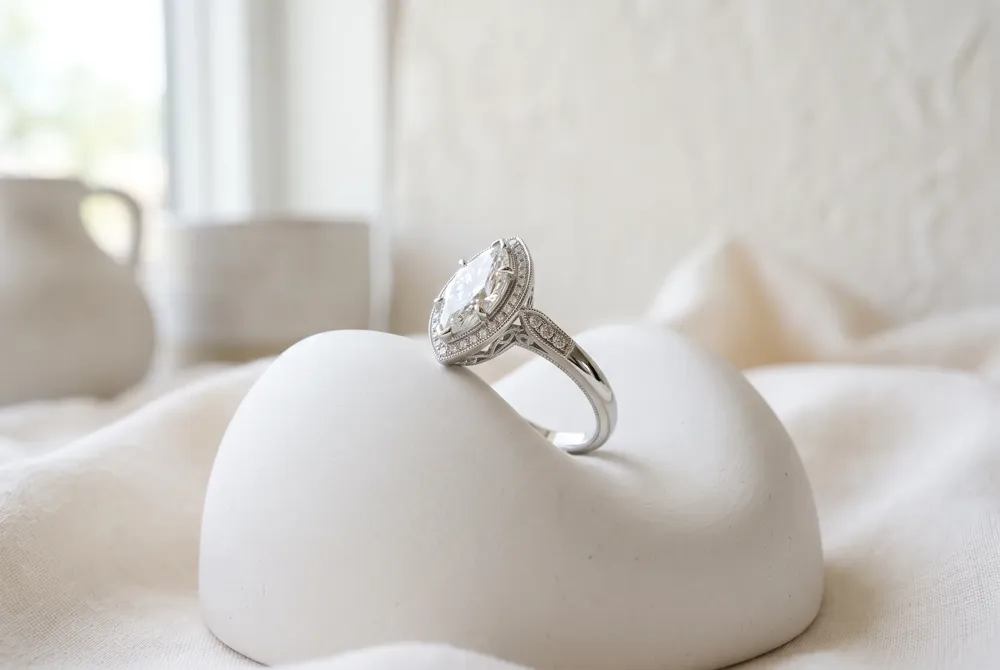
A marquise cut engagement ring is defined by an elongated outline, gently curved sides, and a pointed end at either side. The shape is also called a navette, from an Old French word meaning “little ship,” a reference to its boat-like profile.
That long outline spreads the diamond across more of the finger, so it can look larger face-up than a round diamond of the same carat weight. Worn lengthwise, it can also create the impression of longer, slimmer fingers. These effects are part of the shape’s appeal, though the individual stone’s proportions and the wearer’s hand shape influence its appearance. The Gemological Institute of America’s guide to marquise diamonds offers a useful overview of the cut and its visual characteristics.
A familiar origin story says King Louis XV commissioned a diamond shaped to resemble the lips of the Marquise de Pompadour. It is best understood as a legend rather than established history, but it has helped give the silhouette its romantic associations.
Marquise diamonds have appeared in bridal jewelry across different eras, including Edwardian jewelry and the popular styles of the 1970s. Their outline remains distinctive without being confined to a single aesthetic: it can feel at home in a vintage-inspired design or a cleaner, contemporary setting. At Avittam Diamond Jewels, bespoke ordering lets couples personalize a ring’s design, metal, and engraving, bringing that enduring shape into a style that feels distinctly their own.
Choosing Proportions That Feel Right
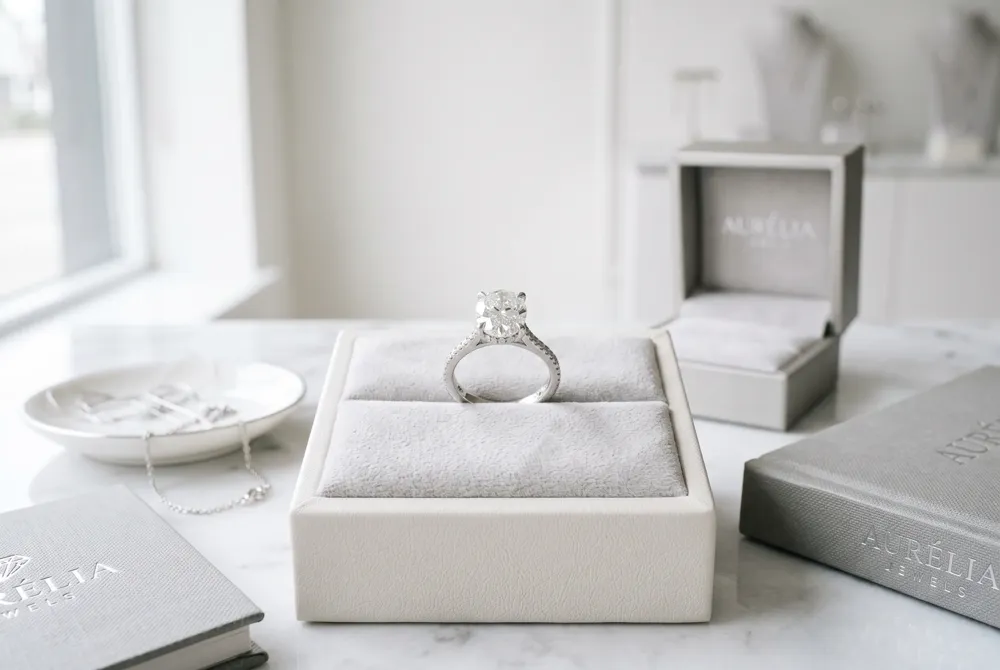
For a marquise cut engagement ring, the length-to-width ratio offers a useful first impression of the diamond’s outline. It is calculated by dividing the stone’s point-to-point length by its width at the broadest part, or belly. A ratio around 1.8:1 to 2.0:1 is often considered balanced, though it is a guide rather than a rule. GIA’s guide to choosing a marquise diamond notes that proportions vary and personal preference ultimately matters.
What length-to-width ratio is most flattering? A ratio nearer 1.8:1 tends to create a fuller appearance, while one closer to 2.0:1 looks slimmer and more elongated. Neither is inherently better. The right proportion depends on the wearer’s taste, the scale of the hand, and how much visual length feels comfortable.
The setting also changes the impression. A halo can add visual width around the center stone, while a solitaire leaves its outline more exposed. When reviewing a design through Avittam Diamond Jewels’ online shopping experience, compare clear imagery of the complete ring, not only the loose diamond, and consider how the proportions sit with the band.
Look beyond the ratio to the outline itself. The points should align, the curved sides should mirror one another, and the wings between the widest area and each tip should flow gracefully. GIA distinguishes symmetry from shape appeal: a stone can be symmetrical yet still have flat or overly bulged wings, or points that seem too rounded.
A marquise diamond’s elongated form makes small differences in its outline easy to notice, so inspect it face-up in clear images or video, ideally at a natural viewing size. Avittam Diamond Jewels offers personalized design choices through its bespoke ordering service, including options for the ring’s design and metal. Use the measurements as a starting point, then choose the silhouette that feels balanced on the hand and true to the wearer’s style.
Reading Carat Weight and Face-Up Size
When comparing a marquise cut engagement ring, separate the diamond’s weight from the space it occupies when viewed from above. Carat measures weight; length and width in millimeters describe the face-up dimensions you see on the hand. The Gemological Institute of America’s guide to marquise diamonds explains that the elongated shape can appear larger face-up than a round diamond of the same carat weight.
Two marquise diamonds with the same carat weight may still look noticeably different. Their proportions and measurements determine how that weight is distributed: a longer outline can extend farther along the finger, while a wider one may feel fuller across it. Neither look is inherently better. The preference depends on the wearer’s hand and the silhouette they find most pleasing.
Compare the length and width alongside the carat weight, then picture the diamond in its intended setting. A halo, for instance, can change the outline’s apparent width, while a simple solitaire leaves the center stone’s shape more exposed. At Avittam Diamond Jewels, detailed product information and virtual try-on tools support online comparison, helping you consider the stone’s presence on the hand rather than relying on its weight alone.
Carat weight also does not determine price or visual impact by itself. Cut, color, clarity, and the diamond’s actual face-up dimensions all contribute to how it looks and is valued. Let measurements guide the comparison, but use them alongside a clear view of the individual diamond and your own sense of proportion.
Assessing Sparkle, Symmetry, and Clarity
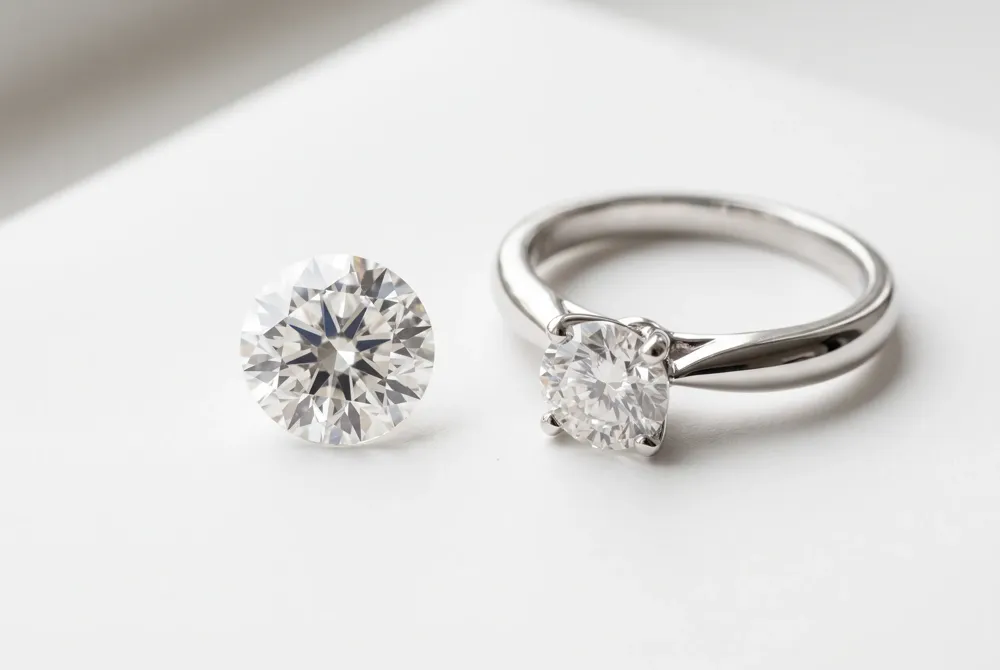
When assessing a marquise cut engagement ring, look beyond its grading report to the way the diamond performs in ordinary light. A pleasing stone shows lively, balanced brightness across its surface, with two aligned points and curved sides that appear evenly shaped. GIA recommends examining the wings, outline, and corresponding facets for symmetry, while noting that a symmetrical stone may still have an outline that does not appeal to you (GIA’s guide to choosing a marquise diamond).
A bow-tie is a shadow that can cross the center of a marquise diamond. Some contrast is common and may give the stone definition, but a broad or very dark shadow can draw attention away from its sparkle. The right balance is a matter of taste, so judge the individual diamond rather than treating the effect as an automatic flaw.
View the diamond face-up, without magnification, in everyday lighting. Turn it gently and watch how its brightness changes as it moves; a shadow that seems strong from one angle may look less noticeable from another. Clear photographs and video can help online shoppers assess the stone, though they cannot fully replace viewing it in person.
A grading report records characteristics such as carat weight, color, and clarity, but it cannot establish how attractive a particular stone looks in daily wear. Color and inclusions may appear different from one diamond to another, and buyers vary in what they notice or prefer. Check the actual diamond, including its tips and center, rather than relying on a grade alone.
At Avittam Diamond Jewels, detailed product guides and virtual try-on tools support an online selection process, while bespoke ordering allows couples to tailor a ring’s design, metal, and engraving. If you are uncertain about a bow-tie, color, or clarity feature, ask a trusted jewelry professional to review the diamond’s imagery and documented details with you before deciding.
Protecting the Diamond’s Pointed Ends
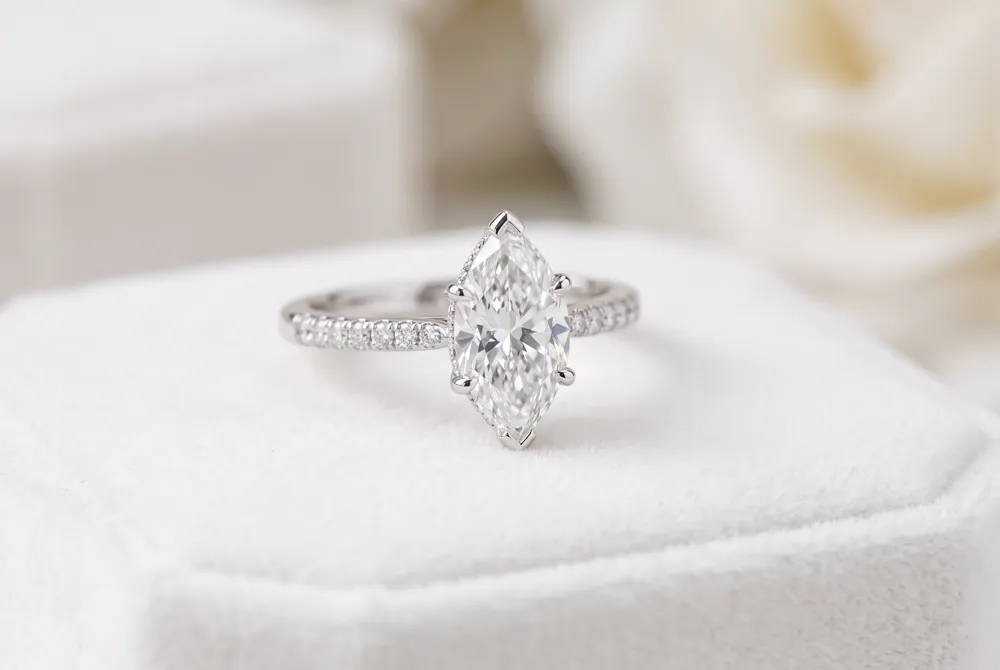
The pointed ends of a marquise cut engagement ring are more exposed than its curved sides, so setting design should account for their greater risk of chipping. The Gemological Institute of America’s guidance on marquise diamonds notes that a very thin girdle can also increase vulnerability, while a little extra thickness at the points may be appropriate.
For a balance of protection and visibility, V-prongs placed over both tips help shield the points while leaving much of the diamond open to view. Secure side prongs can support the stone as well, creating a more open setting without leaving the ends unprotected.
A bezel takes a different approach, surrounding the diamond’s edge with a continuous metal rim. This gives the points more coverage, though it frames more of the stone than prongs do. The right choice depends on whether you prefer an exposed, airy look or a more enclosed outline. At Avittam Diamond Jewels, bespoke ordering lets couples tailor a ring’s design and metal to their preferences, including the balance of coverage and visibility.
Even a protective setting cannot prevent every impact. Remove your ring for exercise, cleaning, or other activities where it could be knocked against a hard surface, and check that the prongs remain secure. Avittam Diamond Jewels also offers virtual try-on tools and detailed product guides to support online shopping; use these resources to consider how a setting looks and feels before choosing your design.
Matching Settings and Metals to Your Style
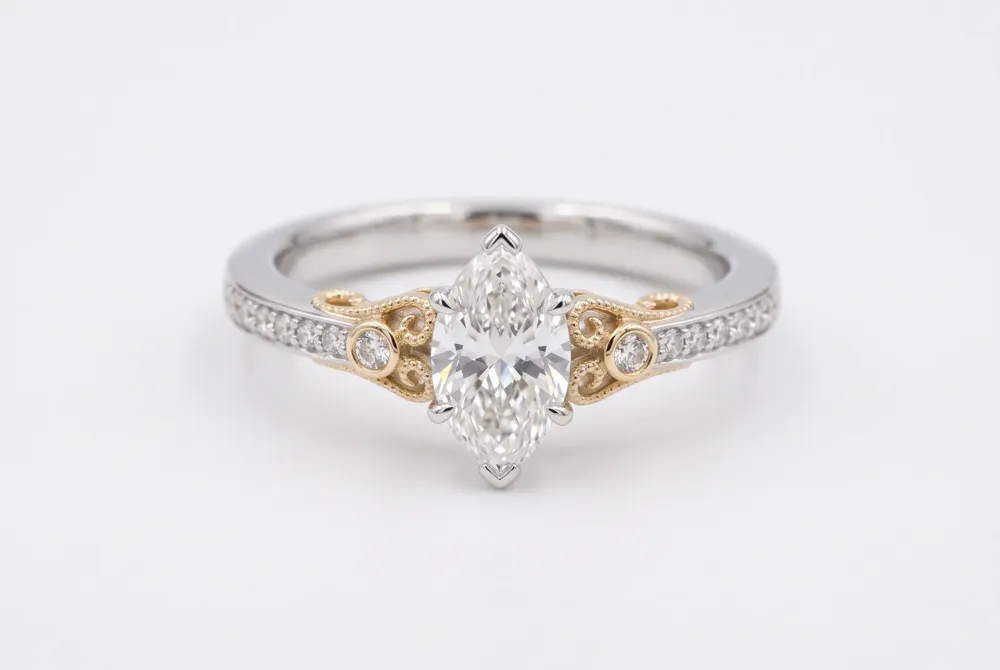
For a marquise cut engagement ring, the setting should frame the diamond’s long outline while securing both pointed ends. Consider how the ring will feel in daily wear, too: a lower profile may sit closer to the hand, while a higher setting gives the center stone more presence. Avittam Diamond Jewels offers bespoke ordering, with choices in design, metal, and engraving to help shape a ring around personal preferences.
Which setting suits the diamond?
A solitaire keeps attention on the marquise itself, making the outline the central feature. A halo adds surrounding sparkle and emphasizes the shape, while side stones create another point of contrast and can change the ring’s overall balance. Whichever style you choose, ask how the setting protects both tips as well as how it looks from above.
The traditional placement runs the stone lengthwise along the finger. An east-west setting turns it across the finger for a more contemporary effect. Vintage-inspired details, such as milgrain or fine metalwork, can complement the marquise’s romantic associations without obscuring its silhouette. GIA also notes that marquise diamonds can be set in either north-south or east-west orientations in its guide to choosing a marquise diamond.
How does metal change the look?
Yellow and rose gold lend warmth and a softer, vintage-inspired mood. White gold and platinum create a cooler, sleeker appearance. There is no single right pairing: compare the metal with the diamond’s color and the wearer’s other jewelry, then consider whether the setting’s height and shape feel comfortable on the hand.
Personalization can extend beyond the metal to details such as the band’s profile, accent stones, and engraving. Avittam Diamond Jewels’ bespoke service allows customers to customize these design choices, so the finished ring reflects the wearer’s taste as well as the marquise’s distinctive form.
Considering Wedding Bands and Everyday Fit
A marquise cut engagement ring can extend beyond the width of its band, so a straight wedding ring may not sit flush beside it. Before choosing a design, consider how the two rings will meet on the hand and whether you prefer a close, coordinated fit or a small, intentional gap.
Curved or contoured wedding bands can follow the engagement ring’s outline, while a V-shaped band echoes the marquise’s pointed ends. Trying pairing options together, or reviewing them side by side, can help you judge the silhouette and avoid surprises after the rings are made.
A simple metal band keeps the pairing understated and leaves the center diamond as the focus. Pavé or eternity styles bring additional sparkle; their scale and setting should complement the marquise rather than compete with it. Avittam Diamond Jewels offers bespoke ordering, allowing couples to personalize a ring’s design and metal as they consider how it will sit with a wedding band.
Fit matters as much as appearance for a ring intended for everyday wear. Check that the combined rings feel comfortable, do not press awkwardly against neighboring fingers, and suit the wearer’s usual activities. GIA’s guidance on marquise diamond shape and proportions can help you assess the center stone’s outline, while a planned band pairing completes the ring’s overall look.
A Shape That Endures Beyond Trends
Are marquise cut engagement rings still in style? The shape remains a distinctive choice, with a silhouette that can feel romantic without being tied to one particular era. Its design has appeared in bridal jewelry across changing tastes, and the Gemological Institute of America’s history of the marquise traces its associations from French origins to later periods of popularity.
A marquise cut engagement ring can lean vintage through milgrain, engraved details, or an ornate setting, yet look strikingly current with a simple band and restrained metalwork. Avittam Diamond Jewels offers bespoke ordering, allowing couples to tailor a ring’s design, metal, and engraving to their own preferences rather than choosing details solely because they are fashionable.
The traditional vertical orientation draws the eye along the finger and gives the stone a romantic, elongated presence. For a less conventional, contemporary expression, an east-west setting turns the diamond horizontally. Neither is inherently more enduring; the right choice is the one that feels comfortable and personal when worn.
A marquise’s long history and adaptability let it feel individual without losing its timeless character. Consider how the outline, setting, and metal suit the wearer’s taste, then favor a design that will still feel meaningful beyond the current moment.
Understanding Price and Perceived Value
Is a marquise cut diamond more expensive than other diamond shapes? Not necessarily. Marquise diamonds may cost less per carat than round brilliant diamonds, but there is no fixed price advantage. The cost of an individual stone depends on its qualities and the market.
When comparing options, consider proportions, color, clarity, symmetry, and availability alongside carat weight. A visible bow-tie can also affect how appealing a stone looks, so assess its appearance rather than relying on a grading report alone. The Gemological Institute of America’s marquise diamond guide recommends examining symmetry and bow-tie visibility in normal lighting.
The elongated outline can give a marquise diamond a larger face-up appearance than some other cuts of the same weight, but this is not guaranteed. Compare the stone’s measurements and visual presence as well as its carat weight. Avittam Diamond Jewels’ curated selection and detailed product information can help make those comparisons clearer when shopping online.
For a fair comparison, look at stones with similar characteristics and decide which qualities matter most to you. One buyer may value a balanced outline and lively appearance, while another may prioritize color or clarity. Comparing like with like can show whether a difference in price reflects a quality you genuinely prefer.
Choose the Diamond That Feels Like Yours
The right marquise cut engagement ring brings together more than an attractive outline. Its proportions should please your eye, its facets should return light in a way you enjoy, and its pointed ends should be thoughtfully protected. The setting and metal then give the diamond a character that feels at home with your style.
As you compare stones, look at each one face-up in clear images or video, and consider how it feels on your hand. A grading report provides useful details, but your own response to the shape, sparkle, and overall balance matters too. Comfort in daily wear deserves a place in the decision alongside appearance.
Avittam Diamond Jewels offers a bespoke ordering service for customizing a ring’s design, metal, and engraving, helping couples shape a piece around personal preferences. When selecting a marquise diamond, thoughtful guidance can make it easier to weigh these details without losing sight of what matters most: a ring that feels distinctly yours.