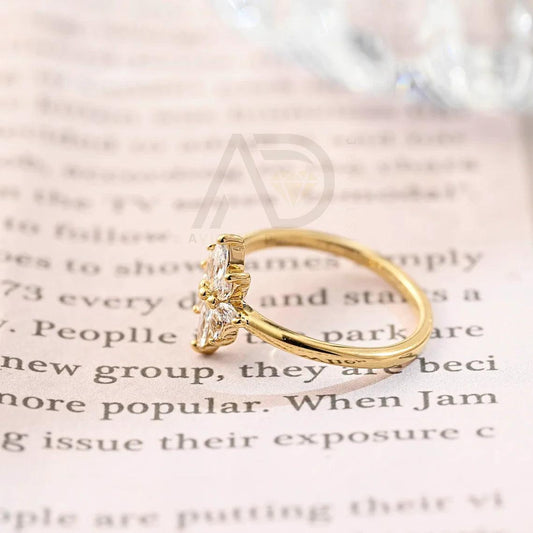

Understanding Both Symbols of Commitment
The journey from a heartfelt proposal to the final wedding vow involves two distinct yet deeply connected pieces of jewelry. While the engagement ring is gifted to signify a promise of marriage, the wedding band is exchanged during the ceremony to formalize the union. Understanding the nuances of the engagement ring vs wedding ring helps couples navigate this transition with clarity and poise.
Deciding which ring to purchase first remains a frequent question for many couples. Traditionally, the engagement ring takes center stage during the proposal, followed by the selection of a complementary wedding band. However, modern couples often choose to explore complete bridal sets simultaneously, ensuring the pieces harmonize perfectly in metal, stone, and profile. Avittam Diamond Jewels specializes in this process, offering bespoke services that allow for custom-designed bands crafted to complement an existing engagement ring for a truly seamless fit.
Expert guidance is essential when selecting pieces that will grace your hands for a lifetime. Whether you prioritize a classic solitaire or a contemporary design, our team at Avittam Diamond Jewels assists in balancing aesthetic preferences with practical daily comfort. By considering the origin of wedding rings and the symbolic value each ring carries, we help ensure your selection remains as meaningful as it is beautiful. Our refined approach removes the guesswork, allowing you to focus on the significance of your commitment rather than the complexities of the shopping journey.
The Core Distinction Between Engagement and Wedding Rings
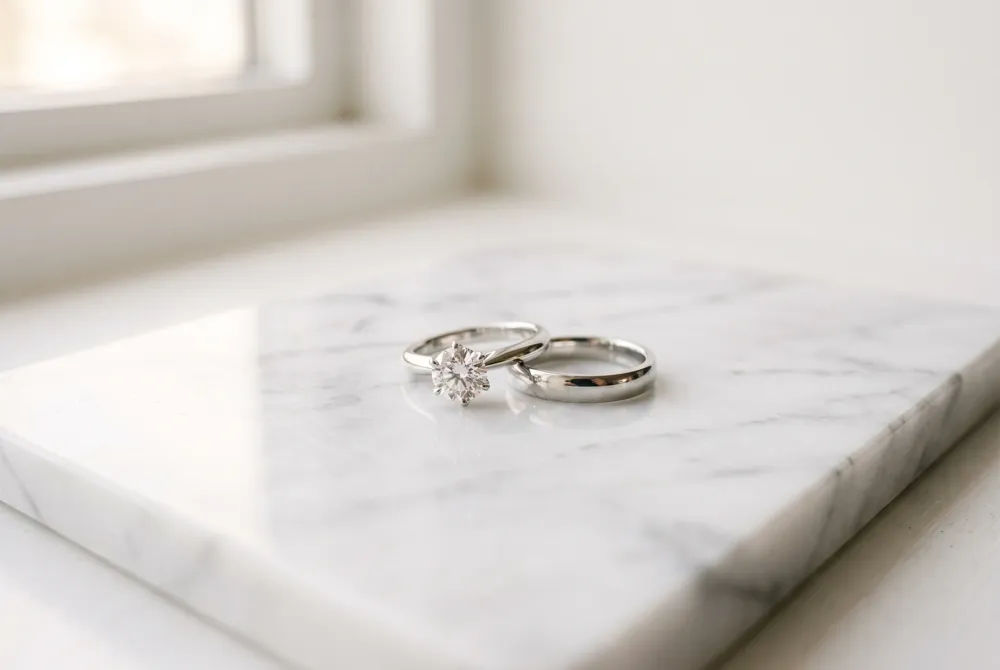
The fundamental difference between an engagement ring vs wedding ring lies in their unique roles within your journey toward matrimony. An engagement ring is traditionally presented during a proposal as a vibrant symbol of your promise to marry, often featuring a prominent center stone that captures the light and reflects the significance of that singular moment. Conversely, a wedding ring, or band, is exchanged during the marriage ceremony, serving as an enduring, often more understated emblem of the vows shared between partners.
While the engagement ring marks the beginning of your official courtship, the wedding ring completes the set, signifying the official union of your lives. Designers often craft the former with ornate settings to highlight the brilliance of a diamond, while the latter is intentionally shaped for durability and everyday comfort. When considering the engagement ring vs wedding ring transition, many couples now value the aesthetic cohesion found in bridal sets which ensure both pieces sit perfectly flush against each other.
At avittamdiamondjewels.com, we emphasize that these symbols are more than just jewelry. They are testaments to a shared history. Whether you opt for a classic solitaire or a bespoke design, the distinction between the two remains rooted in their historical purpose: the ring of promise versus the ring of finality. While traditional customs suggest these pieces are distinct, modern artisans often collaborate with couples to blend these styles, ensuring each ring reflects personal taste while honoring the timeless tradition of the exchange of rings that dates back centuries.
Wearing Both Rings: A Cherished Tradition
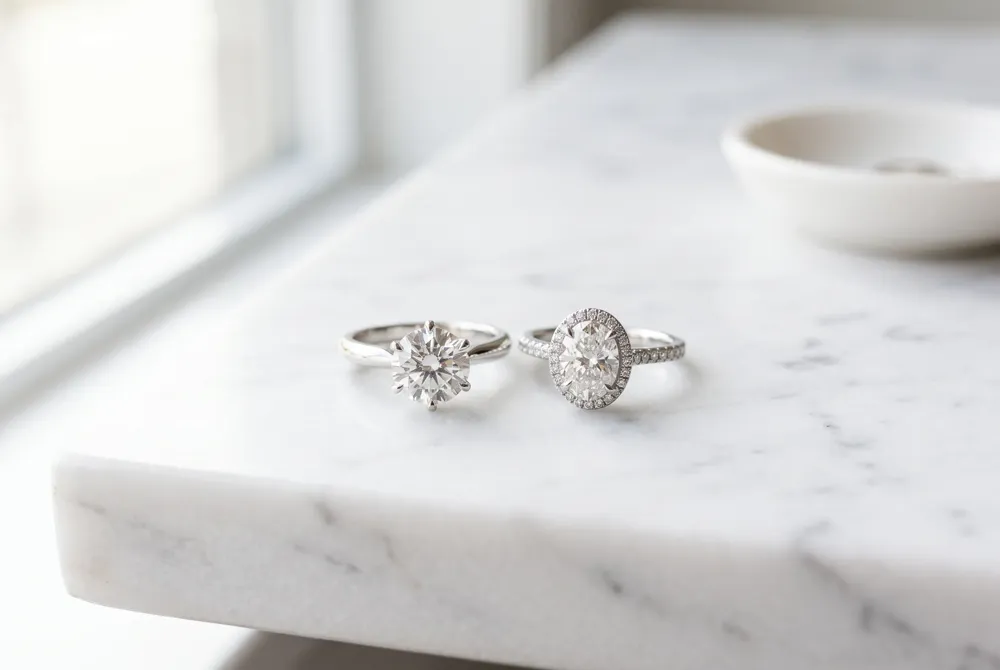
The custom of wearing an engagement ring vs wedding ring on the same finger is a profound expression of a couple's journey. By uniting these two distinct symbols, you create a visual narrative that bridges the initial promise of a proposal with the enduring commitment of the marriage vows. Many find that stacking these pieces transforms them into a singular bridal set, highlighting the evolution of their relationship.
Is it traditional to wear both an engagement ring and a wedding band together?
It is indeed a cherished tradition for many to wear both an engagement ring and a wedding band together on the same finger, creating a cohesive bridal set that symbolizes the transition from a promise of commitment to a lifelong union. Traditionally, the wedding band is placed on the finger first, closest to the heart, with the engagement ring worn stacked just above it. This practice is rooted in the ancient belief in the vena amoris, or vein of love, thought to link the fourth finger of the left hand directly to the heart.
While this order reflects a historic sentiment, modern couples are increasingly embracing the flexibility to style their rings in a way that best highlights their personal aesthetic. If you prefer a customized configuration, Avittam Diamond Jewels offers bespoke design services to ensure that your specific rings sit perfectly together, regardless of the setting style. Whether you choose to solder your pieces into a single silhouette or prefer to wear them separately, the combination of an engagement ring vs wedding ring ultimately serves as a beautiful, bespoke reflection of your unique love story.
At Avittam Diamond Jewels, we believe your choice should honor your individuality while celebrating the timeless elegance of your partnership. Because there is no singular rule, some individuals may opt for a minimalist approach, choosing to wear only one piece for daily activities, or layering additional bands to mark significant life milestones. We encourage you to prioritize comfort and your own sense of beauty when curating your personal stack.
Structuring Your Bridal Stack: The Right Order
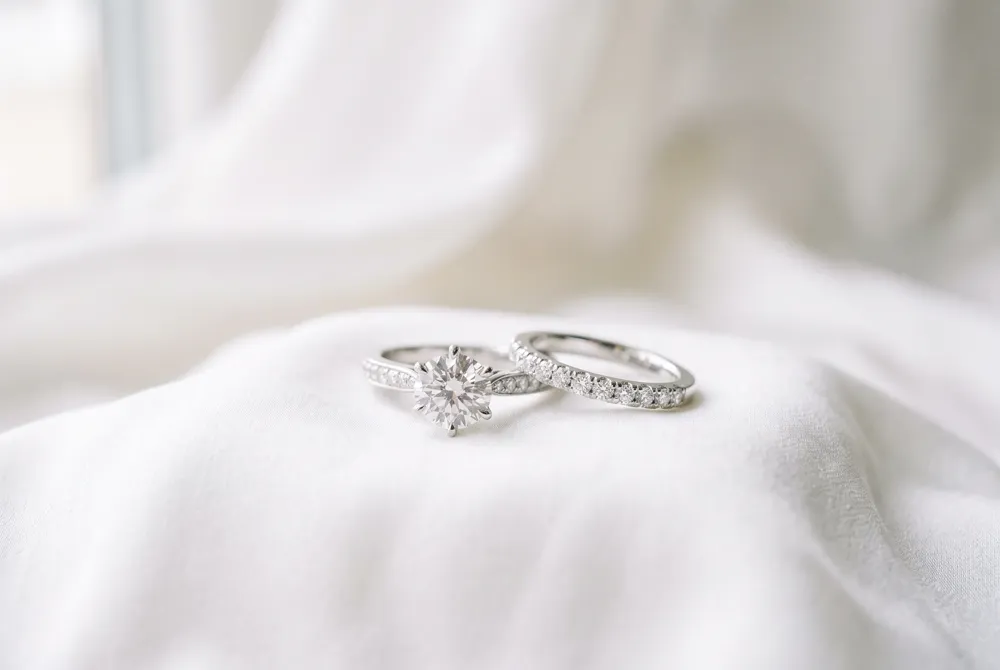
When deciding on your ideal engagement ring vs wedding ring arrangement, many couples find guidance in centuries of tradition. The classic Western custom dictates that the wedding band occupies the position closest to your heart. By placing the wedding band on your finger first, you honor the ancient Roman belief in the vena amoris, or vein of love, which was thought to flow directly from the fourth finger of the left hand to the heart.
Following this foundational band, your engagement ring is typically worn on top. This order serves as a visual narrative of your relationship, where the marriage union acts as the base for the engagement ring that preceded it. Should you choose to expand your collection with an eternity ring to celebrate a future milestone, tradition suggests placing it at the outermost point of the stack. This layered effect allows each piece to retain its individual prominence while contributing to a cohesive, elegant display.
While historical conventions provide an elegant framework, there is no single rule for how you must arrange your bridal set. The physical design of your rings often dictates the most comfortable fit, particularly when ensuring that settings sit flush against one another. If you find that a traditional stack does not suit your style, you may prefer to experiment with different fingers or even wear your engagement ring and wedding band on opposite hands. Ultimately, the most meaningful way to wear your rings is the one that best reflects your comfort and personal story.
- Wedding band: Placed first on the ring finger, symbolizing the foundation of the marital union.
- Engagement ring: Stacked above the wedding band to represent the journey toward that commitment.
- Eternity or anniversary ring: Often added to the outermost position to mark significant life milestones.
| Position | Symbolism | Design Consideration |
|---|---|---|
| Wedding Band | Foundational bond | Often simpler, daily wear |
| Engagement Ring | Proposal promise | Prominent center stone |
| Eternity Ring | Milestone marker | Typically matching pavé |
Design and Price: Engagement Ring vs Wedding Band
When considering the distinction between an engagement ring vs wedding ring, the primary difference often lies in the prominence of the design. Engagement rings are traditionally more ornate, serving as a grand centerpiece featuring a prominent diamond or gemstone to mark a proposal. In contrast, wedding rings are typically crafted with a more streamlined silhouette, intended for effortless daily wear and comfort.
While engagement rings generally represent a higher financial investment due to the complexity of the setting and the carat weight of the central stone, wedding bands are often more modest in price. At avittamdiamondjewels.com, we emphasize that the cost disparity often reflects the level of craftsmanship required to showcase a primary stone versus the durability-focused construction of a band. Many modern couples now curate bespoke bridal sets, ensuring their engagement and wedding rings harmonize beautifully to reflect their unique personal style.
Material choice plays a vital role in both longevity and aesthetics. Precious metals like platinum, white gold, yellow gold, and rose gold are standard for their resilience. While Avittam Diamond Jewels offers a wide variety of these metals for custom creation, it is important to remember that softer metals may require more frequent maintenance when worn daily. Selecting a durable metal ensures your jewelry remains a lasting testament to your union.
| Feature | Engagement Ring | Wedding Band |
|---|---|---|
| Primary Role | Proposal Symbol | Marriage Bond |
| Design Style | Ornate/Stone-focused | Streamlined/Simple |
| Investment | Higher Price Point | Lower Price Point |
The Historical Roots of Ring Exchange
The custom of exchanging rings to signify commitment carries a heritage spanning over 3,000 years. Ancient Egyptian culture celebrated the circle as a powerful symbol of eternity and the infinite nature of the sun and moon, laying the groundwork for our modern appreciation of jewelry as a vessel for vows. By the time of the Roman Empire, this practice had evolved into a formal pledge of intent. This era also solidified the enduring connection between the fourth finger of the left hand and the heart, centered on the belief in a vena amoris, or vein of love, which is why many individuals today continue to wear their rings on that specific digit.
The specific distinction between an engagement ring vs wedding ring became more formally defined following the 12th century as marriage was codified as a formal sacrament. However, the use of diamonds in these pieces took a distinct turn in 1477 when Archduke Maximilian of Austria gifted a diamond ring to Mary of Burgundy. This momentous occasion set a precedent for royal and aristocratic traditions for centuries to follow. It was not until the mid-20th century that the diamond engagement ring became a near-universal standard, significantly bolstered by the influential marketing campaigns that established the diamond as a cultural emblem of permanent commitment.
As you consider your own journey, the evolution of these pieces offers a rich context for your choice. While historical figures helped shape these customs, modern couples are empowered to craft a narrative that feels personal. Whether you opt for a classic design or a contemporary arrangement, understanding these traditions provides a deeper appreciation for the symbols you choose to wear daily. At Avittam Diamond Jewels, we focus on honoring these timeless foundations through modern, bespoke craftsmanship that allows you to define your own legacy of love.
How Should a Gentleman Wear His Wedding Ring?
Deciding how a gentleman should wear his wedding ring is a deeply personal choice often guided by cultural heritage, religious traditions, and individual comfort. While many in Western cultures traditionally wear their band on the fourth finger of the left hand, a custom historically inspired by the vena amoris, men in various Eastern European, Asian, and Orthodox Christian traditions frequently favor the right hand.
Beyond regional customs, some gentlemen opt for the right hand to accommodate their dominant hand, protecting the band from excessive wear during daily activities. This practical adjustment ensures that the jewelry remains in pristine condition, free from the scratches or structural stress often associated with active use on a dominant hand.
Ultimately, the distinction between an engagement ring vs wedding ring is a matter of personal style. Whether you choose the left or right hand, the band remains a timeless symbol of your unique commitment. We invite you to explore the bespoke jewelry services available at avittamdiamondjewels.com to find a piece that resonates with your personal narrative and aesthetic preferences.
Should You Buy the Engagement Ring or Wedding Band First?
The sequence of acquiring bridal jewelry often begins with the engagement ring, which serves as the primary token of a proposal and a formal promise of marriage. Because this piece is central to the proposal, it is traditionally selected and purchased well before the wedding ceremony. Many couples today opt for this traditional timeline to ensure the ring is ready for the special moment, allowing the wedding band to be sourced as a secondary, complementary piece closer to the wedding date.
When addressing the choice of an engagement ring vs wedding ring, an increasingly popular approach is to curate a bridal set from the beginning. By selecting both rings simultaneously, couples ensure that the design, metal choice, and stone alignment are perfectly cohesive. Avittam Diamond Jewels offers bespoke services that cater to this need, allowing for the precise tailoring of a band to fit the unique geometry of an existing engagement ring setting. This proactive strategy eliminates the challenge of finding a matching band later, particularly for complex custom settings.
Budgeting considerations are also essential when deciding on the timing of your purchase. Spreading the investment over the duration of the engagement period can reduce financial pressure, yet planning for both rings early provides a clearer picture of total costs. Modern couples are embracing greater flexibility in this process, moving away from rigid rules to focus on personal style and longevity. Whether you prioritize securing the proposal piece immediately or prefer to design a fully integrated set through a jeweler like Avittam Diamond Jewels, the objective remains the creation of a lasting symbol of your union.
Harmonizing Your Rings: Design and Metal Choices
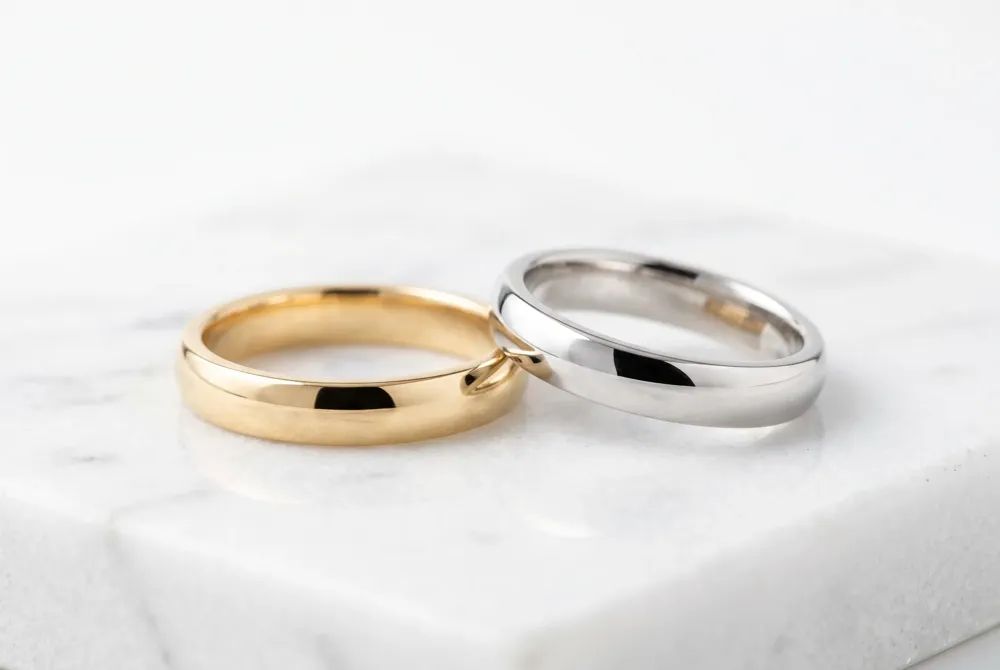
When balancing an engagement ring vs wedding ring, the aesthetic harmony between the two pieces is essential for daily wear. Many couples naturally gravitate toward a cohesive bridal set, where the engagement ring and wedding band are engineered to sit flush against one another. Avittam Diamond Jewels facilitates this by offering bespoke services, allowing clients to craft a custom band that perfectly contours to the unique profile of their engagement ring.
Choosing the right metal requires careful consideration of both beauty and long-term durability. While platinum is prized for its strength and hypoallergenic properties, gold alloys such as yellow, rose, and white gold offer a variety of tones to suit individual tastes. For those mixing metals, it is important to note that disparate hardness levels can lead to excessive wear over time. If you opt for a softer 18k gold band paired with a harder platinum engagement ring, the platinum may gradually erode the gold surface.
The physical architecture of your jewelry also dictates how the pieces interact. A low-profile setting often provides a cleaner silhouette, but it may require a curved or V-shaped band to achieve that sought-after flush appearance. Conversely, a higher setting might allow for a straight band to sit underneath without gaps. At avittamdiamondjewels.com, our experts emphasize that the choice between a classic straight band or an ornate contoured design should always prioritize the wearer's daily lifestyle.
| Metal Type | Durability | Best Use Case |
|---|---|---|
| Platinum | High | Daily wear and security |
| 18k Gold | Moderate | Vibrant color and elegance |
| 14k Gold | High | Added strength for thin bands |
Soldering and Stacking: Practical Considerations
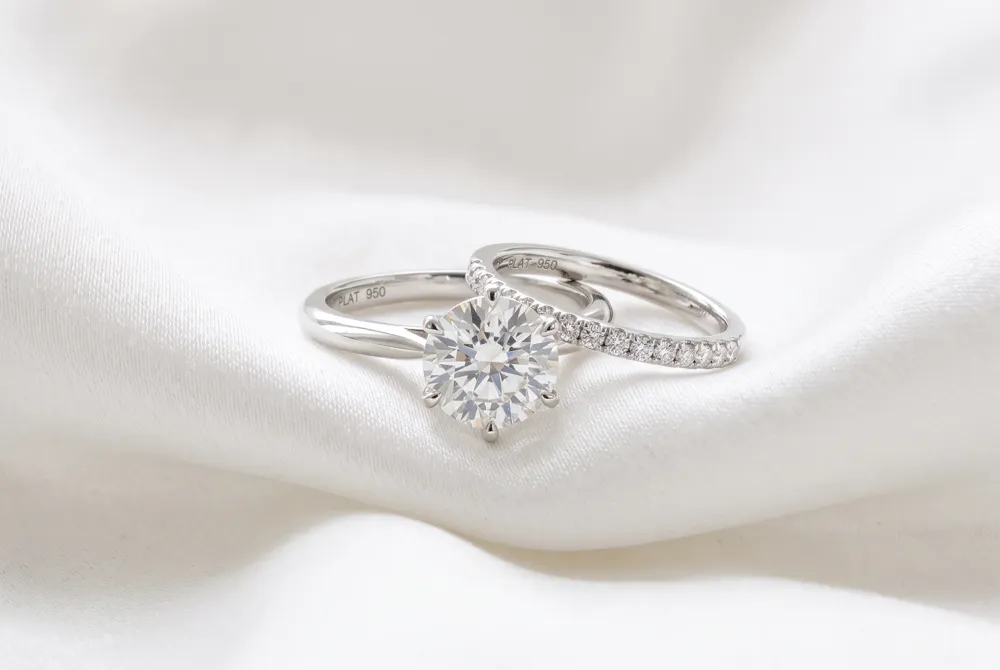
For couples navigating the aesthetic of an engagement ring vs wedding ring, the decision to keep the pieces separate or fuse them through soldering is a matter of both daily comfort and stylistic intent. Soldering provides a permanent solution to ensure your rings remain perfectly aligned on the finger, preventing the constant rotation that often plagues stacked sets. At Avittam Diamond Jewels, we note that this fusion also reduces the friction caused by metals rubbing against one another, which can wear down delicate prongs over time.
While soldering offers stability, it removes the flexibility to wear the rings individually for different occasions. Many individuals find that a more versatile alternative involves using ring enhancers or jackets, which frame the engagement ring to create a cohesive look without requiring permanent modification. These pieces allow you to maintain the independence of your jewelry, making them an excellent choice for those who appreciate the ability to shift their style between a minimal look and a more layered bridal stack.
Lifestyle and Daily Maintenance
When assessing the durability of your bridal jewelry, consider your daily lifestyle and the physical profile of your rings. A low-profile engagement ring typically sits flush against a standard band, whereas higher settings may require a contoured or V-shaped wedding ring to prevent gaps. Regardless of the configuration, regular maintenance remains vital for long-term beauty. We recommend periodic professional inspections of your settings to ensure that stones remain secure, particularly if you have chosen intricate designs or pavé-set bands that experience frequent daily wear.
| Method | Primary Benefit | Consideration |
|---|---|---|
| Soldering | Perfect alignment | Permanent fusion |
| Stacking | Versatile wear | Rings may rotate |
| Enhancers | Protective framing | Distinctive profile |
Your Unique Love Story, Beautifully Adorned
Navigating the choice between an engagement ring vs wedding ring is a deeply personal endeavor. While traditional Western etiquette suggests placing the wedding band closest to the heart, there is no single mandated order for wearing your jewelry. Whether you prioritize chronological significance by placing the engagement ring first, or prefer the aesthetic symmetry of a perfectly flush stack, the final arrangement rests entirely upon your individual comfort and stylistic vision.
Achieving this harmony often requires thoughtful design. At Avittam Diamond Jewels, we embrace an approach to fine jewelry that prioritizes timeless elegance and bespoke craftsmanship. While some mass-market retailers offer generic options that may not sit flush against your existing setting, our bespoke services allow us to craft custom wedding bands engineered to complement the specific contours of your engagement ring. This ensures a seamless, luxurious integration that reflects your personal journey.
Your jewelry should be as unique as your commitment. We invite you to explore our curated collections online, where you can utilize our detailed product guides and virtual tools to envision your ideal bridal set. From selecting durable platinum or gold metals to refining the intricate details of your stack, we are here to support your process. Starting your journey with us means investing in pieces that celebrate your future with authentic, enduring quality.