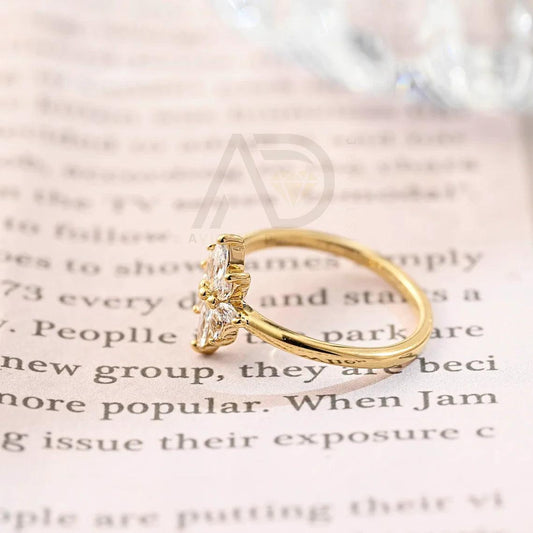

Two Rings, One Love Story
Once you understand the distinct roles each ring plays, the next decision is narrowing down the style that feels like you. Because engagement rings and wedding bands are worn together, they should complement each other without competing for attention. The choices ahead are not about what is trendy, but about what will feel right for a lifetime together.
Metal, Shape, and Stone Preferences
The metal you choose sets the tone for both rings. If your engagement ring is crafted in platinum or white gold, a matching wedding band in the same metal creates a seamless, cohesive look. For those drawn to the warm glow of yellow or rose gold, consider how these tones harmonize with the diamonds and your skin undertone. A practical note: if you plan to wear your rings together daily, platinum offers durability that withstands the wear of a lifetime, while gold remains timeless and easily re-polished.
Shape and proportion matter more than many realize. A Princess cut engagement ring with sharp corners pairs beautifully with a straight band, whereas a Marquise or Pear shape leaves a narrow silhouette and often calls for a curved or notched band to sit flush. Taking the time to match these details ensures comfort and visual harmony, so every glance at your hand brings a quiet sense of rightness. For those still weighing shape options, Avittam Diamond Jewels offers guidance that simplifies this decision.
Coordinating the Two Rings
The goal is not to match perfectly but to create a set that feels intentional. A simple test: place both rings on your finger and step back. Does the overall impression feel balanced, or does one overwhelm the other? If you have a diamond-studded engagement ring with a high setting, a slim, unadorned band often provides the right contrast. Conversely, a solitaire engagement ring can embrace the added presence of a band set with smaller diamonds or a unique texture. Finding this balance is part of the joy of curating your bridal set.
A Note on Matching and Stacking
Some couples prefer their rings to form a matched set, sharing the same metal, finish, and detailing. Others find beauty in a deliberate mix of styles, stacking bands over time to mark anniversaries or milestones. Both approaches are valid, but consistency in the overall width, profile, and metal weight matters. A wide, heavy band may feel different against the skin than a dainty one, and this tactile difference influences daily wear.
Those who love the romantic asymmetry of a pear shape might pair it with a contoured band that echoes its curve, while fans of the bold, architectural lines of a princess cut may opt for a clean, straight band that lets the center stone shine. This is where the expertise of a jeweler becomes invaluable; a professional eye can spot potential gaps in fit and finish before you commit.
Ultimately, the right second ring is the one that feels like a natural extension of your engagement ring and your personal story. Whether you lean toward a traditional matched set or a more eclectic stack, the decision should reflect your taste and the way you want to feel every time you look at your hand. Avittam Diamond Jewels invites you to explore a curated selection of wedding bands designed to complement every engagement setting, with the freedom to customize metal, shape, and stone to create a set that is entirely your own. Take your time, try on different combinations, and trust that the perfect pair is out there waiting to tell your love story.
Purpose and Timing: Promise vs. Union
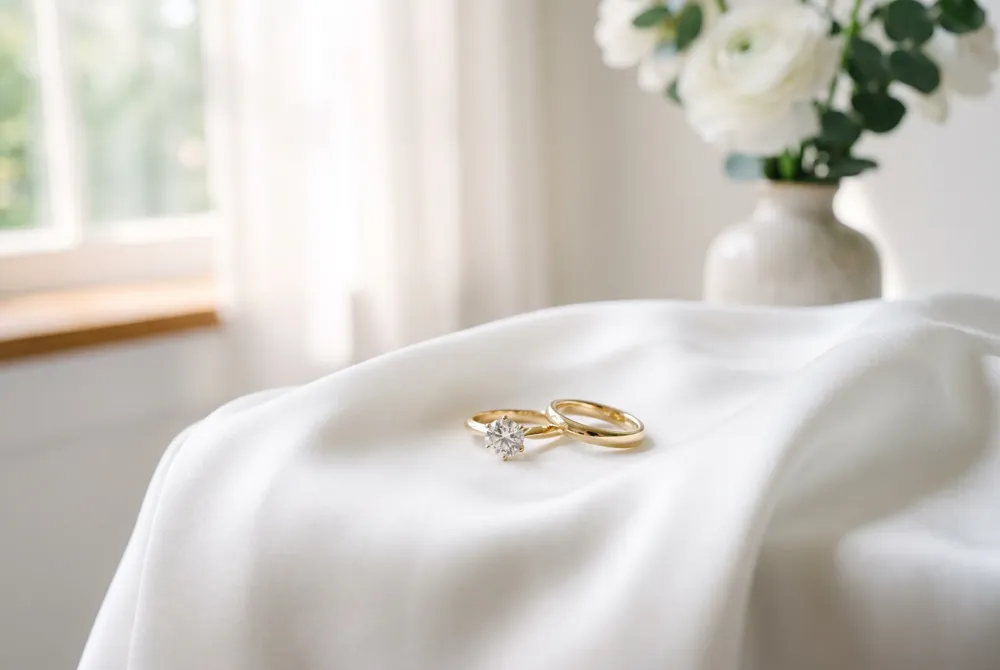
The distinction between an engagement ring and a wedding ring begins with their purpose and the moment they enter your love story. An engagement ring is presented at the proposal, a tangible promise of the intent to marry. It often features a prominent center diamond that captures the significance of that single, life-changing question.
A wedding ring, sometimes called a wedding band, is exchanged during the ceremony. Its unbroken circle symbolizes the eternal union of marriage itself. While the engagement ring marks the beginning of that journey, the wedding band seals it in front of loved ones.
This tradition has ancient roots: engagement rings trace back to ancient Rome, while wedding rings have been found in Egyptian tombs over 5,000 years old. The modern prevalence of diamond engagement rings was largely shaped by a 20th-century De Beers campaign.
Today, some couples choose to skip the engagement ring entirely and use only wedding bands for a minimalist or egalitarian approach. Whether you embrace both traditions or opt for a single piece, Avittam Diamond Jewels offers curated bridal sets that honor each chapter of your commitment with timeless craftsmanship.
Distinctive Designs: Statement Stone vs. Enduring Band
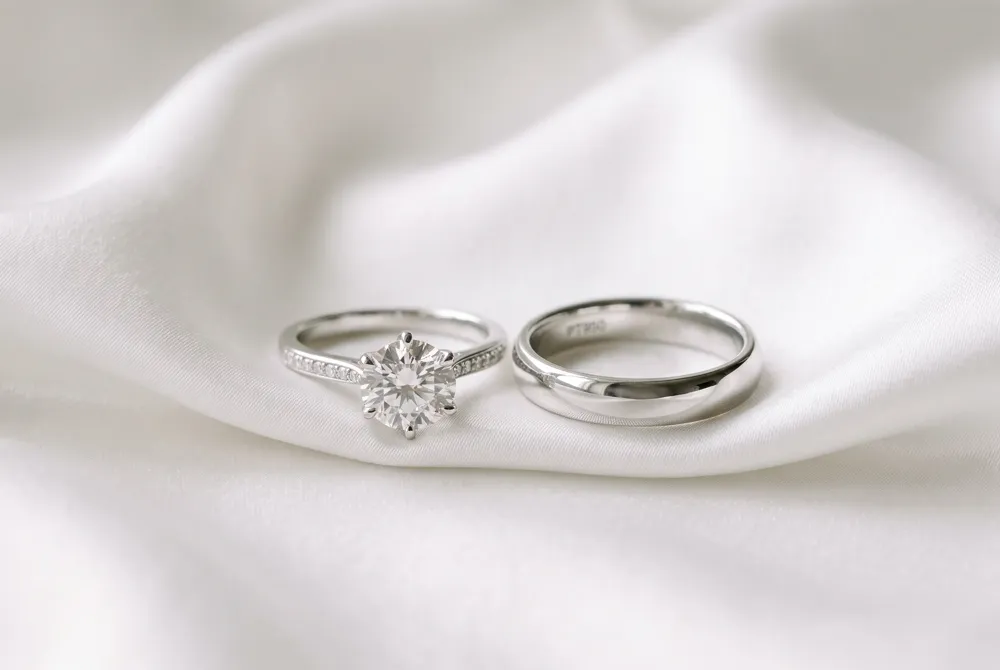
The most visible difference between an engagement ring and a wedding band lies in their design language. An engagement ring was created to be the centerpiece of your bridal jewelry, featuring a prominent raised gemstone—most often a diamond—elevated above the finger by a delicate setting. This main stone is frequently framed by a halo of smaller diamonds, flanked by side stones, or set on a pavé band that amplifies its brilliance and presence.
Wedding bands are intentionally simpler. Think of them as the quiet companion to the engagement ring: a low-profile metal band designed for effortless daily wear and comfortable stacking against the larger piece. They come in many forms, from clean polished circles to eternity bands where small stones are set flush into the metal for sparkle without height. Whether you choose an understated classic metal band or a delicate diamond band, this is the piece you will never need to remove.
Popular Styles for Your Set
Solitaire. A single diamond or gemstone set alone on a plain band. It remains one of the most timeless options because it puts all attention on the stone itself without distraction.Halo. A framing circle (or square) of smaller diamonds around the center stone that dramatically increases shimmer and makes the center appear larger than its carat weight.Three-Stone. One large center diamond flanked by two smaller side stones (often representing past, present, and future). A romantic choice with generous surface sparkle.Classic Metal Band. "Wedding band" and "wedding ring" are interchangeable terms; historically "band" refers to this simpler style — just polished metal with no stones at all. Clean, durable, and endlessly traditional.
Avittam Diamond Jewels offers both statement engagement rings and enduring wedding bands across these styles, ensuring every detail — from metal finish to stone alignment — works together seamlessly. Their collections feature ethically sourced diamonds in a range of cuts and settings, along with a bespoke ordering service that lets customers customize design elements.
Wearing the Set: Stacking Order and Traditions
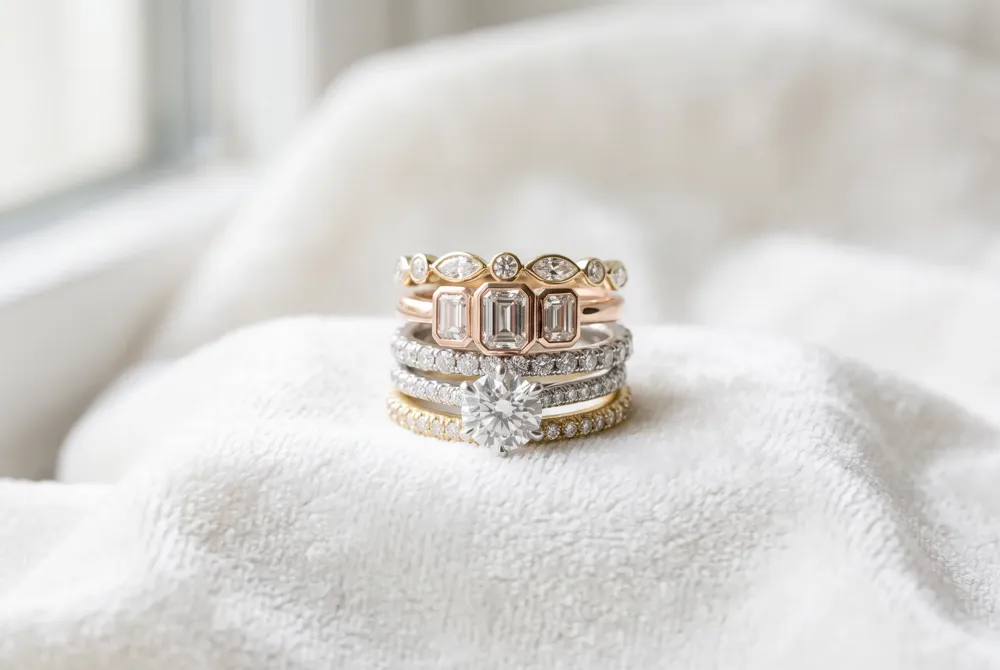
The way you wear your rings carries centuries of romantic symbolism. In Western tradition, both rings rest on the fourth finger of the left hand—the "ring finger"—chosen by ancient Romans who believed a vein, the vena amoris, ran directly from this finger to the heart.
The traditional stacking order places the wedding band first, closest to the heart, with the engagement ring above it. This order is meaningful but not mandatory. Some brides reverse the stack for comfort or to let an elaborate engagement setting shine, and others wear one ring on each hand.
Regional customs add further variety. In parts of Europe including the Netherlands, Germany, Russia, and Greece, as well as in India, wedding bands are worn on the right hand instead of the left. On the wedding day itself, many brides temporarily move their engagement ring to the right hand so the wedding band can be placed unobstructed during vows.
For couples who want a permanent interlocking fit without any shifting throughout daily wear, soldering both rings together creates a single seamless piece that stays aligned without twists or discomfort.
Budgeting for Both: A Look at Cost Differences
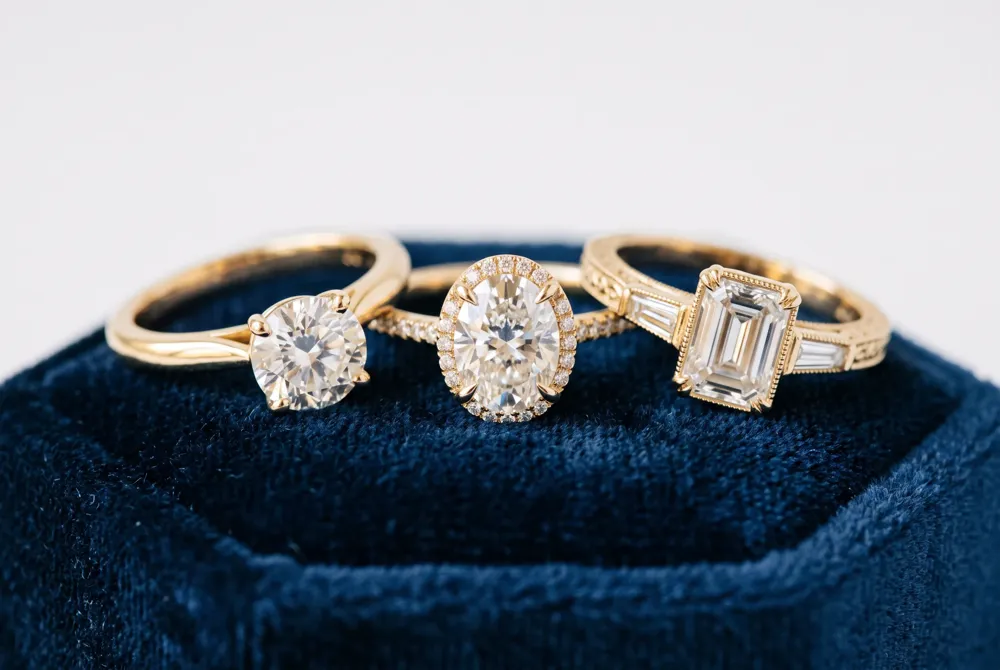
Choosing between an engagement ring and a wedding band is about more than aesthetics; it's about understanding the distinct purpose each piece serves. While the engagement ring traditionally marks the proposal and symbolizes the promise of marriage, the wedding band is exchanged during the ceremony as a public declaration of the union. This interplay is beautifully captured in the longstanding tradition of wearing both rings together, with the engagement ring often taking the spotlight during the proposal and the band assuming its meaningful role at the altar.
Avittam Diamond Jewels recognizes that today's couples seek a seamless journey from 'yes' to 'I do.' Unlike traditional brick-and-mortar stores that often require multiple visits and pushy upselling, Avittam Diamond Jewels offers an AI-native online experience that simplifies the process. Our curated selection of engagement rings and wedding bands is designed for modern love, blending timeless elegance with the convenience of virtual try-on tools and detailed product guides. This approach sets us apart by prioritizing personalization without the pressure, ensuring each piece feels uniquely yours.
Budget Breakdown: Where Do Your Dollars Go?
When it comes to budgeting, it's helpful to know that the global average cost of an engagement ring in 2024 is approximately $5,500, while the average U.S. wedding band cost for couples is around $1,000. This differential isn't just about the diamonds; it's about the complexity of design and the amount of precious metal and stones involved. An engagement ring typically features a central diamond that commands the majority of the price, whereas a wedding band is often simpler, focusing on a narrow band that complements the ring it accompanies.
- Allocate your budget based on the ring that will hold the most symbolic weight for you. For many, that's the engagement ring, which is worn daily and serves as the primary conversation piece.
- Consider the long-term cost of ownership. Wedding bands, being thinner and less complex, often require less maintenance and are less expensive to replace or resize.
- Factor in the total cost of both rings together if you plan to purchase them as a set. Many jewelers, including Avittam, offer bridal sets that pair the engagement ring and wedding band, which can be more cost-effective than buying them separately.
At Avittam Diamond Jewels, we believe in transparency. Our bespoke ordering service allows you to customize not just the design and metal but also the budgeting, ensuring that you invest in the details that matter most to you, whether that's a larger center stone or a hand-engraved inscription.
| Aspect | Engagement Ring | Wedding Band |
|---|---|---|
| Purpose | Symbolizes the promise of marriage | Symbolizes the union itself |
| Typical Design | Features a central diamond or gemstone | Often simple metal band, may have accents |
| Average Cost | $5,500 (2024 global average) | $1,000 (U.S. average) |
| Wearing Timeline | From proposal to wedding day | After the ceremony, worn daily |
| Customization | High: center stone, setting, metal | Lower: focused on band width and finish |
Why Choose Avittam for Both?
While many jewelers offer a single option, Avittam Diamond Jewels excels at providing a complete bridal experience. Our online platform allows you to design both rings in tandem, ensuring they complement each other in metal, silhouette, and sparkle. This holistic approach is a differentiator that saves you time and reduces the guesswork, especially when comparing our service to that of traditional retailers who may not offer integrated customization. By choosing Avittam, you gain a dedicated partner in crafting a matching set that reflects your unique love story, complete with free shipping and a virtual try-on to make the decision feel effortless.
Purpose. The engagement ring is a promise of marriage, often given during a proposal, while the wedding band is a symbol of the completed union, exchanged during the ceremony.Timing. Engagement rings are worn from the moment of 'yes' until the wedding, whereas wedding bands are worn continuously after the vows, often layered with the engagement ring.Design. Engagement rings typically feature a prominent center stone, while wedding bands are often simpler, designed to sit flush or complement the engagement ring's silhouette.
For further guidance on choosing between these two essential pieces, you can explore our in-depth comparison guide on engagement ring versus wedding ring and how to wear both interchangeably.
| Consideration | Engagement Ring | Wedding Band |
|---|---|---|
| Symbolism | Promise to marry | Union in marriage |
| Cost | Higher, due to center stone | Lower, simpler design |
| Maintenance | May need prong checks | Easier to maintain |
| Customization | Extensive | Limited to finish/engraving |
Selecting the Wedding Band: Matching and Contrasting
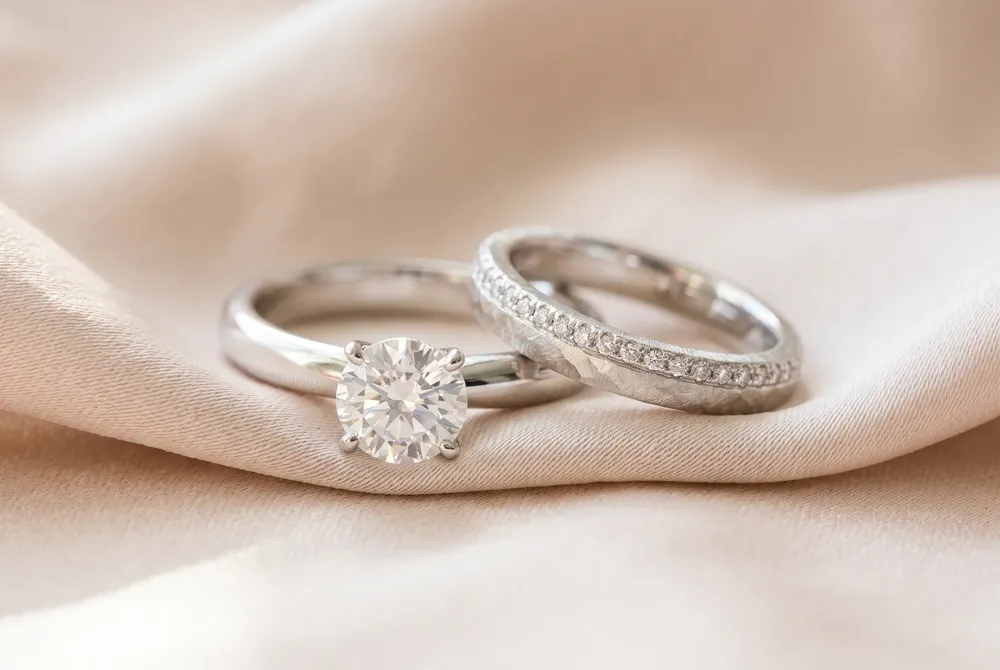
Understanding the distinction between an engagement ring and a wedding ring begins with their roles in your relationship timeline. An engagement ring marks the moment of proposal and the promise of marriage, while a wedding ring, exchanged during the ceremony, symbolizes the lifelong commitment you make to one another. The engagement ring is typically the more ornate piece, often featuring a prominent center diamond that captures attention and tells the story of your unique journey together. The wedding band, by contrast, tends to be simpler and more durable, designed to complement rather than overshadow its partner during the ceremony and in daily life.
Engagement Ring. Traditionally worn alone on the left hand's fourth finger after the proposal, this ring is all about drama and personal expression. It's where you can experiment with bold cuts and distinctive settings that reflect your style. As explored in our guide to engagement vs. wedding rings, the engagement ring often becomes the centerpiece of pre-wedding celebrations, a constant reminder of your special moment.Wedding Band. Exchanged during the vows, this ring is chosen for its everyday practicality and ability to withstand years of wear. Many couples opt for a band that sits flush against the engagement ring, creating a seamless stack. Its design may be plain or set with smaller stones, focusing on durability and comfort while maintaining the elegance you desire.
The timing of when you wear each ring is equally meaningful. You'll often wear your engagement ring alone during the engagement period, savoring its beauty as a standalone statement. On your wedding day, the two rings come together, with the wedding band placed on the finger first, closer to the heart, followed by the engagement ring on top. This tradition is echoed in many guides, such as this guide on how to wear engagement and wedding rings, which explains the importance of order and fit.
Design Continuity: How They Complement Each Other
When choosing both rings, consider how they will look together. Contoured or curved band is designed to wrap around the engagement ring's setting, while a straight band sits flush against it. Your choice depends on the shape and cut of your center stone. For instance, a princess cut engagement ring with its sharp corners pairs beautifully with a V-shaped or curved band that hugs those angles. Conversely, a marquise cut elongated silhouette calls for a band that follows its gentle curve. Many jewelers, including those at Avittam Diamond Jewels, offer bespoke services to ensure your rings align perfectly, creating a cohesive look that feels intentional and refined.
Beyond shape, consider the metal and finish. A matching metal, such as platinum or yellow gold, ties the rings together, while contrasting textures can add subtle interest. The goal is balance: your engagement ring remains the focal point, and the wedding band serves as a supportive partner. This thoughtful coordination ensures that from your proposal to your anniversary, every moment is reflected in the harmony of your rings.
Metals and Materials: From Platinum to Rose Gold
When couples begin exploring engagement ring and wedding band options, the metal of the rings often matters as much as the diamond itself. Each metal carries its own personality, from the modern, cool presence of white gold to the romantic warmth of rose gold and the timeless brilliance of platinum. For many, the choice comes down to how a ring feels on the hand, how it complements the diamond, and how it aligns with their personal style. Whether you lean toward the bright, architectural lines of a princess cut or the soft, romantic curve of a pear shape, the metal is the canvas that frames your center stone.
Understanding the differences between platinum, white gold, rose gold, and yellow gold goes beyond simple aesthetics. It affects durability, maintenance, and even how the metal interacts with the diamond's color. For example, white metals like platinum and white gold reflect light beautifully, making colorless diamonds appear whiter, while warmer metals like yellow gold can create a vintage, heirloom feel. As you weigh your options, consider how your everyday habits and personal taste will shape the ring's long-term appearance.
Platinum vs. White Gold: The Cool Contenders
Platinum and white gold are often compared because both offer a bright, silvery finish. Platinum is naturally white, dense, and extremely durable, making it an excellent choice for a lifetime of wear. It also develops a soft patina over time, which many wearers appreciate as a mark of character. White gold, on the other hand, is alloyed with metals like nickel or palladium and is typically rhodium-plated to achieve its brilliant white sheen. While white gold is more affordable upfront, it requires periodic re-plating to maintain its color.
For a modern, sophisticated look, platinum is the low-maintenance choice in terms of color retention, but it comes at a higher price point. White gold offers a similar aesthetic at a lower cost, making it attractive for budget-conscious buyers. Both metals pair beautifully with the sharp, clean lines of a princess cut or the elongated elegance of a marquise. If you're drawn to a more contemporary style, white gold is a versatile canvas; if you prefer understated luxury, platinum's weight and durability are hard to beat.
Rose Gold and Yellow Gold: Warmth and Romance
Rose gold gets its pinkish hue from copper alloyed with yellow gold, and it has surged in popularity for its romantic, vintage appeal. It flatters a wide range of skin tones and looks particularly stunning with the soft corners of a cushion cut or the romantic asymmetry of a pear shaped pink moissanite. Many couples choose rose gold for its distinctiveness and its ability to evoke warmth and intimacy.
Yellow gold, the classic choice, projects a warm, traditional glow that has adorned engagement rings for generations. It pairs exquisitely with warmer diamond shades and vintage settings, and it is an ideal match for those who value heritage and timelessness. However, yellow gold is softer than platinum or white gold, so it may require more care in everyday wear.
Platinum. The most durable and hypoallergenic, with a naturally white sheen that never fades; requires professional polishing over time.White Gold. Brilliant and more affordable, but needs periodic rhodium re-plating to maintain its bright color.Rose Gold. Warm and flattering, with a romantic pink tone from copper alloying; perfect for vintage-inspired rings.Yellow Gold. Timeless and warm, ideal for classic settings; softer than white metals, so it may require more frequent upkeep.
When you decide on the metal that feels right, consider how it frames your diamond. For instance, a pear shaped engagement ring in white gold makes the stone appear larger and brighter, while a rose gold band adds a soft contrast that highlights the diamond's fire. For those drawn to the architectural sharpness of a princess cut, yellow or rose gold can soften the look, while white metals enhance its modern edge.
Choosing the Perfect Metal with Avittam Diamond Jewels
At Avittam Diamond Jewels, we understand that this choice is deeply personal, which is why we offer a curated selection of engagement rings and wedding bands in platinum, white gold, rose gold, and yellow gold. Our experts guide you through the nuances of each metal, ensuring your selection complements your love story. Explore our collections to find a ring that reflects your unique style, and enjoy our virtual try-on tools that help you visualize the perfect match from the comfort of your home.
Caring for Your Rings: Daily Wear and Maintenance
Diamonds have long symbolized the unbreakable bond between two people, a tradition that spans centuries and cultures. At Avittam Diamond Jewels, we understand that choosing the perfect stone is more than a purchase; it is the beginning of your forever story. Our collection is thoughtfully curated to offer pieces that are as enduring as your love, with each diamond selected for its exceptional brilliance and ethical sourcing.
The journey to forever begins with understanding what makes a diamond truly special. The four Cs — cut, color, clarity, and carat weight serve as the foundation of quality, guiding you toward a stone that captures light and heart in equal measure. For those seeking a romantic and distinctive silhouette, our pear shaped moissanite options offer a graceful alternative to traditional cuts, providing exceptional sparkle and a modern yet timeless aesthetic.
Finding Your Perfect Fit
A ring should reflect the individuality of your love story. Whether you are drawn to the bold architectural lines of a princess cut or the soft, elongated elegance of a marquise, our virtual try-on tools allow you to visualize each option in the comfort of your own space. We recommend exploring our guide to marquise vs. princess cuts to see which silhouette resonates with your personal style.
For those drawn to a softer, more romantic feel, our cushion cut moissanite rings offer a vintage-inspired charm with a modern finish. The rounded corners and brilliant facets create a flattering, luminous appearance that complements a variety of hand shapes. Visit our collection of 7 best moissanite cushion cut engagement rings to find the perfect balance of romance and sophistication.
Guidance on Ring Wear
Once you have selected your engagement ring, understanding how to wear it with your future wedding band is essential for both comfort and aesthetics. Traditional etiquette suggests wearing the engagement ring on the left ring finger, with the wedding band placed closest to the heart. However, personal preference often takes precedence, and we encourage you to explore engagement ring and wedding band rules to find a stacking method that feels right to you.
For brides considering a distinct look, a pear-shaped diamond ring offers a unique alternative to classic rounds. The elegant, teardrop silhouette elongates the finger and adds a touch of glamour. To explore whether this shape aligns with your aesthetic, review our guidance on pear-shaped pink moissanite options, which highlights the beauty and craftsmanship of this choice.
| Ring Type | Silhouette | Best For |
|---|---|---|
| Princess | Sharper, geometric | Modern, bold look |
| Pear Shape | Teardrop, elegant | Romantic, elongating |
| Cushion Cut | Soft, rounded corners | Vintage, romantic feel |
| Marquise | Oval with pointed ends | Slender, dramatic |
A Lasting Symbol of Your Journey
A promise ring is more than a piece of jewelry. It is a quiet, deliberate way of saying that a deeper commitment is on the horizon. Unlike an engagement ring, which signals that a wedding date is near, a promise ring says this relationship matters and deserves the promise of a future. It is often given without the pressure of a specific timeline, making it a beautifully personal way to mark a milestone.
For couples who treasure intimate yet meaningful gestures, the promise ring offers that kind of sincere expression. Its design tends to reflect the wearer's taste, often featuring a single gemstone or a subtle detail that sets it apart from a traditional engagement ring. This is why many people choose a style that can be worn daily and later paired with an engagement ring or wedding band.
At Avittam Diamond Jewels, the belief is that a promise ring should feel as one-of-a-kind as the relationship it celebrates. That is why the brand offers a bespoke ordering service, allowing you to customize the design, metal, and even engraving. Whether you are marking an anniversary, a graduation, or simply the start of forever, a promise ring is a heartfelt way to begin your jewelry story together.