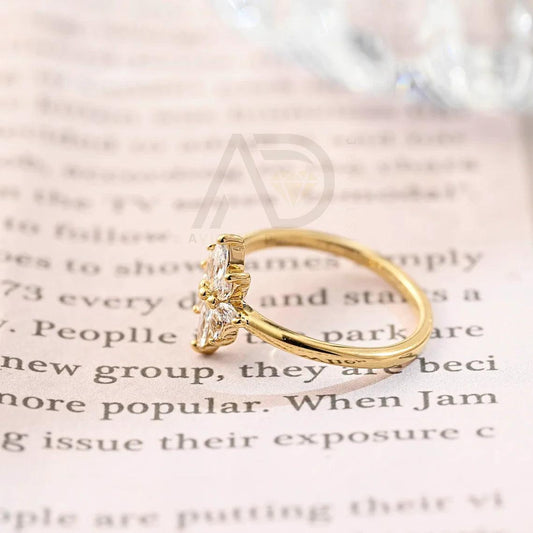

A Storied Silhouette for Modern Romantics
When you picture a marquise diamond, you are picturing the classic marquise silhouette: an elongated oval with pointed ends, often described as a boat or a football. This is the shape that has graced engagement rings for decades, prized for its ability to make fingers appear longer and more slender, and for the way its 58 facets catch and reflect light with a distinctive, dramatic flash. The marquise is a shape of romance and royalty, the very silhouette most people mean when they say "marquise cut."
The "regular" marquise cut, also known as the classic or traditional marquise, features a crown that is relatively shallow, which allows for a large table (the flat top facet) and a wide range of brilliance. Its elongated shape creates a flattering, dramatic look, and it is often chosen by brides who want something unique but still recognizable as a solitaire. For those drawn to this timeless shape, Avittam Diamond Jewels offers a curated selection of marquise engagement rings that capture this classic elegance, with each piece crafted to highlight the stone's natural brilliance and elongated profile.
The Dutch Marquise: A Distinctive Variation
A lesser-known but increasingly admired cousin is the Dutch marquise. Unlike the regular marquise with its straight, pointed ends, the Dutch marquise features a subtle, modified crown that gives the stone a more rounded, softened appearance at the tips. This distinction, while subtle to the untrained eye, dramatically changes the overall feel of the ring. The Dutch marquise often presents a more romantic, antique-inspired look, with a gentle, almost luminous quality that sets it apart from its more common relative. For a bride seeking something distinctive yet connected to the classic silhouette, the Dutch marquise offers a perfect middle ground, and expert jewelers like those at Avittam Diamond Jewels can help you compare these nuances in person or through their detailed virtual consultations.
When choosing between the two, consider not just the aesthetic, but also the shape's impact on the stone's proportions. The Dutch marquise's modified crown can sometimes make the stone appear slightly smaller for its carat weight, whereas the regular marquise's elongated form offers a larger face-up appearance, often looking up to 15% larger than a round diamond of the same carat weight, as noted in the guide to diamond shapes from the Gemological Institute of America. Both are excellent choices for those who love the marquise profile, but the decision often comes down to whether you prefer the classic, sleek lines of the regular marquise or the softer, more romantic aura of the Dutch variation. For those interested in exploring the full range of marquise styles, including both regular and Dutch options, Avittam offers detailed guides like Marquise Cut vs. Princess Cut to help you visualize the differences.
Ultimately, the choice between a Dutch and a regular marquise is a matter of personal taste and the story you want your ring to tell. The Dutch marquise speaks to those who appreciate a subtle twist on a classic, while the regular marquise appeals to those who love the bold, elongated statement of the traditional shape. Whichever you prefer, understanding these distinctions ensures you choose a ring that you will treasure for a lifetime, and the experts at Avittam Diamond Jewels are dedicated to helping you navigate this decision with confidence and clarity. Their collection of marquise engagement rings showcases the finest in both styles, allowing you to see the beauty of each up close.
The Legendary Origin of the Marquise Cut
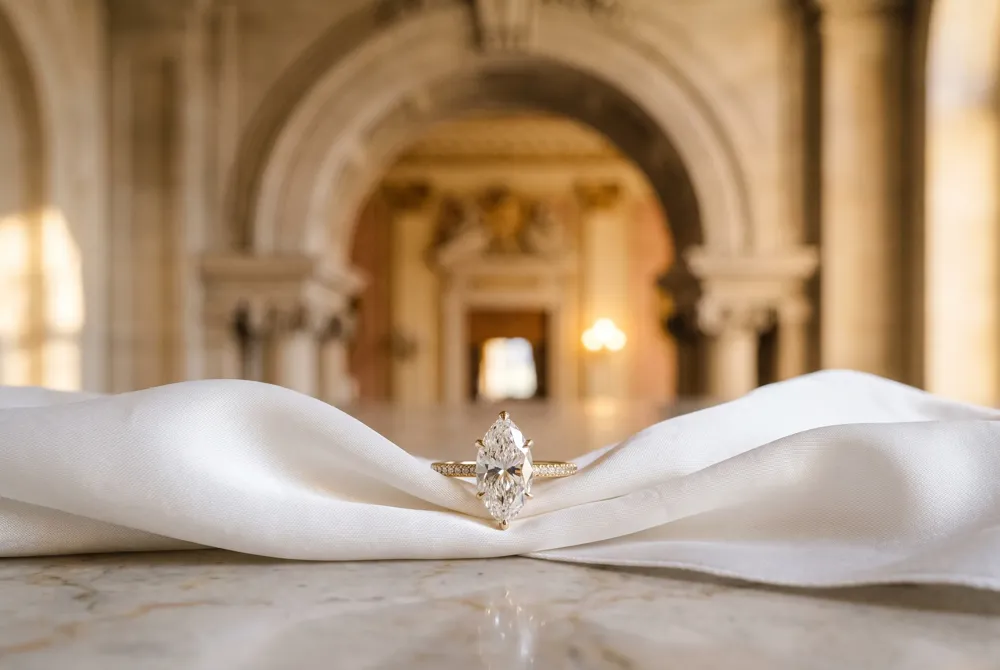
The marquise cut tells a story of 18th-century romance, a shape fit for a king's admiration. Its name is often traced to the Marquise de Pompadour, the celebrated favorite of King Louis XV, who is said to have requested a diamond shape that would echo her distinctive smile, with an elongated, boat-like form and pointed ends. More historically grounded, the silhouette is also linked to the 1745 Battle of Plassey, where the shape was allegedly modeled to resemble the French monarch's lips. Whatever the origin, this cut has endured as a symbol of refined, old-world glamour, capturing the imagination of lovers through the centuries. For those drawn to its timeless allure, marquise diamond engagement rings offer a modern gateway to this storied profile.
The marquise's elongated form gives it a distinct advantage in the world of diamond shapes. It creates an illusion of greater size, appearing approximately 15% larger than a round brilliant of the same carat weight, while often costing up to 30% less, as noted in this detailed guide on diamond shapes. This is because the cut maximizes carat weight along its length, making the stone appear larger without the premium price tag. For brides who value presence and elegance, the marquise offers a dramatic yet refined statement, one that flatters the finger and catches the light in a distinctive, elongated sparkle. This shape is available across a range of settings, from solitaire to halo, each enhancing its unique silhouette.
A Cut with a Distinctive Character
Beyond its size benefits, the marquise cut possesses a character that sets it apart from more common shapes. Its pointed ends and sweeping curves create a sense of movement and sophistication, making it a favorite among those who seek something beyond the conventional round or princess cuts. However, this distinctive form also comes with practical considerations. The sharp points are more vulnerable to chipping, so rings featuring a marquise diamond are often designed with protective settings, such as a V-shaped prong or a bezel, to safeguard the tips. This attention to durability is a hallmark of well-crafted marquise rings, where timeless design meets structural integrity.
| Aspect | Marquise Cut | Round Brilliant |
|---|---|---|
| Carat Weight Appearance | Larger (≈15%) | Standard |
| Cost per Carat | Lower (up to 30%) | Higher |
| Silhouette | Elongated, pointed | Round, balanced |
| Vulnerability | Tips can chip | More durable |
| Flattering on Finger | Lengthens appearance | Classic, not elongating |
For a comprehensive comparison of the marquise against other cuts, including its visual impact and practicality, explore this guide to diamond shapes from Avittam, which offers insights into how different shapes align with various styles and budget considerations. Understanding these nuances ensures that your choice not only reflects your personal taste but also meets your expectations for longevity and wear.
Understanding the Dutch Marquise Variation
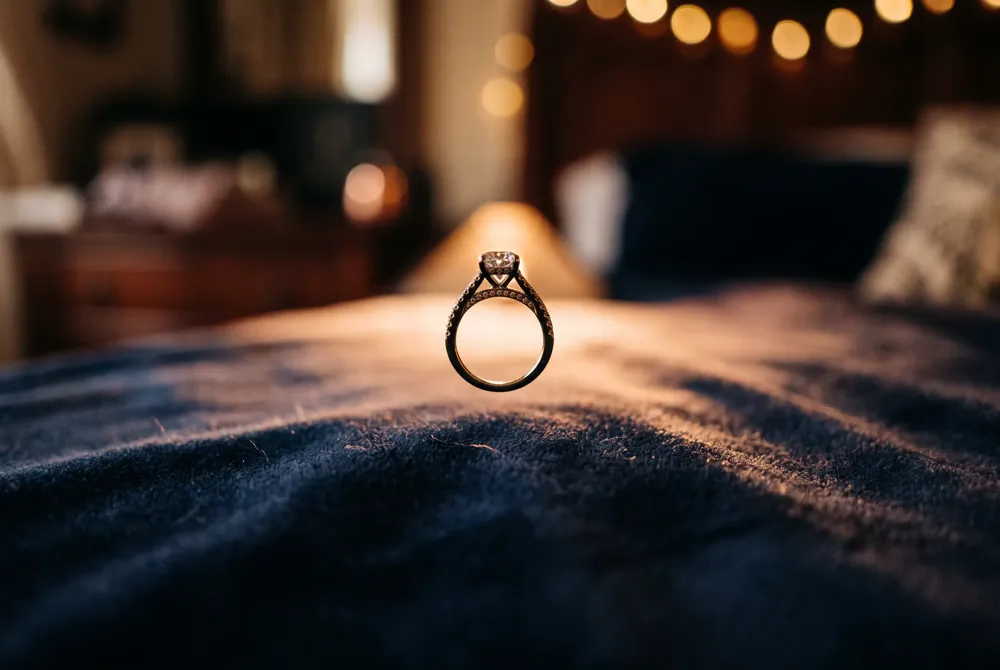
The marquise cut, with its elongated, boat-shaped silhouette and pointed ends, carries a romantic legend that has fascinated jewelry lovers for centuries. Named for the Marquise de Pompadour, a mistress of King Louis XV who supposedly asked for a stone shaped like her smile, this cut has become synonymous with elegance and sophistication. For modern couples, the marquise represents a perfect fusion of history and style, offering a unique alternative to more conventional round or princess cuts.
Experts highlight that the marquise cut's elongated shape actually creates an optical illusion, making the diamond appear about 15% larger than a round diamond of the same carat weight, and it often costs up to 30% less per carat. However, its striking appearance comes with practical considerations. The pointed ends are delicate and can be prone to chipping if not protected by a suitable prong setting or a v-shaped tip. This is why many jewelers, including those at Avittam Diamond Jewels, recommend looking for a marquise with a protective bezel or securing prongs, ensuring that the beauty of the cut is matched by its durability.
Regular Marquise Cut: Classic Elegance and Sparkle
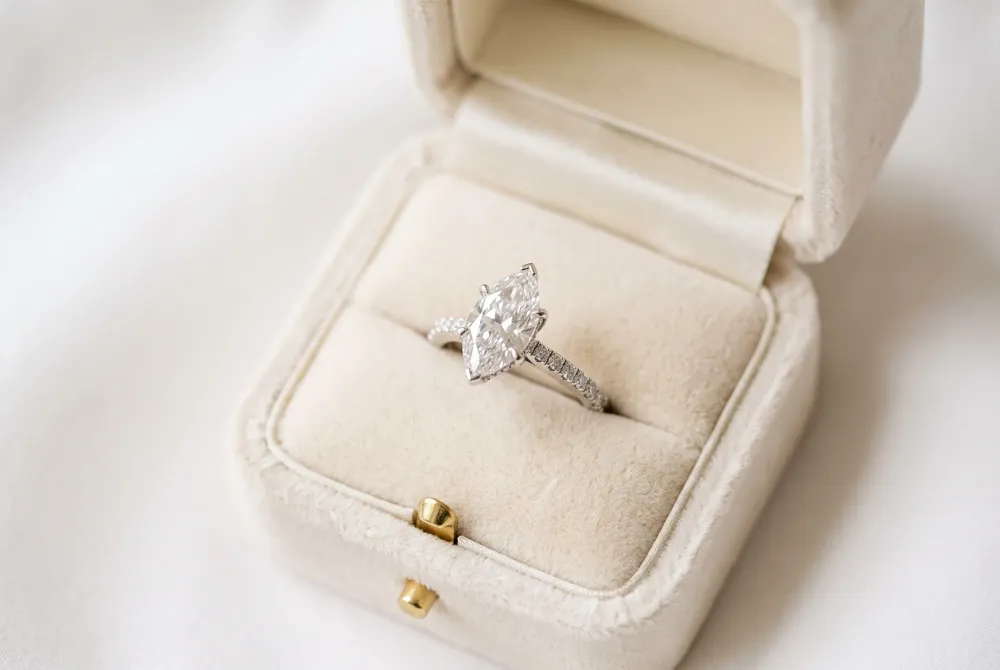
The marquise shape is often called the "navette" for good reason: its elongated, boat-like outline with pointed ends was reportedly inspired by the smile of the Marquise de Pompadour, a royal mistress of King Louis XV. While the legend may be debated, the optical effect is not. Because the stone is stretched along one axis, it carries its carat weight across a longer visual line than a round brilliant. A 1-carat marquise can appear roughly 15% larger than a round diamond of the same weight, a quirk that has made it a favorite among shoppers who want maximum presence without paying for extra carats. For a deeper look at how shape affects apparent size, the Guide to Diamond Shapes for Engagement Rings from GIA's 4Cs blog offers a helpful starting point.
That elongation also works in your favor on the finger. The marquise's long lines visually lengthen the finger and give the hand a graceful, slender appearance. This is why the shape has endured for centuries, from royal courts to contemporary bridal fashion. The trade-off is the pointed ends: they are the most vulnerable part of the stone and require a protective setting, often a V-tip prong or a bezel, to prevent chipping. Understanding this balance between beauty and practicality is essential before you commit, and it's exactly the kind of consideration that sets an informed buyer apart.
A Cut That Flatters Both Hand and Budget
Beyond its romantic origin story, the marquise offers a measurable financial advantage. Because the elongated shape wastes more of the rough diamond crystal during cutting than a round brilliant, the finished stone often carries a lower price per carat. Buyers typically find marquise diamonds cost 20% to 30% less than a comparable round brilliant of the same carat weight. That saving can be redirected toward a higher color grade, a finer clarity, or a more elaborate setting, all without stretching your budget. For a practical breakdown of these cost dynamics and the shape's pros and cons, the Marquise Cut Diamonds: Expert Buying Guide is a solid resource.
Yet the marquise is not a one-size-fits-all shape. Its elongated profile is ideal for long fingers, but it can overwhelm shorter or more petite hands, creating a disproportionate look. Similarly, the narrow silhouette means the bow-tie effect, a dark shadow across the center of the stone, is more pronounced in marquise cuts than in round brilliants. Choosing a well-cut marquise with excellent proportions is the best defense against an undesirable bow-tie. This is where expert guidance matters. At Avittam Diamond Jewels, we pair each customer with a dedicated specialist who reviews the stone's cut grade, length-to-width ratio, and symmetry, ensuring you select a marquise that maximizes brilliance rather than hiding it.
Length-to-Width Ratio. The classic marquise sits between 1.7:1 and 2.2:1. A ratio on the shorter end (1.7 to 1.9) yields a fuller, more oval-like feel, while a ratio above 2.0 stretches the stone into a more dramatic, elongated silhouette. The right ratio depends on your finger length and personal style.Pointed Ends. The sharp tips are the thinnest point of the stone. They catch light brilliantly when well-proportioned, but they also need protection. V-tip prongs or a floating bezel are the standard solutions, and Avittam's artisans can design a custom setting that secures the tips without obscuring the shape.Bow-Tie Effect. All elongated diamonds can show a subtle dark bow-tie across the center, but a well-cut marquise minimizes it. Look for a stone where the bow-tie is faint and changes with movement, rather than a dark, static patch. A high-quality triple-excellent cut, as certified by GIA or IGI, is your best safeguard.
When you combine the marquise's elongated elegance with a thoughtful setting, the result is a ring that feels both regal and modern. Explore how the marquise cut wedding ring compares to other shapes, or view our marquise engagement ring collection to see the silhouette in a range of settings. For a closer look at how the marquise stacks up against the princess cut, a style that offers a similar elongated vibe with a squared-off twist, read our comparison of Princess Cut vs Marquise Cut.
The Bow-Tie Effect: A Consideration for Elongated Cuts
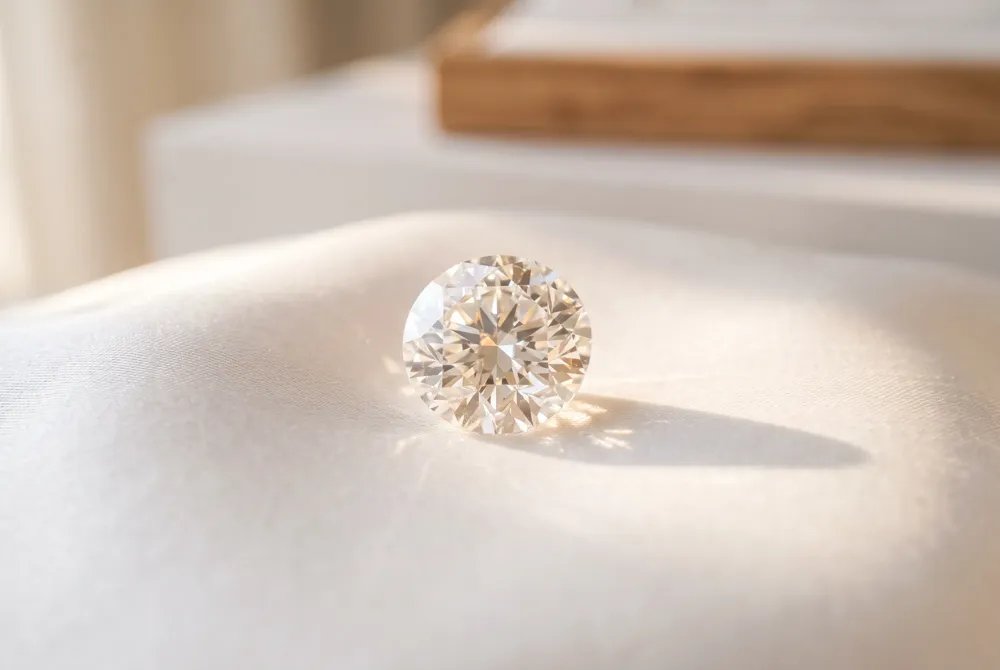
Every marquise, princess, and even round brilliant diamond can display a dark bow tie, a shadowy region that crosses the center of the stone. For the marquise cut, this effect is especially pronounced because of its elongated, pointed outline. The good news? A bow tie is not a flaw. It is an optical effect produced by the way light enters and reflects through the diamond's facets. When you tilt the stone or view it under certain lighting, the pavilion's facets can create a dark, bow-shaped band that the eye naturally picks up. Understanding this effect is the first step toward choosing a marquise that maximizes brilliance over shadow.
What Causes the Bow Tie in a Marquise Cut?
The marquise cut features 56 to 58 facets and a long, narrow silhouette with pointed ends. This shape concentrates light along its central ridge, which is what gives it that dramatic, elongating effect on the finger. However, because the stone is cut with a relatively shallow crown and a deep pavilion, the center can act like a mirror that reflects darkness instead of light. The result is a bow tie effect that varies in intensity depending on the diamond's proportions. In a well-cut marquise, the bow tie is subtle, a whisper of shadow that adds depth. In a poorly cut stone, it can dominate the entire center, making the diamond look dull and lifeless. The key is to look for a marquise with proportions that minimize the effect while still delivering a bright, fire-filled appearance.
How to Assess the Bow Tie in Person and Online
When shopping for a marquise diamond, you don't have to become a gemologist to spot a problematic bow tie. Start by asking for a high-resolution video of the diamond in different lighting, including dim, bright, and backlit conditions. A well-cut marquise will show only a soft, fleeting dark line that disappears as the stone moves. Avoid stones where the dark area feels like a solid, motionless block. Also, examine the stone face-up: if the bow tie appears as two distinct, dark wedges that meet in the center, that's a red flag. Instead, you want a gentle, diffuse shadow that adds contrast without compromising brilliance. Many jewelers, including Avittam Diamond Jewels, provide detailed imaging so you can evaluate this before you commit.
The Marquise Cut vs. Other Shapes
Interestingly, the bow tie effect is not unique to the marquise. Both the princess cut and the round brilliant can exhibit a form of this effect, though it is far less noticeable in rounds because of their symmetrical, circular facet arrangement. The princess cut, with its square outline and sharp corners, also can show a dark center when proportions are off. But the marquise has a distinct advantage: its elongated shape actually flatters the finger, making it appear longer and more slender. That optical benefit often outweighs the bow tie debate for many brides. If you're torn between the two, consider how the shape will look on your hand and how much you prize brilliance over a unique silhouette.
Tips to Minimize the Bow Tie Effect
- Choose a marquise with a length-to-width ratio between 1.85 and 2.10, which tends to produce a more elongated, elegant silhouette with a softer bow tie.
- Look for a diamond with a pavilion angle between 40.5 and 41.5 degrees and a crown angle of 33 to 34 degrees; these proportions help light return to your eye rather than escaping through the pavilion.
- Opt for a marquise with a well-defined, pronounced culet that is small, as a large culet can increase the dark center effect.
- Consider a marquise with a higher clarity grade, as inclusions and flaws can enhance the shadowy appearance.
Also, remember that the setting plays a role. A four-prong setting, like the ones at Avittam Diamond Jewels, leaves the pointed ends exposed, which can make the bow tie less pronounced. A bezel or halo setting, while protective, can sometimes cut into the stone's light return, intensifying the effect. If you're after a marquise engagement ring that minimizes the bow tie, ask to see the diamond in a simple solitaire prong setting so you can judge its true face.
The Final Word on the Bow Tie
Ultimately, the bow tie effect is a matter of taste. Some couples find a subtle bow tie adds character and depth, a signature of the marquise's personality. Others want an absolutely pristine, bright center. The secret is to know your preferences and to work with a jeweler who will help you find a marquise that balances elegance with brilliance. At Avittam Diamond Jewels, we guide you through every step, using our expertise to match you with a marquise that flatters your hand, your style, and your budget. Whether you're drawn to the classic marquise engagement ring or want to explore other diamond shapes, we're here to help you make an informed, beautiful choice.
Perceived Size: Maximizing Visual Impact
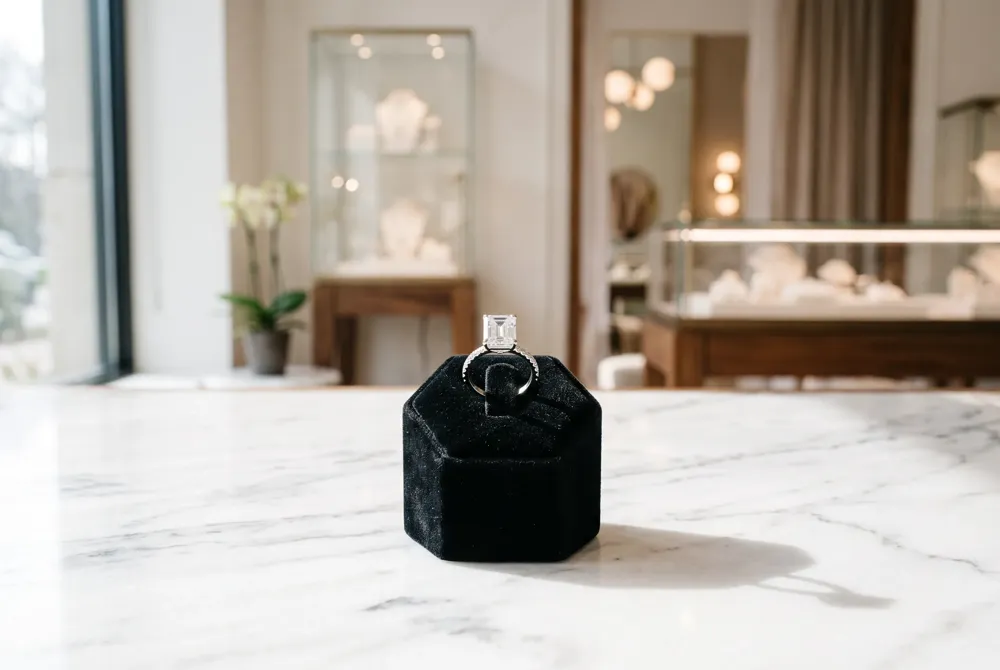
When two elongated diamond shapes face off against two square ones, the visual impact on your finger can be surprisingly different. The marquise, with its boat-like silhouette and pointed tips, stretches the hand and tends to look larger per carat than almost any other shape. The princess, cut as a modified square with a brilliant crown and sharp corners, offers a more solid, substantial footprint. In this section, we break down how each shape’s dimensions, length-to-width ratio, and cutting style affect the size you perceive when the ring is on your hand.
Why the Marquise Looks Larger Per Carat
The marquise’s elongated outline is its superpower. Because its carat weight is distributed across a longer, narrower surface, the stone’s length dominates the eye. According to the Guide to Diamond Shapes for Engagement Rings, a marquise can appear about 15% larger than a round diamond of the same carat weight, while often costing up to 30% less for that size. For a luxury buyer who wants maximum presence without inflating the budget, that’s a compelling reason to consider the shape. The princess, by contrast, is a square-ish hybrid: its equal proportions mean the carat weight is spread across both length and width, so a 1-carat princess may look smaller face-up than a 1-carat marquise of the same weight.
When you hold a marquise against a princess of comparable carat weight, the difference becomes even more obvious. The marquise’s pointed ends extend visually into the finger, drawing the eye outward, while the princess’s straight edges and sharp corners create a more compact, box-like appearance. For brides who love the elegance of elongation, the marquise’s ability to
Color and Clarity: Clever Concealment
The marquise diamond carries a story as distinctive as its silhouette. Legend credits King Louis XIV of France with popularizing this elongated, boat-shaped cut, a shape often associated with the smile of the Marquise de Pompadour. While historians debate the exact origin, the marquise has remained a symbol of regal elegance for centuries. Its narrow, pointed ends and sweeping curves create an unmistakable profile that feels both vintage and contemporary.
Choosing a marquise is about embracing a shape with character. Unlike round brilliants that prioritize uniformity, the marquise offers a dramatic, extended silhouette that flatters the finger and creates an illusion of length. For many couples, this cut represents a departure from the ordinary, a way to infuse their engagement ring with a sense of personal narrative and timeless romance.
A Cut That Maximizes Beauty and Brilliance
Beyond its romantic backstory, the marquise cut is renowned for its practical sparkle. Its elongated shape often makes the diamond appear larger than a round stone of the same carat weight, a detail many brides-to-be appreciate. According to GIA's guide to diamond shapes, the marquise can look up to 15% larger than a round diamond of equal carat, offering exceptional value without compromising on presence.
However, the marquise's distinctive ends require careful consideration. The pointed tips are more vulnerable to chipping than the protected edges of a round cut. This is where expert craftsmanship becomes essential. At Avittam Diamond Jewels, each marquise stone is set with a protective V-tip or bezel to safeguard these delicate points, ensuring your ring withstands a lifetime of daily wear while maintaining its signature silhouette.
How Marquise Compares to Other Beloved Shapes
To truly appreciate the marquise, it helps to see it alongside other classic cuts. Each shape carries its own personality, and your choice ultimately reflects your personal style and the aesthetic you envision.
<Marquise. An elongated, boat-shaped diamond with pointed ends, offering a large surface area for its carat weight. It flatters the finger and creates a slimming effect, making it ideal for those who want maximum sparkle with a unique profile.<Princess Cut. A square or rectangular cut with sharp corners and brilliant facets. It offers a modern, geometric look that maximizes brilliance but lacks the elongating effect of the marquise. For a side-by-side comparison, see this guide to princess vs. marquise cuts.Cushion Cut. A soft, rounded square with a vintage appeal. It offers a more forgiving outline and a sparkling, crushed-ice effect. While not as elongating as the marquise, it's a favorite for those who adore a romantic, old-world charm. This comparison of cushion vs. princess cuts offers further insights.Emerald Cut. A rectangular step-cut with a hall-of-mirrors effect that emphasizes clarity over brilliance. It has a stately, sophisticated look but does not offer the same sparkle or the finger-elongating properties as a marquise.
Each of these shapes serves a different aesthetic purpose. The marquise's elongated form is distinctly dramatic, while round cuts offer timeless brilliance, and emerald cuts appeal to those who value understated sophistication. Choosing between them often comes down to whether you prioritize maximum sparkle, a specific hand silhouette, or a design that tells a story.
The Allure of the Marquise: Pros and Cons
Like any diamond shape, the marquise has its strengths and its considerations. Understanding these trade-offs helps you make a confident choice that you'll treasure.
- Appears Larger: The elongated shape creates an illusion of greater size, offering more face-up sparkle per carat.
- Flattering Silhouette: It elongates the finger, creating a graceful, elegant hand line.
- Unique and Romantic: Its storied history and distinctive profile stand out from conventional round brilliants.
- Vulnerable Tips: The pointed ends are more prone to chipping, requiring a protective setting.
- Bow-Tie Effect: Some marquise diamonds may show a dark bow-tie shape in the center, which needs to be professionally assessed.
For those drawn to these attributes, the marquise offers a compelling combination of brilliance and character. Its ability to maximize the visual presence of the diamond makes it a favorite among those who want a statement ring that feels both luxurious and intentional. Many brides find that the marquise's unique shape perfectly mirrors their own distinctive style.
Why Avittam Diamond Jewels is Your Go-To for Marquise Rings
At Avittam Diamond Jewels, we specialize in handcrafting marquise engagement rings that celebrate both heritage and modern design. Our collection blends the timeless allure of this cut with contemporary settings, ensuring each piece is as unique as the love it represents. From the metal selection to the final polish, we prioritize craftsmanship and authenticity.
We offer a curated selection of marquise engagement rings designed to cater to every taste, from classic solitaires to intricate halo settings. For those ready to explore, our complete buying guide walks you through the nuances of this exquisite shape, covering everything from setting choices to grading considerations. We invite you to discover the elegance of the marquise and find the ring that will tell your story for generations.
Value and Affordability Compared to Round Brilliant
One of the most practical reasons brides fall for the marquise shape is its remarkable face-up appearance. Because the stone is cut with an elongated silhouette and pointed tips, the same carat weight is spread across a greater surface area than in round or princess cuts. According to GIA’s guide to diamond shapes, a marquise cut can face up about 15% larger than a round diamond of the same carat weight, while typically costing up to 30% less per carat. For luxury shoppers who want maximum visual impact without inflating their budget, this shape offers an elegant solution.
Beyond the size advantage, the marquise’s slender outline also creates a flattering elongating effect on the finger, making it a top choice for those who appreciate a sophisticated, vintage-inspired aesthetic. When comparing cuts like marquise versus oval or pear, the distinctive pointed ends draw the eye along the length of the stone, enhancing the perceived size while maintaining a graceful profile. This combination of visual heft and elegant lines is why many discerning buyers choose a marquise engagement ring from Avittam Diamond Jewels, where each piece is handcrafted to highlight the stone’s natural brilliance.
Weighing the Cost and Value
Cost is a deciding factor for most couples, and the marquise delivers on both affordability and elegance. Because the elongated shape wastes less of the rough diamond during cutting, suppliers can offer comparable carat weights at a lower price point. In fact, a well-cut marquise can cost up to 30% less than a round brilliant of the same weight, as noted in industry comparisons. At Avittam Diamond Jewels, this price advantage doesn’t compromise quality: our curated selection of ethically sourced diamonds ensures that each marquise stone meets exacting standards of cut, color, and clarity, so you invest in lasting beauty rather than just a lower sticker price.
While the initial savings are attractive, it’s wise to consider the total value over time. A larger face-up appearance means you can choose a slightly lower carat weight to stay within your desired budget, and still enjoy a striking ring. This strategic approach to size and cost sets the marquise apart from shapes like round brilliant or cushion cuts, which usually command a premium for the same visual presence. For those seeking a balance of luxury and practicality, the marquise is a smart investment.
Styling and Setting Considerations
The marquise’s pointed tips are delicate by nature, so setting selection matters as much as the stone itself. A bezel setting or a pronged mount with protective V-shape prongs can shield the ends from chips and snags, ensuring your ring withstands daily wear.Avittam Diamond Jewels offers bespoke options to customize the design, metal, and engraving, so you can create a piece that feels as unique as the stone’s silhouette. Whether you prefer a solitaire for minimalist elegance or a halo of pavé diamonds to amplify sparkle, our craftsmen can execute your vision with precision.
When styling a marquise ring, consider the band width and profile. A tapered band can visually enhance the stone’s elongation, while a split-shank design adds a modern twist without detracting from the centerpiece. If you’re still deciding between shapes, our guide to marquise engagement rings princess comparison can help you weigh the differences. For a closer look at how the marquise flatters different fingers and aesthetic preferences, explore our marquise engagement ring collection.
| Aspect | Marquise Cut | Round Brilliant |
|---|---|---|
| Face-up size | Appears ~15% larger at same carat | Standard face-up size |
| Cost per carat | Up to 30% less | Premium pricing |
| Silhouette | Elongated, pointed ends | Classic round |
| Finger effect | Elongating effect | Neutral, doesn’t elongate |
| Setting risk | Tips need protection | Better protected edges |
The Romantic Symbolism of the Marquise Cut
The marquise cut is instantly recognizable for its elongated, boat-shaped silhouette with pointed ends and 58 facets, a profile that makes it a favorite for engagement rings. When you browse marquise engagement rings at Avittam Diamond Jewels, you are looking at a stone that appears roughly 15% larger than a round diamond of the same carat weight, yet often costs up to 30% less per carat. That combination of presence and value is a major reason this shape has attracted so many modern couples.
Avittam Diamond Jewels offers a curated selection of marquise stones, each ethically sourced and available in platinum, rose gold, or yellow gold settings. The elongated outline has a slimming effect on the finger, and the pointed ends create a graceful, hand-flattering line that round cuts simply cannot match. For shoppers weighing the marquise against other elongated shapes, it is worth noting how this cut compares with the princess cut and the cushion cut, both of which have a more compact, squared profile.
The Allure of the Elongated Silhouette
The marquise shape reads as both vintage and contemporary, a duality that appeals to brides seeking a ring with character. Its slim outline can make fingers appear longer and more slender, which is why style guides on diamond shapes often highlight the marquise as a top contender for an elongating effect. At Avittam, the bespoke ordering service allows you to tailor the setting, metal, and even the engraving, so your marquise feels personal rather than mass-produced.
However, the pointed ends demand care. They are more vulnerable to chipping than rounded edges, so a protective setting with prongs or a bezel is recommended. This is a detail that expert diamond guides emphasize, and it is one of the reasons Avittam's craftsmen use secure, reinforced prongs on all marquise settings. The result is a ring that looks delicate but is built to last through daily wear.
How It Compares to Other Cuts
To understand where the marquise fits, compare it with the round brilliant, the most popular cut for engagement rings. While a round stone maximises fire and brilliance, it lacks the elongation that many brides find flattering. The marquise engagement rings at Avittam offer a happy medium: the brilliance of a faceted stone with a distinctive, regal profile. In contrast, the princess cut offers a modern, square cornered look, but it does not create the same illusion of length.
For those drawn to historical romance, the marquise is often called the Queen of diamonds, a nickname that hints at its stately proportions. Marquise cut guides also note its flattering effect on the finger, while buying comparisons point to the need for a protective setting. Avittam's team guides each customer through these trade-offs personally, whether you are choosing a solitaire, a halo, or a three-stone arrangement.
Finding Your Perfect Marquise
Selecting a marquise is about more than the shape. Consider the length-to-width ratio: a ratio around 1.8 to 2.0 creates the classic, slim look, while a slightly wider ratio of 1.6 to 1.7 feels more substantial. Avittam's virtual try-on tools let you preview these proportions on your own hand, helping you decide without the pressure of a physical appointment. This white-glove service, combined with free shipping and a curated selection, makes the buying process as enjoyable as the finished ring.
Whether you are drawn to the marquise's Hollywood glamour or its timeless elegance, the right stone should reflect your personal style. Avittam Diamond Jewels offers expert guidance at every step, from the marquise buying experience to the final presentation in a signature gift box. With a choice of settings and an emphasis on craftsmanship, the brand ensures your marquise feels both personal and premium.
| Aspect | Marquise Cut | Round Brilliant |
|---|---|---|
| Silhouette | Elongated, pointed | Round, symmetrical |
| Finger effect | Lengthens, slims | Neutral |
| Light performance | High fire, some bowtie | Maximum brilliance |
| Durability | Vulnerable tips | Sturdy |
| Style vibe | Vintage-glam | Classic |
Choosing Between Dutch and Regular Marquise
When you begin comparing engagement ring silhouettes, the classic marquise and the Dutch marquise often appear side by side. Both share that elongated, boat-shaped profile, yet they differ in a way that changes the entire character of the stone. The regular marquise ends in two distinct points, while the Dutch marquise features a subtle, flattened tip at one end, creating a softer, more regal line. This small variation has a significant impact on how the diamond catches light and how it flatters the finger.
For couples weighing the two, the choice often comes down to personality and hand shape. The traditional marquise offers a dramatic, elongating effect that many find flattering, while the Dutch marquise adds an unconventional twist that appeals to those seeking individuality. According to a guide to diamond shapes for engagement rings, the marquise’s elongated outline can make the finger appear longer and more slender, a benefit shared by both cuts. However, the flattened tip of the Dutch marquise tends to feel more grounded and less sharp, which some wearers prefer for daily comfort.
Dutch Marquise vs. Regular Marquise: A Side-by-Side Look
Silhouette. The regular marquise features two sharp points, while the Dutch marquise has one flattened tip. This makes the Dutch variant appear slightly softer and more distinctive.Flattery. Both elongate the finger, but the regular marquise offers a more pronounced elongating effect. The Dutch marquise provides a subtler, more balanced line that some find more wearable.Uniqueness. The Dutch marquise is far less common, appealing to those who want a conversation-starting piece. The regular marquise remains a beloved classic with broader recognition.
When shopping, consider how each shape aligns with your personal style and lifestyle. A marquise engagement ring guide notes that pointed shapes like the marquise require more care to protect the tips, though a well-set Dutch marquise mitigates that concern with its flattened end. At Avittam Diamond Jewels, you can explore marquise engagement rings that showcase both silhouettes, and our guide to marquise cut engagement rings offers deeper insights into each option’s pros and cons.
Ultimately, whether you choose the classic marquise or the distinctive Dutch marquise, both promise the same timeless elegance that defines fine diamond jewelry. The decision is less about which is “better” and more about which resonates with your personal story and the way you envision your ring catching the light for years to come.
Princess Cut: A Brief Comparison for Discriminating Shoppers
Few diamond shapes carry as much storied romance as the marquise cut. Its elongated, boat-like silhouette with pointed ends was reportedly inspired by a royal love story and remains a favorite among couples seeking a ring that feels both vintage and contemporary. For many, the marquise offers a distinctive alternative to the more common round brilliant, blending the drama of a pointed crown with the sleekness of an oval.
This shape gained renewed popularity in recent years, partly thanks to celebrities and fashion-forward brides. Its unique geometry can create an illusion of greater carat weight, making a marquise diamond look about 15% larger than a round diamond of the same carat weight and cost up to 30% less, as noted in our guide. This clever use of budget is a major draw for those who prioritize size without sacrificing elegance.
Why Choose a Marquise Engagement Ring?
The marquise is a smart choice for someone who wants a statement piece that elongates the finger and flatters the hand. Its long lines can make shorter fingers appear more slender and graceful. But beyond aesthetics, the marquise carries a rich history that appeals to romantics.
Elegance. The pointed ends and curved sides create a refined, regal appearance suitable for both classic and modern settings. It pairs beautifully with halo designs that add a vintage touch.Versatility. Whether set as a solitaire, with side stones, or in a full halo, the marquise adapts to various ring styles. It also works well with both modern minimalist bands and ornate antique-inspired settings.Sizing Illusion. Because of its elongated shape, the marquise appears larger than a round diamond of the same carat weight. This is a budget-friendly way to achieve a significant presence without extra cost.
When shopping for a marquise, focus on the length-to-width ratio—often between 1.85 and 2.10 for the most classic proportions. This ratio affects how slim and elongated the stone appears, and it’s a detail that separates a well-cut marquise from a proportionally odd one. Our collection of marquise engagement rings offers a curated selection where each piece balances these proportions with craftsmanship.
Avittam Diamond Jewels handcrafts each marquise ring with attention to this delicate geometry, ensuring the points are protected in the setting. The brand offers personalization in metal and engraving, allowing you to create a ring that feels uniquely yours. This level of bespoke detail is often missing from fast-fashion jewelers, yet it’s essential for a piece you’ll wear daily.
Comparing the Marquise to Other Shapes
Each diamond shape carries a distinct character, and the marquise’s elongated profile sets it apart from round and princess cuts. While a round brilliant maximizes brilliance and fire, the marquise prioritizes grace and a glamorous silhouette. A princess cut offers sharp corners and a more modern, geometric feel, but it lacks the elongating effect of the marquise.
For those weighing options, our guide on diamond shapes compares these styles in detail. The marquise is often favored by those who want the appearance of a larger carat weight without paying the premium that a round brilliant commands. This makes it a wise choice for budget-conscious couples who still desire a high-end look.
| Shape | Silhouette | Best For | Budget Consideration |
|---|---|---|---|
| Marquise | Elongated, pointed ends | Elongating finger, vintage allure | Up to 30% less than round |
| Round Brilliant | Circular, 58 facets | Maximum sparkle, classic appeal | Premium pricing |
| Princess | Square with sharp corners | Modern, geometric style | Often 10-20% less than round |
| Oval | Elongated, rounded ends | Similar to marquise but softer | Comparable to round, more affordable |
Selecting the Perfect Cut: Expert Tips
Few diamond shapes carry the romantic history and flattering silhouette of the marquise cut. This elongated stone with pointed ends has adorned royalty and modern romantics alike. Its distinctive shape instantly elongates the finger, making it a favorite among brides who want a look that feels both vintage and fashion-forward. For those drawn to this regal profile, understanding what makes the marquise special is the first step toward choosing a ring that feels personally meaningful.
Why the Marquise Shape Stands Out
The marquise cut offers one of the most dramatic appearances of any diamond shape. Its elongated outline creates an illusion of greater size, making a marquise diamond appear larger than a round diamond of the same carat weight. According to a comprehensive guide on diamond shapes, the marquise can look about 15 percent larger than a round brilliant of equal carat weight, a feature that appeals to brides seeking maximum visual impact for their budget. This shape also carries a romantic legend: it is said to have been created in the 18th century to mimic the smile of the Marchioness of Pompadour, a story that adds a layer of intrigue to every ring.
The Marquise vs. Other Shapes
Marquise vs. Princess. While the princess cut offers a modern, sharp-edged square silhouette, the marquise brings a softer, more elongated elegance. A side-by-side comparison of these two popular shapes highlights that the marquise provides a more flattering finger-elongating effect, while the princess suits those who prefer a crisp, contemporary geometric look.Marquise vs. Oval. Both oval and marquise cuts share an elongated profile, but the marquise is distinguished by its pointed ends, which create a more dramatic and slenderizing line. The oval offers a more rounded, softer appearance, while the marquise delivers a sharper, more distinctive statement.Marquise vs. Emerald. For brides torn between classic and avant-garde, the marquise offers a more intense brilliance than the emerald cut's step facets. Where the emerald emphasizes clarity through its open table, the marquise focuses on light dispersion, creating a fiery sparkle that draws the eye down the finger.
Each shape carries its own language. The marquise speaks to those who want a ring that is neither too traditional nor too trend-driven, striking a balance that works from the engagement through decades of wedding anniversaries. Understanding these differences helps you articulate what you want before you ever step into a jeweler or browse collections online.
What Makes a Quality Marquise
Because the marquise is an elongated shape, its proportions matter more than with round diamonds. The length-to-width ratio is critical: a ratio between 1.5 and 2.0 is generally considered ideal, with 1.7 offering a classic, balanced look. More pointed ends can be more delicate, while rounder ends offer greater durability and a softer profile. Always examine the bow tie effect, a dark area that can appear across the center of the stone. A well-cut marquise will minimize this shadow, showing a consistent brilliance from tip to tip. For a deeper dive into what to look for, the Guide to Diamond Shapes from GIA is an authoritative resource on cut quality and shape characteristics.
Considerations for Durability and Wear
While the marquise is a resilient shape for everyday wear, its pointed tips are the most vulnerable part. The thin points can chip if the ring is worn during rigorous activities such as sports or heavy gardening. Many experts recommend protective settings, such as a bezel or V-shaped prongs, to shield the ends. A well-crafted marquise ring, like those available from Avittam Diamond Jewels, is designed with these practical details in mind, ensuring the stone remains secure while maintaining its elegant profile. When researching marquise engagement rings, pay attention to how the prongs are designed to cover those points.
Making the Choice That Matters
Choosing a diamond shape is as much about personality as it is about aesthetics. The marquise cut offers a unique blend of vintage charm and modern sophistication that appeals to the romantic at heart. It flatters the finger, offers more sparkle per carat, and carries a story that connects the wearer to a tradition of elegance. For those who find themselves drawn to its elongated glow, the marquise is more than a fad; it's a choice that feels both intentional and timeless. Explore the options available and trust your instincts; the right marquise will feel like it was made for you, because in many ways, it was.
Finding Your Perfect Symbol of Love
While the standard marquise features a symmetrical, elongated silhouette with pointed ends, the Dutch marquise introduces a subtle yet significant variation in its geometry. This distinctive shape, as explained in the Guide to Diamond Shapes for Engagement Rings, offers a unique alternative for those who appreciate the marquise's elegance but seek a slightly more unconventional profile. The Dutch marquise typically exhibits a more pronounced bow-tie effect and a narrower waist, which can amplify its perceived length and create a dramatic, regal appearance.
For the discerning buyer, the choice between a Dutch marquise and a regular marquise often comes down to aesthetic preference. The regular marquise, with its 58 facets and boat-like shape, is designed to maximize brilliance and is celebrated for its ability to make the finger appear longer and slimmer. In contrast, the Dutch marquise leans into a more niche, vintage-inspired aesthetic, often favored by those who want their ring to stand out as a conversation piece. While both cuts are equally brilliant, the Dutch variation's distinct proportions can alter the overall balance of the stone, a detail that Avittam Diamond Jewels considers when curating its marquise engagement rings.
Shape Comparison: Dutch vs. Regular
| Feature | Dutch Marquise | Regular Marquise |
|---|---|---|
| Silhouette | Elongated with a more prominent bow-tie effect | Symmetrical, boat-shaped with pointed ends |
| Length-to-width ratio | Typically longer and narrower, around 2.0-2.2 | Classic ratio around 1.9-2.2 |
| Appearance | More dramatic, vintage flair with a narrower waist | Timeless, balanced brilliance with a broad surface |
| Facet arrangement | Often deeper, enhancing the bow-tie effect | Standard 58 facets for optimal light performance |
| Who it flatters | Those seeking a unique, regal look and longer fingers | Those wanting a classic, versatile, and elongating effect |
Understanding these differences is crucial when making a selection. The regular marquise, as detailed in marquise cut diamond guides, is prized for its elegant, elongated appearance that can make the finger appear more slender. On the other hand, the Dutch marquise offers a more distinct, often more expensive-to-source variation due to its specific proportions. At Avittam Diamond Jewels, we encourage you to view and compare these shapes in person or through our virtual try-on tools, ensuring your choice aligns with your personal style and the level of uniqueness you desire in a ring that will last a lifetime.